Meta Description (SEO | 120–130 chars)
I monetized my blog—but the anxiety didn’t stop. Before chasing PVs and followers, I broke down what real “stability” means.
Conclusion First (Read This First)
I monetized my blog this year.
That’s a fact. And yes, it was a real achievement.
But to be honest, the moment I did, a new anxiety appeared.
Will this continue next month?
What if my pageviews drop?
What if my health declines and I can’t keep publishing?
That’s when I realized something important.
What I need next is not more articles, not more hustle on social media.
What I need is a structure that produces stability.
Pageviews and followers are not the goal.
They are byproducts of a system designed for stability.
In this article, I break down—layer by layer—
the surface problem, the hidden problem, and the root problem
and show how I’m redesigning my blog as a sustainable system.
Table of Contents
Why Monetization Didn’t End My Anxiety
The Surface Problem: “I Need More Pageviews and Followers”
The Hidden Problem: What I’m Really Afraid Of
The Root Problem: Blogging Is Not a Hit Game—It’s a Trust System
Why My Blog Is Built for Stability (Not Virality)
The Three Pillars of Sustainable Growth
How to Increase Pageviews Without Burning Out
How Followers Actually Grow (Hint: It’s Not Promotion)
How to Stabilize Revenue Without Selling Your Soul
A 90-Day Plan for Sustainable Blogging
FAQ
Final Thoughts: Designing a Blog People Want to Support
1. Why Monetization Didn’t End My Anxiety
Let me start with something personal.
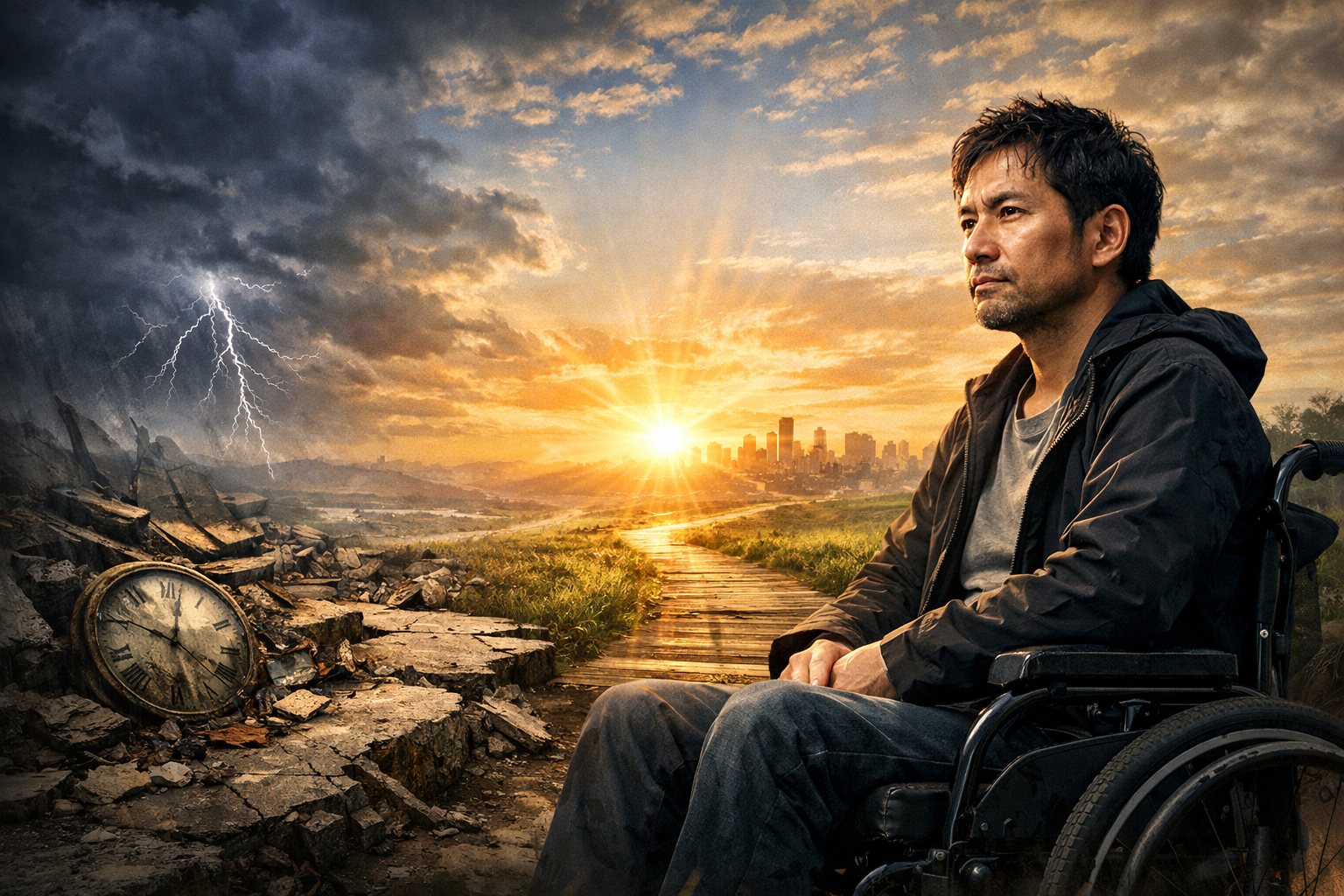
I’m a person with an acquired severe disability.
I know what it feels like when things you used to do suddenly become impossible.
That’s why stability matters so much to me.
So yes—when my blog finally made money, I was happy.
But at the same time, I thought:
“Will this last?”
Monetization looks like success.
But it’s also the beginning of a new phase.
Can I reproduce this result?
Can my life absorb fluctuations in income?
What happens if I can’t publish for a while?
The anxiety didn’t mean I was weak.
It meant something structural was missing.
I wasn’t afraid of failure.
I was afraid of instability.
2. The Surface Problem: “I Need More Pageviews and Followers”
On the surface, the problem seems obvious.
I need more pageviews
I need more followers
I need more traffic
I need more stable income
And the internet is full of advice:
Post every day
Follow trends
Optimize harder
Mass-produce content
Use AI to scale
Chase algorithms
I’ll be honest.
That advice made me feel suffocated.
Not because it’s wrong—but because it’s not designed for someone like me.
I don’t have unlimited energy.
I can’t rely on brute force.
So I realized something crucial:
I can’t win by volume. I have to win by structure.
3. The Hidden Problem: What I’m Really Afraid Of
Here’s the truth.
I’m not afraid of low pageviews.
I’m not even afraid of losing followers.
What I’m afraid of is this:
Not knowing why something worked.
One article performs well.
Revenue increases.
But I don’t know why.
That’s terrifying.
Because it turns blogging into gambling.
Every post feels like a bet
Failure feels personal
Publishing becomes stressful
I don’t want to pray for results.
I want to design them.
As a disabled person, I’ve always had to design my life:
Multiple income streams
Redundant systems
Backup plans
Energy-efficient routines
So I decided:
My blog needs the same philosophy.
4. The Root Problem: Blogging Is Not a Hit Game—It’s a Trust System
At its core, blogging is not about viral hits.
It’s about trust accumulation.
Here’s how sustainable blogs actually work:
A reader finds your site
They stay and read
They move to another article
They come back
They subscribe or follow
They eventually buy or support
When trust builds, traffic stabilizes.
When trust builds, revenue stabilizes.
Without trust:
Traffic spikes disappear
Followers leave
Income fluctuates wildly
Stability is not scale. Stability is depth.
And depth is where my blog shines.
5. Why My Blog Is Built for Stability (Not Virality)
I don’t run a content factory.
I run a life OS log.
My blog documents how I rebuilt my life after it broke:
Work
Money
Habits
Mental stability
Relationships
Social systems
This isn’t motivational fluff.
It’s practical survival design.
That means my blog grows differently:
Fewer viral explosions
More long-term readers
Stronger loyalty
Higher trust per reader
And that’s perfect.
Because I don’t need millions of readers.
I need the right ones.
6. The Three Pillars of Sustainable Growth
Sustainable blogging has three pillars:
1) Acquisition (New Readers)
SEO, social media, referrals.
2) Retention (Reading Depth)
Clear conclusions, strong structure, emotional resonance.
3) Circulation (Internal Movement)
Internal links, pillar articles, thematic clusters.
Most bloggers obsess over #1.
I focus on #2 and #3.
Because retention and circulation create stability.
7. How to Increase Pageviews Without Burning Out
The fastest way to grow pageviews is not publishing more.
It’s building a map.
That map is a pillar structure.
Step 1: Create 3 Core Pillar Articles
For example:
Self-care as a life system
Disability × work × society
Parallel life design (multiple supports, no single failure point)
Step 2: Connect Articles Emotionally
Not just “related topics,” but:
“If you’re afraid of the future, read this next”
“If you’re exhausted, start here”
Emotion-based navigation increases time-on-site and trust.
8. How Followers Actually Grow
Followers don’t grow from promotion.
They grow from perspective.
On social media, I don’t summarize articles.
I do this instead:
One sharp conclusion
One moment of realization
One open question
Example:
“If monetization made you anxious, you’re not weak.
You’re just missing a stability structure.
What does ‘stable’ really mean for you?”
People follow voices, not content dumps.
9. How to Stabilize Revenue Without Selling Your Soul
Unstable revenue usually isn’t about pricing.
It’s about broken pathways.
Affiliate articles fail when they’re isolated.
So I design paths:
Empathy article →
Structural explanation →
Practical guide →
Monetized solution →
Follow-up reassurance
This turns selling into support.
Support builds trust.
Trust builds repeat visits.
Repeat visits build stability.
10. A 90-Day Plan for Sustainable Blogging
Days 1–7: Audit
Top revenue articles
Top traffic articles
Find overlapping themes
Days 8–30: Build Pillars
Expand 3 pillar articles
Add internal links
Create two-way navigation
Days 31–60: Fix Social Entry Points
One-post template
Series format
No aggressive linking
Days 61–90: Rewrite, Don’t Add
Improve 10 old articles
Strong openings
Clear conclusions
Better internal links
Stability comes from improving assets, not exhausting yourself.
11. FAQ
Q: Isn’t publishing more the fastest way to grow?
Short-term, yes. Long-term, structure wins.
Q: Don’t I need lots of followers?
No. You need returning readers.
Q: What if I can’t publish consistently?
That’s exactly why you need evergreen, trust-based content.
12. Final Thoughts: Designing a Blog People Want to Support
I monetized my blog.
But life taught me this:
Anything can break.
That’s why I don’t chase numbers blindly.
Stability is not pageviews.
Stability is a system that survives fluctuation.
I choose to design, not gamble.
I choose depth, not noise.
I choose trust, not tricks.
And I believe this:
Blogs people support are not built on talent.
They are built on design.
That’s the path I’m taking next.


障害者雇用で「仕事を切り出す」だけでは足りない
――元課長・中途重度障害当事者が考える「人を活かす仕事の再設計」
障害者雇用で「仕事を切り出す」だけでは、本当の人材活用にはつながりません。健常者時代に課長を…
















コメントを残す