Reading the Finance Minister’s Denial and Japan’s Tax Future from the Perspective of Car-Dependent Rural Life
—
Introduction | “Taxing Even the Act of Driving?” — A Simple, Quiet Anger from Rural Life
Gasoline prices feel strangely high.
Electricity and food prices are also going up.
On TV they say, “Wages have risen a bit,”
but when you actually keep a household budget, it feels like things are getting tighter, not easier.
In the middle of all this, a word suddenly appeared in the news and on social media:
> “Driving distance tax”
Gasoline tax
Automobile tax
Weight tax
Mandatory + voluntary insurance
And on top of that, consumption tax
We are already paying this much just to own and run a car.
Then we hear:
> “There is a proposal to add tax based on how many kilometers you drive.”
If you live in a car-dependent rural area,
it’s only natural to feel, “You’ve got to be kidding.”
Because in rural, car-based society:
Commuting to work
Grocery shopping
Hospital visits
Driving parents or children to appointments
Almost everything is tied to getting in the car and driving.
In the middle of this, Finance Minister Katayama stated in the Diet:
> “The government is not specifically considering a driving distance tax.”
Some media outlets reported this as “good news for drivers,”
and on social media many people said they felt “relieved for now.”
But from the perspective of someone actually living in a car-dependent rural area,
how far can we really trust this “relief”?
Is it just “not now,” and will the discussion come back in a few years?
Once EVs increase and gasoline tax revenue drops, will they say,
“After all, we do need a driving distance tax”?
Under the banner of “fair road usage charges,” decided from an urban point of view,
will car owners once again be pushed to pay more?
In this blog, I’ll start from the assumption:
> “The driving distance tax has been denied for now. But that doesn’t mean the story is over.”
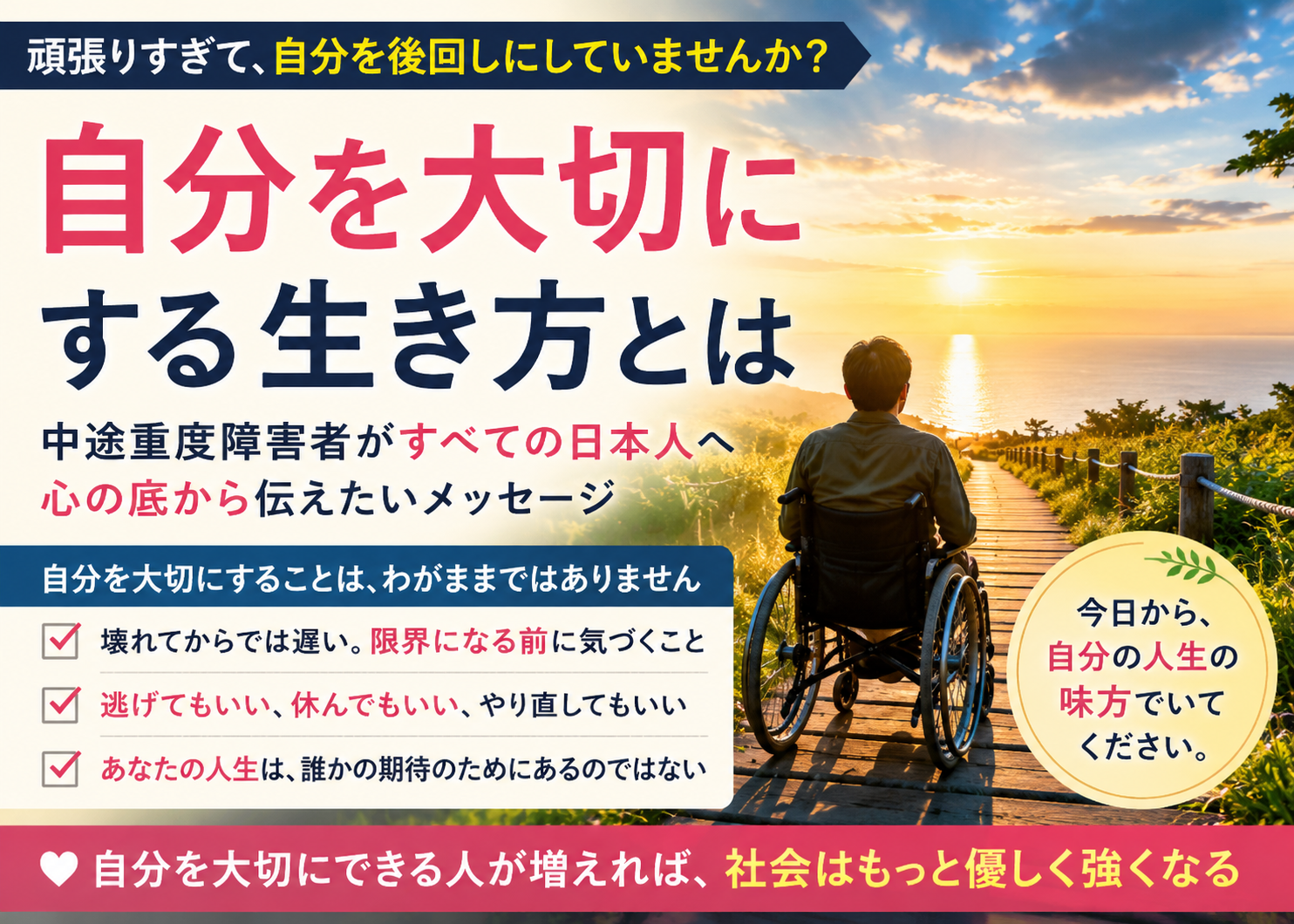
And from there, as a severely disabled, mid-career blogger living in a rural area,
I’ll try to unpack, with both a lived-experience lens and a structural tax lens:
What the driving distance tax actually is and why it feels so wrong
The gap between words and reality in Japan’s tax history
The Takai administration’s fiscal stance and what it could mean for car taxes
Practical steps that rural drivers can take, starting now
—
1|What Is a Driving Distance Tax?
— “Reasonable on Paper, Wrong in Real Life” from a Rural Car Society
1-1 In Simple Terms: How the Driving Distance Tax Works
“Driving distance tax” sounds like a complicated policy,
but the basic idea is surprisingly simple:
> A system that taxes you based on how many kilometers your car has driven.
Specific proposals often look like this:
Vehicle inspection method
At your periodic vehicle inspection, they check the odometer and say:
“You drove X km since your last inspection, so please pay tax for that distance.”
Telematics/communication method
A device in the car sends your driving data to a server,
and you are taxed monthly based on your driving distance.
GNSS (satellite) method
In the future, they might use telematics and satellite positioning
to track distance and routes even more accurately, then tax accordingly.
The typical “selling points” sound like this:
People who don’t drive much will pay less
Those who drive a lot will “fairly” shoulder more of the road maintenance costs
Even if gasoline tax revenue falls as EVs spread,
road funding can still be stably secured
If you look only at the numbers and logic,
some people might say, “That’s actually pretty reasonable.”
However, for those of us living in car-dependent rural areas,
this supposed “reasonableness” is very suspicious.
Because in reality, “driving at all” is the bare minimum requirement to live.
Workplace: 30 km one way, 60 km round trip → 300 km per week
General hospital: 40 km one way, 80 km round trip every visit
Supermarket and drugstore: 20 km round trip, each time by car
So if “more distance = more tax,”
it starts to feel very close to:
> “Charging a penalty for the act of staying alive.”
1-2 “Feels Like Edo-Era Rice Tax” — Why People React So Strongly
In motorcycle/car magazines and on social media,
some people describe the driving distance tax as:
> “Like Edo-era rice tax (land tax).”
This image is surprisingly accurate.
The more you cultivated your rice fields and harvested rice,
the more you had to give away as tax
The harder you worked to support your family,
the smaller your share became
In modern rural life, this translates to:
People commuting long distances because their jobs are far away
People driving constantly because they are caring for children or elderly parents
For them, the system would essentially say:
> “The more you drive to support your life, the more we take from you.”
On top of that, some driving distance tax ideas assume:
Collecting driving data using GNSS and telematics
That means potentially tracking:
Where you drive from and to
At what times you are on the road
Which routes you take
In other words, it creates a world where your movement history is stored in a semi-public way.
Behind the noble slogan of
“fair road usage charges,”
you can’t help but smell the beginning of a surveillance society.
That quiet but very real discomfort—
that is how the driving distance tax feels
to many rural drivers.
—
2|How Much Can We Trust the Finance Minister’s “We’re Not Considering It”?
Now let’s zoom in on the key point this time:
Finance Minister Katayama’s statement denying the tax.
I want to read it more carefully.
2-1 In the Short Term, It’s Actually Quite Trustworthy
I’ll start with my conclusion:
> If we’re talking about roughly the next 1–3 years,
it’s pretty safe to assume “the driving distance tax will not be introduced.”
Here are three main reasons:
1) The economy, prices, and household budgets are in terrible shape
Prices are high and not coming down
Electricity and food costs are rising
Very few people feel like their income is increasing enough to match
In such a situation, introducing a new car-related tax would almost certainly
cause a steep drop in approval ratings for the government.
2) A driving distance tax creates too many enemies at once
Rural, car-dependent households
The trucking and logistics industry
The tourism industry
The entire automotive industry
Bringing in a tax that antagonizes all of these parties
very early in a new administration offers almost zero political benefit.
3) Minister Katayama denied it not just procedurally, but in terms of values
He didn’t just say, “We’re not considering it,” in a dry, bureaucratic way.
He went further and said something to the effect of:
> “Cars exist to be driven. Taxing the distance they drive
just feels wrong, and I’ve heard that sentiment.”
This is more than a technical or procedural remark.
It reads like a value-based political message:
“Driving distance tax is not desirable.”
Putting all this together:
> “At least in the early phase of the Takai administration,
the chances of a driving distance tax being introduced are very low.”
That seems like a realistic assessment.
2-2 But It’s Not a “Lifetime Safety Guarantee”
However, if you look carefully at Minister Katayama’s words:
> “The government is not specifically considering a driving distance tax.”
It is clearly phrased in the present tense.
What this actually means is:
“At this moment, there is no formal project examining this.”
“There is no current process of designing concrete legislation.”
It does not mean:
“We promise never to consider this in the future.”
In political language in Japan, phrases like:
“We are not considering it at this time”
“There are currently no plans to do that”
“We are not conducting specific examinations at this point”
are standard expressions that keep the door open for future policy changes.
So, for those of us living car-dependent rural lives:
We can treat it as “short-term good news you can relax about.”
But at the same time, we should store it in our memory as
“one of the policy options that could come back later.”
Holding these two ideas at once is probably the most realistic stance.
—
3|Japan’s Tax History: The Gap Between “Words” and “Reality”
Now let’s pull our viewpoint back a bit
and look at Japan’s tax system history as a whole,
focusing on how words and reality often drift apart.
3-1 How “Temporary” and “Provisional” Taxes Become Permanent
The best-known example is, of course, the provisional gasoline tax rate.
It was originally introduced as a “temporary” or “provisional” surcharge
But extensions were repeatedly approved
Over time, it practically became just the “normal” tax rate
We’ve seen similar patterns with:
“Special” taxes
“Extraordinary” (one-off) taxes
They are introduced as something temporary,
but then they are tweaked and reshaped into something that sticks around for years or decades.
Many burdens that started with phrases like
“for now,” “just for the moment,” or “provisional,”
end up lasting for decades.
This is a very familiar pattern in the Japanese tax system.
3-2 “We’re Not Considering It” Is a Shield, Not a Guarantee
Another important point:
> “We’re not considering it” is a convenient shield for politicians,
but it is not a guarantee of safety for ordinary people.
For politicians, it has several advantages:
They can later say, “At that time, we really weren’t considering it.”
They can justify a policy shift by saying,
“Circumstances and public opinion have changed, so we are now considering it.”
But for us, what really matters is not:
> “Does this contradict what they said a few years ago?”
What matters is:
> “If this system is introduced,
what will it do to my daily life?”
When you calmly look at tax history:
Before consumption tax was introduced,
various similar ideas came and went
Environmental taxes and carbon taxes were also described as
“not being introduced at this time,” while
the discussions themselves never disappeared
Seen in this light, it’s reasonable to understand the current situation as:
> “Right now, they’ve clearly denied it.
But sometime in the future, the driving distance tax may be brought back to the table.”
That kind of cool, neutral understanding is probably healthiest.
—
4|The Takai Administration’s “Responsible Active Fiscal Policy”
and What It Might Mean for Car Taxes
Next, let’s look at the Takai administration’s fiscal stance
and where car-related taxes might fit into that picture.
4-1 Not a Pure “Raise Taxes and Cut Spending” Approach, But Not “No Burden” Either
The Takai administration has declared a policy of:
> “Responsible active fiscal management.”
Roughly speaking, this means:
Not going all-in on austerity and debt reduction by just cutting spending and raising taxes
Instead, using government bonds when needed to fund essential spending,
while still trying not to damage long-term fiscal sustainability
If you only look at the slogan, you might wonder:
> “So does that mean they won’t raise taxes?”
But things are not that simple.
Because there are unavoidable spending increases, such as:
Social security expenses driven by aging
Infrastructure repairs and disaster prevention investments
Responses to changes in the security environment
Given these, it’s very likely that
some form of additional burden will creep in over time.
4-2 Hidden Burden Increases: Social Insurance, Reduced Deductions, Local Finances
The problem is that this increasing burden may not come as a clear, visible
“X tax goes up by Y%.”
Instead, it may take more subtle forms, like:
Higher social insurance premiums
(health insurance, pension, long-term care insurance, etc.)
Gradual reduction of income tax deductions and credits
Changes in how grants and subsidies are distributed to local governments,
leading to tax increases or fee hikes at the municipal level
So even if the driving distance tax is shelved for now,
> “Total burden on households may not actually go down.”
That is the realistic concern.
This is why, as people living in rural car society,
we need to look not only at “car taxes,” but at our entire picture of:
> “How much real take-home income do we have after all taxes and social premiums?”
That’s the level at which we need to assess our situation.
—
5|The Structural Risks Built into Rural Car-Dependent Life
So far we’ve discussed taxes and politics,
but the root issue isn’t just policy—it’s structural.
5-1 Car Dependence Is Not a Personal Vice,
But the Result of Infrastructure Design
If you live in a rural area, you’ve probably heard comments like:
“You should just use public transport more.”
“Of course it costs more; rural areas are car societies.”
“Just switch to remote work.”
But reality often looks like this:
Trains are infrequent, and you need a car just to get to the station
Bus routes are cut back or cancelled; some areas see only a few buses a day
Shopping centers and hospitals are clustered in the suburbs,
with no shops or clinics within walking distance
In other words, rural car dependence is:
> Not the result of selfish lifestyle choices,
but the direct outcome of how infrastructure has been designed.
If you ignore this and just insist:
> “People should pay in proportion to how much they use the roads,”
you end up with a system that unfairly punishes rural residents.
5-2 Don’t Let It Be Reduced to Simple “Personal Responsibility”
From cities, people sometimes say:
“If you don’t want to pay, don’t rely on cars.”
“You chose to live in the countryside; that’s on you.”
“For the sake of the environment, car users should pay more.”
Yes, there is room for individual effort and ingenuity.
But there are always two distinct layers here:
> 1. Individual choices
2. The design of social infrastructure
In big cities with robust infrastructure,
people have many more choices than in areas where public transport has withered.
If we completely ignore this structural difference,
and only talk in terms of:
> “Those who drive a lot should pay more. That’s fair.”
then rural residents will always come out on the losing end.
So it’s crucial that rural voices keep stating:
> “Our car dependence is a consequence of how the country
and local governments designed infrastructure,
not just a matter of personal preference.”
And we need to keep saying this, calmly but firmly.
—
6|Even If the Driving Distance Tax Never Comes Back,
Other Things Can Still Happen
By now you might be thinking:
> “So if they just don’t introduce a driving distance tax,
we’ll be fine, right?”
Unfortunately, it’s not that simple.
6-1 Partial, Temporary Gas Tax Cuts
That End Up Prolonging the System
One scenario is:
Temporarily and partially lowering the provisional gasoline tax
But never fully abolishing it, effectively keeping the structure alive
For example:
The government offers a “temporary gasoline tax cut” as a measure against rising prices
But insists that permanent abolition is impossible due to revenue needs
In the short term, this kind of measure can be a relief.
Yet in the long run, we may find that:
> “Nothing fundamental has really changed.”
6-2 Stronger Carbon Pricing and Energy Costs
Another possible path is:
Instead of a driving distance tax,
strengthening carbon taxes or emissions trading schemes —
in other words, carbon pricing.
That would mean:
Framing it as “environmentally friendly tax reform,” while
In practice raising the cost of transport, logistics, and electricity
that depend on fossil fuels
In such a scenario, rural car society would again feel the impact through:
> Higher gasoline prices and electricity bills.
6-3 Heavier Taxes on High Income and Wealth
— Still Ending Up on the Backs of the Middle Class
There is also talk of:
Increasing taxes on high-income earners and the wealthy
Revising taxes on financial income and assets
At first glance, this might seem unrelated to rural car users.
But if, in reality,
Policymakers try to avoid hitting the wealthy too hard,
and instead maintain or expand broad-based taxes like
consumption tax or social insurance premiums,
then the result will be:
> “More burden once again on the middle class and ordinary households,
including those in rural areas.”
So even without a driving distance tax,
we can’t let our guard down about the overall direction of fiscal policy.
—
7|What Rural Drivers Can Do:
Small Forms of Defense and Gentle Pushback
I know this has all been pretty heavy so far.
But here’s what I really want to say:
> “Precisely because the situation is harsh,
there are small but meaningful things we can do.”
7-1 Make Your Car Costs Visible in Your Household Budget
The first step is very simple:
> Make your household’s total “car cost” clearly visible.
List out:
Monthly gasoline expenses
Annual automobile tax (divide by 12 for a monthly figure)
Weight tax + vehicle inspection fees (spread over 24 or 36 months)
Annual voluntary insurance (again, convert to monthly)
Average yearly maintenance costs
(tires, oil changes, repairs, etc.)
Add them all up and calculate:
> “How much do we spend per month just to own and use a car?”
Once you know that number,
you can start separating:
Truly essential driving (commute, school runs, hospital visits)
Driving that has grown out of habit
(unnecessary trips, scattered shopping that could be combined)
When you do that, you may notice:
Distance you can realistically reduce
Errands you can consolidate into fewer trips
Even small changes can add up significantly over a year.
7-2 Add Just One Non-Car Option to Your Life
Next, instead of aiming for some impossible “post-car” lifestyle,
set a much smaller, achievable goal:
> “Add just one new option that doesn’t rely on the car.”
For example:
Cut grocery runs from twice a week to once a week,
and use a list to avoid forgotten items
Use online supermarkets or home delivery for heavy items
Check if any local hospitals or clinics offer online consultations
Talk to your employer about trying work-from-home
even one day a month
Use a bicycle or walking for very short trips, if your health allows
Even these small changes reduce your annual driving distance a bit.
Whatever happens with future taxes,
these steps help you move toward a life that is:
> “Not completely at the mercy of the car.”
7-3 Learn to Read Tax News as “System Blueprints”
Lastly, the most important thing in my view is:
> Change the way we read news about taxes.
Instead of only reacting to:
“Is this a tax hike or a tax cut?”
“Is this a new tax or not?”
shift the question to:
From whom and how much is money being taken?
To whom and how is it being redistributed?
How are burdens and benefits distributed between
cities and rural areas,
young and old,
workers and pensioners?
How will this policy affect my own life—
especially transportation, healthcare, and welfare?
When you start looking at tax news as a “system blueprint” instead of
a simple “good/bad” label, you gradually develop:
> A better sense for what is dangerous and what might help.
That sense—
a kind of “political nose”—
helps when you:
Write to your local representatives
Post your thoughts on social media or your blog
Decide who to vote for in elections
It lets you act not based on vague feelings,
but on concrete reasoning.
That, in itself, is a powerful form of everyday defense and gentle pushback.
—
8|Conclusion | Choosing a Society That Doesn’t Punish the Act of Driving
I am a person who acquired a serious disability mid-life.
Walking freely or using public transportation easily is difficult for me.
For someone like me, living in a rural area,
“cars on the move” are not a luxury but:
A way to get to work
A lifeline to reach

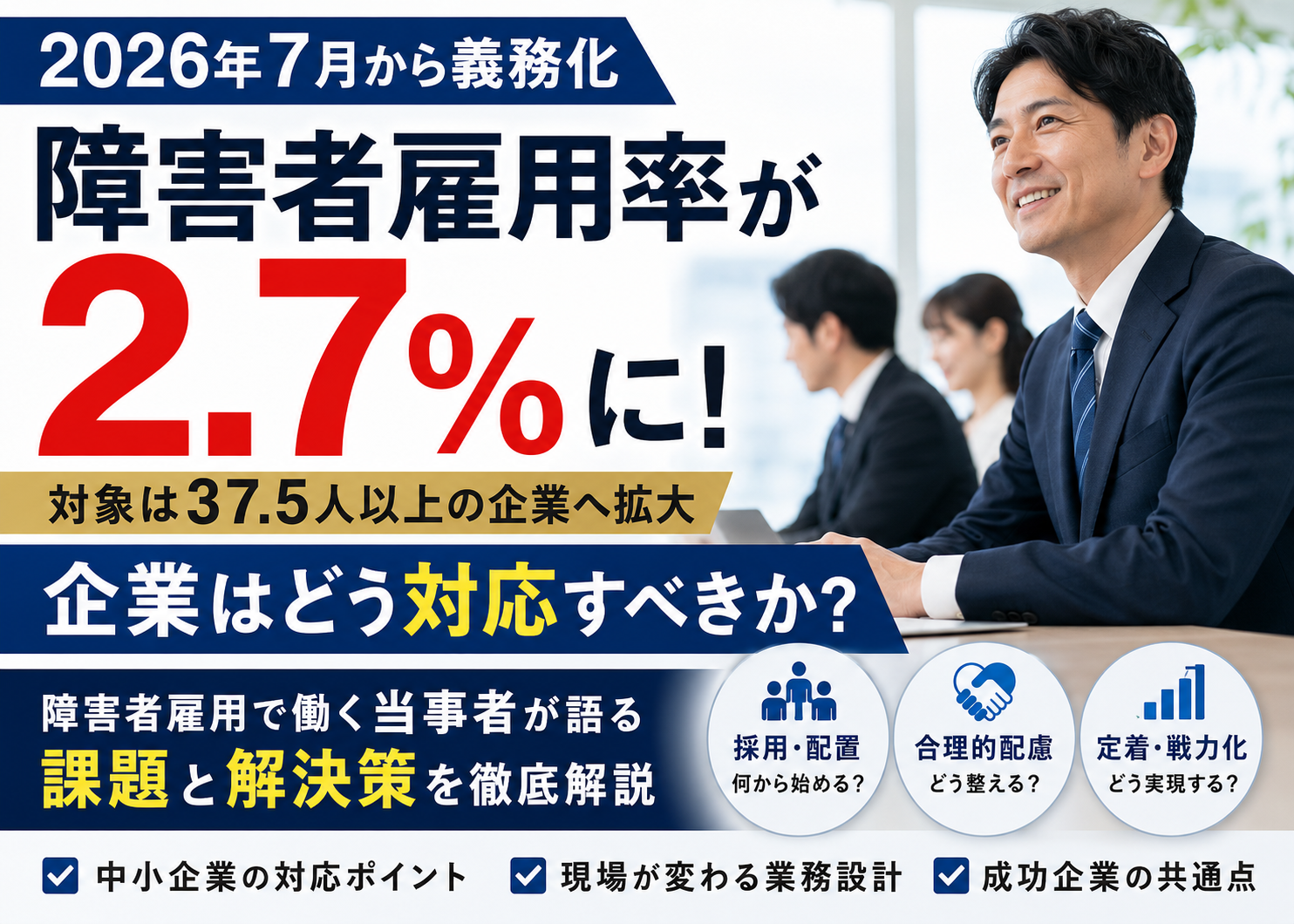
障害者雇用で「仕事を切り出す」だけでは足りない
――元課長・中途重度障害当事者が考える「人を活かす仕事の再設計」
障害者雇用で「仕事を切り出す」だけでは、本当の人材活用にはつながりません。健常者時代に課長を…
















コメントを残す