Meta Description (120–160 chars)
Scripture-less Shintō is strong precisely because it’s “unfinished.” Through harai, yorishiro, seasonal rites, and kotodama, it synchronizes people with nature as a life OS. Includes a 1-minute prayer and 72h/7d/90d templates from a disability-aware lens.
Suggested Slug (URL)
/shinto-incomplete-operating-system
Primary Keywords
Shintō, harai (purification), yorishiro, seasonal rites, kotodama, chinju-no-mori, shinbutsu-shūgō, life OS
LSI Keywords
Two bows–two claps–one bow, kekkai (boundary), torii, Niiname-sai, Toshigoi (Kinen-sai), Ōharae, sando, requiem, watershed, infrastructure, accessibility, disability
OG Image alt
A misty shrine grove and torii. In soft morning light the path fades into the distance; only the hush remains.
—
TL;DR (3 lines)
1. Shintō is strong because it’s unfinished—it syncs people with nature not by doctrine but by place and procedure.
2. Harai, boundaries, yorishiro, seasonal rites, and kotodama are life protocols (an OS) anyone can run.
3. With a one-minute prayer and 72h/7d/90d templates, it’s implementable today—even with physical limitations.
—
Table of Contents
1. Beyond System to Operation: Reading Shintō as a Life OS
2. In Counterpoint to Buddhism: Towers of Logic / Protocols of Place
3. The Engineering of Harai: Recovery for Reversible, Semi-Reversible, and Irreversible States
4. Designing Boundaries: Torii, Sando, and Chinju-no-Mori as Environmental Interfaces
5. Kotodama & Gesture: Two Bows–Two Claps–One Bow as a Minimal API
6. The Invention of Yorishiro: Mirror / Stone / Tree / Boat as Converters
7. The Water Calendar of Annual Rites: Kinen-sai / Niiname-sai / Ōharae
8. The Use of Mystery: Leaving Explanation, Inviting Participation
9. Modernity & Folk Layers: From State Hardening to Postwar Softness
10. Rediscovering the Smallest Prayer with a Disabled Body
11. Urban Prayer / Watershed Prayer: Shrines as Civic Infrastructure
12. Life Implementation Templates (72h / 7d / 90d + One-Minute Prayer)
13. Nigihayahi: A Myth of Transport and Landing as Operational Design
14. FAQ
15. Conclusion: Keep Tending the Unfinished
—
1) Beyond System to Operation: Reading Shintō as a Life OS
Within Japan’s religious culture, Shintō is remarkably “thin.” With almost no binding scripture or heavy doctrine, it’s often called “unsystematized.” Yet that thinness is not a weakness but a flexibility. Shintō is a set of operational protocols—short verbs like purify, offer, bind—that lightly connect us to terrain, seasons, communities, and family history.
This thin OS can be stronger on the ground than thick theory. Precisely because it’s light, anyone can run it, anywhere, starting today.
—
2) In Counterpoint to Buddhism: Towers of Logic / Protocols of Place
Buddhism: structures the inner world (shining theory on dukkha, impermanence, non-self).
Shintō: connects to the outer world (procedures for plugging into place, season, and community).
This isn’t a clash but layered roles. Japan’s long practice of shinbutsu-shūgō (Shintō-Buddhist syncretism) paired inner tuning (Buddhism) with outer interfacing (Shintō)—a cultural optimum that raised the resilience of everyday life.
—
3) The Engineering of Harai: Recovery for Reversible, Semi-Reversible, and Irreversible States
At Shintō’s core is harai (ritual purification). Its essence isn’t punishment or expulsion but recovery.
Reversible: dust, distraction, minor disorder → initialize with cleansing.
Semi-reversible: relational tangles → re-wire through gifts, gratitude, offerings.
Irreversible: bereavement, calamity → create a new order via requiem, transfer, re-enshrinement.
Seasonal Ōharae is a system-wide scheduled maintenance. When individuals, households, and neighborhoods reset together, society achieves synchrony.
—
4) Designing Boundaries: Torii, Sando, and Chinju-no-Mori as Environmental Interfaces
Torii: a declaration of boundary that toggles our perceptual resolution.
Sando (approach path): a deceleration lane that lowers speed and deepens breath.
Chinju-no-Mori (shrine grove): a physical interface that tunes sound, heat, wind, and water.
The shrine is not only devotional architecture—it’s where environmental engineering, landscape, and civil works meet. Prayer is inseparable from maintenance of the physical environment, not merely a psychological technique.
—
5) Kotodama & Gesture: Two Bows–Two Claps–One Bow as a Minimal API
The sequence two bows, two claps, one bow is a minimal API of “posture → synchronization → closing the connection.”
1. Bow: lower the center of gravity; align the axis.
2. Claps: sound zeros the space and triggers synchronization.
3. Bow: close the connection and settle the resonance.
Because it’s variable-length, it can be substituted with gaze, breath, and fingertips when speaking or standing is difficult. Shintō is designed for compatibility.
—
6) The Invention of Yorishiro: Mirror / Stone / Tree / Boat as Converters
The divine is everywhere, yet we humans need handles to pray. Enter the yorishiro—a temporary seat for presence.
Mirror: an unmarked other / a face of the self.
Stone: an axis of unchanging time.
Tree: an axis of change and growth.
Boat: a metaphor of transport, transfer, and operations.
By refusing over-explanation, Shintō allows each locale and household to optimize. This is a high-level design of abstract ↔ concrete conversion—Shintō’s quiet genius.
—
7) The Water Calendar of Annual Rites: Kinen-sai / Niiname-sai / Ōharae
Life on the archipelago runs on water cycles.
Kinen-sai (Toshigoi): prayer for seeds and water—boot.
Niiname-sai: harvest synchronization—commit.
Ōharae: offloading defilements—garbage collection.
Before it’s “religion,” this is a watershed operation engraved in bodies through time design.
—
8) The Use of Mystery: Leaving Explanation, Inviting Participation
The Kojiki and Nihon Shoki leave contradictions and gaps. That’s not neglect—it’s an invitation.
Not-knowing summons dialogue and participation, enabling many local deities to coexist. Mystery protects the editing rights of communities.
—
9) Modernity & Folk Layers: From State Hardening to Postwar Softness
Modern “State Shintō” hardened a soft OS into a rigid institution. After the war, Shintō revived as the breath of living—through village festivals, household kamidana, and local groves. What we ought to recover is not a state religion, but the micro-protocols that fill the last two centimeters of daily life.
—
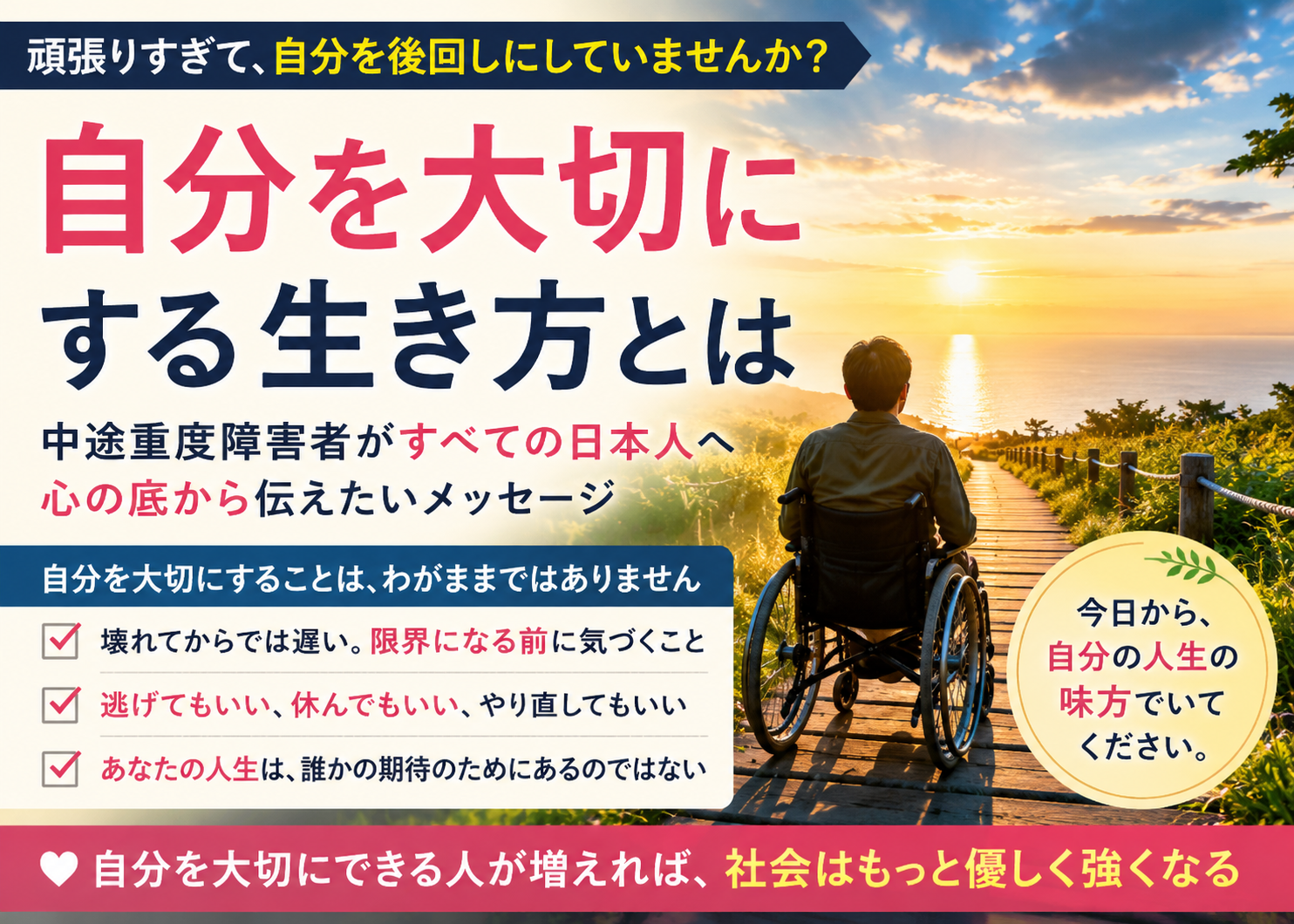
10) Rediscovering the Smallest Prayer with a Disabled Body
After acquiring a severe disability, I pared prayer down.
If I cannot stand, I sit; if clapping is hard, I layer my fingertips.
I walk half the approach; the rest I cover with breath.
Coins can be small; I “offer” care at home—a corner cleaned, a frame wiped.
Shintō is not “for the able.” Its core is substitutability—a design of kindness that holds any body as it is.
—
11) Urban Prayer / Watershed Prayer: Shrines as Infrastructure
In cities, shrines anchor evacuation, assembly, and green. In watersheds, groves perform storage, windbreak, and ecological corridors. The UI of bringing hands together routinely returns attention to water, electricity, and food. Prayer is also a protocol of civic infrastructure maintenance.
—
12) Life Implementation Templates (72h / 7d / 90d + One-Minute Prayer)
72 hours (urgent / short-term)
Entrance harai: wipe doorknobs and floor (5 min).
Aligned boundary: line up shoes; fix the home spot for your bag.
Kotodama log: note three words of gratitude today.
7 days (weekly)
Five-minute visit to the nearest shrine; or, if difficult, step to the balcony and face the sky.
Offering substitute: pick up one piece of someone else’s litter.
Ancestor pin: say one family name aloud (or inwardly if voice is hard).
90 days (seasonal)
Ōharae-at-home: write what to release on paper; tear and let it go.
Cycle check: Water (stock & rotation) / Electricity (outage kit) / Food (rolling stock).
Photo care: wipe a frame; add one date or note.
One-Minute Prayer (anyone, anywhere)
1. Posture: seated is fine; just let the spine stand.
2. Breath: exhale 3 sec / inhale 2 sec × 3 sets.
3. Words (silent is fine):
“Thank you, for this” — one concrete item.
“Please protect” — name yourself and someone.
“I’ll tend later” — declare one tiny act of care after returning home.
4. Gesture: soften your gaze for a small bow → a silent fingertip clap → a closing bow.
> Cross-denominational, ability-inclusive, place-agnostic. Free and ready now.
—
13) Nigihayahi: A Myth of Transport and Landing as Operational Design
“Nigihayahi descended in a stone boat.” Read as allegory, it teaches how to transplant ideas or institutions without breaking the host.
Load provenance onto things (boat = protocol).
Prepare the landing site (boundary, welcoming rite).
Make it stick through operations (localize procedures).
Don’t force change; land it by sequence. This maps cleanly onto community or workplace rollouts and consensus.
—
14) FAQ
(omitted)
—
15) Conclusion: Keep Tending the Unfinished
Shintō isn’t a religion of explanation but of involvement.
Thin doctrine invites thick participation; variable procedures embrace each body.
Mystery opens the editing rights of the commons; seasonal synchrony raises society’s recovery capacity.
I still can’t walk the whole approach. I walk half, and let breath carry the rest.
Prayer asks not for perfection, but for continuance.
To keep tending what is unfinished—that is the gentlest way I know to handle the relationship between nature and people at a high level.
















コメントを残す