> “Disabled people get to take it easy, must be nice.”
That one sentence erased my body, my daily routines, the relationships I carefully built, and the design for living I’ve been refining just to keep going.
Since I became disabled, I have lived every minute, every second, without letting my guard down, as if my life depended on it. That is not a metaphor. If I fall, I might break a bone. If I break a bone, I might be hospitalized. If I’m hospitalized, I can’t work. If I can’t work, that affects my household and my marriage. So I can’t say, “Eh, it’s fine today.” The smallest bit of overexertion can bounce back later many times over.
But from the outside my life sometimes looks like this: I go home a little earlier. I can sit in a café on a weekday. I get to work from home. I got remarried. And so, to some people, I “seem” to be having it easy. That’s why I’m writing this.
Because looking like you have it easy and actually being carefree are two totally different things.
—
Table of contents
1. What this article wants to say
2. The 4 assumptions hidden inside “must be nice for disabled people”
3. What you don’t see is not “free time” — it’s “prep and recovery”
4. Working with left-side hemiplegia means every day is an experiment
5. Remarrying does not mean “life is easy now”
6. Why cafés and slow walks after rehab look like leisure
7. What I really mean by “I’ve lived every minute with my life on the line”
8. A request to society — don’t zero-out invisible effort
9. To fellow disabled people — you are not slacking, you’re living carefully
10. SEO-style FAQ
11. Conclusion: this is not an attack, it’s an explanation
—
1. What this article wants to say
Let me make the goal clear first, especially for people who landed here through a search.
To show concretely why “it’s easier for disabled people” is such a hurtful statement
To put into words how much a “one-side-doesn’t-move-well” disability like left-side hemiplegia forces you to redesign your whole day
To make the invisible labor of working / remarrying / staying socially connected with a disability visible
To share what to look for if you’re a family member or employer who wants to support someone without smothering them
To leave words disabled people can use to say, “I’m not being lazy”
In keyword terms, this is for people who search things like:
“disabled people have it easy”
“disabled people look carefree”
“invisible disability at work”
“working with left-side hemiplegia”
“remarriage with disability”
“disabled person misunderstood”
That’s the audience I’m imagining.
—
2. The 4 assumptions hidden inside “it’s easier for disabled people”
When people say “must be nice,” there’s usually an unspoken chain of thoughts behind it:
1. Disabled = works less
2. Works less = less responsibility
3. Less responsibility = lighter mental load
4. Lighter mental load = easier life
Those four steps get bundled together and come out as “must be nice.”
But in real life, it’s almost the exact opposite. Many of us:
May have shorter working hours, but we spend more time just to be able to work at all
Because of lower physical capacity, we need to design how we take responsibility so we can keep doing it
Since we monitor our mind and body all day long, our mental load is actually higher
Because “if I mess up today, tomorrow collapses,” our life design becomes stricter, not looser
In other words, “less volume” does not equal “easy.” If you don’t get that, disabled people will forever be treated as “the people taking it easy,” and we will forever have to keep explaining, “No, that’s not what’s happening.”
—
3. What you don’t see is not “free time” — it’s “prep and recovery”
This is the part most people miss.
> Disabled people are not “resting.”
They are “preparing so they can work” and “recovering from having worked.”
Take commuting. If an able-bodied person starts work at 9:00, they might get up at 7:30 and still be okay. If I with hemiplegia want to start work at 9:00, I have to:
Check my condition (spasms, tight muscles, after-effects of bad sleep)
Morning rehab (to secure range of motion, wake up the paralyzed side)
Check bags (can I carry this one-handed? will it get heavier on the way back?)
Check the route (steps? slippery because of rain?)
Check that day’s task load (put heavy tasks at my energy peak)
So before I even leave home, I’ve already done an hour’s worth of invisible work.
And when I get back home, it’s the same: fatigue comes late, so I have to stretch, warm, manage pain. That has to be counted as part of “work,” or else people will just say, “Lucky you, you get to go home early.”
In SEO words, this section answers searches like:
“why disabled people go home early”
“why telework is necessary for disabled workers”
“why disabled people get tired easily”
It’s exactly the part so many of us say is “hard to explain.”
—
4. Working with left-side hemiplegia means every day is an experiment
Left-side hemiplegia doesn’t always mean “totally unusable.” Often it means “I can use it, but it’s slower / unstable / more tiring.” That means:
Right side: speed, dexterity, compensation
Left side (affected): slow, fatigues quickly, poor grip
Core: corrects asymmetry, keeps balance
Mind: monitors all of that constantly
That is permanent multitasking.
To do that in a workplace, you need even more tricks:
Switch to files that open one-handed
Move PC and phone to the right
Change layout so you don’t have to carry heavy binders yourself
Ask your boss to avoid putting very heavy meetings in the late afternoon
Add buffer time to movement so you can avoid stairs/crowds
All of that is because I want to keep working. Not because “I don’t want to do anything.” I’m making it look easy so I can keep going. Workplaces that understand this can keep disabled staff for a long time. Workplaces that don’t will say “I guess it just doesn’t work here.”
In keyword terms, this connects to:
“hemiplegia work adjustments”
“hemiplegia workplace understanding”
“job design for disabled employees”
“how to retain disabled workers”
—
5. Remarrying does not mean “life is easy now”
I remarried after becoming disabled. That was a huge gift. But from the outside, it sometimes turns into:
> “If you could remarry, it can’t be that hard, right?”
Again, people are only looking at what’s visible. The truth is: I worked really hard to make myself someone you can actually live with. To not dump too much on my partner, I:
Stabilized my way of working
Wrote down clearly what housework I can do
Learned to explain my “ups and downs”
Organized my rehab/clinic schedule so it’s shareable
I did all that so someone could think, “Yes, I can live with this person.”
This is actually a marriage that requires more careful design than when I was able-bodied.
If I want to say to my spouse, “I’m a bit tired today, can I rest first?” it helps if I can explain why I’m tired. So I log my condition. I learn which day of the week my energy drops. I explain what movements trigger spasms. This is not “taking it easy,” it’s work I do so the relationship doesn’t break.
So this part also answers things like:
“marriage with disability actual realities”
“how to reduce partner burden disability”
“remarrying with disability what to prepare”
—
6. Why cafés and slow walks after rehab look like leisure
A weekday café stop, a slow walk after rehab, a mid-day lunch — all of that looks… leisurely.
But actually it’s:
> “If I don’t do this part, tomorrow will break.”
So it’s recovery brought forward.
With a disability, fatigue often comes late. If I push hard in the morning, I might crash late afternoon or at night. Then the next day’s work suffers. So I deliberately slow down in the middle. I uplift my mood. I lower muscle tension. When I do that, people say, “Must be nice.” But if I don’t do that, I literally won’t be able to keep working.
So it is not “a relaxed life.” It’s “time that protects my ability to participate.”
When society gets that, conversations about telework and shorter hours get much healthier.
—
7. What I really mean by “I’ve lived every minute with my life on the line”
When I say this, I’m not trying to sound dramatic. It’s because, after disability, even tiny carelessness can turn into this chain:
fall → fracture → hospitalization → work stops → life destabilizes
Holding an umbrella and a bag in the rain
Going up/down stairs without using the handrail
Not shielding my left side in a crowd
Cooking while tired and dropping a pot
For an able-bodied person that’s “whoops, that was close.”
For me it can be life-scale. So I:
Don’t overdo it
Rest when it’s time
Change tools
Change the layout at home
Move schedules forward
Each tiny move like that is “putting my life on the line.” Not because it’s “cool,” but because otherwise I can’t protect my family.
—
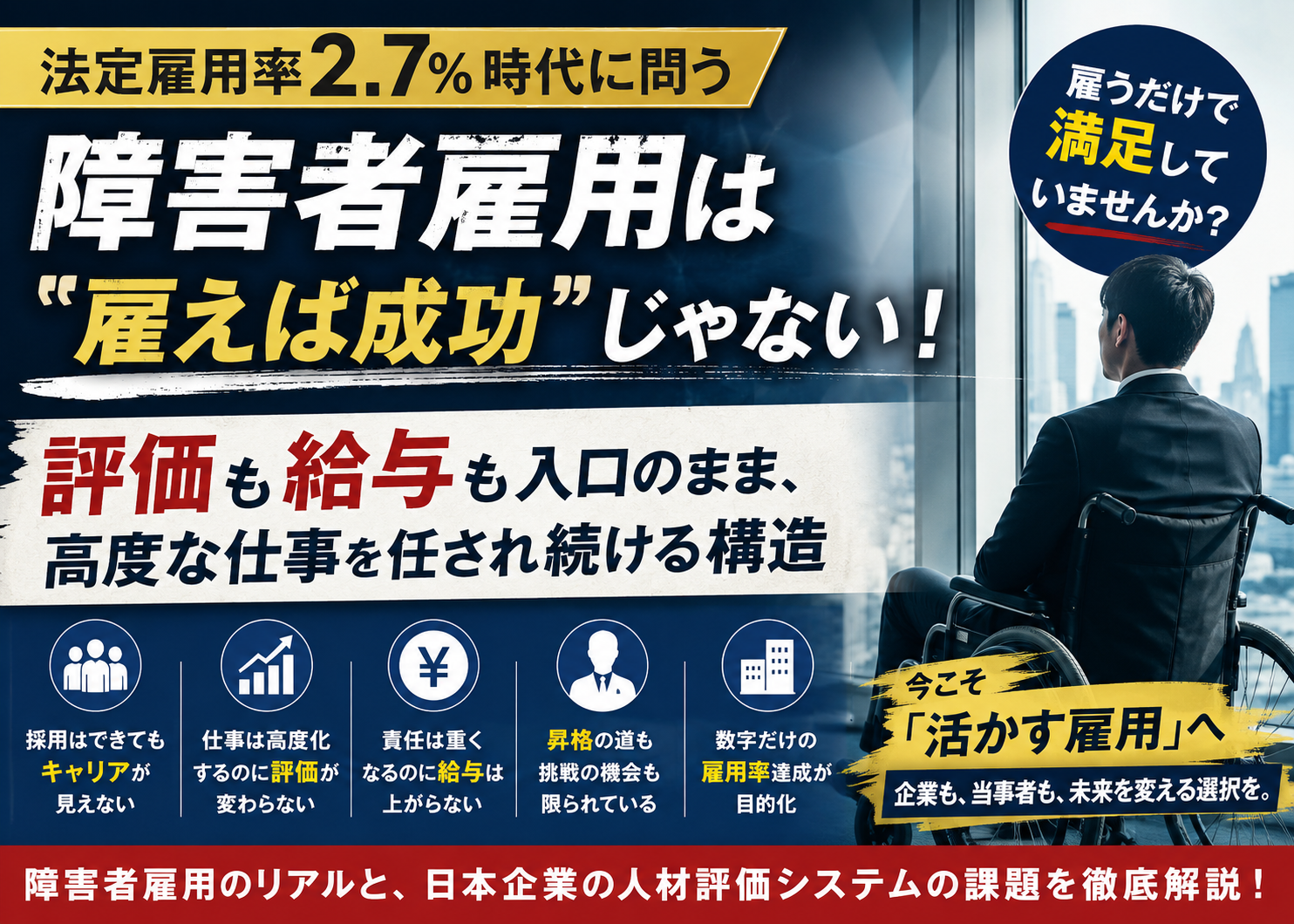
8. A request to society — don’t zero-out invisible effort
If you’ve read this far, I have one request.
> Please assume that in the parts you can’t see, this person is trying very hard.
If you do that,
“I’m leaving early” becomes “oh, they’re adjusting for tomorrow,” not “slacking”
“I’ll work from home today” becomes “that way they can keep working,” not “they’re getting a privilege”
“Weekday café” becomes “recovery time,” not “spoiling themselves”
And that alone will raise participation by disabled people. Because the “cost of explaining” goes down. Explaining itself takes energy and time. If you always have to talk as if no one will get it, you stop going out. That’s bad for society too.
So if you hire disabled people, live with them, or live nearby, please, don’t treat invisible effort as zero.
Just doing that allows us to work more, pay more tax, and be kinder to our families.
—
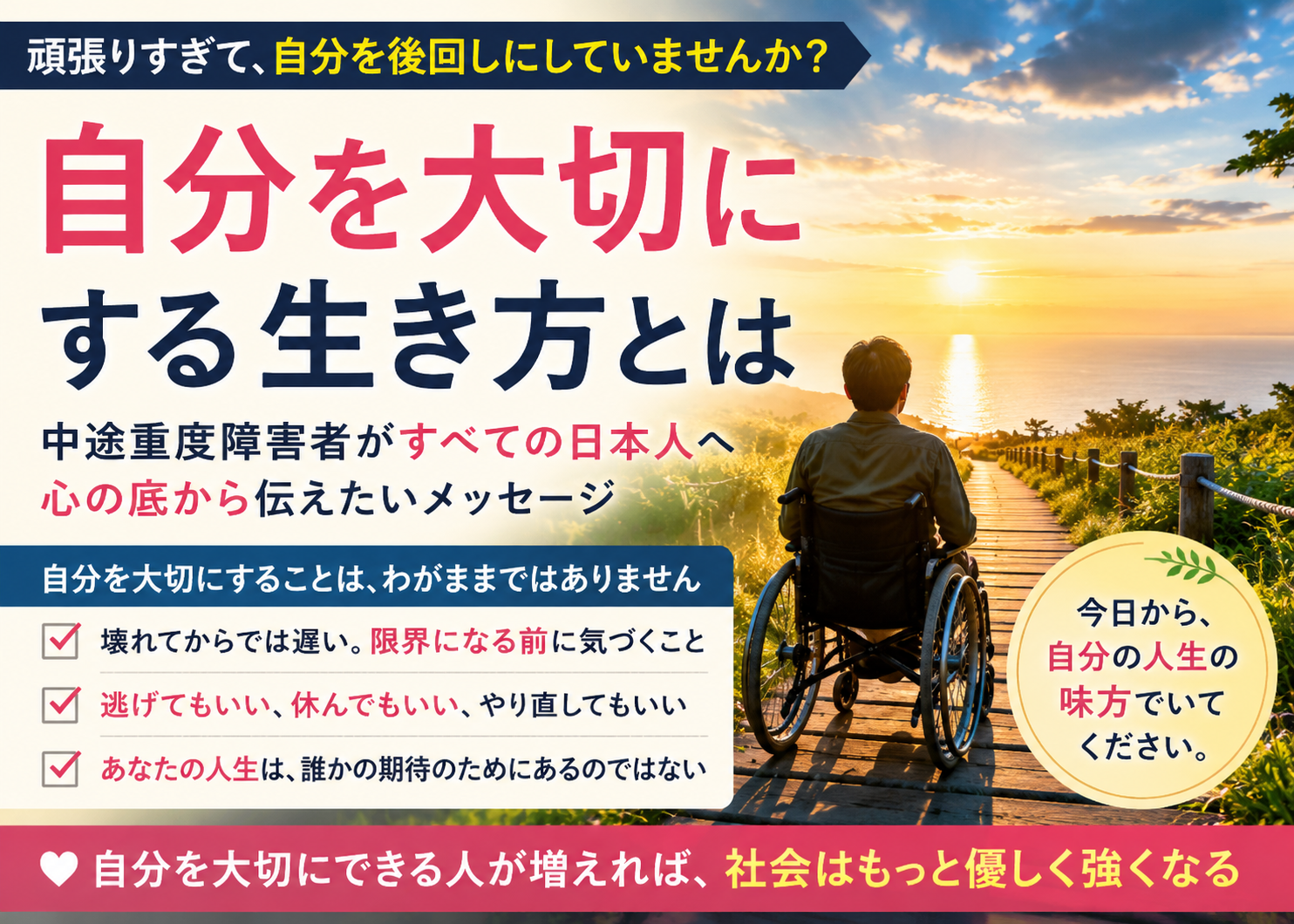
9. To fellow disabled people — you are not slacking, you’re living carefully
Now a word for people who’ve been hurt by the exact same line.
Taking a break in the middle of the day does not mean you’re lazy
Going home early does not mean you’re incompetent
Doing a lot of telework does not mean you’re avoiding work
Getting help from family does not mean you’re spoiled
You are simply living in a way that won’t make you crash.
When someone says, “You look like you’ve got it easy,” translate it like this in your head:
> “It looks that way because I’ve been adjusting everything every day.”
That is something you can be proud of. You’re not taking the easy way out — you’re designing your life.
—
10. SEO-style FAQ
Q1. Isn’t shorter working time for disabled people just preferential treatment?
A. No. It’s a condition for long-term employment. Working full time for 1 month and then collapsing for 3 months is worse for the company and the person than working shorter hours for 12 months. Companies that get this are the ones that can actually keep disabled staff.
Q2. Why do people who “look fine” say “I get tired easily”?
A. Because with hemiplegia and internal disabilities, other parts of the body are constantly over-working to compensate. They look fine because they planned it that way, but their actual energy tank is often low.
Q3. I get annoyed seeing disabled people in cafés or traveling on weekdays…
A. That’s just because your mind links “rest = easy = not working.” With disability, “going out to recover” or “eating out to protect mental health” is part of staying employed. Cut that, and the working days themselves decrease.
Q4. As family, what’s the best way to help?
A. Make it normal to ask, “How much energy do you have left today?” If the person can say “60% today” or “only 20% today” without being blamed, that’s the biggest support. Not being blamed for telling the truth is what makes living together possible.
Q5. What should I ask my workplace for?
A. Shorter routes, fewer steps, no heavy meetings late afternoon, an option to work from home. Those four alone can drastically change the performance of someone with hemiplegia. Frame it not as “make it easy for me” but as “set me up so I can keep contributing.”
—
11. Conclusion: this is not an attack, it’s an explanation
When someone says, “Must be nice, disabled people get to take it easy,” it stings.
But honestly, I don’t want to attack that person. Most people simply don’t know how much of a disabled person’s life is made of invisible labor.
Since I became disabled, I have lived every minute, every second, without letting my guard down. I kept working. I remarried. I did everything I could to stay connected to society. I didn’t do it to be pampered. I did it so that tomorrow I could still show up as a person.
If this post helps even one person lower the “cost of explaining” in their own daily life, I’m happy.
And if someone who once said that line reads this and next time thinks,
> “Hmm, maybe this person is working hard in ways I can’t see,”
then that’s already success.
We are not taking it easy.
We are just living carefully.

















コメントを残す