✅ Meta Description (within 155 characters)
Is Japan’s parliamentary cabinet system truly the optimal form of democracy? A person with a disability critically examines the structure and spirit of Japanese politics.
—
SEO Keywords (naturally embedded throughout the article)
parliamentary cabinet system problems
limitations of Japanese democracy
what is parliamentary democracy
political participation of people with disabilities
voice and representation
systemic exclusion
redesigning political systems
technology and democracy
inclusive governance
democratic legitimacy
—
Table of Contents
1. Introduction: When You Feel Unwelcome in the System
2. What Is the Parliamentary Cabinet System?
3. Why Is It Considered “Optimal”?
4. The Flaws and Limits of Japan’s Parliamentary Cabinet System
5. The Structure of Exclusion Seen from Outside the System
6. What Democracy Really Means
7. What We Can Learn from Other Countries
8. Technology’s Role in Expanding Democratic Participation
9. Systems Should Be Tools—Not Masters
10. Conclusion: Questioning Is the Essence of Democracy
—
<a name=”section1″></a>
1. Introduction: When You Feel Unwelcome in the System
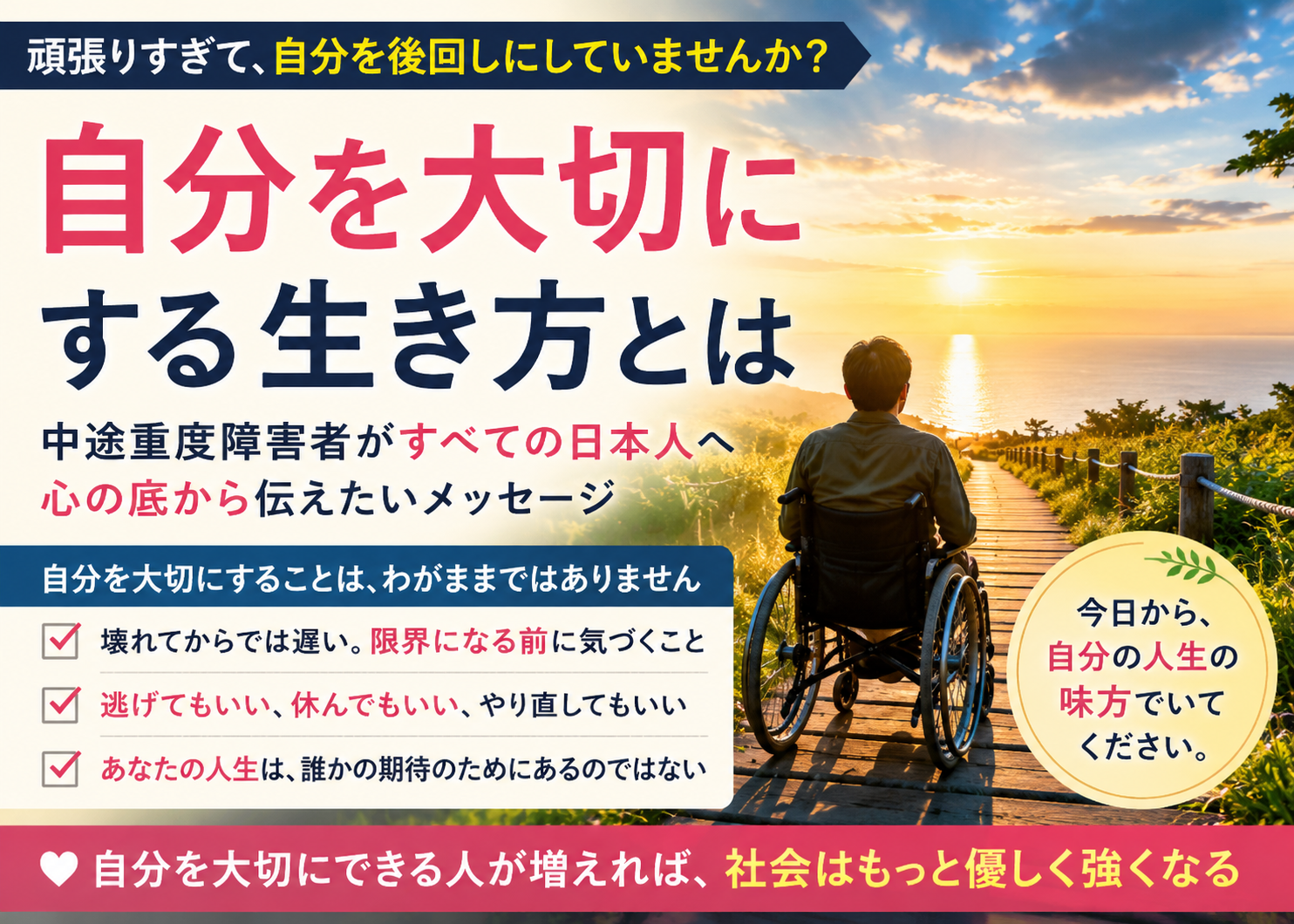
After acquiring a severe disability in adulthood, I began to see the “gaps” in society—especially in the systems we’re told are designed for all.
Voting, government services, policy-making, national debates—none of these seemed truly accessible to someone like me.
So, I started asking a fundamental question:
> “Is the parliamentary cabinet system really the most suitable model for today’s Japan?”
This blog post is not a critique from the outside, but a heartfelt inquiry from someone forced to live outside the margins of the system.
—
<a name=”section2″></a>
2. What Is the Parliamentary Cabinet System?
Let’s begin with a simple explanation.
Definition
In a parliamentary cabinet system, the executive (Prime Minister and Cabinet) is elected by and accountable to the legislature (Parliament), which is in turn elected by the people.
Features
The Prime Minister is chosen from the majority party in Parliament.
The Cabinet is collectively responsible to Parliament and can be dismissed by a vote of no confidence.
Legislation and administration are closely linked, enabling faster policy implementation.
In Japan
The ruling party often dominates both the legislative and executive branches.
The system encourages “Cabinet-centered” governance.
This leads to top-down decisions and potentially marginalizes opposition or minority voices.
—
<a name=”section3″></a>
3. Why Is It Considered “Optimal”?
Strengths Often Cited
Efficiency: Legislation can be passed quickly.
Accountability: The Prime Minister must maintain Parliament’s trust.
Stability: Majority governments are more stable than divided ones.
But Is That Truly Democratic?
Efficiency does not always equal fairness.
When one party dominates Parliament and Cabinet, and minority voices go unheard, the legitimacy of “democracy” is weakened.
—
<a name=”section4″></a>
4. The Flaws and Limits of Japan’s Parliamentary Cabinet System
1. Wasted Votes and Representation Gap
Under the single-member district system, a party winning 40% of votes can end up holding 60% or more of the seats.
2. Strong-Arm Politics
With a strong majority, the ruling party can pass laws without serious debate, turning Parliament into a rubber stamp.
3. Bureaucratic Control
In practice, unelected bureaucrats often wield more influence than elected officials. This undermines democratic accountability.
—
<a name=”section5″></a>
5. The Structure of Exclusion Seen from Outside the System
As a person with a disability, I’ve experienced many moments of exclusion:
Polling stations are not wheelchair accessible.
Disabled lawmakers face procedural barriers just to speak.
Political discussions rarely include people like me.
Democracy should be a system that welcomes everyone, not just the “able-bodied majority.”
—
<a name=”section6″></a>
6. What Democracy Really Means
Democracy is more than elections and majority rule.
It is about recognizing and protecting minority voices.
As Alexis de Tocqueville Said:
> “The greatest threat to democracy is not tyranny—but indifference.”
When people believe their voices won’t make a difference, they fall silent.
That silence weakens the democratic process far more than any single bad policy.
—
<a name=”section7″></a>
7. What We Can Learn from Other Countries
Country System Type Notable Feature
UK Parliamentary Strong tradition of debate and accountability
Germany Parliamentary (with constructive no-confidence) Emphasizes stability
USA Presidential Strict separation of powers
France Semi-presidential Power is divided between President and PM
Switzerland Direct democracy Frequent referendums
There is no one-size-fits-all democracy.
Each nation tailors its system to its culture, history, and citizen maturity.
So why can’t Japan do the same?
—
<a name=”section8″></a>
8. Technology’s Role in Expanding Democratic Participation
Modern technology offers exciting possibilities:
Blockchain voting: Secure, tamper-proof ballots.
AI policy explainers: Complex bills made understandable.
Online town halls and referendums: Real-time civic input.
But technology alone is not a solution. We must consider:
Digital literacy gaps
Voter fatigue
Misinformation and manipulation risks
Ethics must evolve alongside systems.
—
<a name=”section9″></a>
9. Systems Should Be Tools—Not Masters
I used to feel like a passive recipient of the system.
Now I believe:
> The system is meant to serve us, not control us.
When people feel seen, heard, and empowered, they are more likely to listen to others too.
That’s the heart of a healthy democracy.
—
<a name=”section10″></a>
10. Conclusion: Questioning Is the Essence of Democracy
Japan’s parliamentary cabinet system may have been the best choice 70 years ago.
But is it still the best model for a diverse, digital, aging society in 2025?
> To question the system is not unpatriotic—it is an act of belief in our collective potential.
I love this country not because it is perfect, but because it can grow.
And I will continue to raise my voice, in the hope that someone else who feels excluded might one day feel included.
—
Final Thought: Your Voice Matters, Too
Do you feel represented by our current system?
If not, your feelings are valid—and your voice is needed.
Please share your thoughts in the comments or on social media.
Your words could inspire someone to speak up, too.
Let’s redesign democracy together—from the ground up.














コメントを残す