Introduction: For People with Disabilities, “Working” Is Never Taken for Granted
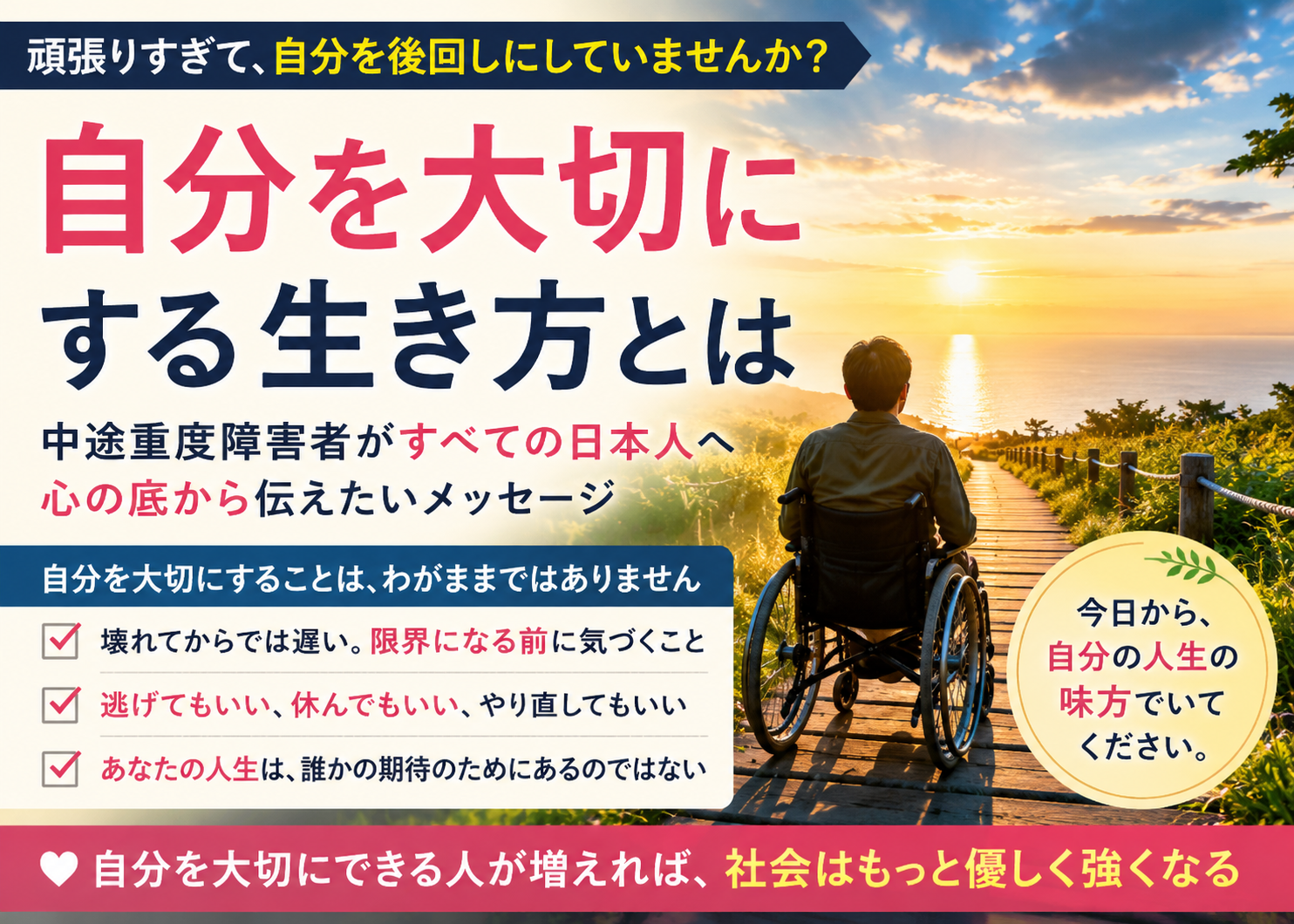
It’s been more than ten years since I suffered a cerebral hemorrhage that left me with severe physical disabilities, including paralysis on the left side of my body. Doctors once told me I might never work again. But somehow, I made my way back into the workforce.
As someone with a severe acquired disability, I’ve come to value two unusual but essential principles in my work life: “positive negative thinking” and “being seriously eccentric.” They might sound contradictory or even strange—but these two traits are what help me thrive in a society designed mostly for able-bodied people.
In this article, I’ll share how these two mindsets guide my working style, rooted in my lived experience, and offer reflections on what it really means to “work” in a world that isn’t always kind or accommodating.
1. What Is “Positive Negative Thinking”?
1.1 | Being Negative Isn’t Always a Bad Thing
Negativity often gets a bad rap. People see it as something to fix or overcome. But I see negative thinking as a tool for survival—a way of foreseeing risks and preparing for them.
Since becoming disabled, I’ve developed a heightened sense of risk. Whether it’s a missed email nuance, a vague meeting agenda, or a delivery deadline, I’ve learned to anticipate what could go wrong and prepare accordingly. My body may not respond as it used to, so my mind must stay two steps ahead.
This kind of “preemptive mindset” has become second nature to me. In fact, it’s been one of my most reliable professional skills.
1.2 | Balancing Negativity with Hope
Still, being negative alone doesn’t get you far. That’s where the “positive” part comes in.
Positive negative thinking means I imagine the worst-case scenario—but I act anyway. Even when I expect rejection, failure, or misunderstanding, I take the next step. In job applications, in presentations, in day-to-day interactions—I carry the thought, “This might not work,” but I do it anyway.
It’s not blind optimism. It’s hope with eyes open—the most sustainable mindset I’ve found as a disabled person navigating an able-bodied world.
2. “Seriously Eccentric” — What It Really Means
2.1 | Being Serious Is Just Responsibility
I’m the type of person who takes work seriously. I meet deadlines. I over-prepare. I want to do things thoroughly and properly. And yes, I worry—often more than I need to.
But being serious can also trap you. It can lead to burnout and perfectionism.
One day, a colleague said to me, “You’re super serious… but sometimes you say the wildest things. That’s what makes you great.” And it clicked: seriousness and eccentricity aren’t opposites—they can coexist.
2.2 | Eccentricity as a Bridge to Creativity
Here’s what I mean by “seriously eccentric”:
- Proposing we turn a meeting report into a short skit.
- Making a joke during morning announcements like, “Today’s lucky disability aid is… my cane!”
- Asking, in a tense moment, “Isn’t joy kind of the real KPI here?”
These aren’t just quirks. They’re my way of shaking up rigidity and bringing humanity back into sterile work environments. When backed by a foundation of seriousness, eccentricity becomes a gateway to originality.
3. Why These Two Principles Matter Even More as a Severely Disabled Worker
3.1 | There Is No “Right Way” to Work When You’re Disabled
There’s no template for working with a severe disability. No manual. No role model. That’s why adaptability is key—and that’s where these two mindsets come in.
“Positive negative thinking” keeps me prepared. “Seriously eccentric” thinking allows me to bend the rules and bring new value to the workplace. One helps me survive; the other helps me shine.
For example, when I face accessibility issues at work, I don’t just complain. I turn the situation into a case study, propose solutions, and even make it part of a workshop. That’s where my eccentricity becomes a form of leadership.
3.2 | I’m Not Trying to Be “Normal” Anymore
I’ve stopped trying to match able-bodied standards. I don’t aim to blend in. Instead, I ask myself: How can I bring value precisely because I’m different?
My “positive negativity” helps me prepare. My “serious eccentricity” helps me contribute uniquely.
Together, they are my professional identity—and my pride.
Conclusion: Embracing Contradictions Is What Makes Us Human
We live in a world obsessed with consistency. But real life is full of contradictions.
I’m both anxious and hopeful. I’m both meticulous and wild. And that’s okay. In fact, it’s more than okay—that’s what makes me fully human.
By owning both sides of myself—my fears and my flair—I’ve built a way of working that is both resilient and joyful. And in doing so, I hope I’m also building a more inclusive world—one that makes room for contradictions, creativity, and compassion.














コメントを残す