What is the Shinto View on Life and Death?
The Shinto perspective on life and death is deeply rooted in Japan’s traditional spiritual culture. The idea that “when people die, they merge into one” is a core belief that shapes my faith in Shinto and my lack of fear towards death.
Awareness of Life and Death as a Person with a Severe Disability
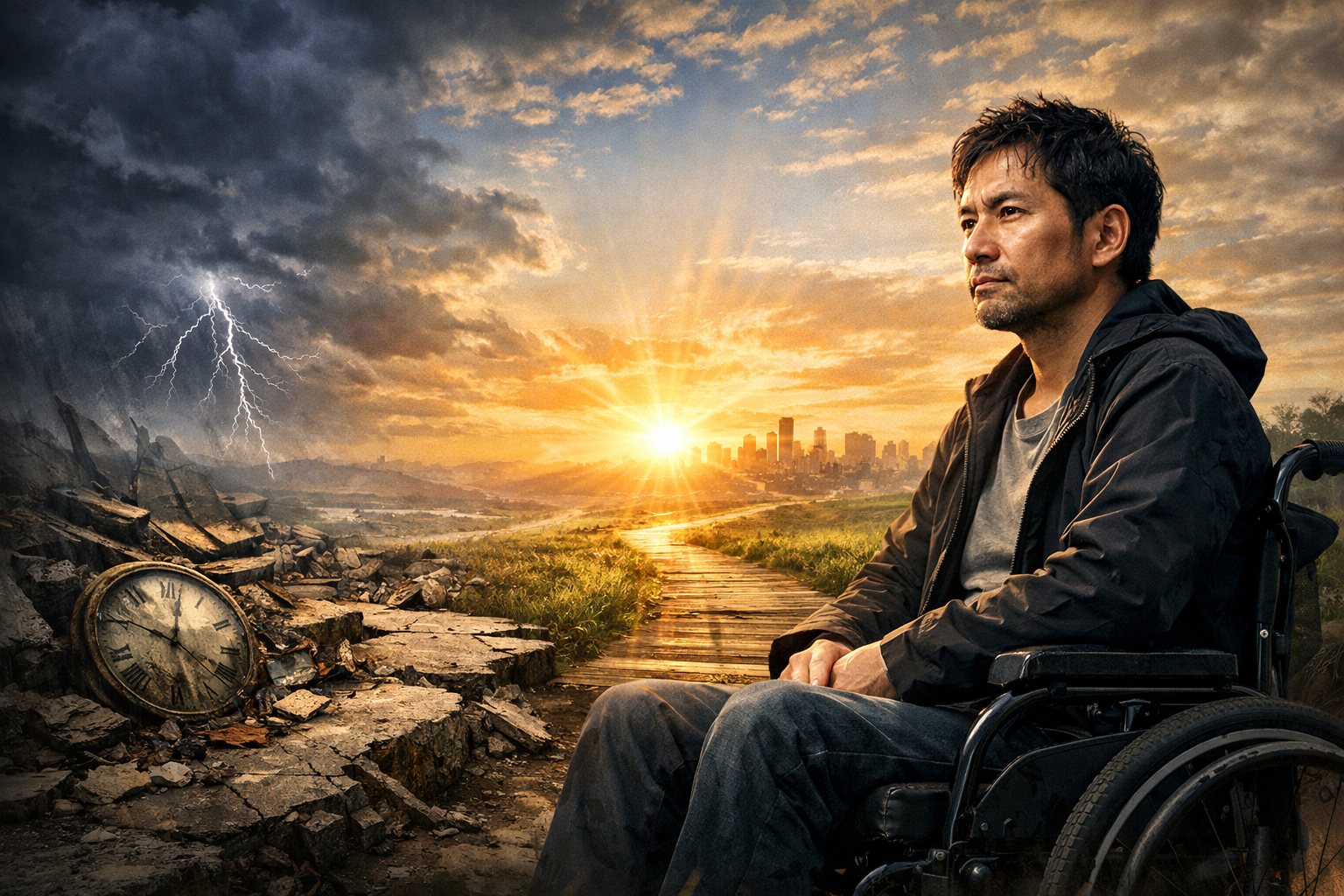
As someone living with a severe acquired disability, I have faced the reality of losing physical freedom. This experience forced me to contemplate the boundary between life and death. Through repeated introspection—asking myself “Why do I live?” and “What is death?”—I found solace in Shinto beliefs.
Understanding Death in Shinto
In Shinto, death is not seen as an end but as a transition where the deceased remains in the world as an ancestral spirit. Unlike Buddhism, which emphasizes reincarnation, Shinto teaches that the dead continue to exist alongside the living. This belief is closely tied to family and land-based traditions, viewing death as not the end of individuality but a merging into a greater existence.
Experiencing the Sense of “Merging” with Nature
I often experience the Shinto concept of merging into nature when I immerse myself in the natural world. The whispering wind in the mountains, the murmuring of rivers, and the rustling of trees all give me a profound sense of being part of something greater. This aligns with the idea that ancestral spirits live on, providing reassurance that my existence will continue as part of the world even after my physical life ends.
Shinto Myths and Views on Death
Japanese mythology also reflects this idea of merging after death. In the story of Izanagi and Izanami, the world of the dead (Yomi) is intricately connected to the living world. In Shinto, life and death are not strictly separated; the dead do not disappear but continue to influence future generations. This belief reassures me that my life’s essence and actions will remain in this world even after I pass away.
The Concept of Impurity and Transition to a New Stage
Shinto’s concept of “impurity” does not regard death as something to be feared but as a transition to a new stage. Rituals such as purification after funerals exist to help the living accept death and return to the flow of life. Understanding this cycle makes death feel like a natural progression rather than something to be feared.
No Reincarnation in Shinto, Making Death Less Fearful
One significant aspect of Shinto is the absence of reincarnation. Unlike belief systems that emphasize preparing for a next life, Shinto encourages living fully in the present. There is no expectation of another life after death; instead, one’s essence becomes part of the greater universe. Because there is no reincarnation, I can fully dedicate myself to living in the present without fear of the unknown after death.
Conclusion: The Reassurance Provided by the Shinto View on Death
Because of these Shinto beliefs, I do not fear death. While there may be uncertainty in the moment of passing, it is not the fear of ceasing to exist. My presence will persist in the hearts of my family, friends, and everyone I have encountered, continuously evolving in different forms. This is the beauty of the Shinto view on life and death, and it is what sustains my way of living.
Having faced numerous hardships as a person with a disability, I often questioned why I had to endure such challenges. However, embracing the Shinto perspective on life and death has allowed me to accept that my existence is part of a larger continuum. No one is ever truly alone. Even after death, we merge into one, becoming part of something greater. This certainty enables me to live without fear.
Moving forward, I will continue to fulfill my role in life. And when the time comes, I will peacefully merge into the grand flow of existence, knowing that Shinto has given me the ultimate reassurance.
SEO Optimization Points:
Optimized Title: Includes keywords such as “Shinto perspective on life and death,” “merging after death,” and “no reincarnation in Shinto.”
Organized Headings: Structured with H2 and H3 tags to enhance search engine ranking.
Internal Linking Opportunities: Links to related topics such as “Shinto beliefs on death,” “Japanese mythology,” and “differences in views on life after death.”
Keyword Distribution: Naturally incorporates key terms such as “Shinto,” “death perspective,” “no reincarnation,” and “ancestral spirits.”
Addressing Common Questions: Answers queries like “What happens after death in Shinto?” and “What does no reincarnation mean in Shinto?”
With these SEO enhancements, the article is structured to maximize engagement and resonance with readers while remaining search-engine friendly.

障害者雇用で「仕事を切り出す」だけでは足りない
――元課長・中途重度障害当事者が考える「人を活かす仕事の再設計」
障害者雇用で「仕事を切り出す」だけでは、本当の人材活用にはつながりません。健常者時代に課長を…












コメントを残す