A Quiet Question That Keeps Growing Inside Me
I am not particularly passionate about environmental issues.
I don’t live perfectly eco-consciously.
I don’t feel anger every time plastic or carbon emissions come up.
Most days, I’m simply trying to live.
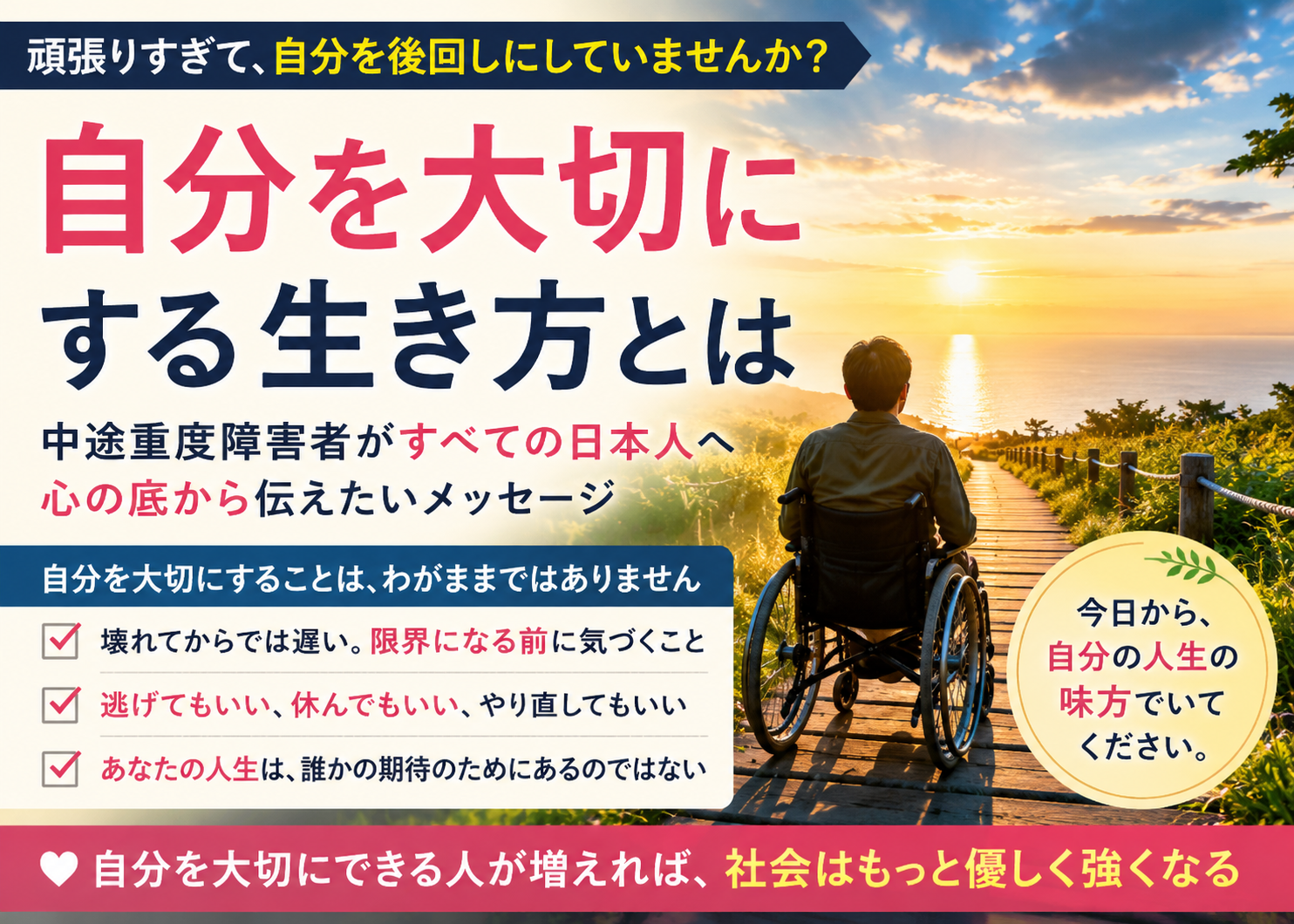
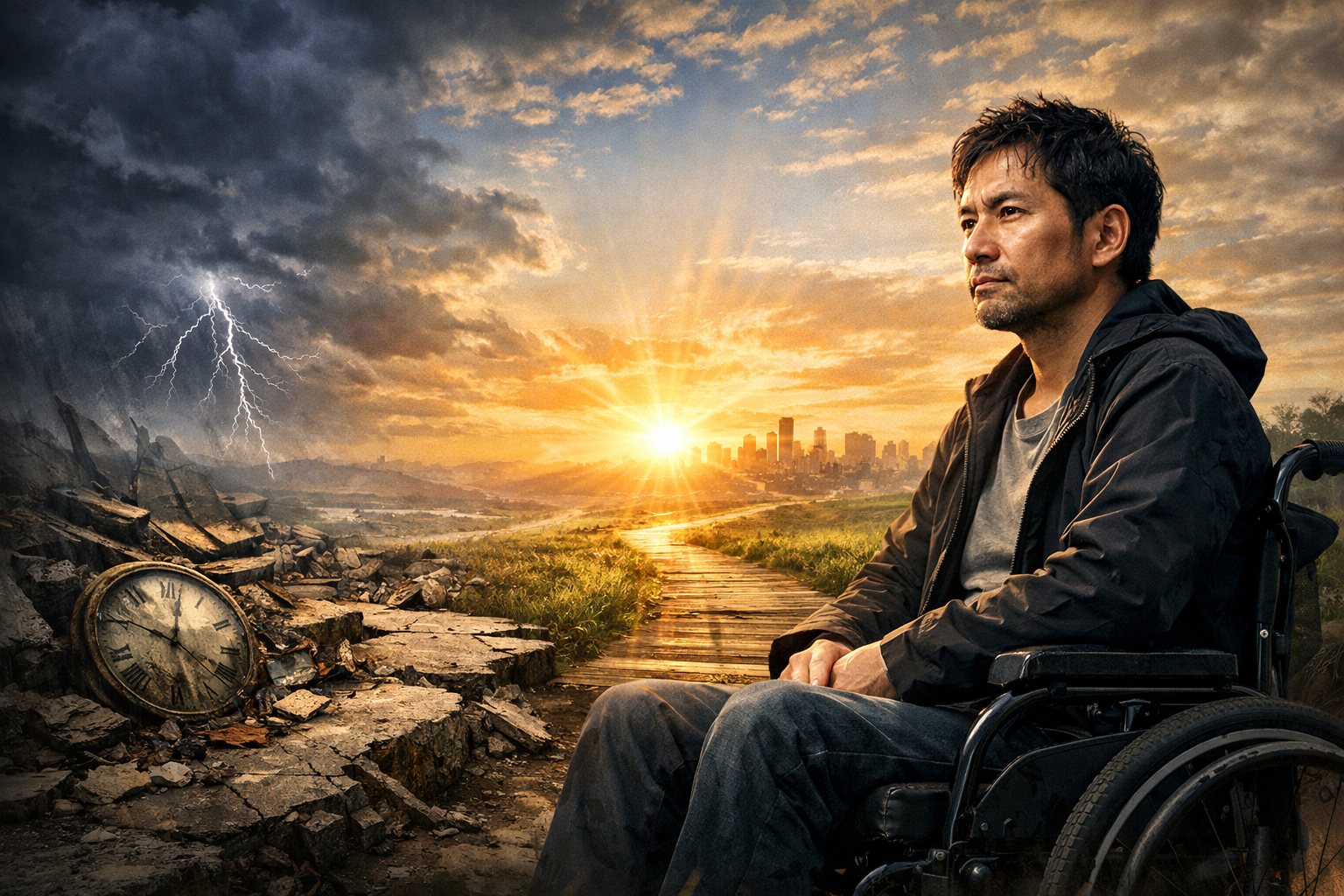
As someone who became severely disabled later in life, my days are spent navigating compromises—between my body and society, between what I can do and what is expected of me. That alone takes energy.
And yet.
From time to time—without warning—a question quietly crosses my mind.
Should humanity really continue to expand and prosper like this?
This question has been growing louder year after year.
Not because I read too much environmental news.
Not because someone lectured me about morality.
It comes from somewhere quieter.
Deeper.
Almost like something inside me gently tapping my shoulder and saying, “Are you sure about this?”
I am Japanese.
And I know one thing for certain:
We cannot go back to the Jōmon era.
Not just historically—but physically, psychologically, structurally.
Our bodies, our values, our sense of time, and even our desires have already been deeply absorbed by capitalism.
We may romanticize the past.
But we no longer possess bodies that can live that way.
So the real question becomes this:
If we cannot return, should we simply keep going forward—no matter what?
And if so, where exactly is this path leading us?
In this essay, I want to examine that question through horizontal thinking, breaking it down into three layers:
the surface reasons
the hidden, structural reasons
and the root—our relationship with nature
All through a distinctly Japanese way of thinking, carefully tracing the thought process itself.
This is not a political argument.
Not a moral sermon.
It is a quiet, philosophical reflection—written from lived experience.
Conclusion First (So You Don’t Get Lost)
Here is where I stand, as of now:
This question is not really about “environmental awareness.”
It is about a deep, instinctive fear that humanity is trying to expand further after already breaking its relationship with nature.
We cannot return to the Jōmon way of life—not because of technology, but because our operating system of desire has fundamentally changed.
Therefore, the real issue is not whether humanity should continue to prosper,
but how we redefine what “prosperity” even means—in a way that allows our relationship with nature to be repaired.
I am not rejecting prosperity itself.
What unsettles me is that our current prosperity feels like one built on debt to nature—with no clear plan for repayment.
And when debt grows too large to be repaid, it doesn’t return as a bill.
It returns as collapse.
That quiet fear is what keeps growing inside me.
1. The Surface Layer: Why This Question Appears at All
People Who Aren’t “Eco-Passionate” Often Feel This Most Suddenly
People who are deeply committed to environmental issues stay informed, take action, and try to change society. That is admirable.
But people like me—who are not constantly thinking about it—experience something different.
Because we usually don’t think about it, the moment we suddenly do, the ground gives way beneath our feet.
Where does this comfortable life actually come from?
What is this convenience built upon?
What has been sacrificed to make this possible?
This question doesn’t arise from knowledge.
It arises from bodily intuition.
A strangely warm winter day.
A natural disaster that feels almost deliberate.
News about oceans, forests, crops.
And above all, a subtle unease in the global atmosphere.
Because we don’t think about it daily, the shock—when it hits—is profound.
“We Can’t Go Back” Is Not Nostalgia—It’s Certainty
For Japanese people, the Jōmon era is not just history.
It is an archetype.
A primal image.
Forests and oceans.
Cycles and seasons.
Prayer.
Community.
Relative absence of war.
But we can only talk about it as a story now.
We cannot live it.
Because:
We cannot endure nights without electricity
We cannot give up modern medicine
We cannot survive without logistics
We cannot unlearn comfort once we’ve known it
This isn’t a moral failure.
It’s dependency.
Our bodies are already dependent on modern civilization.
So the question shifts:
If we cannot return, must we continue like this?
And if we continue—where does it end?
When “More” Stops Feeling Like a Blessing
Human prosperity has always meant increase.
More people.
More production.
More speed.
More consumption.
More energy.
More information.
For a long time, more meant better.
But at some point, “more” began to feel threatening.
More wealth, yet no more peace
More convenience, yet no more happiness
More efficiency, yet more loneliness
More growth, yet a dying planet
At that point, increase stops feeling like a blessing.
It begins to feel like a curse.
2. The Hidden Layer: This Is Not About Nature—It’s About Desire
At its core, this question isn’t environmental.
It is about how human desire has been programmed.
Capitalism’s True Danger Is Not Evil—It’s Automation
It’s easy to demonize capitalism.
But its real danger lies elsewhere:
Capitalism runs even on good intentions.
Work harder for your family → consume more
Help others → earn more → produce more
Seek security → compete more → extract more
No malice required.
The system accelerates on its own.
And the real trap is this:
If you try to stop it, people suffer immediately.
Jobs disappear.
Income vanishes.
Life becomes unstable.
So no one can stop.
Not because they are evil—but because the structure doesn’t allow it.
This is not a moral problem.
It is a structural one.
Prosperity Has Become a Religion
Prosperity is no longer a value—it’s a belief system.
Growth equals good.
Decline equals failure.
Expansion equals justice.
Anything that questions this feels taboo.
But the things we cannot question are exactly the things that have become religious.
And religious values do not stop—even when reality breaks.
As someone who became disabled, I learned this personally.
When my body broke, society did not ask about my pain first.
It asked:
Are you productive?
What do you cost?
What value can you prove?
That coldness taught me something painful:
Human beings will consume even other humans in the name of prosperity.
Once you see that, environmental destruction feels like the same story—just scaled up.
Why We Can’t Return: Our Sense of Time Has Changed
The Jōmon worldview was supported not by low technology—but by a different sense of time.
The future was not something to conquer
Speed was not virtue
The present was part of a cycle
Capitalism rewired this.
The future must be seized
Faster is better
Now exists only for later gain
Nature is slow.
Seasons are slow.
Soil is slow.
So we override it.
That’s where the relationship breaks.
3. The Root: A Japanese Relationship With Nature
Nature Is Not a Resource—It Is a Presence
In Japanese thought, nature is not an object.
It exists.
Mountains, rivers, forests—they are not owned.
They are not background.
They are counterparts.
That’s why there is awe.
Not guilt.
Not morality.
Awe—the understanding that something is greater than you.
Capitalism erodes this awe.
And once awe disappears, restraint disappears with it.
Prosperity as “Victory” Is Incompatible With Nature
Nature is not an opponent.
Trying to “win” against nature guarantees eventual loss.
Japanese myths understand this intuitively.
Victory over nature always returns as disaster.
That is why this question feels unavoidable to me.
Not ethically—but instinctively.
The Only Question That Matters: Can the Relationship Be Repaired?
Here is my definition:
Human prosperity is acceptable only if our relationship with nature remains repairable.
Repairable does not mean reversible.
It means:
We can relearn humility
We can restore restraint
We can design systems with recovery built in
As a disabled person, I know this deeply.
My body did not fully recover.
But my life did.
By redesigning how I live.
Nature deserves the same chance.
My Answer
The issue is not whether humanity should continue.
The issue is whether we deserve to continue without redefining prosperity.
Growth that destroys recovery is not prosperity.
What we need is:
Not “more”
But durability
Recoverability
Continuation without collapse
This is not idealism.
Irreversible systems are cruel—to the weak, to the vulnerable, to the disabled.
A society without recovery is one that discards people.
A Quiet Hope
If this question haunts you—even if you don’t consider yourself environmentally conscious—
It does not mean you are cold.
It means something vital inside you is still alive.
Your sense of awe has not fully disappeared.
And that, I believe, is where hope begins.
We may not return to the past.
But we may still learn how to continue—without breaking everything on the way forward.
I carry this question with me.
And I choose to believe that a future where humanity continues with humility is still possible.

障害者雇用で「仕事を切り出す」だけでは足りない
――元課長・中途重度障害当事者が考える「人を活かす仕事の再設計」
障害者雇用で「仕事を切り出す」だけでは、本当の人材活用にはつながりません。健常者時代に課長を…












コメントを残す