Why People Who Look Fine on the Outside Quietly Break on the Inside
Meta description (120–130 JP chars equivalent in meaning)
EDQL is an eating-disorder QOL scale—but its core idea can be used by anyone. This article shows how to use EDQL as a “life damage detector,” avoid the trap of self-judgment, and build a practical Life OS that prevents burnout before it hits.
Conclusion First
EDQL was created for eating disorders.
But its deepest value is not “about food.”
It’s a method to detect where your quality of life is quietly collapsing—before you fully break.
A “healthy” person’s life often looks normal:
you go to work
you do chores
you smile
you keep your schedule
But inside, something starts dying:
fatigue never leaves
meals become messy or empty
seeing people feels heavy
sleep becomes thin
hobbies disappear
the future turns dark
So here’s my proposal:
Use EDQL not as a diagnosis, but as a personal “Life OS inspection checklist.”
Not to judge yourself—
but to protect yourself.
One condition matters above all:
Never use the score to punish yourself.
EDQL is not a game where you raise points.
It’s an early-warning system.
1) EDQL’s Real Core Isn’t “Eating Disorders.” It’s “Life Damage Detection.”
EDQL is used in the eating-disorder field to focus on Quality of Life (QOL)—not just symptoms.
And the key point isn’t the name of the scale.
The real questions are:
What are we trying to measure?
Why do we measure it?
How do we use what we measure?
Because the moment you “measure QOL,” you change the power dynamics of real life—
for better or worse.
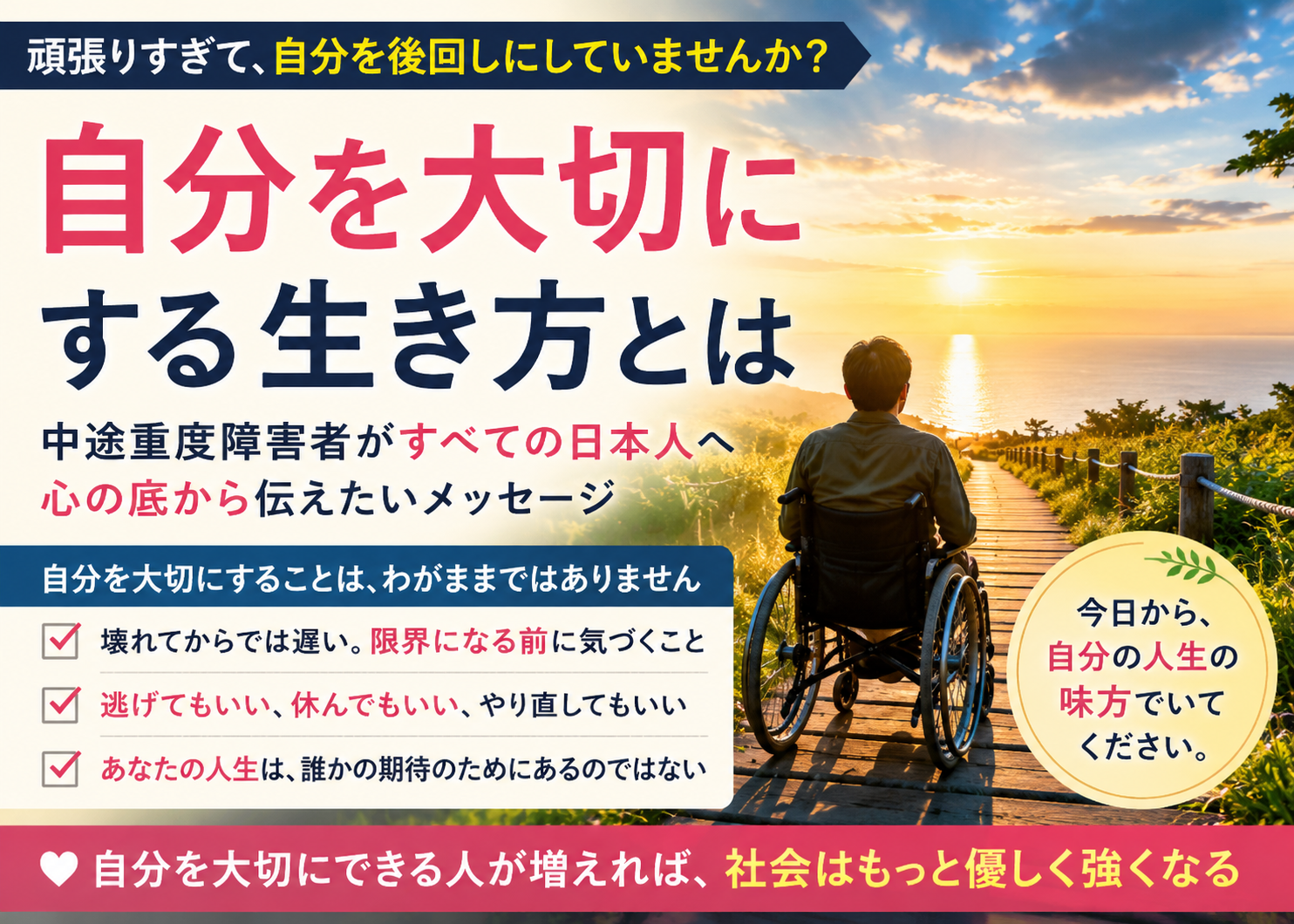
As someone who became severely disabled later in life, I learned this the hard way:
You can improve medically…
and still lose your life.
Eating disorders often have the same structure.
2) Why “Healthy People” Need This: Because They Can Keep Functioning While Breaking
Collapse in a healthy person is rarely dramatic.
It’s usually “normal-looking”:
You can work… but after work you’re dead.
You can do chores… but your spirit is gone.
You can meet friends… but your conversation is thin.
You can keep hobbies… but you don’t feel joy.
From the outside, no one sees it.
Even you may say: “I’m just tired.”
That’s exactly why you need a system.
EDQL’s mindset brings these questions into everyday life:
What’s happening to your food? (Is it becoming chaotic?)
What’s happening to your body? (Sleep, fatigue, pain)
What’s happening to your emotions? (Do you still feel joy?)
What’s happening to your relationships? (Are you isolating?)
What’s happening to your daily activity? (Is your world shrinking?)
If you check these regularly, you can stop burnout, depression, or dependency before they take over.
3) The Hidden Danger: If You Turn QOL Into a “Score,” You Can Destroy Yourself
This is the most important warning.
Healthy people fail with EDQL-like tools when they do this:
try to “raise the score”
treat a low score as “I’m worthless”
compare scores with others
start blaming themselves
and end up collapsing faster
Numbers are convenient—but that’s why they become cruel.
So set the operating rule first:
A score is not a verdict. It’s an alarm.
A low score simply means: your protection priority just went up.
As a person who became severely disabled later in life, I’m saying this clearly:
If you don’t know how to “design protection,” life breaks easily.
And yes—healthy people break too.
4) A Practical “Life OS” Model: How to Use EDQL Thinking in 3 Layers
I’ll explain this in three layers—surface, hidden, and structural.
4.1 Surface Layer: A Weekly 5-Minute “Life Damage Check”
Start small. Keep it simple.
Once a week, rate yourself in 5 areas (0–4):
0 = no problem
4 = serious damage
The 5 Areas (Rate 0–4)
Food: Are meals becoming chaotic, skipped, binge-y, or filled with guilt?
Sleep: Falling asleep, waking up, sleep depth, heaviness in the morning
Activity: Is your life shrinking? (going out, chores, hobbies)
Relationships: Are conversations becoming painful? Are you isolating?
Emotions: Do you still feel joy/curiosity—or are you going numb?
Add them up.
Then use a simple interpretation (not as judgment):
0–5: Maintain
6–10: Adjust (reduce load, recover)
11+: Redesign (rebuild your schedule and environment)
This alone catches early collapse.
4.2 Hidden Layer: The Key Question—Is the Cause Inside You, or Outside You?
When scores get worse, many healthy people instantly blame themselves:
I’m weak
I lack discipline
I should try harder
Often that’s wrong.
The real cause may be external:
workload
relationships
commuting
constant notifications
family roles
financial pressure
“correctness” and social pressure
So when your score rises, ask this:
Is this a “me” problem—
or an “environment” problem?
That single question reduces self-hate, and self-hate is a fuel for collapse.
4.3 Structural Layer: Why Healthy People Break—The “Unbreakable Life” Social OS
The biggest reason healthy people break is not personality.
It’s the social OS:
resting is shameful
having margin is “weak”
productivity is morality
you should always respond
efficiency is beauty
you must be “normal”
EDQL thinking says:
Don’t run on a life design that destroys you.
Build protection first.
This is not “disabled people’s wisdom.”
It’s human survival wisdom.
5) Examples: How EDQL Thinking Stops Collapse Before Burnout
This is where it becomes real.
Case 1: You can work—but you “die” at home
Activity: 3 (no hobbies, chores collapse)
Emotions: 3 (no joy)
Relationships: 2 (talking feels heavy)
Solution is not willpower. It’s load design.
Build a fixed “recovery routine” after coming home
Legitimize 2 days/week of “do nothing” at home
Create notification-free zones
Reduce emotional labor before negotiating overtime
Case 2: Meals get messy and caffeine becomes the engine
Food: 3 (skipping, bingeing, guilt)
Sleep: 2 (light sleep)
Emotions: 2 (irritability)
Solution is not a perfect diet plan. It’s patching the hole.
Breakfast isn’t “nutrition.” It’s emotional foundation.
Make it boring and fixed: same time, same simple thing
Don’t increase caffeine—design a way to reduce it
Case 3: You can socialize—but crash afterward
Relationships: 3
Emotions: 3
Sleep: 2
Solution is not “better communication skills.” It’s boundaries.
reduce frequency
reduce number of people
increase “people you don’t need to explain yourself to”
reduce comparison triggers (especially social media)
6) The Minimum Implementation: The Smallest System That Works
Healthy people don’t need perfect self-care.
They need minimum inspection + minimum correction.
Weekly:
5-minute check (the 5 areas)
Pick one high-score area
Make one small change:
Food is bad → “Fix breakfast only”
Sleep is bad → “Cut light/screens before bed”
Activity is bad → “Choose a day to drop chores”
Relationships are bad → “Cancel one meeting”
Emotions are bad → “Schedule one joy”
Humans break when they try to change everything at once.
But small repairs continue.
7) Common Misunderstanding: “Isn’t this too dramatic for healthy people?”
No.
Healthy people are often more dangerous cases because:
They can keep functioning while collapsing.
And when they finally break, recovery takes longer.
So EDQL thinking is not “labeling yourself with a disorder.”
It’s giving yourself permission to detect damage early.
Final Summary: EDQL as a “Permission Slip” to Protect Your Life
EDQL’s core is life damage detection
Healthy people can “keep running” while collapsing
Scores are alarms, not verdicts
The key is separating internal vs external causes
The structural cause is a social OS that assumes humans are unbreakable
Weekly check + one small repair prevents burnout before it hits
And I’ll say this plainly, as someone who became severely disabled later in life:
Humans don’t change much.
A certain percentage will always be careless, rushed, and unimaginative.
So don’t bet your survival on “people will understand.”
Design protection first.
EDQL can be used as a sensor for that design—even in a “normal” life.

障害者雇用で「仕事を切り出す」だけでは足りない
――元課長・中途重度障害当事者が考える「人を活かす仕事の再設計」
障害者雇用で「仕事を切り出す」だけでは、本当の人材活用にはつながりません。健常者時代に課長を…

















コメントを残す