Meta Description (for SEO, ~120–130 characters)
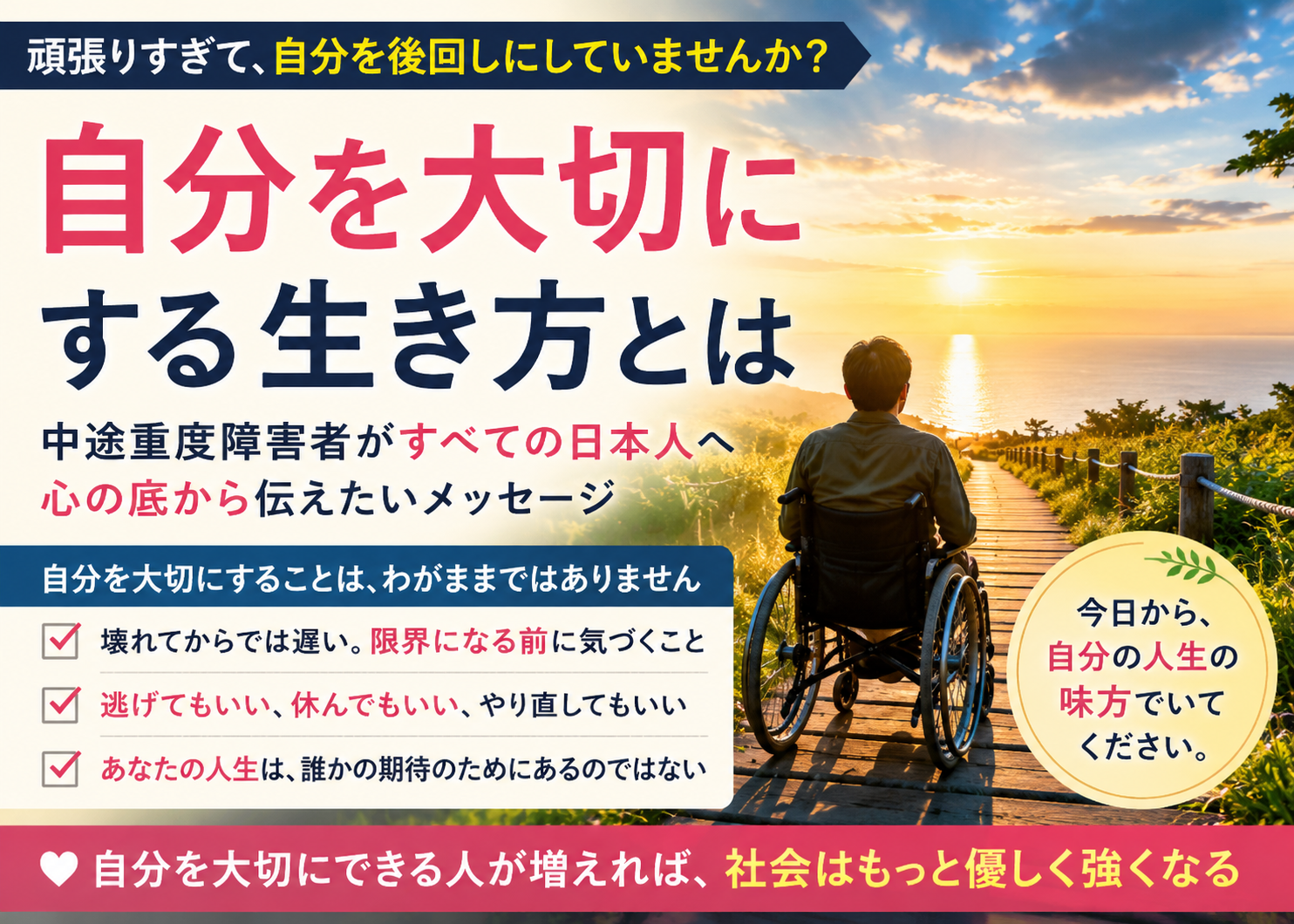
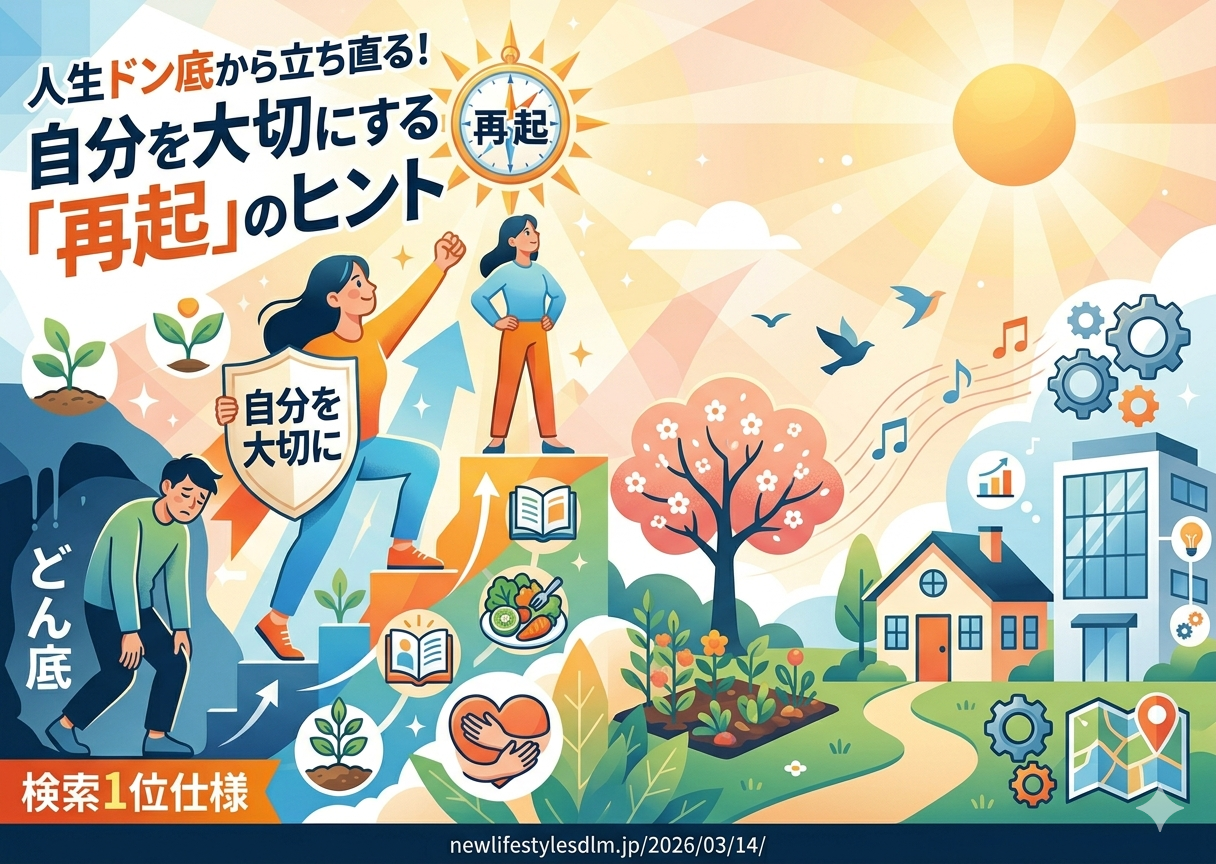
After becoming severely disabled in midlife, I started rebuilding my life around “taking care of myself.” This is the long, honest log of how I rewrote my life’s OS through blogging, parallel work, and living in rural Japan.
—
Table of Contents
1. Introduction | A Mid-Career Severely Disabled Blogger Recommends His Own Blog
2. In One Sentence: This Blog Is a Log of Rewriting My Life’s OS
3. Theme 1: “A Life Where I Take Care of Myself” as the Core Axis
4. Theme 2: A Parallel Life Because I Can’t Stand on One Leg Anymore
5. Theme 3: Mental Training to Enjoy Aging and Change
6. Theme 4: Reading Rural Life, Energy, and Population Decline from the Ground Up
7. Theme 5: Shinto, Jomon, Taiwan – Digging Up the Invisible OS
8. The Writing Method Is Also Content: Fact → Insight → Design
9. Who This Blog Is For
10. Why I Can Proudly “Recommend” My Own Blog
11. To You Who Will Walk with This Blog from Here On
12. Conclusion | The One Axis I Never Want to Change, Even If My Followers Grow 10x
—
1|Introduction | A Mid-Career Severely Disabled Blogger Recommends His Own Blog
There’s something a little awkward about “recommending your own blog.”
In Japan, the more typical style might be:
> “If you feel like it, I’d be happy if you read it.”
and then quietly dropping a link at the end.
Even so, in this article I’m deliberately going to do something a bit bold:
> As a mid-career severely disabled blogger,
I’m going to thoroughly put my own blog into words and actively recommend it.
Why?
Because for me, this blog is not just a place to publish information.
It’s:
> A long-term log for rewriting the OS of a life that once collapsed.
That’s why I think it’s worth taking the time to explain what kind of place this is, what I’m trying to do here, and for whom it exists.
—
2|In One Sentence: This Blog Is a Log of Rewriting My Life’s OS
My blog is not a “how-to” site.
It’s not a motivational quote collection either.
If I had to summarize it in one sentence, it would be:
> A record of one person who became severely disabled in midlife,
honestly logging the process of rewriting the OS of their life—
their assumptions, values, and life design.
2-1. How My “Vantage Point” Changed as a Severely Disabled Person
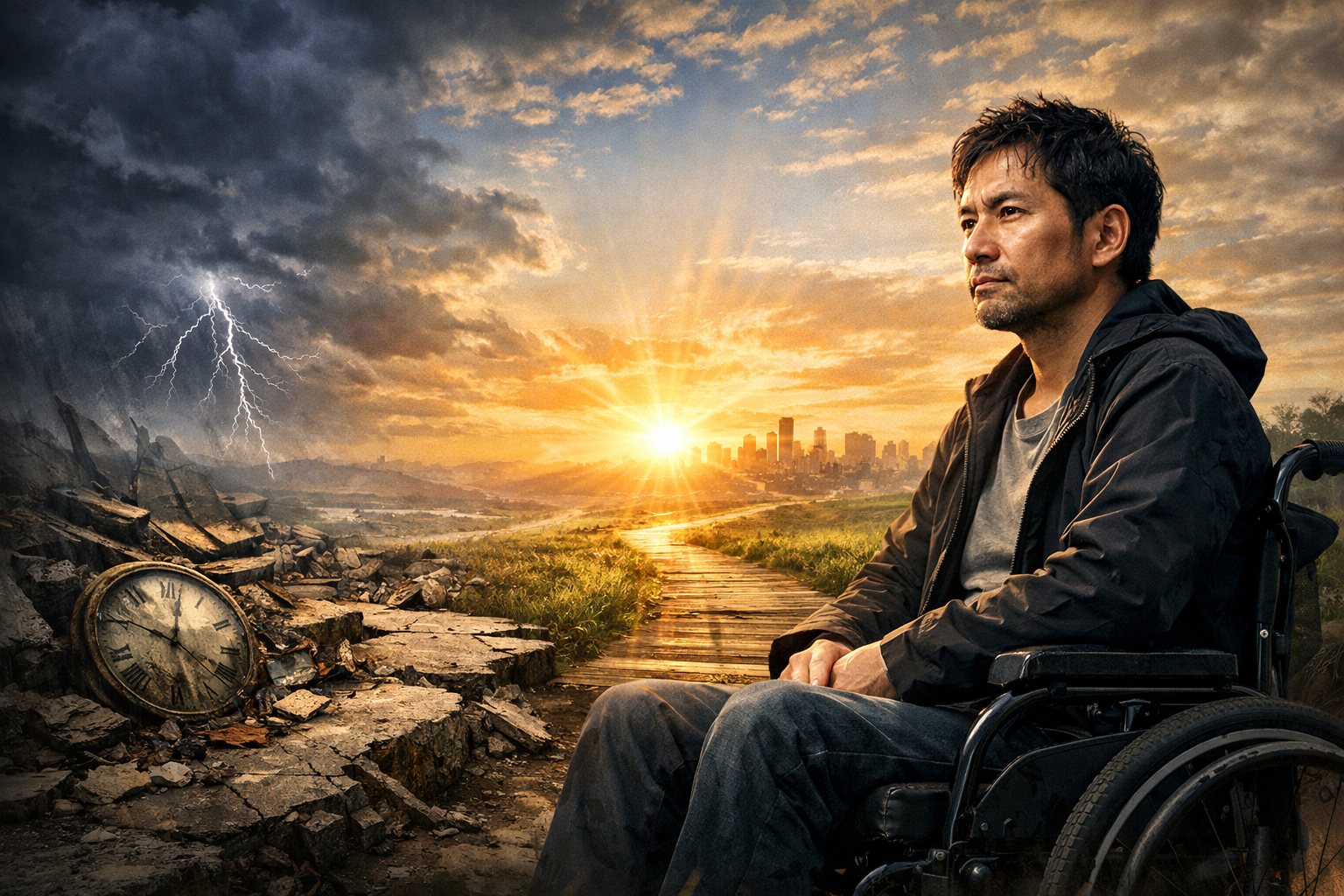
I had a brain hemorrhage in midlife and ended up with a serious physical disability.
All the assumptions that had been “normal” up to that point suddenly stopped working.
“Of course I can work full-time.”
“I can push through with willpower if I need to.”
“The future is supposed to go up and to the right.”
These OS-level beliefs suddenly became unusable.
That’s why this blog keeps returning to themes like:
How to accept aging and decline as part of life
How to separate “rice work” (work to live) and “life work” (work that makes you feel alive)
How to translate “a life where I take care of myself” into specific, concrete actions
For me, this blog is like:
> A notebook for having a dialogue with myself,
while rewriting my internal OS from scratch.
2-2. Putting “Peace of Mind” at the Center – A Quiet Kind of Rebellion
One phrase that keeps appearing on my blog is “peace of mind.”
Peace of mind is the foundation of happiness
And the first thing that tends to get cut away is that peace of mind, sacrificed to “rice work”
At the same time, I still need a job to live
In the middle of this contradiction, I came to a conclusion:
> “We need to flip our value system
from ‘life centered on work’
to ‘life centered on peace of mind.’”
This doesn’t mean, “Everyone should quit their job.”
Rather, it’s about:
What kind of working style allows me to earn money and protect my peace of mind?
What kind of life work supports my peace of mind and contributes something to society?
In other words, it’s a mid-to-long-term redesign of how I live, not a quick fix.
And I try to write about that redesign process without hiding the messy in-between.
—
3|Theme 1: “A Life Where I Take Care of Myself” as the Core Axis
In the header of my blog, I’ve given a whole category its own spot:
> “A life where I take care of myself.”
The reason is simple:
> It was precisely “a life where I sacrificed myself and kept pushing”
that broke me once.
I don’t want to talk about “taking care of yourself” as some fluffy, feel-good self-love slogan.
I want to treat it as:
> A practical skill set.
3-1. Rebuilding Self-Efficacy and the Feeling of Being the Protagonist in Your Own Life
Living as a mid-career severely disabled person quickly shreds your sense of self-efficacy.
Things you used to do easily become difficult
You can’t work at the same speed as others
You involuntarily compare yourself to your “old self”
In that state, being told “Believe in yourself!” honestly doesn’t resonate.
So I redefined self-efficacy on the blog:
> Self-efficacy is
“The feeling that you can once again hold the steering wheel of your own life.”
Concretely, that starts with small actions like:
Writing even a short blog post once a day
Treating time at a café with my wife as a high-priority “scheduled event”
Allowing myself to choose “rest” on days when my health is bad
They’re all small, unglamorous actions that won’t go viral on social media.
But when you stack up these “tiny wins,”
there are moments when you suddenly feel:
> “Ah, I’m the protagonist of my own life again.”
That feeling—regaining your role as the protagonist—is what I try to nurture through my writing.
3-2. Installing “Humility and Openness” Later in Life
Another theme that appears often is “being open and honest (in a good way)”.
Before becoming disabled, I carried a certain amount of pride.
Part of me believed, “I’m one of the people who ‘get it’.”
But when your body and career collapse,
that pride just becomes dead weight.
So I made a decision:
> I’m going to treat “openness and honesty” not as a fixed personality trait,
but as a trainable skill I can install later in life.
On the blog, I write honestly about things like:
Moments of jealousy
Times when my judgment was off and I embarrassed myself
Fights with my wife that left me really down
Putting those things into words instead of hiding them
has turned into a kind of “muscle training for honesty.”
—
4|Theme 2: A Parallel Life Because I Can’t Stand on One Leg Anymore
As part of this blog’s concept, I use the phrase “parallel life.”
It might sound like a trendy lifestyle term,
but for me it’s actually a very practical survival strategy.
4-1. When a Severely Disabled Person Tries to Stand on One Leg, They Fall
Right now, the roles I play look something like this:
Office worker in an infrastructure company (rice work)
Counselor as a mid-career severely disabled person
Blogger / writer
Occasionally illustrator / thumbnail designer
This isn’t “being hyperactive” or “chasing too many things.”
It’s more like:
> “Because I can’t physically stand on one leg,
I need to live with three or four points of support.”
If I stake everything on one job:
A single illness could drop my income to zero
A sudden company policy change could shake my whole life design
The risk is simply too high.
That’s why I’ve been taking time to design a structure like this:
Rice work to sustain basic living
Life work to sustain my peace of mind and self-expression
Counseling to walk alongside other people’s life stories
And tie all of them together with one axis:
“a life where I take care of myself.”
That multi-point-support structure is what I call a parallel life.
4-2. Allowing “Benign Madness” as a Spice in Life
Living a parallel life inevitably pushes you away from what people consider “normal.”
You get questions like:
“Why are you doing so many things?”
“Isn’t that too much work for your condition?”
“Wouldn’t it be more efficient to focus on just one thing?”
Despite that, on the blog I’ve written:
> The spice that makes life enjoyable is a kind of “quiet madness.”
A madness that keeps looking at both the beauty of the world
and the ugliness of society and human beings.
I write about:
Energy infrastructure, population decline, nurse working conditions
and at the same time,
Shinto, Jomon, the connection between Japan and Taiwan,
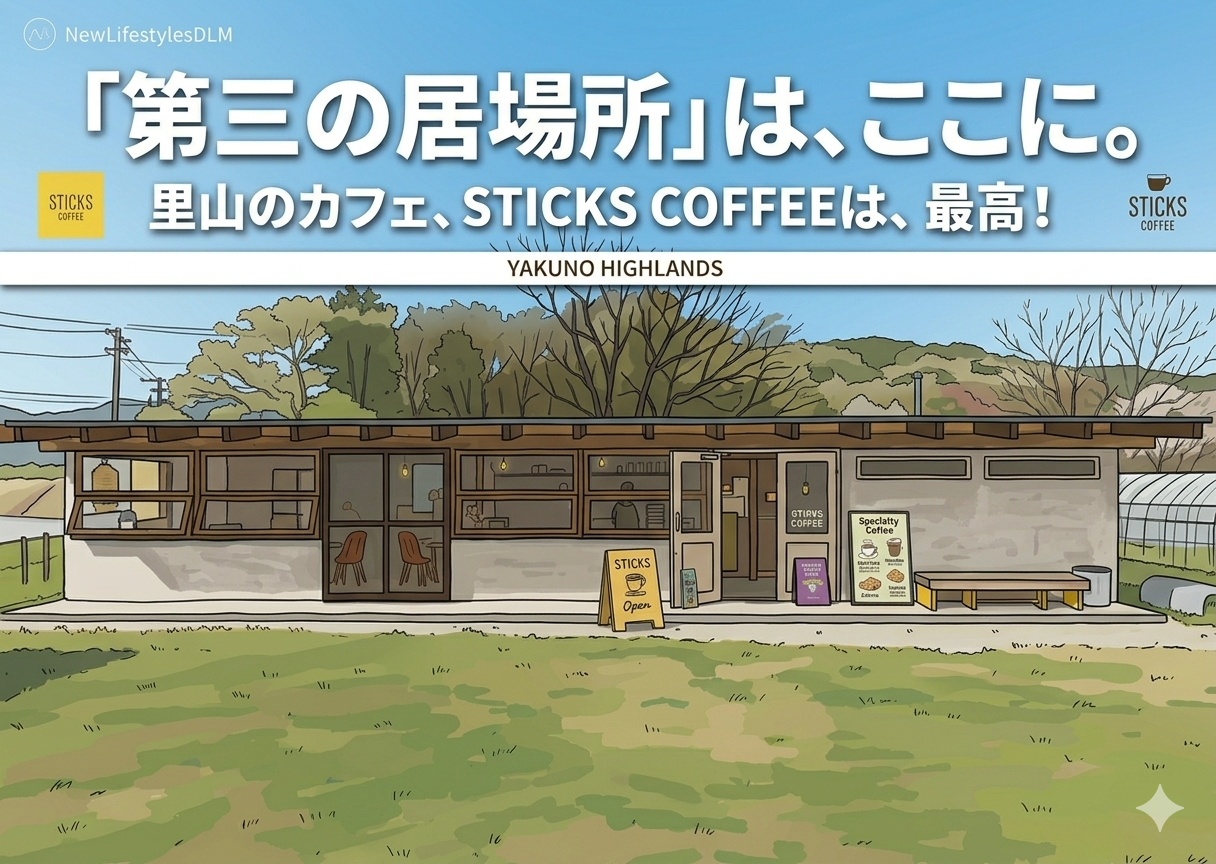
everyday time with my wife, and cafés we love
Writing about these polar opposites with the same intensity is, in a sense, “mad.”
But that madness, for me, is actually:
> Proof that I’m still sane.
That’s the kind of madness I want to keep quietly weaving into this blog.
—
5|Theme 3: Mental Training to Enjoy Aging and Change
Living as a mid-career severely disabled person
is a bit like experiencing “fast-forwarded aging.”
Your body doesn’t move the way you want
You can’t work the way you used to
The nature of your fatigue changes
You can treat all of that as nothing but “decline,”
or you can try to see it from a different angle.
Which you choose changes your whole view of life.
5-1. Questioning the Premise That “Aging = Loss”
On the blog, I pose questions like:
> “Does aging really only mean ‘getting worse’?”
For example, if your eyesight gets worse:
You might not be able to read print as quickly
But you might discover the joy of listening to the world through audiobooks
If your legs and back get weaker:
Long trips might become difficult
But you might start noticing tiny changes in the scenery near your home
Aging and disability definitely take things away.
But at the same time,
it’s also true that:
> New kinds of richness creep into your field of vision—
riches you never saw before.
On the blog, I try hard not to hide that subtle gradation.
I don’t want to sugarcoat it as “aging is beautiful,”
nor do I want to drown in pure pessimism.
I want to keep putting that nuance into words.
5-2. Let’s Stop Sacrificing “Now” in the Name of “Future”
When writing about aging and change,
there’s one trap I want to avoid:
> “Because it’s for the future, I’ll just endure the present.”
Of course, things like saving money, health management, studying, and qualifications
are “investments in the future.”
But from where I stand, having already collapsed once,
any investment that completely sacrifices your current joy and peace
looks very dangerous.
So on this blog, I keep looking at:
Time with my wife at cafés
Healthy eating and moderate fasting
Time spent writing and reading
and asking:
> How can I design these
so they are both present joy
and a bridge to a better future?
That design work—creating life habits that serve both “now” and “later”—
is one of the core projects I keep documenting.
—
6|Theme 4: Reading Rural Life, Energy, and Population Decline from the Ground Up
My life’s stage is the Tajima region of Hyogo Prefecture—
in other words, rural Japan.
That means this blog is written not against a backdrop of skyscrapers,
but against mountains, rivers, rice fields, and dams.
6-1. Pulling “One-Line News” Down to the Level of Real Life
Some of the topics I often write about include:
News about “record-high bankruptcies due to labor shortages”
Night shift systems and cuts to night shift allowances at local hospitals
The quiet collapse of Japan’s mold-making and manufacturing industry
The launch of a short-stay child support program in a small city
The future of pumped-storage power plants, dams, and nuclear power
These are often grouped under “social issues” or “economic news.”
But I consciously reframe them as:
> These are not just macro-level topics.
They are directly tied to the lives of individual people like my spouse, neighbors, and myself.
For example:
What does a nurse’s night shift really look like at home afterward?
If local factories keep quietly closing, what happens to the job options for kids growing up here?
What does it mean to live in a region that hosts dams or pumped-storage plants?
Pulling big social issues down to this level turns news from mere “information” into:
> “Raw material for designing our own lives.”
That’s the sort of reframing I try to keep doing.
6-2. Seeing Energy Infrastructure as a Question of “How We Live”
Because I work close to the energy and power sector,
I also write about topics like:
Pumped-storage hydropower
Renewable energy
Nuclear power
Wireless power transmission using lasers
When I write about these, I try to:
Avoid falling into partisan political or ideological debates
Avoid both blind worship of technology and blanket technology denial
The view I keep returning to is:
> “Energy infrastructure” is fundamentally about
whether people can live a life where they
“can safely press the switch without thinking too much.”
For example:
How do dams deal with the risk of heavy rain and flooding?
How can we reduce dependence on nuclear power while avoiding blackouts?
How should we combine renewables, batteries, and pumped-storage as a “water battery”?
These are no longer problems that only experts should think about.
That’s why I want to use this blog to keep translating energy topics into everyday language
and connect them back to “how we live.”
—
7|Theme 5: Shinto, Jomon, Taiwan – Digging Up the Invisible OS
On my blog you’ll also find articles about:
Shinto
Ancient Japan
The Jomon period
The relationship between Japan and Taiwan
At first glance, these might seem unrelated to a “life design blog.”
But in my mind, they are tightly connected.
7-1. The Beauty of Shinto and a Quiet Wish to Keep Living in Japan
After becoming severely disabled, it became far more difficult
to imagine “a life of freely traveling abroad.”
Instead, I naturally started:
> Looking much more closely and carefully at “Japan”
as a place to live.
Japan is no longer number one in the world in terms of economic power, military power, or population
Yet, travelers still come from all over the world, and many admire Japanese culture
And I myself feel a quiet, persistent wish: “I want to keep living my life here in Japan”
When I dig into the roots of that feeling,
I keep reaching the theme of “the beauty of Shinto.”
The clear air of a shrine
The rhythm of local festivals
The landscape formed by rice fields, mountains, and rivers
All of these feel like part of:
> An “invisible OS of faith” that quietly runs under life in Japan.
And this invisible OS deeply overlaps with the idea of:
> “a life where I take care of myself.”
7-2. Re-Drawing Boundaries Through Jomon, Ancient Japan, and Taiwan
I often write about:
The relationship between Japan and Taiwan
The flow from Jomon to Yayoi to Kofun periods
The cultural sphere formed by ocean currents like the Kuroshio
A central theme running through those articles is:
> The balance between
“drawing boundaries” and “seeing beyond boundaries.”
Labels and lines like:
Disabled / non-disabled
Urban / rural
Japanese / foreigner
Sane / mad
are useful tools to understand the world.
But if we only look at the world through those lines,
it becomes suffocating very quickly.
So, through imaginary journeys between ancient Japan and Taiwan,
I try to share this feeling:
> Maybe there is a continuous world connected by sea, prayer, and daily life,
onto which humans later drew lines and borders.
For me, this is very similar to the inner work of:
> Accepting the label “disabled person,”
while also reclaiming the sense of being “just a human being” beneath that label.
—
8|The Writing Method Is Also Content: Fact → Insight → Design
There’s one more big characteristic of this blog:
> The way the articles are structured
is itself something I want readers to be able to copy.
8-1. A Three-Step Structure: Fact → Insight → Design
Many of my posts follow a three-step structure:
1. Fact – Sharing What Happened
Numbers and data from the news
Specific episodes from my life or others’
Historical context and raw information
2. Insight – Interpretation and Analysis
Why is this happening?
What structures or OS-level assumptions are behind it?
How do I personally feel about it?
3. Design – Proposals and Next Steps
So, how do we choose to live in light of this?
What do we accept, what do we let go of, what do we cultivate?
What’s one small step we can try starting tomorrow?
This structure is basically a direct translation of the principle I once wrote in a kind of “declaration” for the blog:
> “Believe nothing, doubt nothing,
just try, observe, and verify.”
It’s a way of turning that principle into an article format.
8-2. Letting “TL;DR” and Long-Form Stories Coexist
I often write long-form posts—
10,000 characters or more is pretty common.
At the same time, to make it accessible to busy people and English readers, I sometimes:
Place a summary (TL;DR) at the beginning
Prepare a separate English version of the article
The idea is:
> “Let’s respect the rhythm of the reader’s life
and give them options in how they want to read.”
If you want to immerse yourself, you can read the whole narrative
If you just want the big picture, you can read the summary first
This “freedom of reading style” is another way of applying
“a life where I take care of myself” to the reader, not just the writer.
—
9|Who This Blog Is For
Now I’d like to make it explicit:
> Who is this blog trying to help?
Here are the people I usually picture when I write.
9-1. People Who’ve Been Doing Their Best but Feel Stuck
First, I think of people who:
Have tried their best at work and relationships
And yet have started to feel: “I can’t keep going like this”
Are clearly losing the balance between their mind and body
For those people, I don’t want to say, “Try harder.”
Instead, I want to say:
> “Given everything you’ve been doing,
it’s completely natural to feel worn out.”
From there, I hope my articles can serve as raw material to think about:
What can I let go of?
How can I take care of myself without abandoning everything?
What pace would allow me to keep moving while also healing?
I want this blog to be a place to start that kind of thinking together.
9-2. People Facing “Unexpected Detours”: Disability, Illness, Aging
The second group I picture includes people dealing with:
Sudden illness or an accident
Caring for a family member
Burnout or mental health struggles
In other words, people who’ve hit an “unexpected detour” in life
and feel like they can never “go back to the way it was.”
Because I myself got knocked off the track by a brain hemorrhage,
I’ve come to feel this strongly:
> Recovery is not just “returning to your old life.”
It can also mean “designing a new path you couldn’t have seen before.”
Aging and disability can be seen not only as an “end,”
but also as a kind of forced transition into Act Two.
This blog is where I keep practicing that shift in perspective—
over and over, from many angles.
9-3. People Tired of the City, and People Struggling in the Countryside
The third group is people who are caught between city and countryside:
People exhausted by the city but afraid to jump into rural life
People living in the countryside but feeling like, “I’m trapped here forever”
Living in Tajima, a rural area,
I’ve written posts based on this feeling:
> “If you let go of appearances, rural Japan can be surprisingly easy to live in.
But the countryside is not a utopia.
That’s exactly why we need to consciously design how we live here.”
The question is not: “Is the city right or is the countryside right?”
The real question is:
> Wherever you live, can you choose in a way that puts
your and your loved ones’ ease of living ahead of appearances and status?
This blog is a place where I openly share
my rough sketches of how to think about that.
—
10|Why I Can Proudly “Recommend” My Own Blog
Finally, I want to honestly write about
why I can openly say:
> “I hope you’ll read this blog.”
10-1. Because It Doesn’t End with Empty Feel-Good Phrases
This blog includes a lot of beautiful-sounding words:
Hope
Peace of mind
Enjoying aging
Taking care of yourself
But every one of these words is written with real mud on them.
Stories about my health crashing
Nights when I fought with my wife and felt crushed
Experiences of helplessness at work
Anger and frustration at how disabled people are treated
Because those things aren’t hidden,
the beautiful words don’t float off into the air.
When I reread my own posts,
I feel:
> “At least I’m not sugarcoating my life.”
That’s why I can recommend my blog without flinching.
10-2. Because I’m Handing Over Questions, Not “Correct Answers”
This blog is not a collection of:
> “If you do X, things will go well.”
Almost every article ends by tossing the ball back to the reader:
How do you feel about this?
What would you let go of, and what would you choose?
What does your version of “a life where I take care of myself” look like?
I’m not trying to force my way of living onto anyone.
What I want is to:
> Hand people questions
they can use to redesign their own lives in their own words.
That’s the stance I stubbornly maintain.
So even as I dream of multiplying my followers by ten,
I have absolutely no desire to water down the content.
10-3. Because I’ve Promised Myself to Keep Going Until My Life Ends
Deep in the blog, I have a sort of “declaration” written.
In it, I state that I will:
Write only original content, not copied or spun material
Base my articles on my own practice, experience, and thinking
Keep pursuing and spreading “a life where I take care of myself” for as long as I live
Of course, it’s important to set goals for things like page views and income.
Of course, I’d be happy to see my followers grow tenfold.
But more important than all of that is the axis written in that declaration.
> I will write when I’m being read.
I will write even if I’m not being read.
Even on days I can’t write, I will still want to write.
That stance, in itself,
is my way of practicing “a life where I take care of myself.”
—
11|To You Who Will Walk with This Blog from Here On
If you’ve read this far,
I imagine you might be someone who:
Wants to redesign your life in your own words
Is tired of polished “success stories” and wants to see real, ongoing struggle
Is searching for a way to work hard without sacrificing yourself
For someone like you,
I hope this blog can become:
> “A quiet place of refuge”
and also “a workshop for redesigning your life.”
I’d be very happy if different posts could become companions for different days:
An article you read on a night when you hit rock bottom
A post you revisit when the future feels frightening
A piece you open in a café, full of unspoken frustration about work
If my writing can gently weave itself into your days like that,
even just a little, that’s more than enough.
—
12|Conclusion | The One Axis I Never Want to Change, Even If My Followers Grow 10x
This article has been a bit of an odd experiment:
a blogger recommending his own blog.
I’ve tried to lay out:
My perspective as a mid-career severely disabled blogger
A parallel life built around “a life where I take care of myself”
Mental training for enjoying aging and change
Real-life stories about rural Japan, energy, population decline, nurses, and factories
And explorations of Shinto, Jomon, and Taiwan as an “invisible OS”
All of these together make up this blog.
Yes, I’d love to have ten times more followers.
I want as many people as possible to read.
At the same time,
I suspect I’d keep writing even if my follower count didn’t grow at all.
Because ultimately, this blog is:
> Not only a broadcast to the world,
but also a message to my future self.
Every day, I quietly ask myself:
Did I manage to take care of myself today?
Did I manage to take care of the people I love today?
Did I manage to look straight at both the beauty of the world
and the awfulness of society and humans?
The answers to those questions
are what I’m slowly stacking up in the form of blog posts.
As long as I don’t lose that axis,
I believe this blog will keep its value—
no matter how many followers I have.
If you feel like it,
I’d be very happy if you took just one line from this blog
and quietly shared it with someone.
You could quote it on social media
Or bring it up in a conversation with a friend or family member
Each of those tiny actions
becomes a quiet ripple spreading the idea of
“a life where you take care of yourself.”
From my side,
I’ll just keep writing—quietly, stubbornly, steadily.
Please feel free to drop by again
whenever it fits your pace.


障害者雇用で「仕事を切り出す」だけでは足りない
――元課長・中途重度障害当事者が考える「人を活かす仕事の再設計」
障害者雇用で「仕事を切り出す」だけでは、本当の人材活用にはつながりません。健常者時代に課長を…














コメントを残す