Meta description (120–160 chars):
Diversity needs operations, not slogans. Translate Shinto’s harai, yorishiro, kotodama, sacred groves, and annual rites into a daily OS, and implement with a 1-minute opening, 72h/7d/90d templates—starting today.
Primary Keywords: diversity, Shinto, harai (purification), yorishiro (temporary vessel), kotodama (ethics of speech), sacred grove, annual rites, life OS, inclusion, accessibility
LSI Keywords: consensus-building, RACI, read-receipt SLA, meeting ops, buffer time, templates, accommodation catalog, behavior change, team culture, iterative design
—
TL;DR (3 lines)
1. The essence of diversity isn’t “affirming differences” but operating so differences can share the same space safely.
2. Shinto’s five modules—Harai / Yorishiro / Kotodama / Sacred Grove / Annual Rites—work as a life OS even without religious trappings.
3. With a 1-minute opening × read-receipt SLA × RACI × accommodation catalog, implement via a 72h / 7d / 90d roadmap—starting today.
—
Reader & Search Intent
Primary: Leaders, HR, frontline managers, educators seeking actionable inclusion (DEI) practices.
Secondary: Teams wanting “space design” without religious overtones; people who wish to work without burning out as “the person who always has to ask.”
Likely queries:
“essence of diversity / diversity operations / Shinto diversity / kotodama consensus / what is harai / what is yorishiro”
“team accessibility implementation / meeting operations template / RACI read-receipt SLA examples”
—
Table of Contents
Prologue: Change the room without raising your voice
Chapter 1: Diversity runs on three layers—Ideals / Systems / Operations
Chapter 2: Shinto as an “unfinished OS” — Strength without a single canon
Chapter 3: Translating five modules — Harai / Yorishiro / Kotodama / Sacred Grove / Annual Rites
Chapter 4: Case studies — Quiet voices, late replies, and travel/health load
Chapter 5: Lived experience — Requests drain; design accumulates
Chapter 6: Copy-paste templates you can use now
Chapter 7: 72h/7d/90d roadmap & KPIs
Chapter 8: FAQ — common worries and answers
Finale: Prayer is a verb — Deliver the “last 2 cm”
—
Prologue: Change the room without raising your voice
We’ve gained more banners that say “Value diversity.” Yet in many workplaces, goodwill and fatigue live side by side, and we still leave the burden of asking to the same people every time.
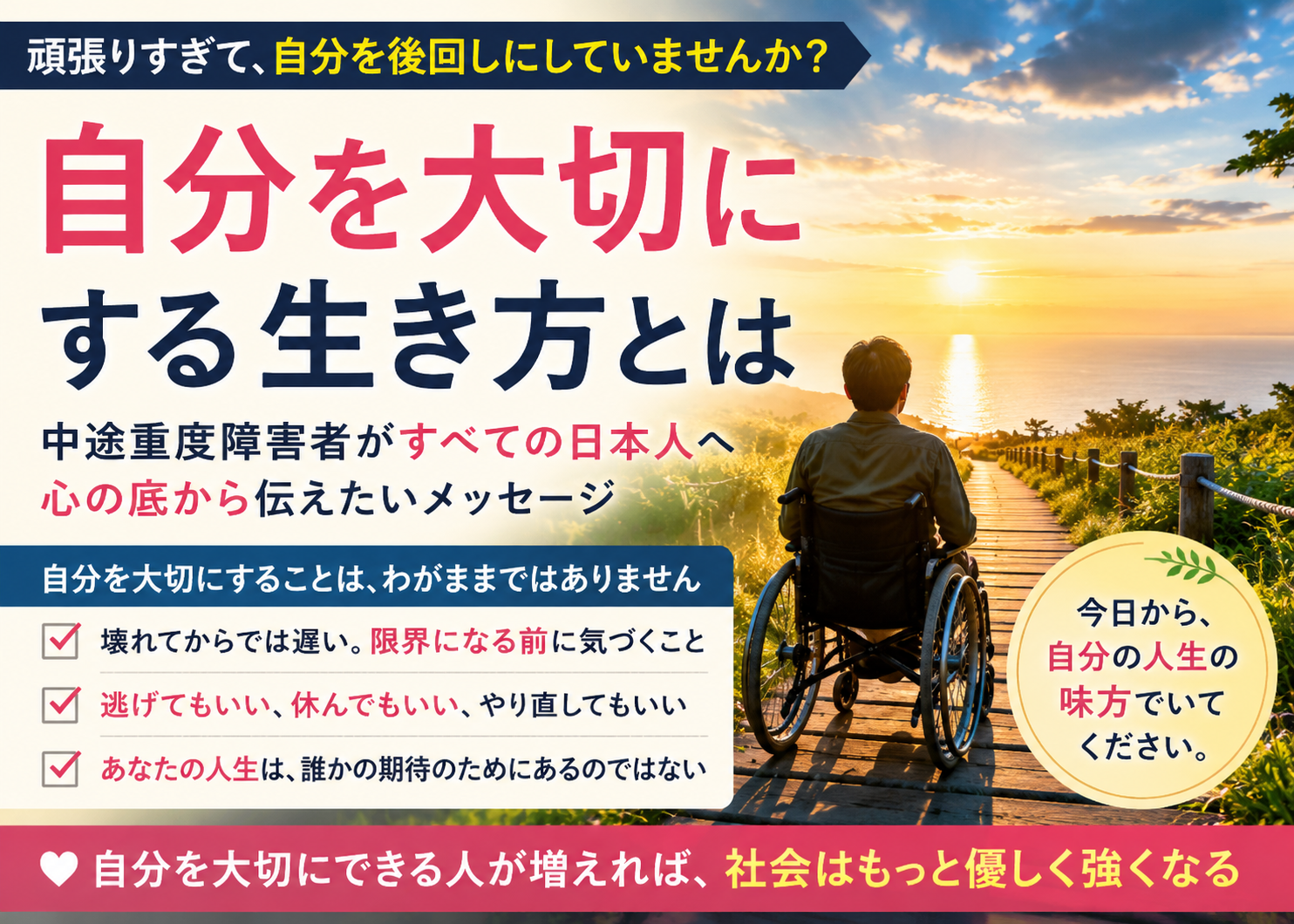
I work with a severe, mid-career disability, and I meet that structure daily. My realization: diversity isn’t something to shout; it’s something to use—concretely as Preparation → Temporary Vessel → Speech Design → Buffering → Repetition.
Japan’s Shinto quietly holds operational wisdom for these steps. Not as religion, but as a life OS. Translate it into repeatable practices, and we can move forward without blaming anyone.
—
Chapter 1: Diversity runs on three layers—Ideals / Systems / Operations
Ideals (respect, inclusion, fairness) → Systems (evaluation, budgets, policies) → Operations (order, phrasing, seating, time).
Where do we stumble? Almost always on operations. Ideals are shared; systems are forming; yet we still trip over the last 2 cm—the way we speak or the order we do things.
This article stays with operations, extracting reproducible behaviors from Shinto while removing religious color.
—
Chapter 2: Shinto as an “unfinished OS” — Strength without a single canon
Shinto does not fix everything under one doctrine. Its unfinished nature preserves updatability and local fit.
Harai: Not punishment—discharging static and rebooting.
Yorishiro: A temporary vessel to house invisible value and form a provisional consensus.
Kotodama: Speech is a safety device for the room.
Sacred Grove: Buffers at boundaries to soften collisions.
Annual Rites: Repetition that turns practice into muscle memory.
Because it is unfinished, Shinto can hold differences. That pairs naturally with operationalizing diversity.
—
Chapter 3: Translating five modules — Harai / Yorishiro / Kotodama / Sacred Grove / Annual Rites
3-1. Harai — Remove the “sediment” before it hardens (Start-up design)
Goal: Drop noise and static so dialogue begins from zero.
How to implement
Open every meeting with 60 seconds of stillness: breathe → state one-sentence purpose.
Share a 3-line brief: purpose / context / expected outcomes.
Read-receipt SLA: within 24h, send a simple “received.” Promise a due date for a substantive reply.
Naming rules: project prefix + date + version for channels/files.
Effect: Irritation shifts from people to process; flow restarts without blame.
—
3-2. Yorishiro — Set up a “form” where differences can reside (Container design)
Goal: Let hard-to-say things be said to the form, not to a person.
How to implement
RACI: Responsible / Accountable / Consulted / Informed, on one shared page.
Single intake: one front door for requests to reduce wandering.
Five-point request: purpose / deadline / format / approver / evaluation criteria.
Templates: minutes, proposals, approvals, leave, disability accommodations.
Effect: From goodwill-dependent → system-dependent. Less person-dependence.
—
3-3. Kotodama — Design speech that doesn’t break consensus (Wording design)
Goal: Convert attack-phrases into operation-phrases to reopen flow.
Examples
“You’re slow.” → “What factors are blocking progress?”
“Why can’t you?” → “What three conditions would make it possible?”
“Whose fault?” → “At which step did we get stuck?”
“Isn’t this common sense?” → “Let’s write down the unwritten assumptions.”
Effect: From harvesting apologies → harvesting agreements. Keeps psychological safety intact.
—
3-4. Sacred Grove — Architecture of buffers and whitespace (Boundary design)
Goal: Soften collisions in physical, informational, and temporal space.
How to implement
Physical: step-free access, ramps, rails, quiet seats, lighting control.
Information: 14pt+, high contrast, alt text, summaries, screen-reader friendly.
Time: 45-minute meetings + 15-minute buffer; travel-aware scheduling; 72-hour pre-deadline confirmation.
Effect: Fewer repeat requests from those with constraints → less exhaustion overall.
—
3-5. Annual Rites — Turn good practice into culture (Time design)
Goal: Make better operations breathe regularly.
How to implement
Weekly: meta-review of operations (talk about how we run, not just results).
Monthly: update the accommodation catalog (problem → design solution).
Seasonal: small rites for gratitude & refresh (celebrate shared failures too).
Effect: From one-off → sticky. Tacit knowledge gets named and passed on.
—
Chapter 4: Case studies — Quiet voices, late replies, and travel/health load
4-1. When loud voices dominate
Harai: Share one sheet at the start: purpose / decisions / takeaways.
Yorishiro: Collect speaking queue via a quick form in advance; the host allocates turns.
Kotodama: Host uses scripts that frame dissent as improvement hypotheses.
Sacred Grove: allow chat in parallel; summary captions; archive recording.
Annual Rites: Review meeting operations bi-weekly.
Result: Value gets decoupled from volume; quiet insights make it into specs.
—
4-2. “They’re ignoring us” — the late-reply trap
Harai: read-receipt SLA (24h “received”), plus a promised date for substance.
Yorishiro: mandatory five-point request; one intake channel.
Kotodama: from “Any update?” to “What can I remove to unblock you?”
Sacred Grove: quiet hours / notification rules.
Annual Rites: visualize delay KPIs and improve operations.
Result: The feeling of being ignored fades; nagging costs drop sharply.
—
4-3. Travel load & fluctuating health
Harai: default to 45-minute meetings with a 15-minute travel buffer.
Yorishiro: a template for health accommodations (pre-notice / proxy attendee / recording access).
Kotodama: from “Can’t you come?” to “What lets you join without strain?”
Sacred Grove: quiet seats; temperature control; hybrid participation.
Annual Rites: seasonal refresh of the accommodation catalog.
Result: Lower drop-out rates; sustained participation.
—
Chapter 5: Lived experience — Requests drain; design accumulates
Saying “I’m sorry, but today…” over and over is a life tax.
When we elevate needs into design—rules, templates, buffers—I don’t have to say it each time. Helpers are freed from guilt and burden. Shinto’s five modules convert individual requests into social etiquette. That’s what sustainable diversity looks like.
—
Chapter 6: Copy-paste templates you can use now
6-1. The 1-Minute Opening (secular “room-setting”)
Ask (10s): State today’s purpose in one sentence.
Thanks (20s): Name one concrete contribution from last time.
Care (30s): Declare expected friction (time/noise/materials) and how you’ll mitigate it.
6-2. Five-Point Request
Purpose:
Deadline:
Format (deliverable / time required):
Approver (decision-maker):
Evaluation (how it will be checked):
6-3. Read-Receipt SLA (boilerplate)
> Received. I’ll send a first response by 6 p.m. tomorrow. If delayed, I’ll share the reason and a new due date by 2 p.m. today.
6-4. Kotodama Card (attack → operations)
“You’re slow.” → “Let’s remove the blocking factors.”
“Why can’t you?” → “List three enabling conditions.”
“Whose fault?” → “Which step did we stall at?”
“It’s common sense.” → “Let’s write down the assumptions.”
6-5. RACI (skeleton)
Responsible — the doer
Accountable — answerable owner
Consulted — partners to sound out
Informed — those who must be kept in the loop
6-6. Quick Accessibility Wins
Docs: 14pt+, high contrast, summary, alt text.
Meetings: 45-minute standard + 15-minute buffer, captions, parallel chat.
Physical: step-free paths, quiet seats, lighting & temperature options.
6-7. Accommodation Catalog (starter)
Issue Context Minimum (72h) Standard (7d) Cultural (90d)
Late replies Busy / away Read-receipt SLA Notification rules KPI + reviews
Speaking bias Voice volume gap Pre-queue Host scripts Annualized practice
Travel/health Distance / condition 45+15 schedule Proxy/recordings Seasonal refresh
—
Chapter 7: 72h/7d/90d roadmap & KPIs
72 hours (quick start)
Introduce the 1-minute opening / read-receipt SLA / five-point request / kotodama card.
KPIs: SLA adherence, number of phrasing conversions, % meetings opened with the 1-minute ritual.
7 days (team adoption)
Review RACI; run an accessibility sweep; start a weekly meta-review of operations.
KPIs: speaker-distribution index, meeting overrun rate, doc-standards adherence.
90 days (culturalization)
Operate the accommodation catalog; standardize 45-minute meetings; seasonal gratitude/refresh mini-rituals.
KPIs: fewer nudges, lower drop-out, better satisfaction (NPS) & burnout indicators.
Tip: Share a one-page weekly dashboard. Win with small changes at higher frequency.
—
Chapter 8: FAQ — common worries and answers
Q1. Isn’t this “bringing religion into work”?
A. We’re importing operational wisdom, not religion. Harai = prep; Yorishiro = templates/roles; Kotodama = phrasing; Sacred Grove = buffers; Annual Rites = repetition. You can implement with zero religious color.
Q2. Are you against speaking up?
A. Not at all. Speaking up is the trigger. What sustains change is design and repetition.
Q3. Does this align with Western DEI?
A. Yes. Safe rooms, buffered boundaries, and iterative process updates match DEI’s implementation stage.
Q4. Is this overkill for small teams?
A. The smaller the team, the more leverage you get. One person’s load affects everyone; early variance control pays off.
Q5. What about cost?
A. There’s an initial cost of putting things into words, but rework, nagging, and misfires drop, so total effort declines.
—
Finale: Prayer is a verb — Deliver the “last 2 cm”
“Prayer” here means how we ready ourselves.
Open with one minute; shape requests with five points; guard the flow with phrasing; create buffers like a sacred grove; and keep it alive through repetition. No need to raise your voice. Design turns kindness into team habit.
Diversity is something to use, not shout about. Your first step could be as small as proposing the 1-minute opening at tomorrow’s meeting.

障害者雇用で「仕事を切り出す」だけでは足りない
――元課長・中途重度障害当事者が考える「人を活かす仕事の再設計」
障害者雇用で「仕事を切り出す」だけでは、本当の人材活用にはつながりません。健常者時代に課長を…
















コメントを残す