Meta Description (120–160 chars)
Was the Taika Reform a “destruction,” or an “OS swap”? Through Fuhito’s “standardization” and Emishi’s “operations,” we unpack the coup, the ritsuryō codes, and the editing of the Nihon Shoki.
Suggested Slug: /taika-revision-fuhito-emishi-reinterpretation
Intended Readers: Fans of early Japanese history, learners and new researchers, practitioners interested in system and operations design
Primary Keywords: Taika Reform, Fujiwara no Fuhito, Soga no Emishi, Isshi Incident, ritsuryō system, Nihon Shoki, Asuka period
Related (LSI) Terms: centralization, state monks, Emperor Saimei/Emperor Tenchi, handen shūju (land/census), household registers, Fujiwara-kyō, Heijō-kyō, immigrants from the continent, Baekje/Silla, Battle of Baekgang
—
TL;DR
Conclusion: The Taika Reform was not pure rupture but an OS swap—the operational know-how (Ops) of the Soga regime was standardized into code (Code) by the Fujiwara regime under Fuhito.
Soga no Emishi = master of operations, binding external networks and Buddhism into one running system.
Fujiwara no Fuhito = master of standardization, who built systems that keep running even when people change through ritsuryō, marriage policy, and documentation.
Isshi Incident (645) = a public reboot of legitimacy + transfer of memory control.
Modern takeaway: Durable institutions blend standardization with live operations.
—
Table of Contents
1. Prologue — Standing Before a Burned Library
2. The Trap of the “Revolution” Label: Reading Beyond Hero Stories
3. Soga no Emishi: Operations, Buddhism, and Sea Lanes
4. Reading the Isshi Incident as a “Public Bug Fix”
5. Fujiwara no Fuhito’s Design: Ritsuryō as Common Language, Marriage as Capital Governance
6. Inheritance vs. Rebranding: What Survived and What Was Renamed
7. How External Pressure Chose the “Right” Design: After Baekgang
8. Dissolving Two Bad Reputations: “Private Greed” / “Conspiracy”
9. Reading Capital Cities with Your Feet: Blueprint vs. Terrain
10. A Seven-Point Checklist (for Reframing)
11. Mini-FAQ
12. Conclusion — Beyond Good & Evil, Toward “How to Build the Public”
—
1 | Prologue — Standing Before a Burned Library
In 645, during the Isshi Incident, Soga no Iruka was cut down in the court hall; his father, Soga no Emishi, set fire to his own residence. More than buildings burned.
In those flames likely perished the regime’s memo books—notes on policy practice, foreign dispatches, Buddhist administration manuals, diagrams of personal networks—the operational logs of the state.
History is made from what paper survives. To see past the ashes, we need to reconstruct the missing logs from structure.
As a blogger living with a severe, acquired disability, I routinely design my life around gaps. Early Japanese history demands the same: from the shape of silence and the layout of fragments, we raise a different whole.
> Question: Did the fire consume “proof of evil”—or “high-grade operational know-how”?
—
2 | The Trap of the “Revolution” Label: Reading Beyond Hero Stories
The textbook story is neat:
Prince Naka no Ōe (later Emperor Tenchi) and Nakatomi no Kamatari (later Fujiwara) toppled the overbearing Soga, imported Chinese institutions, and built a centralized state.
Shift the lens from human drama to system design, and a different picture appears—a single nation-building project with two phases:
Phase 1 (Soga): A state run by operations (Ops) that integrated external networks (Korea/China) and religious infrastructure (Buddhism).
Phase 2 (Fuhito): A state run by standards (Code)—ritsuryō law, marriage alliances, and documentation.
Not a clean break, but a rewiring. The Soga hardware (functions) stayed, while the Fujiwara swapped in a new OS (standards).
—
3 | Soga no Emishi: Operations, Buddhism, and Sea Lanes
3-1 The Practical Hub
Emishi mediated among powerful clans and served as a hub for people, goods, and information. Rather than ruling by sheer prestige, he excelled at keeping a complex machine running by continual patching.
3-2 Buddhism as Social Technology
A temple is more than a place of prayer. In the Asuka age it also functioned as clinic, school, translation lab, welfare node, and diplomatic reception hall—a multi-function hub and a tool for standardization. The Soga regime used Buddhism as social tech to raise the community’s shared operating style.
3-3 Security of the Sea Interface
Baekje, Silla, Goguryeo, Tang—the sea’s API carried monks, scribes, artisans, silk, iron, horses, and crafted goods. Keeping those lanes stable was a lifeline.
Emishi’s so-called “overreach” can be read as centralized management of external interfaces = national security. In antiquity the boundary between “private” and “public” was fluid: the private mansion doubled as an administrative, storage, and hospitality hub.
> Side Note: Before we condemn “private enrichment” with modern accounting, factor in antique public-private fluidity.
—
4 | Reading the Isshi Incident as a “Public Bug Fix”
A coup is cloak-and-dagger—but also a visible specification change.
A killing in open court is a public reboot of legitimacy. Burning the Soga residence moves the control of memory (logs) from private archives to public documents.
> Question: Why do organizations stage public rituals when they change rules?
Answer: To broadcast, retrain, and rewire responsibility all at once.
—
5 | Fujiwara no Fuhito’s Design: Ritsuryō as Common Language, Marriage as Capital Governance
5-1 Ritsuryō as Common Language (Specification)
From the Taihō Code (701) to the Yōrō Code (promulgated 757), Fuhito’s project wasn’t mere import; it localized Tang law into a common language (bureaucratic code) with portability and repeatability.
Rank ladders, household registers and tax rolls, land and tax regimes, the relay/post system, and state granaries—this is the documentation of the state, so that systems keep running even when people rotate.
5-2 Marriage as Proto–Corporate Governance
Fuhito locked power with a double mechanism: law (rules) × blood (capital). Through marriages (e.g., Miyako, mother of Emperor Monmu; Kōmyō, later Empress Kōmyō), he overlaid capital structures atop the legal framework. Standards + capital = durability.
5-3 Editing Memory: Re-architecting the Archive
The compilation of the Nihon Shoki ran on the bureaucratic network Fuhito built. The winners’ tidying trims away the losers’ complexity. Hence we must read with a meta-view for editorial bias.
> One-page textual diagram
Soga = distributed operations (redundancy ↑) / strong diplomacy ↑ / Buddhist administration ↑
Fujiwara = central standards (portability ↑) / legal system ↑ / talent pipelines ↑
⇒ Keep the hardware, install Fujiwara-OS, reassign functions.
—
6 | Inheritance vs. Rebranding: What Survived and What Was Renamed
Buddhist networks → State temples & clergy regulations (operations → institution)
Sea interface → Envoys to Tang / contacts with Balhae (private hubs → public routes)
Immigrant talent → Academies & bureaus (private pools → public pipelines)
Urban management → From Fujiwara-kyō to Heijō-kyō (operational city → planned capital)
Clan cults → State rites & diplomatic ceremony (private rites → public rites)
Names and responsibility centers moved, but functions survived—the continuity engine behind the “revolution.”
—
7 | How External Pressure Chose the “Right” Design: After Baekgang
Tang–Silla cooperation, the fall of Baekje and Goguryeo, and the Battle of Baekgang (663).
With external pressure high, unifying external specifications outranked domestic debates. Standardized ritsuryō cut transaction costs in diplomacy, military, and taxation.
Had the pressure vectors differed, Soga-style distributed ops might have lasted longer. History turns less on morality than on adaptation.
—
8 | Dissolving Two Bad Reputations: “Private Greed” / “Conspiracy”
(1) Emishi = Private Greed
Ignore the ancient setup—private mansions doubling as administrative, storage, and hospitality hubs—and investment looks like waste. In reality it often produced public goods through private forms.
(2) Fuhito = Pure Conspirator
Yes, his house benefited. But he also reduced friction by aligning private interest with public benefit (law × blood). Durability is evidence of good institutional design, not only cunning.
—
9 | Reading Capital Cities with Your Feet: Blueprint vs. Terrain
Desk history is revised by foot history. Walk Asuka, Fujiwara-kyō, and Heijō-kyō; let straight lines, curves, soil, and water speak.
Suzaku Avenue and grid lines = the scent of standardization (Fujiwara).
Temple–river relationships = the scent of operations (Soga).
Embankments, ditches, terraces = the stitches of day-to-day administration.
Three on-site checks
1. From the main avenue, read a temple’s frontal alignment and water logic.
2. Find switching points in waterways—who patched what, when?
3. Stand where structures are missing—what was lost, and how was it substituted?
Institutions live in blueprints; operations live in terrain. Layer them, and the OS swap takes 3D form.
—
10 | A Seven-Point Checklist (for Reframing)
1. Extract functions/roles first—judge personalities later.
2. Read governance on two axes: marriage × law.
3. Always factor in the burned archives (missing logs).
4. Put external environment (Tang, Silla, Balhae) at the top of the model.
5. Treat religion as social technology (temples = multi-function hubs).
6. Use spatial layout (capitals, waterworks) as first-order evidence.
7. Keep distance from label-words like “revolution” or “tyranny”—they’re names assigned after the edit.
—
11 | Mini-FAQ
Q1: Was the Taika Reform a “revolution” or “continuity”?
A: Event = revolutionary; outcome = continuous. Power shifted dramatically, while specification updates advanced through inheritance.
Q2: What was Fuhito’s key strength?
A: Converging heterogenous inputs into standards. By making ritsuryō a common language, he boosted portability and repeatability, so systems run despite personnel changes.
Q3: How should we reassess Soga no Emishi?
A: As a master of external interfaces whose operations sustained national survival. Move beyond the “private vs. public” binary—read him by function.
Q4: How reliable is the Nihon Shoki?
A: Read it with a meta-eye: who funded and staffed the compilation, and when. Map contradictions and silences to surface editorial bias.
—
12 | Conclusion — Beyond Good & Evil, Toward “How to Build the Public”
Soga no Emishi = keeping complexity running.
Fujiwara no Fuhito = ensuring systems run even when people change.
The Taika Reform revives not as a story of destruction, but of longevity.
Living and working with disability, I design my days the same way: install replaceable mechanisms first, leave room to absorb complexity. The handwork of ancient politics can be transplanted into our present-day workplaces.
Beyond the ashes lay not villainy’s secrets, but the craft of making the public endure.

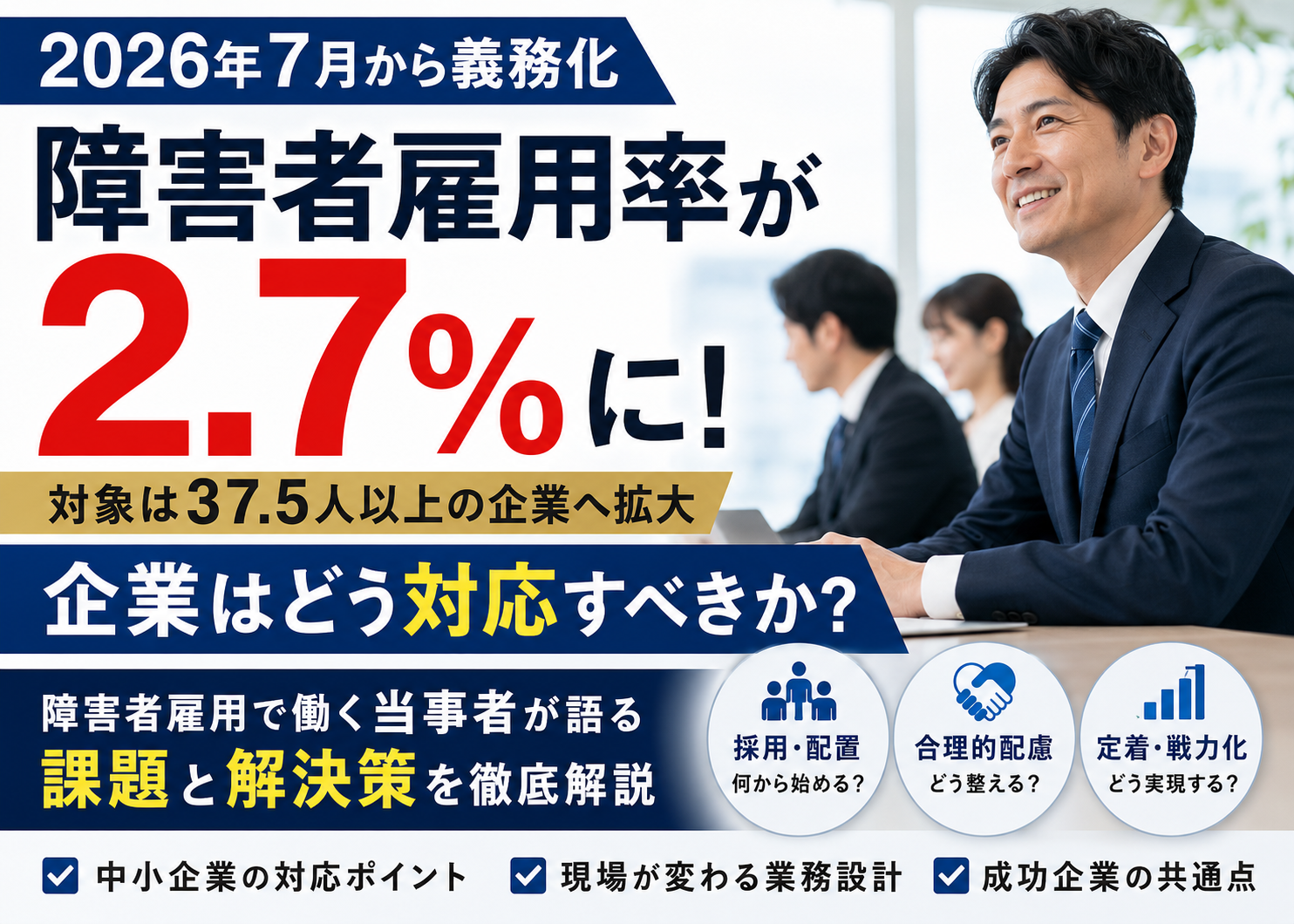
障害者雇用で「仕事を切り出す」だけでは足りない
――元課長・中途重度障害当事者が考える「人を活かす仕事の再設計」
障害者雇用で「仕事を切り出す」だけでは、本当の人材活用にはつながりません。健常者時代に課長を…















コメントを残す