✅ Meta Description (within 155 characters)
Triage—a method for saving lives in medical crises—is also a tool for life and work. A mid-career person with a severe disability reveals its wisdom in this long-form blog post.
—
🔍 Primary SEO Keywords (naturally distributed throughout the text):
triage definition / prioritizing in life / focus and selectivity / task prioritization / limited resources / work with disabilities / how to protect mental space / building judgment / reviewing your work habits / sustainable living
—
Table of Contents
1. Introduction: The Day I Learned I Couldn’t Save Everything
2. What Is Triage? From Emergency Medicine to Life Strategy
3. What Disability Taught Me About Limits
4. How Triage Helps at Work
5. Triage for Relationships, Emotions, and Family Life
6. The Courage to Not Do Everything
7. Letting Go Was the Beginning, Not the End
8. What I Gained Through Disability: The Power of Saying No
9. Triage Life Hacks You Can Start Today
10. Conclusion: Protecting Yourself Is the Most Important Choice
—
<a id=”section1″></a>
1. Introduction: The Day I Learned I Couldn’t Save Everything
“I want to do everything.”
“I feel like I’ll fall behind if I don’t keep up.”
“I thought working hard was the only way.”
I used to live like that—until one day, everything stopped.
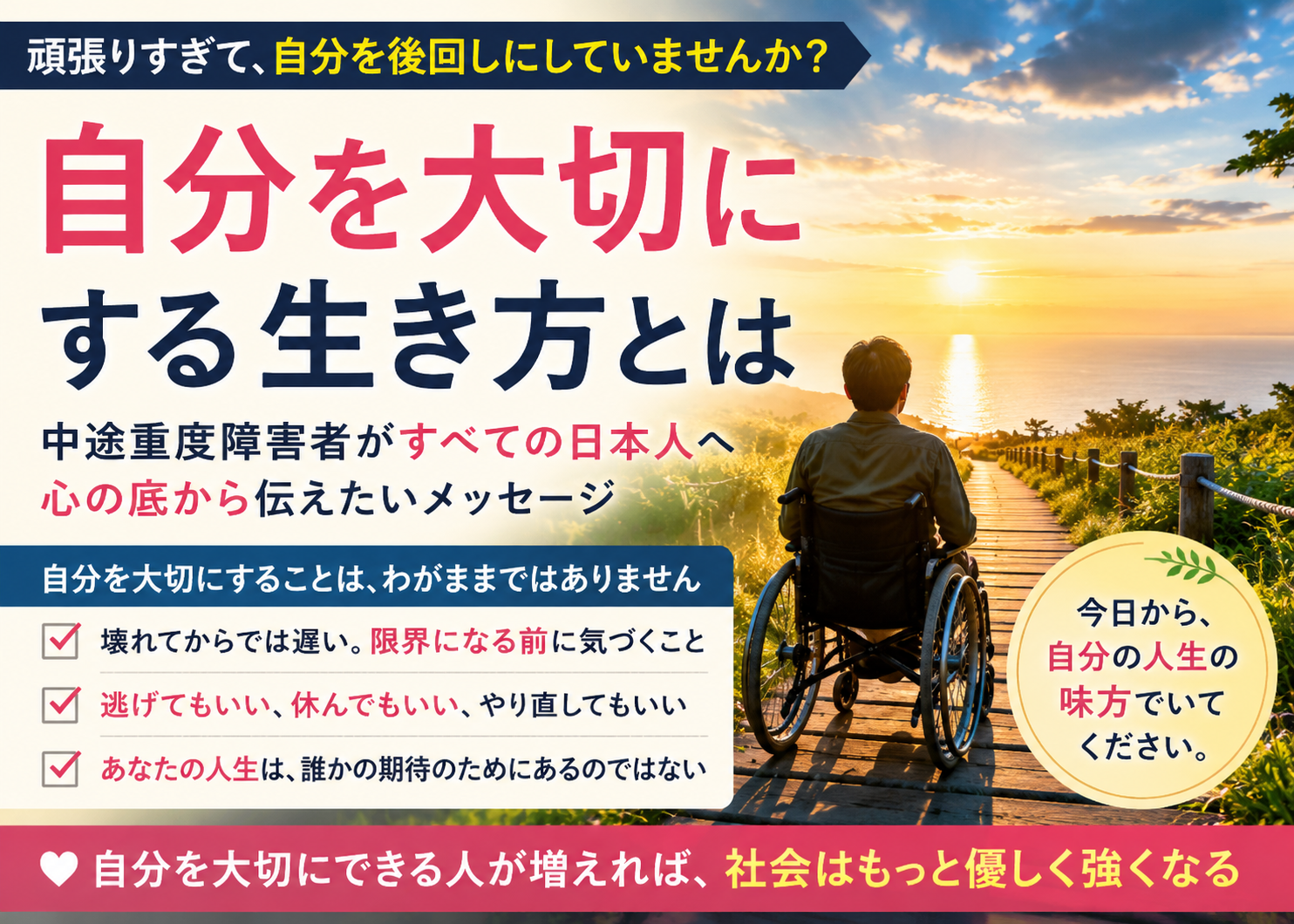
I developed a severe physical disability later in life. In a single moment, I lost the ability to live as I used to—at work, at home, in relationships.
I was devastated. But as time passed, I realized something important:
Because I couldn’t save everything, I finally learned what was truly worth saving.
That’s when the concept of “triage” entered my life—not just as a medical term, but as a life strategy.
—
<a id=”section2″></a>
2. What Is Triage? From Emergency Medicine to Life Strategy
▷ Medical Triage: The Basics
“Triage” comes from the French word trier, meaning “to sort.”
In emergency medicine and disaster response, it refers to the process of determining who receives treatment first when resources are limited. Typically, patients are sorted into:
Red: Requires immediate treatment to survive
Yellow: Can wait a little, but still needs urgent care
Green: Injured but stable; can wait longer
Black: Chances of survival are low; comfort care only
It may sound harsh, but triage is not about abandoning people—it’s about saving as many lives as possible with what little we have.
▷ Life Triage: The Same Logic Applies
Our daily lives are no different.
We’re bombarded with tasks, emotions, expectations, social media, deadlines…
Trying to “do everything” often leads to burnout and regret.
That’s where triage thinking for life comes in:
Red: What must I absolutely do today?
Yellow: What can wait but still matters?
Green: What’s optional or can be delegated?
Black: What should I let go of?
—
<a id=”section3″></a>
3. What Disability Taught Me About Limits
After my accident, my time and energy became severely limited.
Tasks that once took 5 minutes could now take 30.
A full 10-hour workday was impossible—I now function best with about 4 focused hours.
▷ Key Realizations
“If you try hard enough, you can do anything” is a myth
Choosing what not to do is more powerful than trying to do everything
Letting go is not defeat—it’s survival
We all live with limited resources, even if we don’t realize it.
My disability just made that painfully obvious—and ultimately freeing.
—
<a id=”section4″></a>
4. How Triage Helps at Work
I now work at a major infrastructure company through disability-inclusive hiring. Even with support, there are still days when I feel overwhelmed by tasks.
That’s where triage thinking saves me.
▷ Example: Task Prioritization at Work
Priority Task Strategy
🔴 Red Finish report for tomorrow’s meeting Complete before end of day
🟡 Yellow Create slides for next week’s training Start after main tasks are done
🟢 Green Organize files in the shared drive Do if time permits
⚫️ Black Reply to every internal message instantly Skip or delay non-urgent chats
You don’t need more time.
You need to stop spending time on what doesn’t matter.
—
<a id=”section5″></a>
5. Triage for Relationships, Emotions, and Family Life
▷ Relationship Triage
After becoming disabled, some people distanced themselves from me.
It hurt at first—but in time, I saw it as a blessing.
The people who stayed became my true support system.
What I Now Value:
People who truly listen
People who respect my pace
People who don’t expect me to be “normal”
We don’t need to be liked by everyone.
We just need a few people who see and accept us.
▷ Emotional Triage
Anger? Let it cool before reacting.
Sadness? Feel it fully—but only when safe.
Anxiety? Breathe, write it down, and revisit later.
You don’t have to “solve” every emotion immediately.
Sometimes, labeling and delaying is the most self-compassionate thing you can do.
—
<a id=”section6″></a>
6. The Courage to Not Do Everything
Society praises those who work hard, push through, and say yes to everything.
But that kind of life… nearly broke me.
Now, I live by a different code:
> You don’t have to do everything.
You only need to protect what matters most.
That’s not laziness—it’s wisdom.
It’s how I preserve my energy, dignity, and life.
—
<a id=”section7″></a>
7. Letting Go Was the Beginning, Not the End
I let go of:
Full-time, high-pressure jobs
Driving myself everywhere
The need to be “totally independent”
Caring what others thought of me
And in return, I gained:
A flexible, sustainable work rhythm
A stronger bond with my partner
A new mission in life through blogging
Connections with others navigating disability
Letting go isn’t about loss.
It’s about opening space for something new.
—
<a id=”section8″></a>
8. What I Gained Through Disability: The Power of Saying No
Saying “no” used to feel scary.
Now, it feels like self-respect.
Because I can’t do everything, I’m forced to choose:
Which meetings truly matter
Which social networks nourish me
Which projects deserve my energy
That clarity has become one of my greatest strengths.
It’s not a weakness—it’s an evolved survival strategy.
—
<a id=”section9″></a>
9. Triage Life Hacks You Can Start Today
✅ Use a “Red, Yellow, Green” To-Do List
🔴 Must Do Today
🟡 Can Do This Week
🟢 Can Do Later (or not at all)
✅ Emotional Journaling
Write:
“What emotion am I feeling?”
“Does it need immediate action?”
This creates space before reaction.
✅ Relationship Audit
Ask:
“Do I feel energized or drained after talking to this person?”
Adjust accordingly.
—
<a id=”section10″></a>
10. Conclusion: Protecting Yourself Is the Most Important Choice
We don’t need to be everything for everyone.
We don’t need to chase every opportunity.
We don’t need to say yes to every request.
We just need to choose—wisely, gently, courageously.
Triage isn’t about abandoning what matters.
It’s about protecting what truly does.
—
💬 If this article resonated with you, I’d love to hear your thoughts.
Leave a comment, share this with a friend, or send me a message.
Let’s normalize lives where “less” is not a failure—but a wise, loving choice.
#TriageThinking #MinimalistMindset #DisabilityInclusion #FocusAndLetGo #ProtectYourEnergy #LivingIntentionally #MidlifeWisdom #WorkLifeBalance #MentalHealthMatters

障害者雇用で「仕事を切り出す」だけでは足りない
――元課長・中途重度障害当事者が考える「人を活かす仕事の再設計」
障害者雇用で「仕事を切り出す」だけでは、本当の人材活用にはつながりません。健常者時代に課長を…

















コメントを残す