Introduction | The Day I Was Asked, “Do You Hold a Grudge Against Society?”
One day, someone asked me a question I didn’t expect:
“Don’t you hold a grudge against society?”
At first, I was surprised. Yes, I became severely disabled later in life. I lost many things, and my world changed drastically. But not once have I felt hatred toward anyone.
Rather, I’ve been supported — by welfare systems, by my local community, and by the kindness of strangers. I am alive today because of that support. That’s why I don’t see society as something to resent, but as something I want to repay.
Yet, this feeling of gratitude may be deeply connected to a contrasting experience — the departure of someone closest to me.
Chapter 1 | My Wife’s Decision and My Acceptance
When I became disabled, the person who was closest to me — my wife — chose to leave.
She told me:
“I want a divorce.”
It pierced my heart like a knife. But now, I no longer blame her. Living with someone who had suddenly become severely disabled would have demanded immense emotional and physical strength. Perhaps her decision was inevitable.
While my wife chose to leave, society — surprisingly — did not.
This contrast between the individual and society shaped the way I see the world today.
Chapter 2 | Discovering the Power of Being Supported
After becoming disabled, I learned what it truly means to be supported. Welfare systems gave me a lifeline. Government workers patiently taught me how to apply for assistance and adapt to my new life.
Neighbors cleared the snow from my front door. A local volunteer offered to drive me to the hospital when I couldn’t walk.
These weren’t just “services.” They were acts of human kindness — a chain of compassion.
I realized that I wasn’t living alone. And somewhere deep inside, I felt this unshakable sense: “Someday, I have to return this kindness.”
Chapter 3 | What Does It Mean to “Give Back”?
Even with a disability, there are always ways to contribute. I began looking for a way to give back.
One was registering as a foster parent.
Despite my physical limitations, I wanted to provide warmth and care to children in need. With help from local officials and understanding social workers, I completed the process and became a registered foster parent.
Another way was employment. I knew I couldn’t do physical labor, but I still had experience and skills. That’s why I applied for an administrative position at an electric power company.
That job was part of the foundation of society — supporting the infrastructure of daily life. Moving from the “helped” to the “helper” side gave me a deep sense of purpose.
Chapter 4 | Rebuilding Relationships With Society
Welfare isn’t just about financial aid. It’s a bridge that allows people like me to reconnect with society.
After becoming disabled, I felt like all my previous relationships had been wiped away. But through welfare, I slowly built new ones.
With city employees. With other disabled individuals I met online. With job support staff who encouraged me every step of the way.
These relationships helped me rejoin society — not as a burden, but as a person of value.
Chapter 5 | Living Joyfully Is Not Just for Me
There’s one thing I want to say clearly:
I don’t live with a smile to appear noble. I don’t want pity. I choose to live joyfully — not only for my own well-being, but to give peace of mind to those who care about me.
If I lived in sorrow, what would others think?
“Maybe supporting him wasn’t worth it.”
“Maybe he can’t find happiness anymore.”
That would hurt me more than anything.
So I smile. I joke. I enjoy my hobbies. I work. I write blogs. I live joyfully so others feel at ease.
And someday, if I face new hardships, I want to look back and say:
“I lived my life well.”
Chapter 6 | Choosing to Work in the Energy Sector
When I got the opportunity to work at an electric power company, I knew it was more than a job. It was a way to truly give back.
I can’t climb poles or fix wires. But as an office worker, I support those who do. I manage schedules, prepare documents, and help keep operations smooth.
Knowing that I play a small part in powering society gives me pride. I’m not just surviving — I’m contributing.
Chapter 7 | The Cycle of Support and Gratitude
Welfare is not charity. It’s a cycle — a living ecosystem of support.
Those who are helped today can help others tomorrow.
I believe in this cycle. I’ve lived it.
I was once supported. Now, I support.
This exchange — this passing of kindness from one to another — is what keeps our society strong and warm.
Chapter 8 | No Grudge, Only Hope
It’s easy to feel bitter about society. After all, the world isn’t perfect. Accessibility is lacking. Job options are limited. Hurtful words still exist.
But what does resentment solve?
Instead, I choose hope.
“I was supported.”
“Now I support.”
“That’s what society is meant to be.”
Conclusion | Living Is My Way of Giving Back
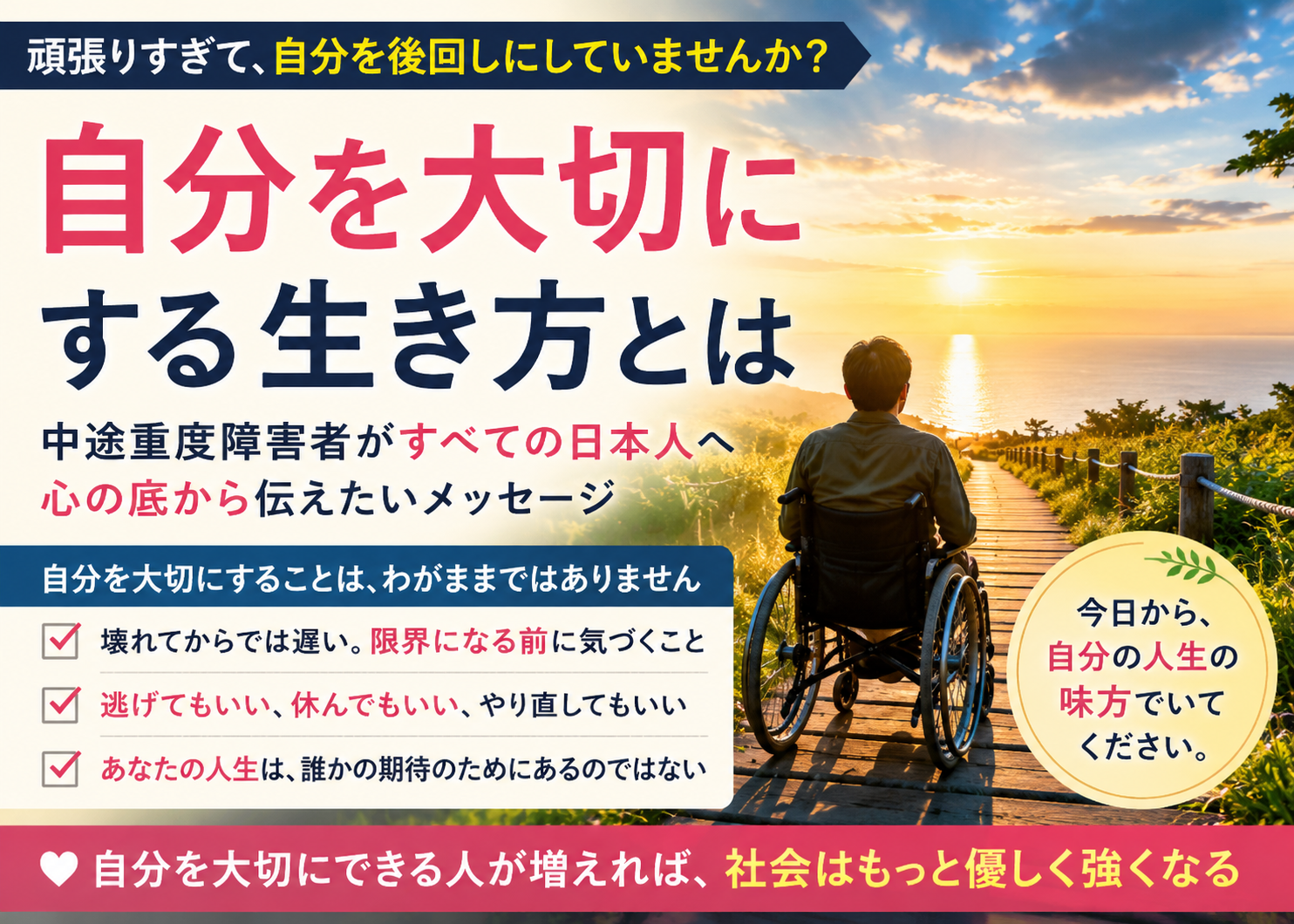
I’m proud to be a person with a disability.
Not because I’m special, but because I’ve chosen to live with gratitude and contribute in my own way.
I believe that living itself is the greatest way to give back.
To everyone who helped me — thank you.
I will continue to repay your kindness — through my work, through my home, through my writing, and through my joy.
Because a joyful life is the most sincere way I can say thank you.













コメントを残す