SEO Meta Description (within 155 characters)
The invisible world once saved me—but I realized that alone isn’t enough. A disabled blogger explores the balance between faith and action in this reflective blog.
Primary SEO Keywords (naturally embedded)
- Invisible world meaning
- Spirituality and reality balance
- Dangers of relying only on faith
- Disability and life philosophy
- Seeing the visible world clearly
- Balanced way of living
- Prayer and action
- Spiritual vs practical life
- Living with both seen and unseen
- Wisdom from classics: Hōjōki, Analects
Table of Contents
- Introduction | I Was Saved by the Invisible World, Until I Wasn’t
- Chapter 1 | Why Do We Seek the Invisible World?
- Chapter 2 | The Moment I Realized Faith Alone Was Not Enough
- Chapter 3 | What Rehabilitation Taught Me About Action
- Chapter 4 | Wisdom from Classics: Integrating the Visible and Invisible
- Chapter 5 | The Dangers of Escapism in Spirituality
- Chapter 6 | My Conclusion: See the World with Both Eyes
- Final Thoughts | You, Too, Have Two Worlds Within You
Introduction | I Was Saved by the Invisible World, Until I Wasn’t
Do you believe in the “invisible world”?
I do. In fact, I had to—after acquiring a severe disability midlife, I found that visible things like money, jobs, or even health didn’t offer comfort. What sustained me were invisible things: belief, hope, prayer, the presence of love, and my own inner conviction.
But one day I thought:
“Am I relying on this too much? Am I neglecting the visible world in front of me?”
This blog is about that realization.
It’s about how I came to see that only valuing the invisible world can become dangerous, and how balancing both the visible and invisible worlds has become essential for living fully.
Chapter 1 | Why Do We Seek the Invisible World?
1-1. Searching for “Meaning” in Suffering
When reality becomes too painful, humans seek meaning.
Questions like:
- “Why is this happening to me?”
- “Why am I so unlucky?”
- “Is there a reason for my suffering?”
These questions often lead us toward spiritual beliefs or inner philosophies.
When I became disabled, I told myself:
“This is probably a test from above.”
“Maybe it’s a karmic result from a past life.”
“There must be a reason for this pain.”
Believing those things gave me comfort—and it helped me survive.
1-2. How Social Media Amplifies Spiritual Content
In today’s world, platforms like Instagram and TikTok overflow with spiritual posts:
- “High vibrations attract good fortune.”
- “Go with the flow of the universe.”
- “Messages from your past life will guide you.”
While these phrases sound uplifting, they can sometimes lead to mental laziness or emotional dependence—causing us to avoid facing reality.
Chapter 2 | The Moment I Realized Faith Alone Was Not Enough
2-1. I Was Using Faith as an Escape
One day, I asked myself:
“Am I actually doing something to improve my life?”
“Or am I just making excuses while doing nothing?”
It hit me hard.
I wasn’t moving forward.
I was hiding behind spirituality to avoid facing the harshness of reality.
“The invisible world saved me, but now it’s starting to trap me.”
That moment changed everything.
2-2. The Cost of Ignoring Reality
The more I avoided the visible world, the more my life suffered:
- I lost motivation for work.
- My social ties weakened.
- I stopped solving practical problems.
By relying too much on “the universe” or “divine timing,” I had slowly abandoned my own agency.
Chapter 3 | What Rehabilitation Taught Me About Action
3-1. Muscles Don’t Move with Prayer Alone
In rehab, I learned this truth:
“No matter how much you hope or pray—your body won’t move unless you make it move.”
Faith may calm the heart, but it doesn’t lift your limbs.
Spiritual strength doesn’t replace physical effort.
3-2. Life Moves Forward When Prayer and Action Work Together
That’s when I realized:
Prayer and action are not enemies—they’re partners.
- Prayer gives you direction.
- Action gives you movement.
We need both to build a meaningful life.
It’s like walking with two legs: one invisible, one visible.
Chapter 4 | Wisdom from Classics: Integrating the Visible and Invisible
4-1. ‘Hōjōki’ and the Courage to Face Reality
In Hōjōki, Japanese writer Kamo no Chōmei doesn’t shy away from disasters. He describes fires, earthquakes, and disease with brutal honesty.
Despite his spiritual outlook, he didn’t escape reality—he stared directly at it.
His balance taught me that spiritual maturity doesn’t mean floating above the world.
It means standing within it while holding meaning in your heart.
4-2. The Analects: Uniting Heart and Action
Confucius taught “仁 (jin)”—benevolence—and “礼 (rei)”—social practice.
He emphasized turning invisible virtue into visible behavior.
Spiritual insight meant nothing if it didn’t show up in your daily actions.
That wisdom is still true today.
Chapter 5 | The Dangers of Escapism in Spirituality
5-1. Why Relying Too Much on Spirituality Is Risky
Let’s be honest: spiritual thinking can be addictively comfortable.
- It lets you avoid blame.
- It explains bad luck away.
- It delays the need for change.
But if you’re not careful, it becomes a trap.
The invisible world should support us—not become a shortcut to avoid life’s challenges.
5-2. How to Find Healthy Balance
Balance means:
- Dreaming, while keeping your feet on the ground.
- Being grateful, while still making improvements.
- Praying, while also taking responsibility.
This dual approach makes us more grounded, more resilient.
Chapter 6 | My Conclusion: See the World with Both Eyes
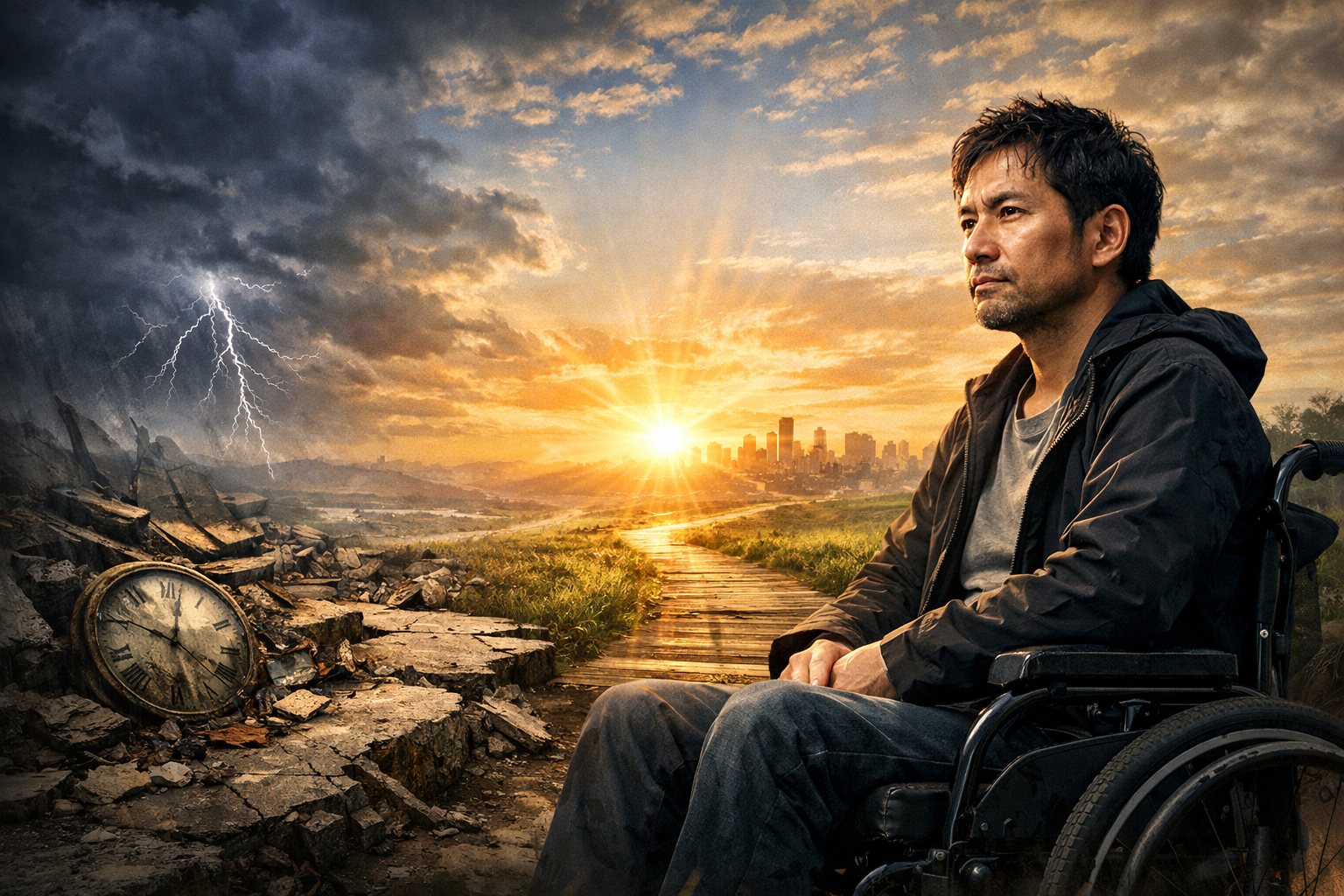
One eye for hope. One eye for reality.
That’s the balance I try to live by.
The visible world is tough. But it’s where we connect with others, build things, and make change.
The invisible world is tender. But it must not become an excuse to stop growing.
“Faith supports the soul. Action moves the body.”
We need both.
We deserve both.
Final Thoughts | You, Too, Have Two Worlds Within You
If you’ve read this far, I know one thing:
You, too, have been saved by the invisible world.
But you’ve also faced reality and kept going.
And that combination is powerful.
Please don’t reject either side of yourself.
Instead, accept them both.
“Pray with your heart. Walk with your feet.”
That is how I move forward.
And maybe, it’s how you will too.
If this article resonated with you, please share it or leave a comment. Let’s keep this dialogue going.















コメントを残す