SEO Meta Description (within 155 characters)
Ancient Japan saw time not as a straight line but as a layered cycle. This blog explores how its timeless worldview offers healing wisdom for modern life.
Main SEO Keywords
ancient Japanese time perception / no separation between past present future / cyclical time / myth and time / Japanese view of life and death / ancient belief systems and time / Japanese cultural time awareness / time and community perception
Table of Contents
- Introduction | Why Do We Assume Time Must Be Divided?
- Chapter 1 | Ancient Japan’s View: Time as Overlap, Not Flow
- Chapter 2 | Kojiki and Nihon Shoki: Myths Merged with the Present
- Chapter 3 | Ancestral Spirits and the Presence of the Dead
- Chapter 4 | The Philosophy of Impermanence: Only Now Exists
- Chapter 5 | Embracing the Past and Future as Part of Now
- Conclusion | A Life Unshackled by Time
Introduction | Why Do We Assume Time Must Be Divided?
Modern society assumes time flows in one direction: past → present → future. Our calendars, resumes, project timelines—all rely on this linear concept.
But that idea isn’t universal. Ancient Japanese people viewed time in a profoundly different way.
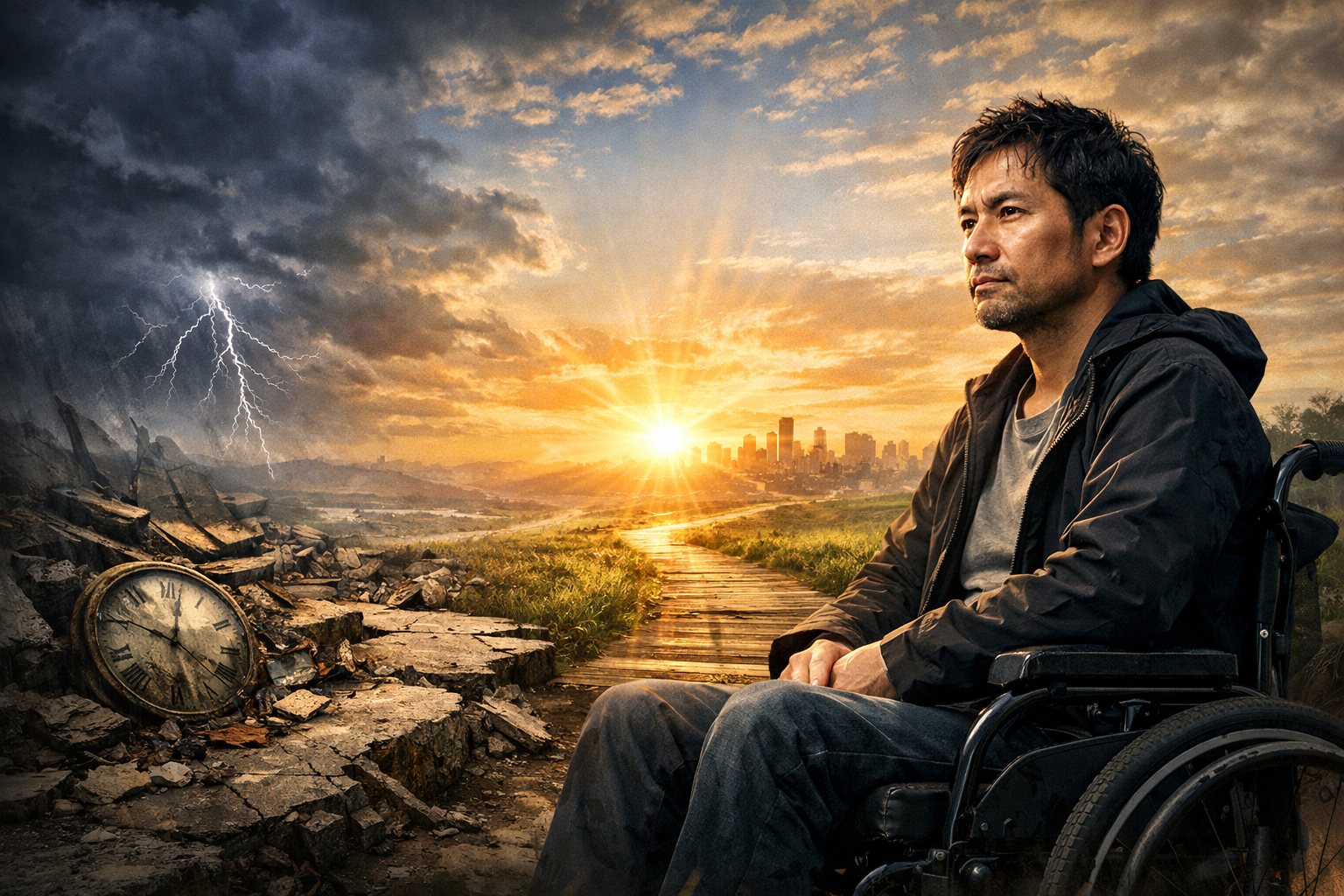
To them, past, present, and future weren’t separate. Rather, they coexisted in the ever-present now.
This cyclical and layered time perspective was deeply embedded in mythology, rituals, views of life and death, and even the relationship with nature.
In this blog, we’ll explore the essence of ancient Japan’s concept of time and how it offers a compelling alternative to modern life’s stressful tempo.
Chapter 1 | Ancient Japan’s View: Time as Overlap, Not Flow
1-1. Linear vs. Cyclical Time
The clocks and calendars we rely on today are based on Western perceptions of time—rooted in Christianity and Greek philosophy: a beginning and an end.
In contrast, ancient Japanese people saw time as cyclical, overlapping, and ever-returning.
Like the recurring seasons, life too was perceived as a cycle—birth, death, and return. But this wasn’t repetition; it was recreation of sacred space in different moments.
1-2. Rituals as the Re-Creation of Sacred Time
At Ise Grand Shrine, the buildings are rebuilt every 20 years in a tradition known as Shikinen Sengu. This isn’t due to decay but to spiritually recreate the same space in a new moment.
Similarly, rituals like Niiname-sai or Daijōsai aren’t just annual events. They are opportunities for gods and people to reconnect—now, as if it were the original time again.
Chapter 2 | Kojiki and Nihon Shoki: Myths Merged with the Present
2-1. The Ambiguity of Beginnings
The Kojiki opens with the creation of heaven and earth (tenchi kaibyaku), but without dates or chronology. Gods simply “appear”—timelessly.
Myths weren’t distant past—they were continuously unfolding.
2-2. Myth, History, and the Now
In the Nihon Shoki, the imperial lineage from Emperor Jimmu to modern emperors is depicted as one unbroken continuum rooted in divine myth.
The emperor isn’t a historical relic but a living thread connecting gods to the present. Myth and reality merged seamlessly.
Chapter 3 | Ancestral Spirits and the Presence of the Dead
3-1. The Dead Never Truly Leave
In Japanese ancestral belief, the dead don’t vanish into a faraway afterlife. They remain near, watching over the living.
They dwell in the mountains or by the sea. During Obon, we don’t invite them back—they’re already with us. Obon is simply the time we acknowledge them again.
3-2. A World Without Boundaries
Today we draw clear lines between life and death, past and present. Ancient Japanese culture saw no such walls. The dead coexisted with the living, influencing life as unseen but constant companions.
Chapter 4 | The Philosophy of Impermanence: Only Now Exists
4-1. Impermanence Is Not Despair
With the arrival of Buddhism, the idea of mujo—impermanence—took root in Japanese thinking.
But it wasn’t nihilistic. On the contrary, it affirmed life: because all things change, the present moment becomes supremely valuable.
4-2. Hōjōki and Tsurezuregusa: Surrendering to Time
In Hōjōki, the transient nature of the city and life is described:
The flow of the river is ceaseless, yet the water is never the same.
This line captures the beauty of embracing change, of living fully within the now.
Chapter 5 | Embracing the Past and Future as Part of Now
5-1. Healing by Embracing the Whole Self
Modern life often leads us to fear the future and regret the past. But the ancient time perspective teaches us that both are present in this very moment.
Trauma isn’t a shadow from the past—it’s part of who we are now. The future isn’t a plan but a prayer—born from how we live today.
5-2. Prayer as a Timeless Act
In ancient Japan, to pray wasn’t to control the future. It was a spiritual discipline to bring one’s whole self—past wounds and future hopes—into the clarity of now.
Conclusion | A Life Unshackled by Time
Dividing time into past, present, and future can imprison us:
- We grieve over the past
- We fear the future
- We miss the now
But ancient Japan’s worldview invites us to see all moments as folded into the present.
- The past becomes legacy and gratitude
- The present becomes breath and presence
- The future becomes prayer and possibility
We can live more gently, more freely, when we realize we can only ever live in the now.
Ancient Japanese people understood this deeply, even if they never said it in modern words. Their rituals, myths, and everyday customs reflect a timeless truth:
Time doesn’t pass. It accumulates. And in that quiet accumulation, we are always here—now.
In that sacred now, we can live with more kindness. More honesty. More peace.














コメントを残す