SEO Meta Description (within 155 characters)
A real story of surviving as a person with a severe disability. Learn how to live wisely with limited resources through focus, selection, and reverse thinking.
Main Keywords (naturally embedded throughout the text)
- severe disability strategy
- reverse design thinking
- focus and selection
- disabled career planning
- surviving with limited resources
- disability and blogging
- disability employment tips
- life design under constraints
Table of Contents
- Introduction | When “I Can’t Do Everything” Becomes a Strength
- Chapter 1 | Living as a Severely Disabled Person: The Hard Reality
- Chapter 2 | The Power of Saying “No”: Focus and Selection
- Chapter 3 | Designing Life Backwards from Your Ideal Future
- Chapter 4 | Career Planning with a Severe Disability
- Chapter 5 | Blogging as a Tool of Influence for Those Who Can’t Move
- Chapter 6 | Why This Strategy Applies to Everyone
- Conclusion | The Ones Who Design Around Their Limits Shape the Future
Introduction | When “I Can’t Do Everything” Becomes a Strength
We all live with some form of limitation—time, energy, mental focus, physical ability, or social support. These limits become even more visible when you have a severe disability.
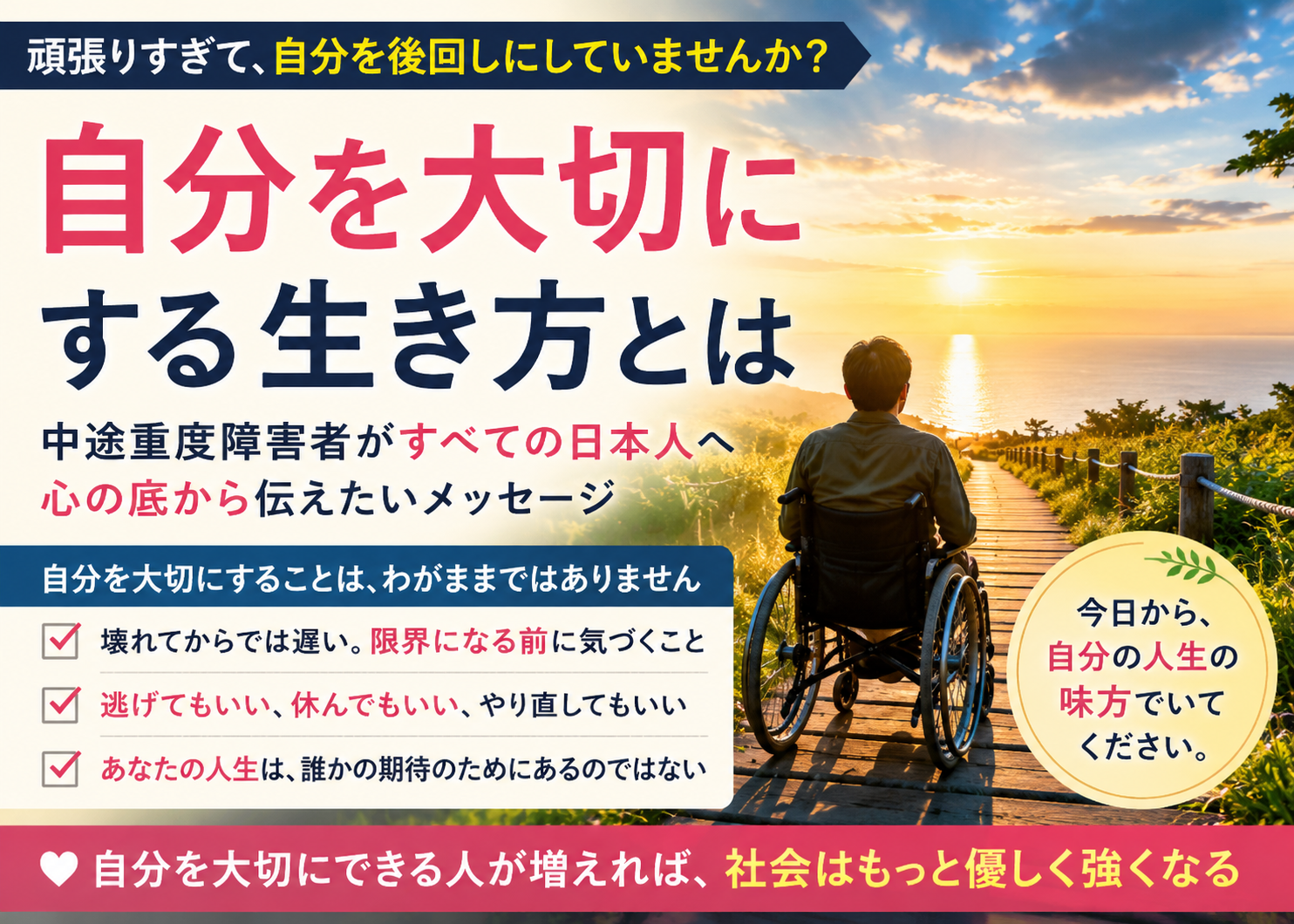
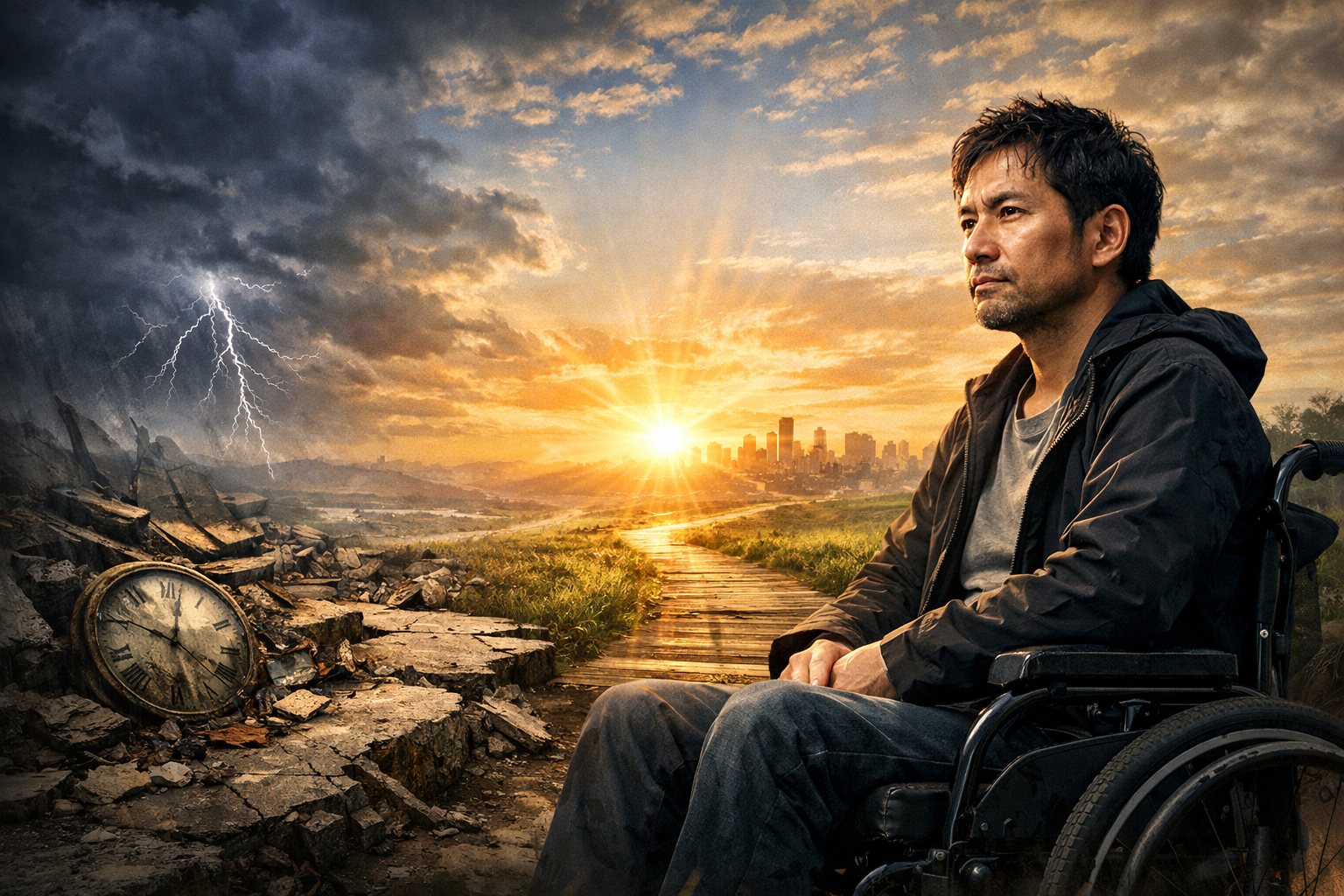
In my case, I lost my physical freedom midlife. I couldn’t walk. I couldn’t go out without assistance. I couldn’t even manage a full day of work without exhaustion. But it was precisely in that crisis that I discovered a new way of thinking:
“I must live by strategy, not just effort.”
This blog shares my lived experience of using focus, selection, and reverse design thinking to rebuild my life. These methods are not just for people with disabilities—they’re for anyone facing constraints.
Chapter 1 | Living as a Severely Disabled Person: The Hard Reality
After acquiring a severe disability, I lost many things:
- Freedom of movement
- Physical endurance
- Career options
- Spontaneous social interaction
- Independence
But beyond those losses, I discovered an insight:
“Limits are not tragedies. They are design conditions.”
Once I accepted my new limitations, I stopped chasing everything and began building a life with purpose. I stopped spreading myself thin and started choosing what truly mattered.
Chapter 2 | The Power of Saying “No”: Focus and Selection
Trying to do everything often leads to burnout. For someone with limited time and energy, focus and selection is not a luxury—it’s survival.
My “Focus and Selection” Approach:
- Limit social platforms: I focused on X (formerly Twitter) to build authentic connections.
- Choose work strategically: I picked tasks that required intellect, not physicality—like process design and documentation.
- Streamline communication: I used writing (blogs) as my main tool, rather than meetings or long conversations.
As a result:
- I reduced fatigue and confusion.
- I deepened my skills and expertise.
- I built trust with readers and coworkers.
“When you stop trying to do everything, you start doing the right things deeply.”
Chapter 3 | Designing Life Backwards from Your Ideal Future
Rather than moving forward without direction, I used reverse design thinking to guide my path.
Step-by-step Reverse Design
- Define your ideal life “I want to work stably in a large infrastructure company while making an impact through writing.”
- Map the steps backward
- Gain skills at a system integration company
- Build credibility at a mid-sized manufacturing firm
- Launch a blog to build influence
- Decide today’s actions based on that map
By thinking backwards from a goal, my daily actions gained clarity.
“The goal comes first. Strategy follows.”
Chapter 4 | Career Planning with a Severe Disability
I needed a career that respected my physical limits while using my intellectual strengths.
My strategic choices:
- Chose industries where remote or desk-based work was valued.
- Targeted companies with a clear structure and process orientation.
- Presented a portfolio that showed my “thinking and writing” skills.
Career Path:
- Started at a Mitsubishi-affiliated systems firm
- Gained process design skills at a Panasonic group company
- Achieved my long-term goal: stable employment in a major infrastructure company
“You don’t need to fight your limits. You can design around them.”
Chapter 5 | Blogging as a Tool of Influence for Those Who Can’t Move
Blogging became my main way to express and contribute.
Why blogging?
- It doesn’t require physical movement.
- It allows deep reflection.
- It connects you with readers across distance and time.
Blogging helped me:
- Build influence
- Receive empathy and encouragement
- Discover my voice and expertise
“Blogging is a digital leg for those who can’t walk.”
Chapter 6 | Why This Strategy Applies to Everyone
This is not just a disability story. It’s a story of life under limits, which we all face.
- Parents raising children
- Caregivers
- People dealing with mental illness
- Those in remote regions or marginalized communities
Everyone has some form of limited resources. That’s why strategic thinking matters for all of us.
The Three Principles:
- Know your resources
- Time, energy, support, environment
- List what you will NOT do
- Cut distractions and low-impact tasks
- Design backwards from your future
- Make the next step simple and clear
“Freedom isn’t the absence of limits. It’s knowing how to live well within them.”
Conclusion | The Ones Who Design Around Their Limits Shape the Future
With limited resources, don’t try to do everything. Instead, do the most important things exceptionally well.
“A clear strategy turns limitations into strengths.”
Your life is your design project. And your constraints are not curses—they are blueprints.
Those who understand this truth are the ones who will shape the future.














コメントを残す