Lessons from Religion and Literature on How to Live Fully
Introduction | What Does “Human Completion” Really Mean?
“Hey, where are we ultimately heading in life?”
That simple question came up one day while chatting with my wife over dinner.
It stuck with me ever since.
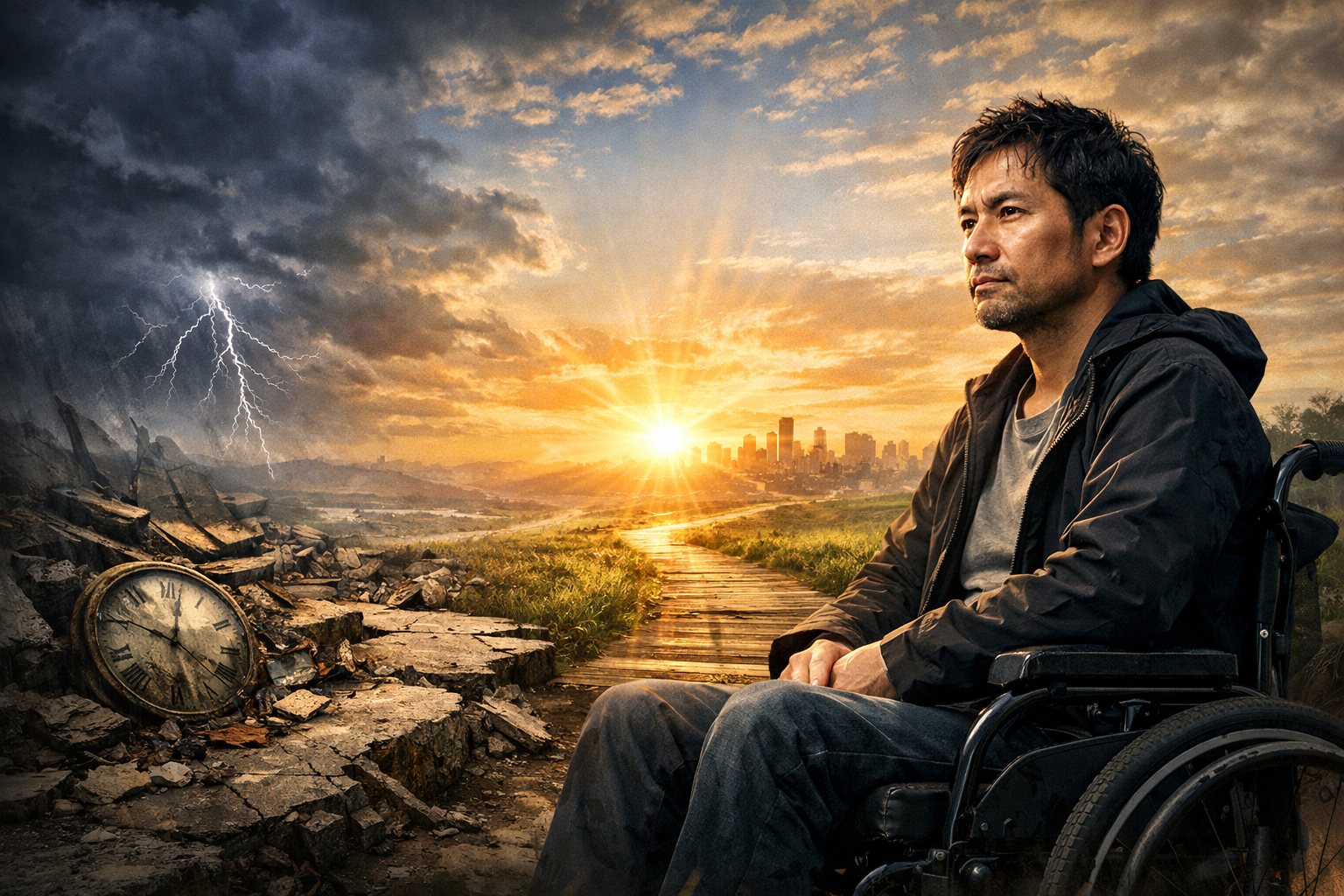
Ten years ago, I suffered a cerebral hemorrhage that left the left side of my body paralyzed. In that moment, everything I thought was “normal” in my life fell apart—my career, my body, even my identity.
Since then, I’ve often found myself asking:
What does it mean to be truly human? What does it mean to live well? And what does a “complete” human look like?
In this blog post, I’ll explore those questions through the lens of world religions and classical literature, reflecting on my own journey as a person living with a severe acquired disability.
Not to give easy answers—but to offer honest, resonant thoughts on what it means to keep moving forward.
What Religion Teaches Us About the “Complete Human”
Christianity: Love as Action
Christianity defines human fulfillment as “love for one’s neighbor.”
Jesus said:
“Love your neighbor as yourself.”
This love is not a fleeting feeling—it’s an act of will.
I remember when I was hospitalized, unable to speak or move. One day, a nurse quietly adjusted my pillow and smiled. She didn’t say a word, but her presence brought me to tears.
In that moment, I realized something: love doesn’t always need words. Sometimes, it’s the simple act of being there for someone that reveals the deepest humanity.
Buddhism: Letting Go is True Strength
Buddhism teaches that suffering stems from attachment, and that by letting go, we can reach nirvana—a state of peace beyond desire and fear.
For a long time, I clung to the idea of “going back” to who I was before my disability.
But one day, I began to release those attachments—and a sense of quiet acceptance emerged.
There are things you can only see from within limitation.
Buddhism, to me, has been a gentle voice reminding me that we are not what we “have” or “do,” but how we are with what we’re given.
Islam: Sincerity in Prayer
In Islam, the highest human goal is complete submission to Allah (God).
To pray five times a day is not about routine—it’s about honesty.
Standing before God means acknowledging your limits, your vulnerability, and your need for something beyond yourself.
I found prayer in my own way after becoming disabled.
On nights when I couldn’t sleep from pain or fear, I would silently place my hands together. Not because I had answers—but because I needed peace.
Prayer became my way of saying, “I’m still here. And I still believe in something greater.”
What Literature Reveals About Human Nature
The Odyssey: The Journey Back as a Form of Heroism
In Homer’s The Odyssey, Odysseus spends ten years struggling to return home. He isn’t just a war hero—he’s a man who stumbles, cries, and keeps going.
To me, that story mirrors life with disability.
I can’t go back to who I was—but I can find my way home as the person I’ve become.
Human completion isn’t about “restoration.”
It’s about integration—carrying your wounds and your wisdom as you walk forward.
The Death of Ivan Ilyich: What Remains at the End
Tolstoy’s novella tells the story of a man facing death, realizing too late that his life was built on shallow values. In his final moments, he discovers:
“I am not dying. I am becoming.”
This line shook me.
Because I, too, lost nearly everything—mobility, confidence, even relationships.
But in that loss, I found something that remained:
the ability to love, to forgive, and to be thankful for life itself.
Completion isn’t about having everything.
It’s about knowing what truly matters when everything else is gone.
A Complete Human Isn’t a Perfect One
We often imagine “complete” humans as superheroes—flawless, powerful, untouchable.
But religion and literature suggest something else entirely:
- Those who know their own weakness can truly empathize.
- Those who have been hurt can offer real kindness.
- Those who are imperfect can still be wholly human.
I’ve come to believe that completion means accepting our imperfection and choosing to live anyway.
Disability as a Question, Life as the Answer
Since acquiring my disability, I’ve carried a lot of questions:
- Do I still have worth?
- Can I live fully in this body?
- What makes me “me”?
Religion and literature haven’t answered those questions for me.
But they’ve helped me live them more honestly.
Maybe that’s what completion really means:
not finding the answer, but living the question.
Conclusion | Let’s Walk This Path, Slowly but Surely
If you’re reading this and feeling “incomplete,” let me tell you something—you’re not alone.
I’m right there with you.
The world often tells us to be strong, capable, independent.
But sometimes, the most courageous thing we can do is simply exist—honestly, vulnerably, and with others.
I’m not finished.
You’re not finished.
But we’re both on the path.
Let’s keep walking—together.














コメントを残す