Ten years ago, I suddenly became “disabled.”
A stroke left me with paralysis on my left side.
Everything I used to do without thinking suddenly became a struggle.
Rehabilitation was tougher than I had imagined.
Even the smallest movements caused pain.
I kept asking myself, “Why did this happen to me?”
But no matter how much I dwelled on it, I couldn’t turn back time.
Then, one day, a thought crossed my mind:
“Now that I’m disabled and can do less than before, maybe I don’t need to pretend to be an adult anymore?”
This realization lifted a weight off my shoulders.
Losing a Childlike Mindset While Growing Up
As a child, I was excited about everything.
Games, toys, playing outside—everything felt new and fun.
But as I grew older, people around me started saying things like:
“You’re too old for that.”
“You should act more like an adult.”
Little by little, I abandoned my childlike excitement and curiosity.
To survive in society, I thought I had no choice.
At work, I was expected to be responsible.
I had to meet the expectations of those around me.
So, I prioritized “acting like an adult” over “enjoying things like a child.”
Becoming Disabled Made Me Stop Pretending to Be an Adult
Then, ten years ago, I became disabled.
At first, I focused only on “what I couldn’t do anymore.”
Walking, using my dominant hand, speaking smoothly.
Things I once took for granted now required a huge effort.
“How am I supposed to live like this?”
But then, I had a sudden realization:
“Maybe I don’t have to force myself to be an adult anymore.”
Before, I always worried about how others saw me.
I forced myself to “act like a responsible adult.”
But now that I was disabled, did I really need to?
In fact, I noticed that society treats disabled people differently.
When I was able-bodied, people expected me to take care of myself.
But as a disabled person, people expected to help me.
So, I thought, “Why not just accept it?”
I could be honest about needing help.
I could openly enjoy the things I love, like a child.
When I accepted this idea, I felt relieved.
Balancing “Adult Responsibilities” and “Childlike Freedom”
Of course, real life isn’t that simple.
Even as a disabled person, I still have to work.
I still have responsibilities as a member of society.
So, I needed to find a balance between my childlike mindset and adult responsibilities.
For example:
✅ I take responsibility at work.
✅ But in my personal life, I allow myself to have fun.
✅ I ask for help when I need it.
✅ But I make sure not to rely too much on others.
This balance lets me live in a way that feels true to myself.
What I Gained from Becoming Disabled
Losing physical abilities was tough.
But in exchange, I gained a new perspective.
I realized:
▶ I don’t need to pretend to be an adult.
▶ I can openly enjoy things, like a child.
▶ I don’t have to fit into society’s expectations.
I want to keep embracing my childlike mindset.
I refuse to let society define “what a disabled person should be.”
Instead, I focus on what makes me happy.
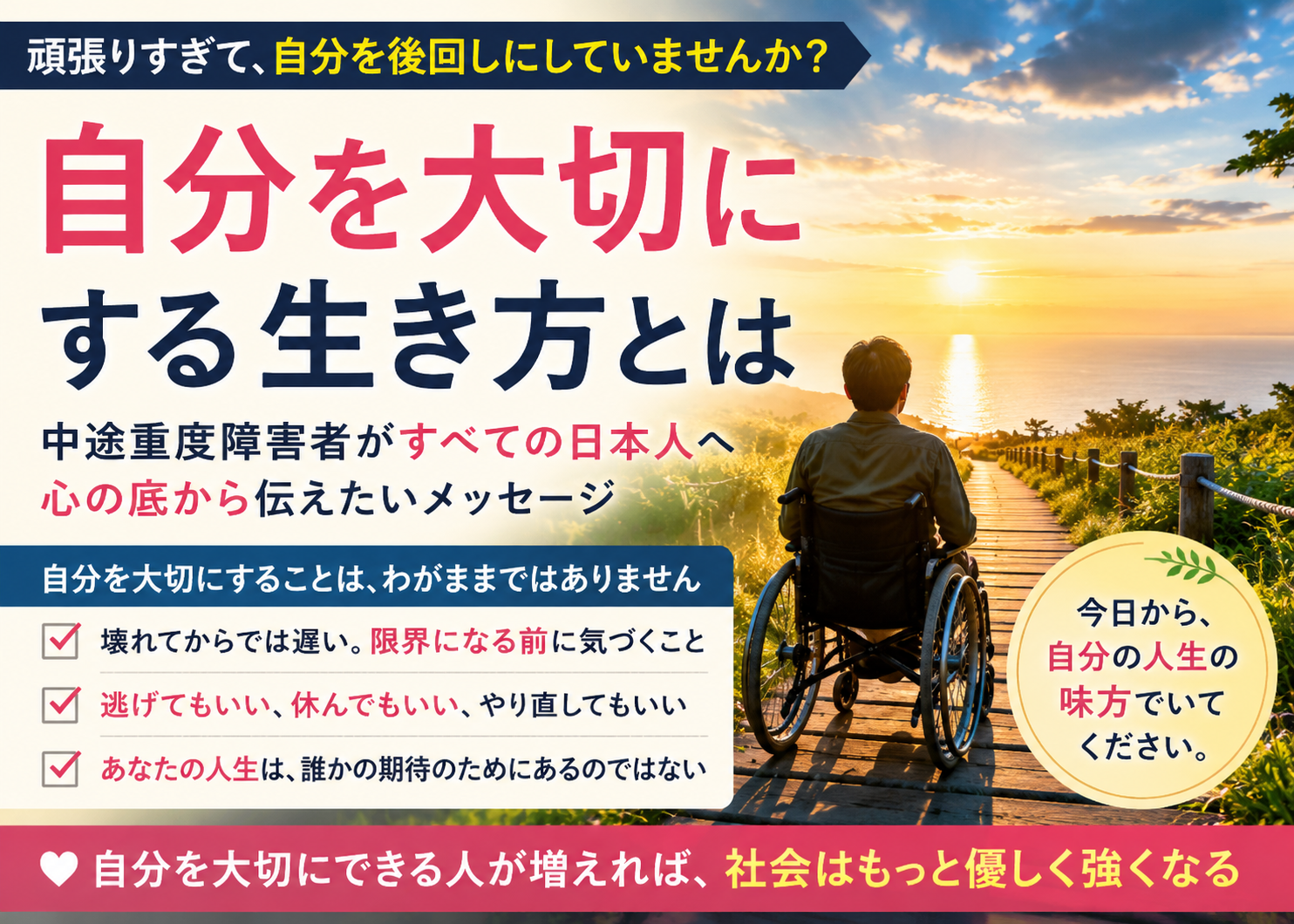
If you’re reading this and feeling pressured to “act like an adult” all the time,
I encourage you to remember how you felt as a child.
Think about the moments when you felt pure joy.
The times when you were truly excited about life.
That feeling is important—whether you’re disabled or not.
Final Thoughts – “Childlike” Is Not a Bad Thing
Even as adults, we can still embrace childlike joy.
If anything, becoming disabled showed me how freeing it can be.
Society tells us to “act like adults.”
But I believe in “acting like myself.”
So, from now on, I will continue to:
✅ Be responsible where it matters.
✅ Enjoy life in a childlike way.
✅ Live at my own pace.
Would you like to try embracing your childlike self, too?
















コメントを残す