The rising number of people with disabilities in modern Japan is an issue we can no longer ignore. Aging demographics, advancements in medical technology, and shifts in societal awareness are all contributing factors. However, despite these developments, Japan’s environment for people with disabilities remains insufficient. In this article, I will outline the current situation based on data and propose welfare policies to reduce the overwhelming burden on families. I hope this piece serves as a starting point for many to consider how we can better support those with disabilities in our society.
The Growing Number of People with Disabilities
According to the Ministry of Health, Labor, and Welfare’s “White Paper on Persons with Disabilities,” the number of people with disabilities in Japan has increased by approximately 10% over the past decade. The breakdown reveals that there are about 4.36 million people with physical disabilities, 1.09 million with intellectual disabilities, and 4.19 million with mental disabilities. Notably, the number of people with mental disabilities has grown significantly, reflecting advancements in diagnostic techniques and increased public awareness.
This increase is not merely about numbers—it raises critical questions about how society accommodates individuals with disabilities and integrates them into daily life.
The “Isolation” Faced by People with Disabilities and Their Families
Many people with disabilities in Japan rely on their families for care. However, this reliance places a heavy burden on families, often leading to caregiver exhaustion, financial strain, and, in some cases, the collapse of the caregiving system altogether. Caregivers may be forced to leave their jobs, resulting in what is termed “caregiver burnout” or “caregiving attrition.”
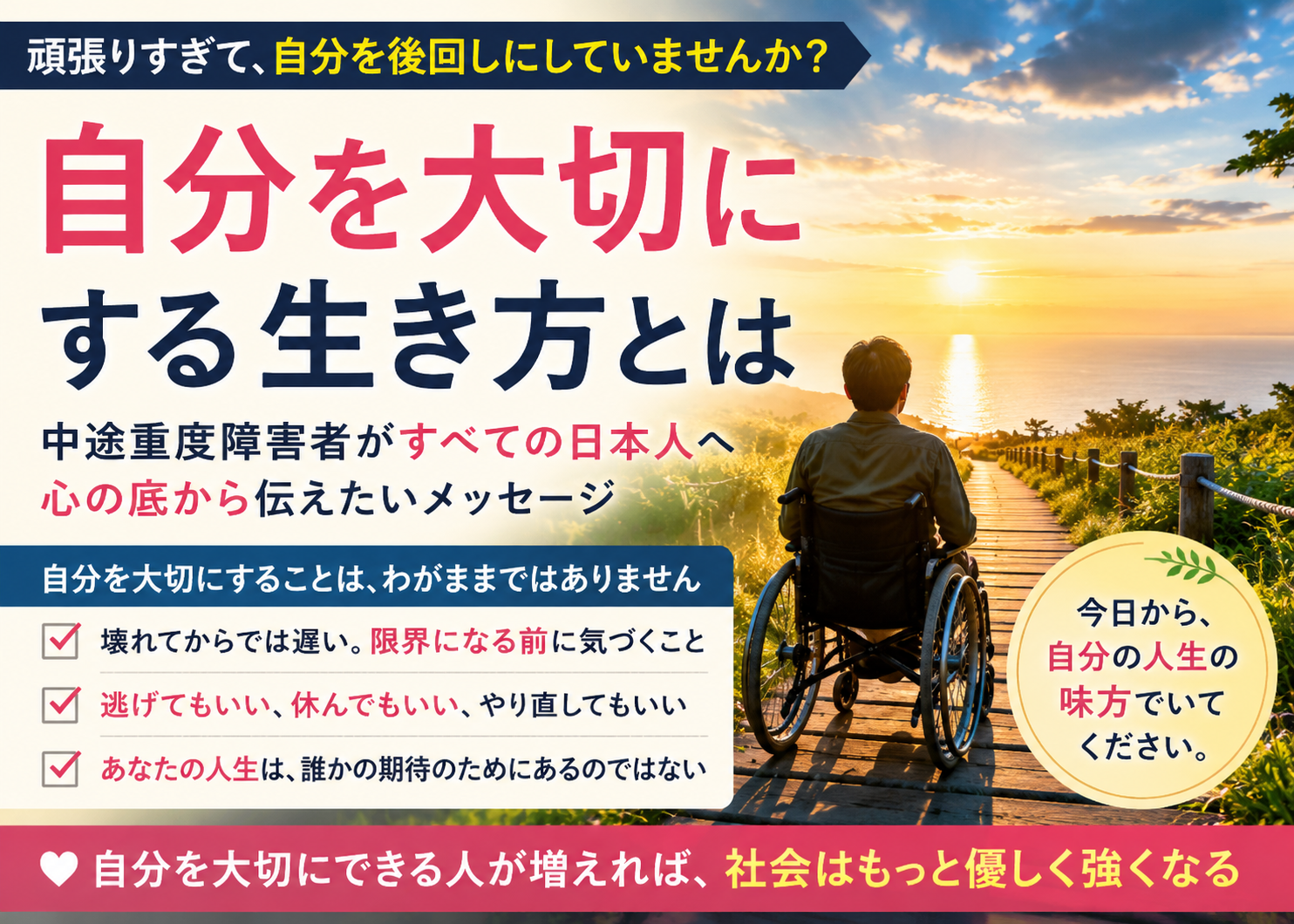
As a person with a disability myself, I often feel the harsh reality of navigating life with limited societal support. While family care is indispensable, it is unsustainable if the families themselves are overwhelmed. This is where societal support structures must step in.
Welfare Policies to Prevent Family Collapse
Rather than leaving all caregiving responsibilities to families, we need a societal framework that shares the burden. Here are some specific welfare policies to consider:
Expanding Respite Care Services
Respite care services, which allow caregivers to take temporary breaks, must be expanded. These services provide caregivers with much-needed rest, enabling them to continue providing care without reaching their physical or emotional limits.
Enhancing In-Home Care Services
Regular support from professional caregivers through home visits or day services can significantly reduce the burden on families. This is especially crucial in rural areas where such services are often lacking.
Strengthening Financial Assistance
Providing robust financial aid to households with individuals with disabilities can alleviate the cost of living, medical expenses, and assistive devices, reducing the economic strain on families.
Building a Future of Inclusion
Our ultimate goal should be a society where people with disabilities are naturally integrated into the community rather than treated as special cases. Inclusive education, employment support, and regional support networks are essential for preventing isolation among people with disabilities and their families.
The issues faced by people with disabilities are not isolated problems. Somewhere, someone is pushing themselves to the limit for the sake of their loved ones. And tomorrow, it could be you facing the same challenges.
Raise Awareness and Drive Change
To those reading this article, I have a request: learn about the realities faced by people with disabilities and their families, and raise your voice. When more people care about and discuss these issues, societal change becomes possible.
Please share this article to spread awareness. Your support can provide encouragement to those living with disabilities and their families, helping pave the way for a more inclusive society.
Together, we can build a future where everyone, regardless of their abilities, can live with dignity and a smile. Will you join us in creating this future?

















コメントを残す