Meta Description (SEO | 150–160 chars)
“自分” is built from “自” (nose/breath) and “分” (division by blade). A beautiful, accessible guide to reclaiming your inner life in a noisy age.
Recommended Slug
jibun-kanji-origin-japanese-self-breath-boundaries
Target Keywords (naturally distributed)
Jibun meaning / kanji 自分 origin / kanji 自 nose / kanji 分 meaning / Japanese self vs Western self / ma Japanese concept / Japanese aesthetics space / recoverability / reclaim your self / breath and boundaries / sharing burdens
TL;DR (Read This First)
The Japanese word 自分 (jibun) is not just “myself.” Its kanji structure points to a philosophy.
自 originally depicts the nose, the gateway of breath: your most basic “I am alive” proof.
分 combines 八 (to split) and 刀 (blade): the pain of separation that creates an individual boundary.
Japanese “self” is less about a fixed inner core and more about breath + boundary management, with space (余白 / 間) as a form of strength.
In an era of constant outrage and metrics, returning to this kanji logic becomes a practical survival design: recoverability.
Table of Contents
Prologue: A Drop of Ink on an Age Built on Sand
“自”: The Nose, the First Pulse of Life
“分”: The Blade That Hurts — and the Paradox That Connects
Horizontal Thinking: Why Japanese “Self” Isn’t Western Self
Aesthetics of the Self: Borrowed Scenery, Ikebana, and the Power of Space
The Modern Illness: Self-Esteem Fatigue and Self-Loss
After Politics and Markets: Finding One Quiet “自”
Practice: Seven Designs to Reclaim Yourself Starting Today
Epilogue: You Are a Single Thread in the World’s Cloth
FAQ (English Reader Edition)
Social Snippets & Thumbnail Lines (Ready to Use)
1. Prologue: A Drop of Ink on an Age Built on Sand
If you are tired right now,
it is not because you are weak.
It is because the age has increased the speed at which it steals your breath.
Open your phone and the world is already shouting.
Markets swing. Headlines flash. The next outrage arrives before your body has finished processing the last one.
Social media turns anger into fuel, fear into currency, “rightness” into a weapon.
Everything demands a response.
Now.
React now.
Take a stance now.
Buy now.
Optimize now.
Explain yourself now.
And after you do this a thousand times—
what do you actually gain?
More information.
More speed.
More connection.
More tools.
Yet somehow, less air.
A strange dryness grows inside.
A quiet emptiness that no upgrade seems to fix.
The more “efficient” life becomes, the more many of us feel that our inner life is being left behind.
That is the problem this essay is trying to touch with a single, old tool:
two characters.
Not a motivational slogan.
Not a personality test.
Not a self-help method that demands you “be stronger.”
Just two kanji you already know:
自分 (jibun).
In modern Japanese, it often means “myself.”
But the kanji are ancient. They are not arbitrary.
Kanji are not merely symbols; they are compressed memory—a fossil of how people saw reality and survived it.
When you return to a kanji’s origin, you are not playing an academic game.
You are touching a structure of thought older than your current exhaustion.
And right now, structure is what we need.
Because this era is loud on the outside and fragile on the inside.
Convenience increases—but recoverability decreases.
And when recoverability disappears, life becomes brittle.
So tonight, let’s do something almost rebellious:
Let’s stop running outward.
Let’s descend inward—
past headlines, past numbers, past other people’s performance—
and place a drop of ink on what has become an age built on sand.
That ink is not darkness.
It is outline.
The outline of you.
2. “自”: The Nose, the First Pulse of Life
The First Secret: In Japanese, “Self” Begins at the Nose
The kanji 自 is widely understood to originate as a pictograph of the nose.
In ancient forms, you can see the suggestion of a face’s center—something protruding, something unmistakably human.
Why the nose?
Because the nose is the most immediate marker of “me” on the face—
but more importantly because the nose is the gateway of breath.
And breath is the earliest, most unnegotiable truth of being alive.
Before you had beliefs,
before you had opinions,
before you had a résumé,
before you had a “brand,”
you had one thing:
inhaling.
Breath Cannot Be Outsourced
Most parts of life can be delegated.
Food can be cooked for you.
Work can be shared.
Transport can be provided.
Even decisions can be made on your behalf.
But breath?
No one can breathe for you.
Breathing is the ultimate personal responsibility—
and also the ultimate gift.
The world gives you air without asking for a credit card.
You receive it.
You return it.
In that exchange, you become a person living inside a world instead of merely being carried by it.
That is why 自 is not an arrogant declaration of ego.
It is not “I matter because I am loud.”
It is simply:
I am still breathing.
That quiet continuity is a kind of dignity.
The Hidden Lesson: Identity Comes After Physiology
Modern culture often pushes you to “find yourself” through concepts:
What do you want?
What do you believe?
What career do you choose?
What values define you?
But kanji logic says something gentler and more profound:
Before you define yourself, return to breath.
Because when breath is shallow, thought becomes extreme.
When breath is stolen, identity becomes brittle.
When breath is disrupted, even “truth” turns into a weapon.
And so “自” teaches a practical philosophy:
The shortest path back to yourself is not self-analysis.
It is breath recovery.
“Naso” — The Nose as Origin
Japanese has a word like 鼻祖 (biso) meaning “founder” or “originator.”
Even in language, the nose carries a subtle sense of “beginning,” “first,” “root.”
Anyone who has had a blocked nose knows this truth in the body:
when the nose closes, the world becomes distant.
Smell fades. Taste weakens.
And strangely, the mind grows anxious.
The nose is not just an organ.
It is a bridge between your nervous system and the world.
So “自” begins at the nose because the self begins at the place where the world enters you.
You are not a sealed container.
You are an open system.
And the first opening is breath.
3. “分”: The Blade That Hurts — and the Paradox That Connects
The Second Secret: The Self Is Born from Separation
The kanji 分 is commonly explained as a combination of:
八: to split, to separate
刀: a blade, a knife
So “分” is not originally “understanding.”
It is division.
A cut.
A line.
A boundary made by force.
This is beautiful—and painful—because it matches human life.
An individual is not born as a philosophical concept.
An individual is born by being separated from what once held them.
You are born by being cut from the mother.
You grow by being separated from childhood.
You become yourself by being separated from the collective.
The world gives you a blade and says:
Here.
This is your outline.
The Real Meaning of “Understanding” Is Cutting
In Japanese, “to understand” is 分かる (wakaru)—literally, “to divide.”
That is quietly terrifying.
Because it reveals what understanding really is:
it is not just empathy.
It is not just agreement.
It is the act of separating something complex into pieces you can name.
Right/wrong.
Good/bad.
Friend/enemy.
Success/failure.
Division is a mental blade.
It creates clarity.
And clarity can save you.
But division can also flatten reality.
It can destroy subtlety.
It can turn humans into labels.
So when you say, “I don’t understand myself,”
it may not mean you are failing.
It may mean reality has become too complex to cut cleanly.
The Paradox: Only What Is Divided Can Be Shared
Here is where Japanese language reveals an extraordinary paradox.
The same “分” that means “to split” also appears in:
分かち合う (wakachiau) — “to share.”
To share is literally “to divide together.”
That means the self is not only born from separation—
it is also healed through shared division.
A life becomes unbearable when all division becomes loneliness.
A life becomes sustainable when division becomes distributed.
Pain can be divided.
Work can be divided.
Silence can be divided.
Responsibility can be divided.
This is not weakness.
This is infrastructure.
So “分” contains two truths at once:
The self hurts because it is separated.
The self survives because it can share.
A Quiet Reframe of Loneliness
In the modern West, loneliness is often treated as a defect, something to cure.
But “分” suggests another view:
Loneliness is not always a defect.
It is often a feature of being an individual.
The problem is not loneliness itself.
The problem is a society that refuses to share weight—
and then tells individuals to “be stronger” instead.
That is not philosophy.
That is cost-shifting.
And it breaks nervous systems.
So “分” becomes a compassionate diagnosis:
You are not broken because you feel alone.
You are human.
What you need is not just affirmation—
but a structure that allows burdens to be shared.
4. Horizontal Thinking: Why Japanese “Self” Isn’t Western Self
Western “Self” Often Means a Fixed Core
In English, “self” often carries the sense of a stable inner core:
Be true to yourself.
Know your true self.
Find your authentic self.
There is beauty in this.
But there is also danger—
because when the world changes, and your body changes, and your life collapses,
the demand to maintain a fixed core can become violence.
It can make suffering feel like failure.
“自分” Means Something Else: Breath + Boundary Awareness
Japanese “自分” is not built on the idea of a fixed core.
It is built on:
breath (自)
boundary (分)
Breath changes.
Boundaries change.
Your “self” in this framework is not a hard diamond.
It is a living thing that must be managed gently.
That is why Japanese culture has long valued:
subtlety
context
silence
restraint
space
This is not “indecision.”
It is a survival technique for complexity.
The Self as “Space,” Not as “Monument”
In Japanese aesthetics, “space” is not emptiness.
It is presence.
The unpainted part of the painting is not missing content—
it is the area where the viewer’s life enters.
A garden is not complete by itself—
it borrows distant mountains as part of its composition (借景).
Ikebana is not about showing off flowers—
it is about shaping air, line, and silence.
And waka poetry does not “explain.”
It leaves space—so the reader can live inside it.
That is the Japanese self:
not a monument shouting “I am this,”
but a space that allows the world to pass through without destroying you.
And in the modern age, that is not weakness.
That is resilience.
5. Aesthetics of the Self: Borrowed Scenery, Ikebana, and the Power of Space
Borrowed Scenery (借景): You Are Not an Island
A borrowed-scenery garden is a quiet lesson in identity.
The garden does not declare independence from the world.
It becomes beautiful by incorporating what is outside it.
The mountains beyond the wall become part of the design.
That is how a sustainable self works.
If you harden into a sealed “core,” you become lonely and brittle.
If you open into space, you can be completed by the world without being consumed by it.
Ikebana: The Center Is Not the Flower—It Is Air
Ikebana’s true subject is often not the flower.
It is the invisible movement around it.
Line.
Angle.
Balance.
Silence.
Again: “自” is nose.
Breath.
The self begins in air, and it returns to air.
Waka: Why Not Explaining Can Be an Act of Kindness
Waka poetry leaves space.
It doesn’t force meaning down your throat.
It offers a scene—
and trusts you to bring your own life.
That trust is rare today.
Modern discourse often demands certainty and full explanation—
and punishes nuance.
But humans are not built for constant certainty.
The nervous system needs softness.
Waka provides that softness.
And so does the deeper meaning of “自分.”
6. The Modern Illness: Self-Esteem Fatigue and Self-Loss
The phrase “self-esteem” became popular because people were hurting.
They needed language to describe inner collapse.
But something strange happened:
Self-esteem became a performance metric.
Raise it.
Train it.
Strengthen it.
Prove it.
And many people became exhausted by the very thing meant to heal them.
Here is the kanji-based alternative:
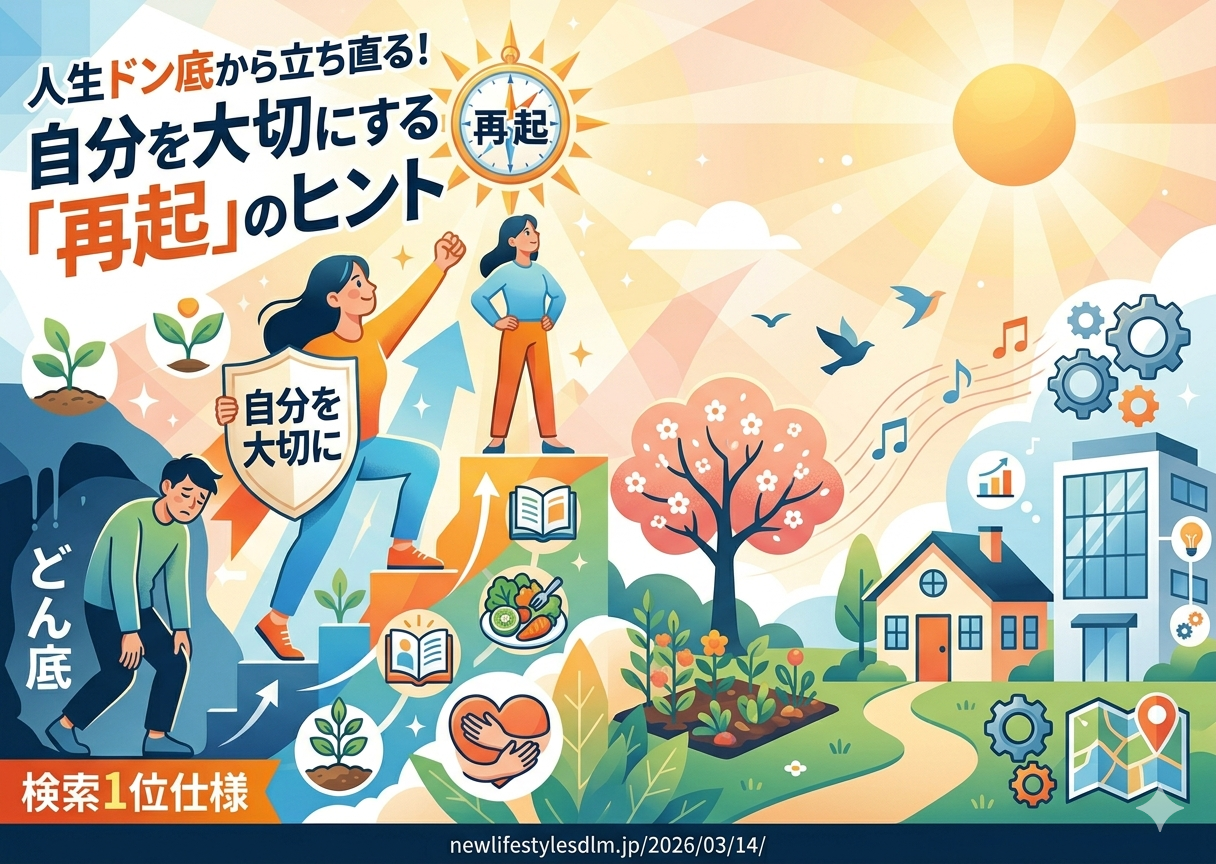
Before self-esteem, restore recoverability.
Recoverability means:
even if you break, you can return.
And “自分” tells you how:
restore breath (自)
restore boundary (分)
Not by force.
By design.
When breath returns, the mind slows.
When boundaries return, relationships stop bleeding you.
This is not inspiration.
This is maintenance.
And maintenance is love.
7. After Politics and Markets: Finding One Quiet “自”
Politics and economics are loud because they deal in external control:
power, numbers, status, competition.
When you live inside that noise, your inner life becomes thin.
You start to believe you are small.
But you are not small.
You inhale the world’s air.
You return breath to the world.
You are already participating in the planet’s circulation.
That is not small.
So the redefinition of “wealth” begins here:
not “what you own,”
but “whether you can breathe inside your life.”
A wealthy life is a life that allows breath.
A wealthy society is one that does not make nervous systems pay for institutional failure.
And when you cannot change the whole world, you can still do one thing:
you can rebuild the inner architecture that allows you to live.
That architecture is embedded in “自分.”
8. Practice: Seven Designs to Reclaim Yourself Starting Today
This is not a list of heroic habits.
It is a list of gentle designs.
You do not need to become stronger.
You need to become returnable.
1) In the Morning, Open Your Nose Before Your Phone (30 seconds)
Before headlines, before messages, before tasks—
inhale once through the nose.
Notice: cold? dry? scent?
That moment is “自.”
You are back.
2) Before You Cut People, Name the Feeling
When irritation arrives, do not swing the blade outward.
Name what is happening:
fear.
fatigue.
loneliness.
overload.
Naming is placing the blade back into its sheath.
3) Keep One Boundary Sentence Ready
Choose one phrase:
“That’s enough for today.”
“I will stop here.”
“Not now.”
Boundaries are not willpower.
They are language.
4) Share One Small Burden Each Day
Not grand empathy. Not dramatic confession.
Just share something concrete:
a dish.
a task.
a quiet check-in.
a five-minute help.
This is “分かち合う”—sharing division.
5) Schedule Ten Minutes of Space (Not Optional)
Space will not “happen.”
Space must be designed.
Ten minutes of no input.
No optimization.
Just air.
6) Don’t Explain Yourself Too Much (Waka Technique)
Leave space.
Not everything must be fully expressed.
Your nervous system needs privacy.
7) At Night, Remember Your First Breath of the Day
Return to morning.
You began today by breathing.
That is your origin.
If everything else went wrong, you still began.
And that is not nothing.
9. Epilogue: You Are a Single Thread in the World’s Cloth
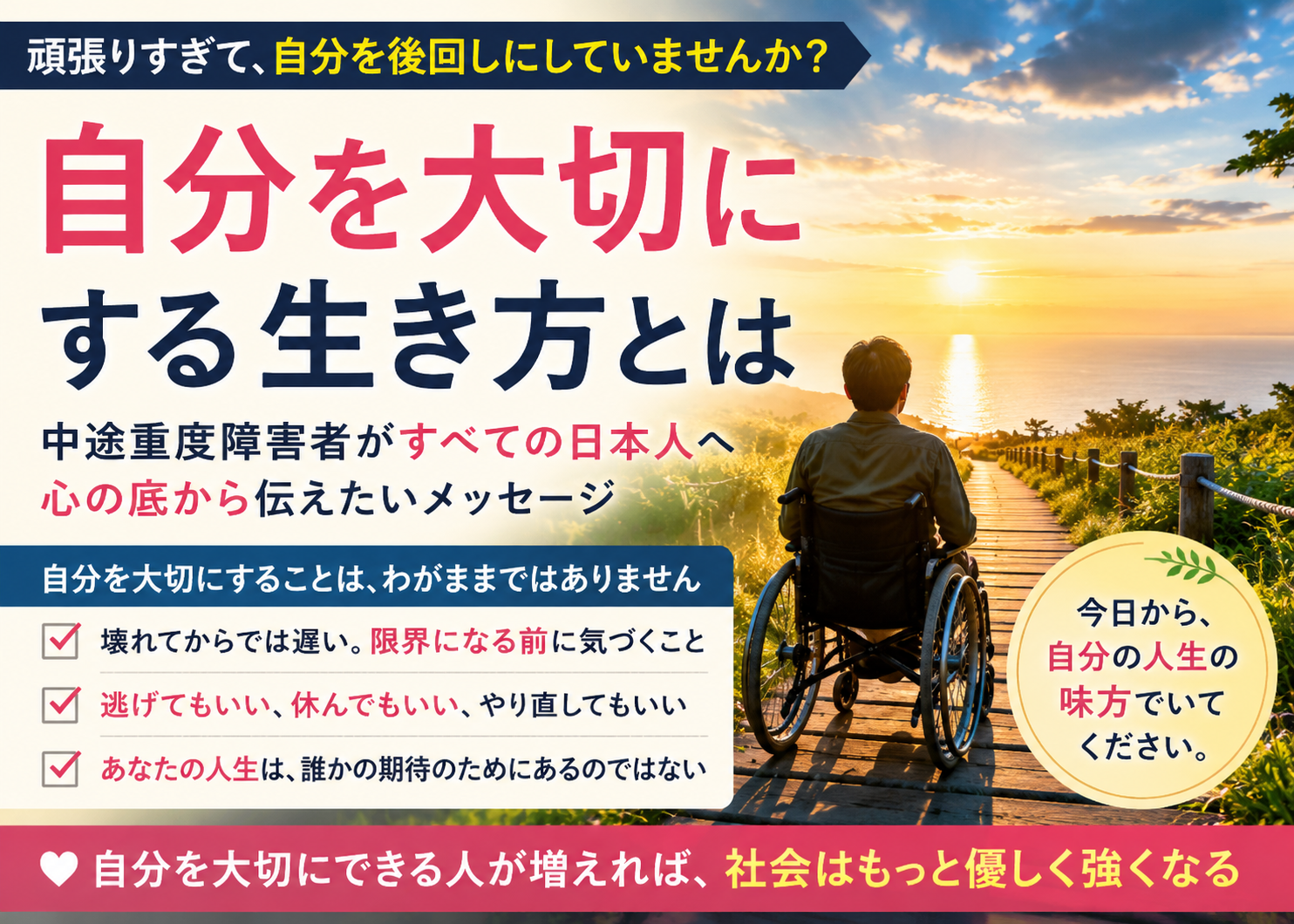
To love yourself is not to become selfish.
It is to treat your thread gently
so the cloth does not tear.
“自” is breath.
“分” is boundary.
Together they form a philosophy:
You are not a fixed core required to remain unbroken.
You are a living being required to remain returnable.
And when you become returnable,
you stop cutting others just to feel solid.
You become capable of sharing weight.
That is how a private self becomes public kindness.
Tomorrow morning,
when you inhale your first breath,
may the air feel slightly different—
as if the world has moved half a step closer.
Not because the world became easier,
but because you returned to the place where you can live inside it.
10. FAQ (English Reader Edition)
Q1: Is “自分” literally “nose + division”?
It’s not a strict modern literal translation, but the kanji origins strongly suggest these symbolic roots: 自 as nose/breath; 分 as splitting by blade.
Q2: How is this different from “ego”?
Ego is often about asserting a self. “自分” here is about maintaining a self through breath and boundary design.
Q3: What if I feel I’ve completely lost myself?
Start with physiology. Return to breath. Then rebuild boundaries with small sentences and small shared burdens. Recoverability comes first.

障害者雇用で「仕事を切り出す」だけでは足りない
――元課長・中途重度障害当事者が考える「人を活かす仕事の再設計」
障害者雇用で「仕事を切り出す」だけでは、本当の人材活用にはつながりません。健常者時代に課長を…














コメントを残す