The “Akan” Strategy: How I Clear the Game on Highest Difficulty
—Not by repainting pain as “growth,” but by holding the facts, and walking with the eight million gods.
Meta Description (English | 120–150 chars)
Pain is pain. A disabled survivor reveals “Akan” (clear-eyed acceptance) and Shinto’s radical inclusion as a life-game strategy.
Recommended Slug
akan-strategy-shinto-life-game-high-difficulty
Prologue — The Quiet Truth My Body Taught Me
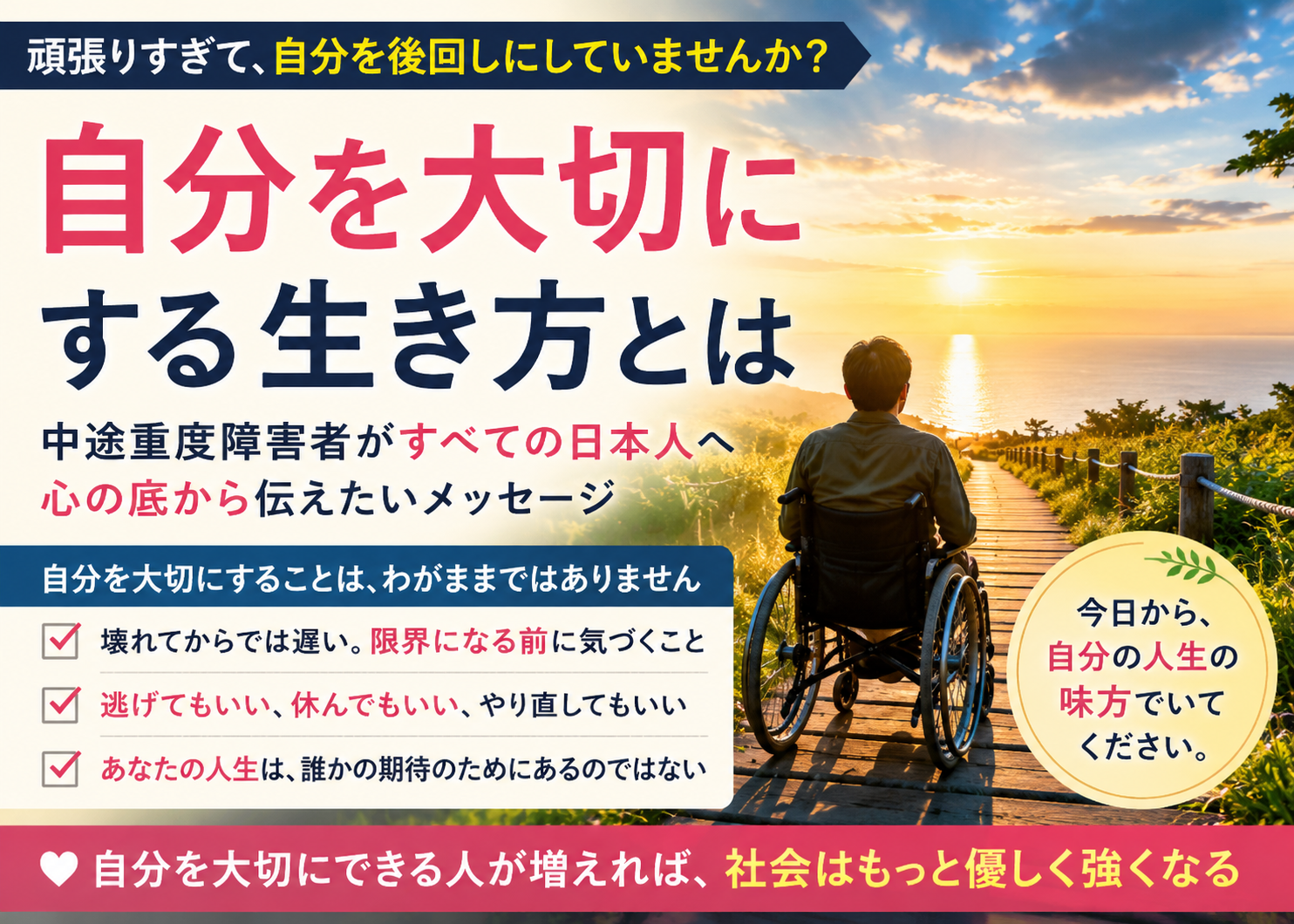
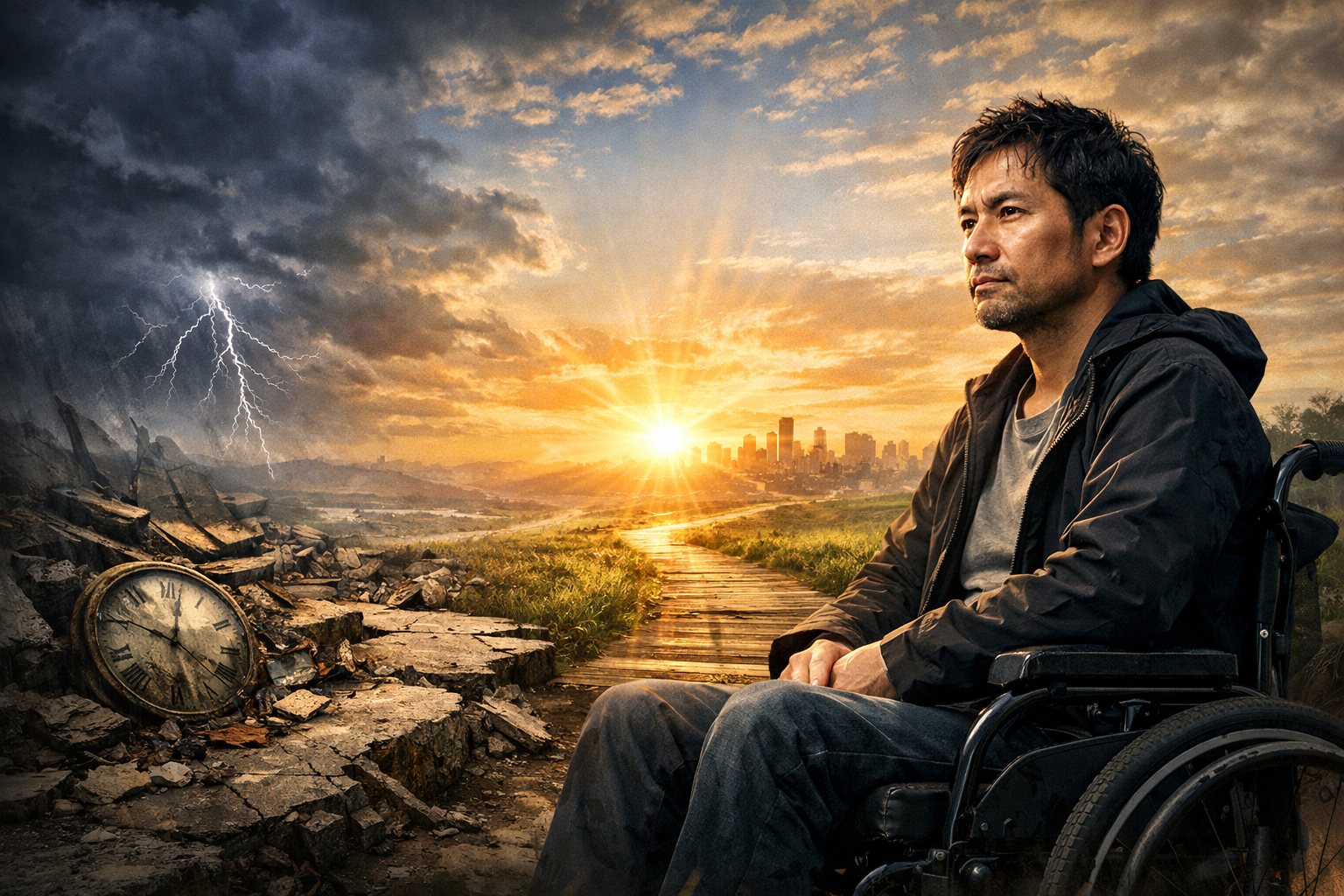
A body that won’t move is loud.
Not because it screams—but because it never stops saying “no.”
No, you can’t stand up like that.
No, you can’t turn fast.
No, you can’t pretend it’s fine.
No, you can’t “push through” forever.
Pain is a fact, and facts have a specific weight.
They don’t care about your optimism.
They don’t negotiate with your willpower.
They don’t soften because someone told you, kindly, to “think positive.”
When I became severely disabled, I learned something that sounds brutal until it becomes salvation:
A crisis is a crisis.
A pinch is a pinch.
Loss is loss.
Fear is fear.
I refuse cheap alchemy.
I refuse the habit of converting agony into “meaning” too quickly, as if the point of suffering is to produce a motivational poster.
Because when you do that too fast, you break twice.
The first injury is the event itself.
The second injury is denying your own reality.
People say it with good intentions:
“You’ll grow from this.”
“Everything happens for a reason.”
“You’re stronger than you think.”
Sometimes those sentences help.
Often, they don’t.
And here is the uncomfortable question no one wants to answer:
Can you manage my pain inside your body after you speak those words?
No.
Then don’t treat words like bandages.
Words are not bandages.
Sometimes they’re knives.
So what did I hold, when hope didn’t hold me?
I held facts.
Not because I’m brave.
Because my body did not allow me to escape reality.
I discovered that despair isn’t only sadness.
Despair is the feeling of standing in an ocean with no ground.
No footing. No structure. No map.
To survive, I needed ground.
I built it by doing something modern culture hates:
I stopped arguing with reality.
That is what this essay is about:
Akan—a Japanese word often translated as “to give up,”
but whose deeper core is closer to:
to make it clear. To clarify. To see the facts until they become usable.
Not surrender.
Not resignation.
Not “be positive.”
A strategy.
A way of clearing the game.
1) “Giving Up” as the Most Aggressive Form of Hope
In English, “giving up” tastes like defeat.
It tastes like quitting.
But the word I’m pointing to is different.
In Japanese, akirameru (to “give up”) has a hidden spine:
it carries the sense of clarifying—of making something “bright” enough to see.
To “give up,” in this sense, is not to drop your life.
It is to stop feeding your life to illusions.
It means:
Naming what cannot be changed.
Fixing it as a constraint.
Redirecting resources into what can be improved.
That isn’t weakness.
That is elite-level survival.
Because human resources are limited.
Your energy is limited.
Your attention is limited.
Your time is limited.
Your money is limited.
Your social support is limited.
Your nervous system is limited.
If you pour finite resources into what will not move, you lose.
You don’t lose because you’re not strong enough.
You lose because the strategy is wrong.
Here is the most important fork in the road:
A) The fantasy loop
“I’ll get back to normal.”
“If I push harder, I’ll return to who I was.”
“I should be able to do this.”
“Why can’t I?”
This loop produces:
Hope → pressure → overreach → collapse → shame → self-hatred → isolation.
B) The Akan loop
“This is the constraint.”
“This is what I can’t change.”
“This is what I can change.”
“This is where I invest.”
This loop produces:
Facts → clarity → smarter choices → fewer collapses → more stability → more life.
So, I learned to sort reality into three boxes:
Things I can change: habits, environment, tools, sequence, pacing, asking for help, language, routines
Things I cannot change: what I lost, time that won’t return, other people’s judgments, the noise of society
Things I can’t change yet but may change over time: recovery range, technology, relationships, the shape of work, opportunities
Once you sort like this, life becomes lighter—not because it becomes easier,
but because you stop fighting unwinnable battles.
That is what “giving up” gives you:
You recover your resources.
And when you recover resources, you recover options.
This is the paradox:
To “give up” the wrong fight is to begin the right one.
And something else happens when you do it.
When you stop chasing what you cannot do, your true outline appears.
The world tells you to “expand your possibilities.”
But in highest difficulty mode, expansion is not step one.
Step one is definition.
You define:
what is possible today
what is impossible today
what is dangerous today
what is safe today
Then you move.
Akan is not surrender.
Akan is the beginning of movement.
2) Acceptance and “Giving Up” Are the Same Blade
People say acceptance and giving up are “one thin line apart.”
I see them as the same blade, pointed in different directions.
Acceptance means: receiving reality without denial.
Akan means: clarifying reality until it becomes a usable constraint.
Acceptance without Akan becomes vague spirituality.
“It is what it is,” you say—then you repeat the same collapse again.
Akan without acceptance becomes cold violence.
You start cutting your life down with a dry heart.
But when you hold both:
You accept what is true,
then you clarify it,
then you design a life that does not break you.
This is not emotional.
This is engineering.
It’s survival engineering.
3) Life Is a Game on Highest Difficulty—And Disability Is a “Challenge Run”
Some people hate the metaphor.
“Life isn’t a game.”
They say it as if the metaphor trivializes suffering.
But I say it because it keeps me alive.
There are pains so heavy that you must hold them with a tool.
The “game” lens is that tool.
Games have:
starting stats
rules
constraints
unfair enemies
random outcomes
and still—ways to win
Disability, for me, is a “challenge run.”
A restriction mode.
A highest difficulty setting.
And here’s the strange gift of challenge runs:
They reveal the system.
When you play on easy mode, you never see what the game is built from.
When you play with harsh constraints, you see everything:
where friction hides
where assumptions live
where the interface lies
where “normal” is just a design choice
That’s why I call life a game:
Because the moment you see the system, you can stop blaming your soul.
You can stop asking: “What’s wrong with me?”
And instead ask:
“What’s the rule here?”
“What’s the constraint?”
“What is the smartest move under this condition?”
That shift is not positivity.
It’s sanity.
Separating emotion from the controller
Emotion is not the enemy.
Emotion is a weather system.
But if emotion holds the controller, the run collapses.
There are days when anger drives.
Days when grief drives.
Days when panic drives.
Days when “Why me?” drives.
Those days are full of mistakes:
You overreach.
You burn fuel you don’t have.
You crash.
And then shame arrives to finish you off.
So I split the player into two layers:
Player One: Emotion (crying, raging, fearing, breaking)
Player Two: The Strategist (observing, allocating, choosing the next move)
Emotion is allowed.
Emotion is honored.
But the strategist holds the controller.
That is not stoicism.
That is not suppression.
That is survival.
4) The Most Expensive Question: “Why Me?”
“Why me?” is a human question.
It is also a strategic trap.
Not because it’s false.
Life is unfair.
Bad luck is real.
But “Why me?” drains your resources while producing no next move.
It is like sitting at a boss fight, yelling at the difficulty setting,
while your health bar quietly empties.
So I translate the question into a usable one.
Not:
“Why me?”
but:
“Given this condition, how do I raise my odds?”
That is Akan.
You do not approve of the injustice.
You simply stop bargaining with reality.
You fix the condition as a constraint.
Then you play.
Here is the core algorithm:
gather information
estimate resources
cut actions into the smallest possible units
build repeatability (rituals, routines)
anticipate exceptions (plan for the day you crash)
Do this, and you don’t become invincible.
You become harder to destroy.
And that is the real win.
5) The Eight Million Gods: Shinto as the Ultimate Philosophy of Inclusion
I was tired of perfection.
“Return to normal.”
“Be productive.”
“Be strong.”
“Don’t complain.”
“Stay positive.”
Modern society often worships a single god:
the god of standardization.
Shinto shattered that for me.
In Shinto, there are yaoyorozu no kami—
“eight million gods,” a phrase that really means: uncountable.
Gods in the mountain.
Gods in the river.
Gods in fire.
Gods in the kitchen.
Gods in boundaries.
Gods in tools.
Gods in the imperfect.
Gods in the strange.
Gods in what doesn’t fit.
Shinto does not demand that you become flawless to be worthy.
It assumes the world is diverse by nature.
Which means:
If you are broken, you are not expelled from reality.
You are still inside the sacred.
This is not comfort.
This is a worldview that stops self-hatred at its root.
Because self-hatred often begins with one hidden belief:
“If I don’t match the standard, I have no right to exist.”
Shinto says:
Your existence was never a performance review.
Even the warped tree has a god.
Even the cracked stone has a god.
Even the quiet body that won’t move—can still be a shrine.
That idea did not make my pain disappear.
But it did something more important:
It gave me permission to live without apologizing for existing.
6) Seimei-Shin: The “Clear Heart” That Protects the Mind
Shinto offers a phrase that sounds moralistic in translation, but is not.
Seimei-shin (清明心): the “clear and bright heart.”
Some hear it as “be cheerful.”
I hear it as:
be clear.
Don’t blur reality.
Don’t distort facts to please people.
Don’t pretend you’re okay when you’re not.
Don’t turn suffering into a story before you’ve felt it as truth.
Clarity is compassion.
Because confusion is what breaks you.
When you deny your reality, your mind begins to split:
“One part of me hurts.”
“One part of me says I shouldn’t.”
“One part of me is ashamed.”
“One part of me performs strength.”
That split is exhaustion.
Seimei-shin is not fake happiness.
It is the refusal to lie to yourself.
And this is where Shinto and Akan touch hands:
Akan = clarify until you can act
Seimei-shin = keep your inner lens clear enough to see
Clarity is the root of dignity.
7) Rituals That Keep Cognition Normal (Because Philosophy Fails on Pain Days)
Ideas are fragile.
A strong pain day can crush even the best philosophy.
That’s why you need rituals—small actions that anchor your mind.
Not grand transformations.
Small, repeatable moves that preserve your sanity.
Ritual 1: The Morning “Reality Drop” (Three Scores)
When you wake up, score these from 1–10:
energy
discomfort/pain
mental fog
This sounds cold. It is kind.
Instead of “I’m worthless,” you can say:
“Today is a 3.”
A 3-day plan should not look like a 10-day plan.
Most breakdowns are not moral failures.
They are planning failures.
Ritual 2: Fix what you cannot do (to stop useless battles)
Say it clearly:
“Today I can’t go out.”
“Today I can’t write long.”
“Today my judgment is slow.”
This is not quitting.
This is avoiding unwinnable fights.
Ritual 3: Diversify your dependency (Never tie your life to one rope)
People collapse when all support is one thing:
one job
one person
one identity
one ability
When that single rope breaks, the whole life falls.
So diversify—even lightly:
body support: tools, environment, rest
mind support: prayer, music, journaling
social support: one friend, a professional, an online space
future support: tiny learning, tiny creation, tiny savings
Dependency is not evil.
single-point dependency is.
Ritual 4: Convert loneliness into “solitary dignity”
Loneliness: nobody is here.
Solitary dignity: I do not abandon myself.
This is not bravado.
It’s a promise:
“Even today, I stay with me.”
Ritual 5: The Night “Run Log” (Three Lines)
Write three lines:
today’s enemy
today’s best move
tomorrow’s difficulty adjustment
Not a self-judgment.
A strategy log.
You are collecting data for your future self.
8) Save Points: Designing a Life That Doesn’t End in One Crash
Highest difficulty is dangerous for one reason:
A single failure can delete everything—if your life is designed on one track.
Lose the job → lose identity
lose identity → lose relationships
lose relationships → lose stability
lose stability → lose health
That chain is not fate.
It’s design.
Akan is a redesign.
It adds save points.
Ask yourself:
Where are your save points?
Where do you recover?
Where do you retreat?
Where do you restart when you crash?
If you don’t have them, build them small.
A five-minute ritual is a save point.
A phone call is a save point.
A written plan is a save point.
A single friend is a save point.
A quiet shrine visit is a save point.
Most people think survival requires strength.
Often it requires structure.
9) A Simple Template You Can Use Tomorrow
Don’t overcomplicate it.
Survival strategies must be usable when you’re exhausted.
Here is the Akan template in five moves:
drop into facts (score your day)
fix the unchangeables
choose one changeable thing
cut the action into the smallest unit
ritualize it (repeatability beats intensity)
And here is what a “smallest unit” might look like on a collapse day:
drink one sip of water
open a window for fresh air
place hands together and say: “I will live today.”
write one sentence: “Enemy / Move / Tomorrow”
You might think, “That’s nothing.”
On highest difficulty, that is everything.
Because the goal is not heroic performance.
The goal is not disappearing.
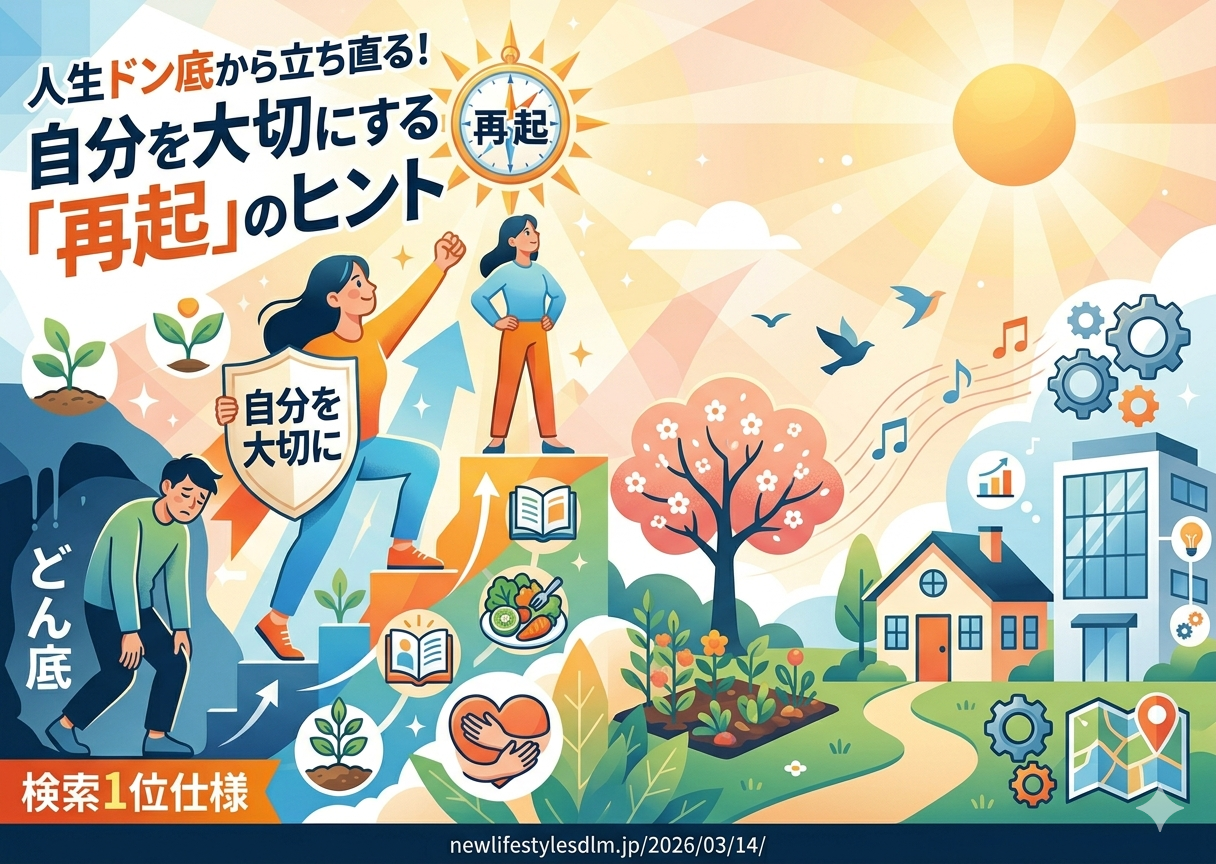
Epilogue — At the Bottom of Crisis, We Can Still Dance
Let me say it clearly, the way people rarely do:
Your suffering does not need to become “meaning” today.
Your suffering can remain suffering.
But you must not disappear.
A crisis is a crisis.
Loss is loss.
Unfairness is unfairness.
Stand on the facts.
Then allocate resources.
Then make the next move.
This is what Akan means:
Not “I surrender.”
But:
“I see. I fix the constraints. I play anyway.”
And I want you to remember the eight million gods:
The sacred is not only in perfection.
It is in the cracked.
The bent.
The slow.
The silent.
The body that refuses to obey.
If you believe you are unworthy because you don’t fit the standard,
return that standard to whoever handed it to you.
It will not save you.
You are living your game.
Your challenge run.
Your highest difficulty mode.
So the strategy must be yours.
Tomorrow, you only need one move:
drop into facts
fix the constraint
reallocate
protect your mind with ritual
do not abandon yourself
At the bottom of crisis, we can still dance.
Not because the world became kind.
Not because the pain vanished.
But because dancing is not cheerfulness.
Dancing is the body-language of will:
“Under these conditions, I live.”
And if you are alive today,
that is not “barely anything.”
That is creative.
That is defiant.
That is sacred.
That is the clearest form of victory I know.













コメントを残す