Let me start with the conclusion.
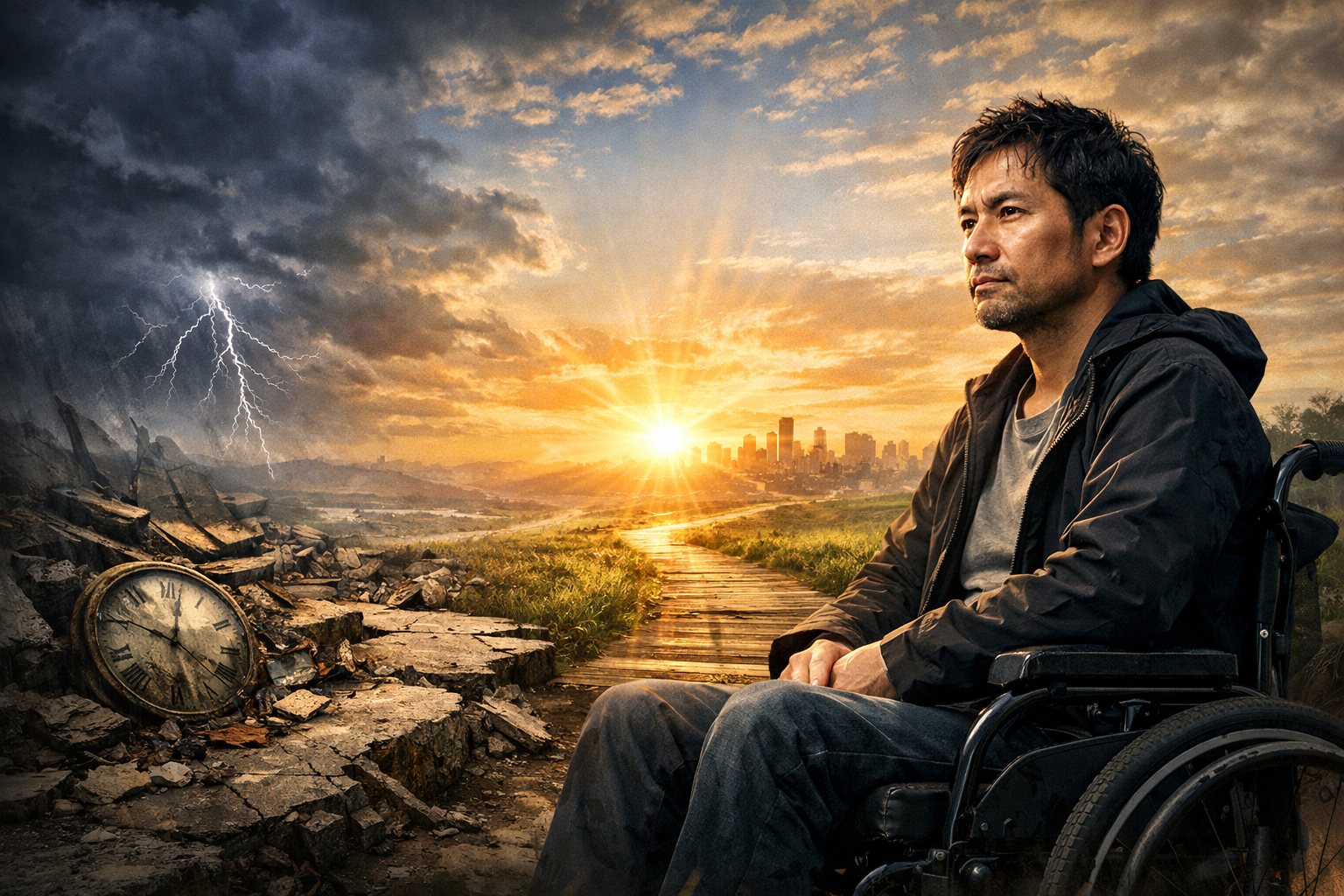
I became severely disabled midway through life.
I’m alive today because Japan’s welfare system exists. I’m grateful for that—deeply.
And precisely because I’m a beneficiary, I need to say something most people expect me not to say:
If we want welfare to survive, we should prioritize investing in young people’s education and living stability—over election-season handouts.
This is not a “cut the weak” argument.
It’s the opposite.
It’s a survival strategy for everyone.
Because when the foundation collapses—when the people who support society burn out—the first people to fall are always the vulnerable: the elderly, the disabled, the sick, and children.
That is not ideology.
That is risk management.
1) The Fear of Being Supported: “A Luxury Meal on a Sinking Boat”
Welfare getting better is, of course, a good thing.
But when politics turns “helping the vulnerable” into a contest of who can hand out money faster, something cold rises in my chest.
Not guilt.
Fear.
This is what it feels like:
Like being served a luxury meal on a boat that’s already sinking.
Yes, the meal helps in the moment.
Some people truly need immediate cash relief. I’m not denying that.
But if the boat is going down, the quality of the meal doesn’t matter.
What matters is whether we’re fixing the hole.
And here’s the uncomfortable truth that beneficiaries like me can’t afford to ignore:
When society starts cutting costs, the vulnerable are not protected first. They’re protected last.
Sometimes they aren’t “cut” loudly.
They’re simply abandoned quietly—through staff shortages, stricter requirements, lower service quality, and collapsed local systems.
That’s why “nice policies” that ignore the foundation feel dangerous to me.
2) Break the Trap: This Is Not “Old vs Young”
This topic often gets framed as generational war:
“The elderly are taking too much.”
“Young people are suffering.”
“It’s unfair.”
That framing is explosive—and usually useless.
Because the real problem is not “old people” or “young people.”
The real problem is a design that produces conflict.
The hidden mechanism: Helping one generation can unintentionally crush the next
If spending is concentrated in ways that overload working-age people, what happens?
taxes and social insurance pressure rises
disposable income falls
fewer people can afford marriage, children, or education
talent drains away from essential fields (healthcare, caregiving, infrastructure, teaching)
the economy weakens, tax revenue shrinks
And then the system enters a spiral:
The very policies meant to “protect the elderly” end up destroying the workforce and tax base needed to protect them.
That is not the elderly’s fault.
That is a structural outcome of budget design.
And disability welfare is not immune
The same rule applies.
If the supporting layer—young workers, caregivers, engineers, administrators—collapses, welfare doesn’t “feel kind.”
It becomes a paper promise.
And when budgets tighten, the vulnerable face:
invisible burden shifting to families and local communities
tighter eligibility rules
service degradation due to staff shortages and burnout
This is why beneficiaries should be the loudest voices saying:
“Don’t just hand us money. Protect the foundation that makes protection possible.”
3) The Core: Welfare as “Pity” Dies. Welfare as “Investment” Survives.
Here’s my real wish, as a disabled citizen.
I don’t want a society that simply gives me a temporary check.
I want a society where, 20 years from now, there are still:
skilled therapists and healthcare workers
caregivers with enough mental room to care humanly
engineers who can build automation and efficiency into public services
administrators who can design systems that don’t break families
resilient infrastructure that can restore life after failure
That doesn’t appear overnight.
Those people are grown.
They are educated.
They are trained.
They are supported.
So when I say “invest in young people,” I’m not speaking in moral poetry.
I’m speaking in future survival math.
Education spending isn’t idealism—it’s national safety
Education is often treated like a “nice-to-have.”
But it is actually one of the most concrete forms of security we have.
Because education and youth stability produce:
higher productivity and tax revenue
more skilled workers in critical fields
fewer burned-out caregivers
stronger local communities
less isolation, fewer crises, lower long-term costs
In other words:
Education is welfare’s long-term power source.
The fatal mistake: treating welfare as “compassion”
If welfare is framed as pity, it becomes optional.
“Only when we can afford it.”
“Only when the economy is good.”
“Only for the ‘deserving.’”
But if welfare is framed as investment—the infrastructure of human survival—it becomes central, not expendable.
That’s what I want.
Not sentimental welfare.
Sustainable welfare.
4) What We Should Ask in an Election: “Who Can Design 30 Years Ahead?”
Election seasons reward simple promises:
“Cash now!”
“Immediate benefits!”
“We will protect you!”
But I want a different standard.
I don’t want the candidate who can give me money today.
I want the candidate who can answer this:
How will you keep this country functional 30 years from now?
Because here is another uncomfortable truth:
In a country where young people are losing hope, the disabled cannot be safe.
Not because young people are selfish.
Not because the vulnerable are a burden.
But because systems require operators.
Hospitals require staff.
Care requires people.
Infrastructure requires maintenance.
Welfare requires trained professionals.
So here are the questions I want to ask politicians—without attacking any generation:
How will you prevent young people’s lives from becoming impossible (housing, wages, retraining)?
How will you protect caregivers, medical workers, and teachers from burnout—structurally, not only financially?
If you do handouts, what’s the exit plan? What replaces them?
How will you invest in education and skill-building as a long-term security strategy?
How will you design welfare so it remains functional—not just “available on paper”?
These are not ideological questions.
They are engineering questions.
5) Solidarity Across All Ages: This Isn’t Cutting People Off—It’s Keeping Everyone Alive
Let me say it clearly.
This is not a call to abandon the elderly.
This is not a call to cut the disabled.
This is not “us vs them.”
This is the opposite:
If the next generation collapses, everyone collapses.
We are on the same boat.
And if the boat sinks, the vulnerable do not float safely to shore.
They go down first.
That is why I am asking—almost begging—for a change in political focus:
less “nice-looking short-term generosity”
more long-term investment in youth stability and education
more protection of the people who keep society running
more system design, less emotional theater
Because the highest form of compassion is not a luxury meal.
It’s fixing the boat.
Final Note: If This Hit You, Please Share the Frame, Not the Anger
If something in this essay resonates, I don’t want you to share outrage.
I want you to share the frame:
“Welfare survives only if the foundation survives.”
“Youth investment is not charity. It’s the security system for all of us.”
“The real question isn’t who gets cut—it’s whether the system remains functional.”
That’s the message I wish we could spread—quietly, clearly, and powerfully.
Because what we need is not victory over another group.
What we need is survival—together.

障害者雇用で「仕事を切り出す」だけでは足りない
――元課長・中途重度障害当事者が考える「人を活かす仕事の再設計」
障害者雇用で「仕事を切り出す」だけでは、本当の人材活用にはつながりません。健常者時代に課長を…













コメントを残す