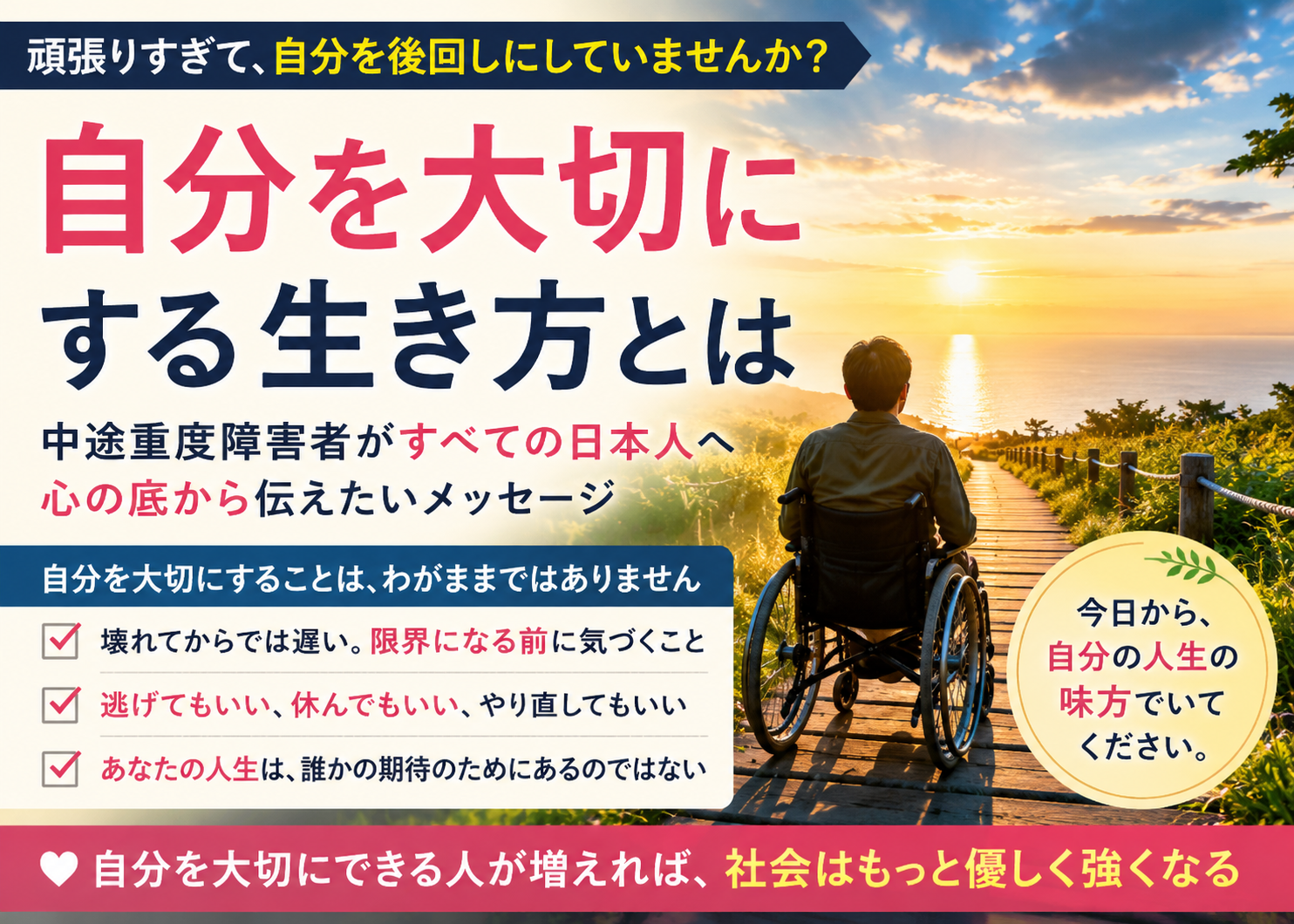
After becoming severely disabled in midlife, I’ve found myself unable to let go of one question:
> “What is it that makes a human being feel truly happy?”
My career and income once collapsed all at once.
My body no longer moves the way I want it to.
What I can’t do stands out far more than what I can.
And yet, at some point I realized:
> “Oddly enough, there are now more moments when my heart feels calm,
and even quietly richer than before.”
This strange feeling kept bothering me.
As I kept digging into it, I always ended up at the same place:
> “The original sense of happiness in the Japanese mind.”
Japan is no longer “number one” in the world in terms of growth,
military power, or population.
Even so:
People from all over the world continue to visit Japan
Many say, “I want to live in Japan someday”
And I myself feel, “I want to quietly keep living in this country”
So then:
What did Japanese people historically feel as “happiness”?
When and how did that sense of happiness change?
And how can we reinstall that operating system (OS) today?
In this article, I’d like to zoom out over Japanese history as a whole,
focus especially on Heian and Kamakura literature, and try to:
> Gently verbalize the “original sense of happiness” in the Japanese mind,
tracing the causal relationships that shaped it.
—
1. Why Revisit “The Original Happiness of the Japanese” Now?
A time where we’ve worked, grown, and competed—yet still feel empty
Living in Japan in the Reiwa era,
we have an unprecedented level of:
Convenience
Information
Options
And yet at the same time:
Mental health issues
Feelings of loneliness
Anxiety about the future
are only increasing.
“I’m working so hard, but it never feels enough.”
“I scroll through other people’s lives on SNS and feel hollow inside.”
Voices like these are everywhere.
At that point, I can’t help but stop and think:
> “Maybe we installed the wrong ‘happiness OS’ in the first place.”
No matter how many “apps” we add—skills, certifications, gadgets—
if the underlying OS doesn’t fit us,
life will always feel heavy and exhausting.
Modern Japan might be exactly in that state.
A mid-career, severely disabled person’s “OS reinstall” experience
I had a brain hemorrhage during what people call the “prime working age”
and became severely physically disabled mid-career.
Working full-time “as usual” became difficult
The career ladder I was climbing suddenly disappeared
My income and social status changed drastically
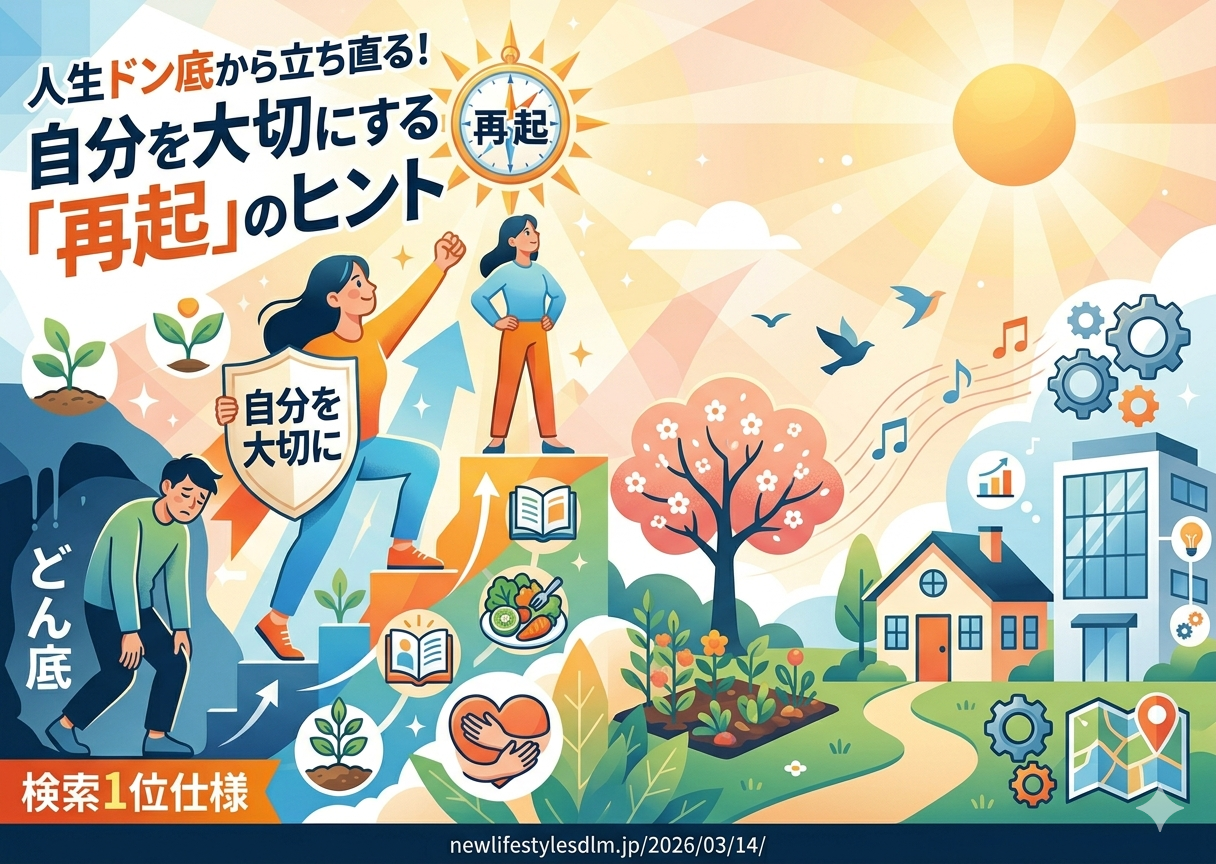
It felt as if the entire OS of my life was being forced to reinstall.
At first I tried to live by the old value system:
I compared myself to who I used to be and fell into despair
I scolded myself for “not being able to try harder”
I desperately tried to “get back” the life I had as a non-disabled person
Those days went on for quite a while.
But as I struggled and struggled, slowly I began to think:
> “Maybe, unless I change the criteria for happiness itself,
I’ll stay miserable forever.”
So I went back to Japanese classics and history.
And there I found something that modern Japanese people
seem to have quietly lost sight of:
> “Our original sense of happiness.”
It was still there, breathing quietly in those texts.
—
2. Jōmon, Yayoi, and the Ancient State: The “Original Landscape” of Happiness
The Jōmon way of life: everyday life, festivals, and “ma” (space/silence)
In the Jōmon era, there was no state, no writing.
What we have left are remains of houses, pots, clay figures, shell mounds.
From these, we can glimpse people who:
Didn’t just make pottery to survive
Took the time to decorate their pots with patterns
Crafted clay figurines to pray for fertility and safe childbirth
Cherished rituals and communal festivals
In this we can already see the seeds of what later becomes essential to Japanese culture:
Ke – ordinary, everyday life
Hare – festivals, the special and extraordinary
Ma – blank space, silence, timing, and pause
For Jōmon people, happiness was not:
Mass ownership of things
but more like:
Living within the rhythm of the community
Being connected to nature
Offering prayers to unseen forces
If you asked them, “Was today a good day?”,
they might have said:
“We brought back food together.”
“We laughed around the fire.”
“We survived another turn of the seasons.”
In this, we can already glimpse
the prototype of the Japanese sense of “humble happiness.”
Yayoi and the ancient state: rice, water, and the birth of “wa” (harmony)
In the Yayoi period, as rice cultivation spread,
people’s lives became deeply tied to water and timing.
Managing water in the rice paddies
Synchronizing planting and harvesting across the community
Building and maintaining irrigation systems together
Without these, stable harvests were impossible.
So in reality:
> “If each person just does what they want, everyone starves.”
From here, over time,
we reach the ancient Japanese OS expressed in:
> “Wa o motte tōtoshi to nasu” — “Harmony is to be valued.”
Originally, “wa” (harmony) did not mean:
“Shut up and obey”
“Just put up with everything”
It meant:
Avoid unnecessary conflict
Help each other save face
Keep the community alive over the long term
In other words, a very practical survival strategy.
From this point on, the Japanese sense of happiness
contains a strong element of:
> “Rather than one person winning forever,
it’s more important that everyone manages to survive together.”
This is one root of the original Japanese happiness mindset.
—
3. Nara and Heian: “Mono no aware” and Happiness as Sensitivity
Manyōshū and the value of small, personal joys
Compiled in the Nara period, Manyōshū is a poetry anthology
that includes the voices of emperors and unknown commoners alike.
Its poems are filled with:
Joy and anguish in love
Farewells to family
Loneliness while traveling
Awe at the changing seasons
This is a world of very personal, concrete emotions.
For example:
Two lovers gazing at the same moon
A tight embrace before parting
Staring at the night sky thinking of someone far away
These are the kinds of moments
where Manyō’s people found deep happiness and sorrow.
Here, happiness is not:
> Income, status, or follower count,
but rather:
> “The intensity of a particular moment, in a particular relationship.”
The smallest unit of happiness is the “moment” and the “bond.”
That’s the first key point in the original Japanese sense of happiness.
The Tale of Genji: emptiness after gaining power, wealth, and love
The Tale of Genji portrays Heian aristocratic culture at its peak.
Its protagonist, Hikaru Genji, is “overpowered” in every way:
Exceptionally handsome
Excellent both in arts and arms
Born into the imperial family
In modern terms, he’s a man with top-class looks, education, and pedigree.
Yet the story as a whole is pervaded by:
Fear of losing what he has gained
Helplessness in the face of failing to protect those he loves
Aging, death, and loss waiting at the end of all glory
In other words, a built-in emptiness.
If we put it in modern language:
> Even with amazing specs and achievements,
he can’t say from the bottom of his heart, “I’m truly happy.”
The text shows us clearly that:
If we define happiness in terms of possession and control,
we also inherit the fear of losing them
No matter how “complete” the external conditions,
the inner thirst remains a separate problem
This is one sharp insight from Heian literature.
“Mono no aware”: happiness in the fact that things change
Scholar Motoori Norinaga called the core of The Tale of Genji:
> “Mono no aware”
This is the feeling that:
Joy and sorrow,
Meetings and partings,
become moving because they don’t last forever.
What matters here is:
> Not “happiness that lasts forever”
but the ability to savor moments that are precious precisely because they pass.
By this point the Japanese sense of happiness already
shifts its center of gravity toward:
Not “things that continue for all time,”
But a sensitivity to “what exists here and now.”
This is very different from the modern obsession with:
“Stable success”
“Winning for life”
“Becoming someone who never falls off”
The Pillow Book: happiness as a way of seeing the world
Sei Shōnagon’s The Pillow Book,
famous for its opening “Spring, dawn is best…”,
teaches another important aspect of happiness.
Her writing embodies:
Finding delight in subtle differences of season and time
Capturing the “okashi” (charm) in everyday scenes
Reframing the world through one’s own lens
For her, happiness lay not primarily in external conditions, but in:
> “How to look at things, and how to put them into words.”
A personal way of relating to the world.
Even the most ordinary day can become rich
if you have the eyes to find beauty and humor in it.
This is one of the core functions of the Japanese “happiness OS”:
> Happiness as a way of seeing, not just a set of circumstances.
—
4. Kamakura: Happiness as Facing Impermanence
(The Tale of the Heike, Hōjōki, Tsurezuregusa)
The Tale of the Heike: glory and downfall under the echo of impermanence
The Tale of the Heike begins with the famous line:
> “The sound of the Gion Shōja bells echoes the impermanence of all things.”
It narrates the rise and fall of the Heike clan,
and throughout the text we hear:
> “No matter how great power and wealth are,
they all eventually vanish.”
But what’s important is that:
Impermanence is not treated simply as a misfortune
Rather, given that everything is impermanent,
how we live becomes the real question
In this world, happiness is not:
> “Winning forever,”
but:
> How we fall,
how we accept defeat,
how we keep our humanity to the end.
That’s where quiet dignity and a mature kind of happiness are recognized.
Hōjōki: minimalism born out of an age of disasters
Kamo no Chōmei’s Hōjōki records in detail:
Great fires
Whirlwinds
Famine
Earthquakes
that struck Kyoto.
After describing all this chaos, he concludes by saying:
> “I now live in a ten-foot-square hut,
having chosen a life with the bare minimum I need.”
Here we see a shift:
From clinging to big houses and high status
To protecting inner freedom in a small space with fewer possessions
In modern terms,
he’s like the ancestor of “minimalism.”
In a world full of impermanence and disasters,
Chōmei deliberately chooses:
> “Not owning much, not expanding, knowing what is enough.”
Paradoxically, that is how he wins
a deep and steady “happiness of the heart.”
Tsurezuregusa: tasting an incomplete life as it is
Yoshida Kenkō’s Tsurezuregusa also overflows
with wisdom for living in a world of impermanence.
He begins:
> “Having nothing to do, I spend whole days with brush in hand…”
He doesn’t treat free time as “boring waste.”
He treats it as:
> A chance to observe, think, and enjoy subtle things.
He values not:
perfect order,
but:
“good enough” and the beauty of leaving some things incomplete.
The underlying message is:
> “Life is incomplete by default.
If you can enjoy it including that incompleteness,
you are already fairly happy.”
It’s a gentle combination of acceptance and humor—
very Japanese in flavor.
—
5. Muromachi and Sengoku: “Wabi-sabi” and Imperfect Happiness
The value of “quiet” born amid war and chaos
The Muromachi and Sengoku periods were politically unstable,
full of warfare and bloodshed.
In the midst of that harsh age grew:
Zen thought
The tea ceremony
Dry landscape gardens
The deep stillness of Noh theater
All of these are “cultures of quiet.”
They have in common:
Preferring simplicity over luxury
Few colors, few sounds
Beauty in incompleteness and empty space
When life is cheap and war is constant,
people reach for:
Carefully preparing a single bowl of tea
Arranging a single flower in silence
Gazing at a garden made only of rocks and sand
In those acts,
they find “the feeling of truly being alive.”
“Wabi-sabi”: happiness found in what is worn and incomplete
“Wabi-sabi” is often described as:
> A sensitivity that finds beauty in imperfection, aging, and quietness.
A chipped tea bowl
A faded wooden floor
A seemingly empty garden with deep hidden depth
These are not dismissed as “shabby.”
They are loved precisely because time and stories cling to them.
This aesthetic quietly rewrites the definition of happiness:
Not “new, shiny, and perfect”
But “used, worn, and cracked—in a way that tells a story”
And this leads naturally to a larger question:
> Can we love not a “perfect self,”
but a self with scars and cracks?
As a disabled person,
I find that wabi-sabi is not just an aesthetic.
It is a practical philosophy of how to live.
—
6. Edo: Repetition, Everyday Life, and “It’s Mutual”
The richness of “boring” peace
The Edo period saw about 250 years without large-scale war.
In the countryside:
Annual events
Rice-planting and harvest
Local festivals and Shinto rites
repeated year after year.
In towns:
Craftsmen continued their trades
Merchants opened their shops daily
Rakugo and Kabuki offered daily entertainment
It was a world of repetition.
Happiness here was:
> “This year, we lived much like last year.”
We planted rice again this year
The festival was held again
The family got through another year together
This kind of “nothing special happened”
was the greatest reassurance and quiet happiness.
“Yui” and mutual aid in the countryside
In rural villages there was a system called “yui”,
a network of reciprocal help.
Villagers helped each other plant and harvest
People joined together to raise a house
Everyone cooperated at weddings, funerals, and in times of disaster
The underlying feeling was:
> “If someone is in trouble, we help.
And when we’re in trouble, we are helped.”
This everyday “it’s mutual” attitude
was built into village life.
Of course, village communities were sometimes suffocating.
Yet compared to the isolated lives many lead today,
this was a luxurious form of social safety net.
Town culture: money and pleasure “used with style”
In Edo’s towns:
Successful merchants
Skillful artisans
Performers and entertainers
embodied a new style of happiness.
They believed:
Money is not just for hoarding; it’s to be used with style
Life’s flavors, including entertainment and play, are worth enjoying
Human warmth and quick wit are as valuable as status
In short:
> “Work seriously, and play properly.”
This is a well-balanced happiness philosophy.
The famous attitude,
“Real Edo folk don’t carry money over to tomorrow,”
sounds reckless from a modern perspective.
Yet at the same time, it suggests:
> “Rather than worry constantly about the future,
let’s also care about how we live today.”
It’s a light-footed, here-and-now way of happiness.
—
7. Modern, Postwar, and Reiwa: How Our Happiness OS Was Replaced
Meiji to prewar: “A rich country and strong army” as top priority
After the Meiji Restoration, Japan dedicated itself to:
“Enrich the country, strengthen the military”
Industrialization
Catching up with Western powers
In this era, happiness was defined mainly at the national level:
National wealth = people’s happiness
Territorial expansion = national pride
Military power = safety and international status
The happiness of individuals
was subordinated to the success of “Japan” as a whole.
Postwar to High Growth: home, appliances, lifetime employment
After the devastation of war,
Japan’s high-growth years brought:
Television, refrigerators, washing machines
Private homes
Cars
Lifetime employment and seniority systems
This era created a standard template for happiness:
> “Good school → good company → marriage → home of your own”
For people who had known war and poverty,
this template was a very real and precious dream.
The problem arose later:
The template remained even after the conditions changed.
As a result:
Lifetime employment collapsed, yet people still planned around it
Taking on a mortgage locked people into rigid work patterns
Chasing “the same happiness as everyone else”
made it difficult to hear what one truly wanted
The OS no longer fit the hardware,
yet it kept running.
Reiwa: more freedom, more exhaustion
In Reiwa Japan, on the surface:
Ways of working
Ways of living
Family structures
have all become more diverse and free.
Yet at the same time:
The pressure to “live your own life authentically”
Endless comparisons via social media
Decision fatigue in a world with no clear “right answer”
are wearing people down.
This suggests:
> The happiness OS built on
“Growth, competition, and personal responsibility”
is not enough to sustain long-term well-being.
As someone who became severely disabled mid-career,
I tried to keep living by that OS.
It almost broke me many times.
That’s why I now feel so strongly:
> We need to boot up an older version
of the Japanese happiness OS.
—
8. Putting the “Original Japanese Happiness” into Words
We’ve taken a quick tour through Japanese history and literature.
If we try to compress the “original Japanese sense of happiness”
into a few clear statements, we might get something like this.
The smallest unit of happiness is “this moment, with this person”
From Manyōshū, Genji, Pillow Book,
through the tea ceremony, local festivals, and Edo town life,
a common idea emerges:
> The smallest unit of happiness is
“this exact moment” and “this exact relationship.”
The feeling when the seasons shift
The moment you laugh together with family or friends
A small event where you feel, “I helped someone today”
Each of these points of experience
is what actually builds our sense of a happy life.
Not large numerical measures like:
Income brackets
Rankings
Follower counts
but:
> The density of lived experience, day by day, moment by moment.
That’s the original Japanese metric for happiness.
Because everything is impermanent, we lean toward “knowing enough”
From The Tale of the Heike, Hōjōki, Tsurezuregusa,
and from centuries of war, disaster, and epidemics,
Japanese people learned repeatedly:
> “Life does not go as planned,
and we have no idea what will happen or when.”
From this comes not just despair, but also a shift:
Instead of trying to control everything
We ask, “Within what I’m given,
how deeply can I savor and make use of it?”
This is not resignation.
It’s wisdom to keep us from being destroyed by our own desires.
> Accepting impermanence is what allows us to say,
“Maybe this is already enough.”
This sense of “enoughness”
is another central part of the original happiness OS.
Balance between self and community: “wa” is not someone’s sacrifice
“Wa o motte tōtoshi to nasu”
is often misused to mean:
“Read the room and shut up.”
“Just endure and conform.”
But originally, “wa” was not about sacrificing one person.
It meant:
No one is crushed alone
Everyone knows their role and limits
The group as a whole survives long-term
You can see this in:
Rural “yui” networks
Edo’s “it’s mutual” attitudes
Wabi-sabi’s idea of “modest luxury” within your means
All of these share a sense that:
> It’s not about “one person winning everything”
or “one person losing forever,”
but about finding a level where everyone can be
“reasonably okay” together.
That balance is part of the Japanese happiness design.
The courage to live together with an incomplete self
Wabi-sabi, Hōjōki, and Tsurezuregusa
point in the same direction:
> Don’t aim for a “perfect self.”
Instead, accept and live with
“a self that has wounds and cracks.”
The self that got sick
The self that became disabled
The self whose career broke halfway
The self that failed to love well in the past
Instead of erasing these,
we treat them like a bowl repaired with gold lacquer (kintsugi)—
> The cracks and breaks become part of the beauty.
Living as as a mid-career, severely disabled person,
I cannot count how many times this idea has saved me.
> When we decide to live together with our imperfect self,
we finally get closer to a quiet, stable happiness.
I feel this is one of the ultimate forms
of the original Japanese happiness.
—
9. Reinstalling the Happiness OS in Daily Life
To close, let me list a few small practices
for bringing this original happiness OS
back into our everyday Reiwa lives.
Count “good moments” instead of “achievements” at the end of the day
At the end of each day, instead of asking:
“What did I accomplish today?”
we ask:
“In what moments today did I feel, ‘That wasn’t bad at all’?”
Write down just three of them.
For example:
The coffee smelled especially good this morning
The sky on the way to work was beautiful
A colleague’s casual comment saved me
A silly conversation with family made me smile
They can be very small things.
This is like:
> Recording “three charming things” à la Sei Shōnagon,
every day.
Keep doing this, and
your view of the world will gradually change.
When your mind says “more, still not enough,” add “maybe this is enough already”
Our inner monologue often runs like this:
“I need to earn more.”
“I’m still not good enough.”
“Until I achieve X, I’m not worth anything.”
Whenever that tape starts to play,
try adding one short line:
> “…and yet, maybe this is already enough.”
You don’t have to stop all effort.
You don’t have to give up on growth.
But by:
Taking your foot off the “desire accelerator” for just a moment
Letting yourself breathe again
you can lighten your mental load, little by little.
Turn SNS from a comparison tool into a “mono no aware diary”
SNS naturally encourages:
Announcements of success
Highlight reels of people’s lives
and we end up comparing ourselves.
So here’s another option:
> Use your account as a “mono no aware diary”
or a “today’s okashi (charm) log.”
Post just one thing per day:
A picture of the sunset
A tiny work accomplishment
A cat asleep in a patch of sunlight
Instead of bragging,
you’re just recording the beauty and humor of the world.
I like to imagine
Sei Shōnagon and Motoori Norinaga would have loved this way of using SNS
if they’d been alive today.
See your imperfect self as “kintsugi in progress”
Life cracks everyone:
Illness
Disability
Failure
Breakups
Loss
Those fractures are unavoidable.
Instead of declaring, “This is the end,”
you can try thinking:
> “Right now, I’m in the middle of being repaired with gold.
The kintsugi isn’t finished yet.”
The gold can’t be applied right away
It takes time for the pieces to be rejoined
But one day, the bowl will be whole again in a new form
Trust that,
and live with your cracked self as it is.
That very process, I believe,
is the Japanese way of walking toward happiness.
—
10. The Japanese Luxury of “Being Quietly Happy”
Looking back over Japanese classics and history,
we see that the original Japanese sense of happiness
was never flashy.
It was about:
Enjoying the changing seasons
Valuing daily life with family and friends
Accepting impermanence while still savoring the present
Living fully with an imperfect self
From a global point of view,
this might look like a very “plain” happiness.
But as someone rebuilding life as a mid-career, severely disabled person,
I now feel deeply that:
> “The world is this beautiful,
and allowing myself to be quietly happy
in one corner of it”
is the most luxurious way to live.
We didn’t “lose” this OS.
We only got distracted.
Its design blueprints are still:
In a line of Manyō poetry
In a scene from The Tale of Genji
In a ten-foot hut in Hōjōki
In the stillness of a tea room
Reflected on water in a rice paddy
And even now,
those blueprints show up somewhere
in the course of your ordinary day.
What remains is simply:
> Whether or not we choose to notice them again.
The journey of rediscovering
“the original Japanese sense of happiness”
requires no special training or world travel.
It can begin with:
Looking up at today’s sky for a few extra seconds
Tasting today’s meal a bit more carefully
Treasuring today’s time with the person next to you
Small OS updates,
starting quietly from these tiny acts.
If, after reading this,
you and I can both
take just one such step together,
then perhaps that alone
is already one form of
“true happiness” in the Japanese sense.

障害者雇用で「仕事を切り出す」だけでは足りない
――元課長・中途重度障害当事者が考える「人を活かす仕事の再設計」
障害者雇用で「仕事を切り出す」だけでは、本当の人材活用にはつながりません。健常者時代に課長を…














コメントを残す