Lead (Introduction)
The Kuroshio Current is a “line” you can’t draw on a map. It flows north along Taiwan’s eastern waters, then past Yonaguni, Yaeyama, Okinawa, Amami, and southern Kyushu, carrying the same warm breath. When flags in two harbors swell under the same wind, we remember: the closeness between Japan and Taiwan is older than any political season—it’s a layered closeness woven from the physics of the sea, the prayers of daily life, the infrastructure we built together, and the give-and-take of civil society.
This long essay avoids both romanticizing and oversimplifying. It traverses geography, ritual, trade, bodily culture, the ambivalence of modern history, and citizen-to-citizen ties, and brings them down to actions we can take tomorrow. I also add the perspective of a blogger living with a severe acquired disability, aiming for a piece that resonates, helps, and is shared.
—
1|Seeing Closeness in “Kuroshio Distance”: The Sea as an Invisible Circuit
For those who live by the sea, straight-line distances on a map don’t mean much. Seasonal winds, currents, stars, and waves determine when and which routes are crossable. Flowing from east of Taiwan through the Ryukyu Arc to southern Kyushu, the Kuroshio created what we can call “Kuroshio distance”—a distance you can actually travel, allowing boats, songs, and tools to circulate.
The sea is not a wall but a conveyor.
Re-measuring with “Kuroshio distance” shrinks psychological distance.
The more often people can cross, the more unspoken mutual understanding (tacit knowledge) accumulates.
> As land civilizations laid roads, sea peoples read routes in the tide.
Those routes mark the beginning of Japan–Taiwan overlap.
—
2|The Design Principles of Prayer and Ritual: Ancestors, Sea Deities, and the “Boundary”
What Taiwan’s many Indigenous peoples (largely Austronesian) share with the Ryukyu Arc is an un-separated weave of livelihood and prayer. At the hinges of voyaging, fishing, and farming they pray to ancestors and spirits, composing their conduct at the boundary between mountain and sea.
The resemblance stems less from religious diffusion than from similar survival conditions.
The Japanese mainland’s aesthetics of ma (interval), purification, and harmony also root in a bodily sensibility that attunes to water and wind.
Conclusion: Even if the contents of belief differ, the “design” of prayer converges.
—
3|Trade Carried “Taste” and “Technique”: Tea, Sugar, Gear, and Craft
What travels longest along maritime corridors are things light, durable, and slow to lose value: salt, shells, bark cloth, fishing gear, boat timber, drinking vessels, medicinals—and tea and sugar.
Tea: Techniques of fermentation, roasting, and drying united preservation and pleasure.
Sugar: As festive sweetness, it reinforced an emotional circuit.
Fishing gear & crafts: Tool improvements raised safety, productivity, and pride across regions.
> Taste is diplomacy. Memories shared in the kitchen outlast any official statement.
—
4|Different Languages, Similar “Bodily UI”: Songs, Calls, and the Power of the Circle
Japanese/Ryukyuan (Japonic) and many Taiwan Indigenous languages (Austronesian) are from different families, yet the functions of work songs and festival chants look strikingly alike. To haul heavy nets, row oars, and beach boats, people need tempo and calls.
Songs are tools—a shared metronome that eases work and reduces accidents.
When bodily UI is similar, cross-cultural learning costs drop.
Circle dances auto-adjust participants’ spacing and speed—the oldest interface.
—
5|Modernity’s Double Edge: Convenience and Pain in a Shared Build
During the 1895–1945 period, railways, dams, water and sewerage, power generation, public health, and schools constituted a modern infrastructure build, while language policy, land issues, and political participation inflicted real pain.
Beware simplification: memories vary in tone by region and generation.
The memory of joint construction remains in structures that still operate, preserving the fact that “we built this together.”
A method for reconciliation places the double edge—benefit and injury—at the center and juxtaposes stakeholders’ voices with restraint and respect.
—
6|Civil Society’s Circuit: Reciprocal Giving That Amplifies Trust
In major disasters, flows of donations and volunteers move along a horizontal circuit separate from formal diplomacy. Social media visualizes and accelerates this, thickening the loop of gratitude → revisits → joint projects.
Giving is the strongest public relations: it leaves behind long-term goodwill money can’t buy.
School trips & study tours: institutionalize goodwill and transfer it to the next generation’s joint action.
Mutual benefit grows stronger when mutual visibility is high—design for support with a face.
—
7|Three Singularities Behind “Unparalleled”
1. Current system × island arc: The Kuroshio supplies the physics of encounter.
2. Modern joint construction: Despite pain, a shared, working skeleton endures.
3. High-density civic exchange: Disasters catalyzed mutual giving and gratitude that reinforce each other.
This four-layer stack—physical, lived, structural, emotional—is rare globally. The content of “unparalleled” is not mystery but superposition.
—
8|Avoiding the Trap of Romance: Happy in Similarity, Learning in Difference
The myth of a straight line (“unbroken since antiquity”) is alluring but thins history.
Narratives that ignore colonial pain are another form of violence.
Editorial practice:
Set A/B voices side by side (praise and dissent on the same page).
Make time- and region-specific differences explicit.
Declare “happy in similarity / learning in difference” as your guiding policy.
—
9|What We Can Do Tomorrow: Education, Industry, Culture, and Preparedness
Education (K–12 / university / adult)
A joint curriculum in “Kuroshio Studies”: currents, weather, resources, history, safety.
Language × body: learn greetings, numbers, and tool words across Japanese, Taiwanese Mandarin, and Indigenous languages by singing and handling objects.
Mutual internships: 2–4 weeks of hands-on practice at ports, museums, and NGOs.
Industry & Tourism
Cross-border small business: coffee/tea/fruits/fermentation/bags/crafts within circular tourism that includes repair and conservation.
Working trips: joint action programs on marine debris cleanup, seaweed bed restoration, and maritime safety.
D2C circuit: scheduled port-to-port e-commerce (cold-chain + ambient).
Culture
Harbor museum network: traveling co-exhibitions on navigation, celestial observation, boatbuilding, and festivals.
Joint choir and dance: maximize bodily UI compatibility.
Annual ritual handbook: a shared calendar with visitor guides.
Resilience (disaster & health)
Mutual aid protocol: common procedures for medical aid, interpretation, supplies, positioning drones, and power.
Youth rotation: standing slots for short-term placements in local governments, hospitals, and NGOs during emergencies.
Harbor microgrids: autonomous power, water, and communications in crises.
—
10|Conclusion: Kitchens and Harbors Are Stronger Than Politics
Before grand ideas, the sea and the kitchen connected people. Prayer composed conduct, tools and food deepened closeness, joint construction formed a skeleton, and civic giving circulated the blood.
Even when political winds shift, harbors read the wind and kitchens keep the flame. Songs pass on in schools; feet move to the same rhythm at festivals. As long as the layers of daily life maintain the circuit, this bond will not waver.
> The sea is always present on the other shore.
The waves we watch are the waves they watch.
Let’s cultivate a future where we’re happy in similarity and learning in difference—quietly, surely.
—
Ending Note (From the Author)
As someone living with a severe acquired disability, there are days I cannot travel far. Even then, I can cross the sea by boat of words. My body’s limits taught me that distance shrinks with ingenuity. Just as the Kuroshio shortened the space between islands, our ingenuity can shorten the space between hearts.
If this essay becomes a wind in some harbor or a small light in someone’s kitchen, that will be my joy. The sea is always present on the other shore.

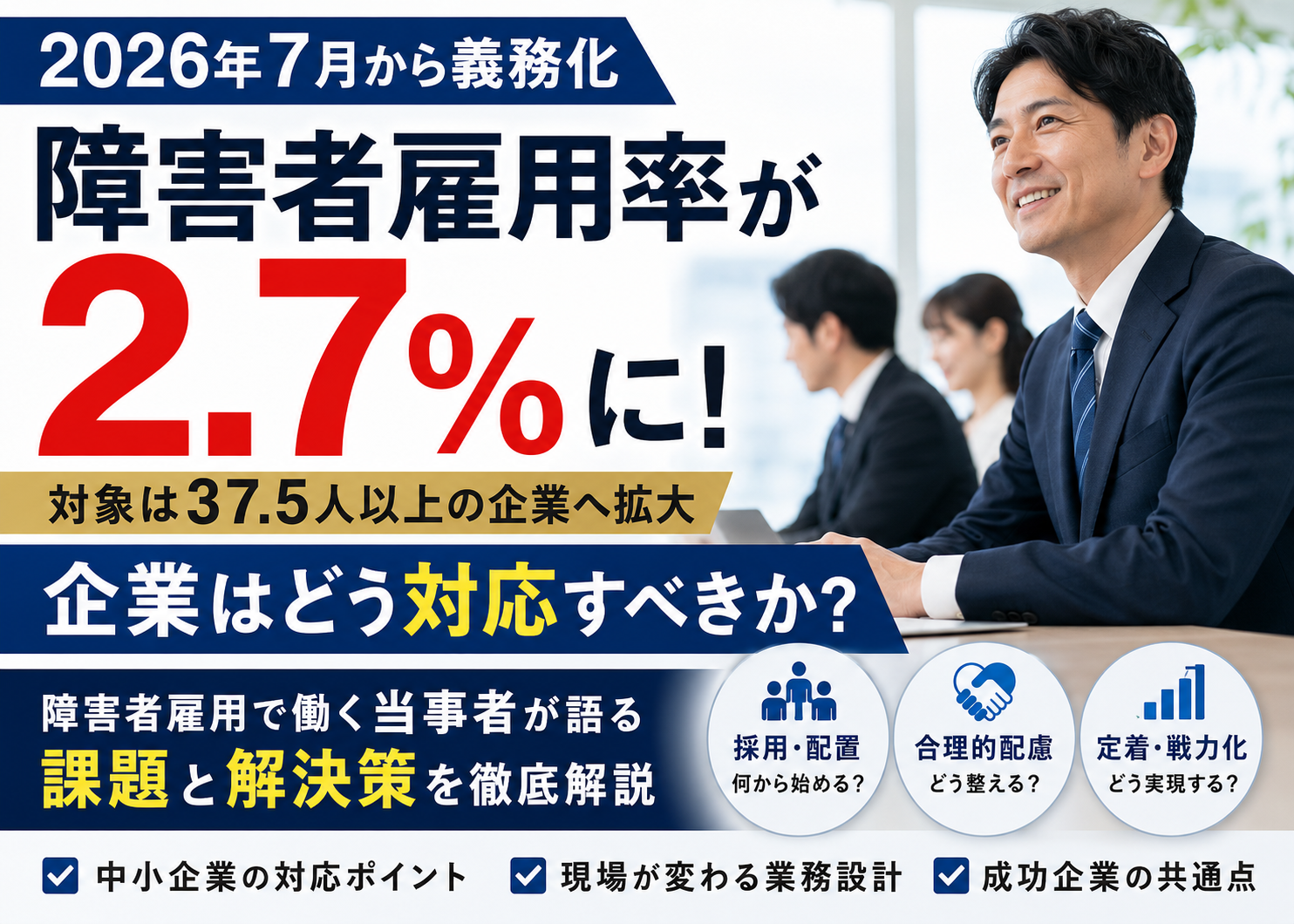
障害者雇用で「仕事を切り出す」だけでは足りない
――元課長・中途重度障害当事者が考える「人を活かす仕事の再設計」
障害者雇用で「仕事を切り出す」だけでは、本当の人材活用にはつながりません。健常者時代に課長を…












コメントを残す