TL;DR (3 lines)
1. Japan is a maritime nation since antiquity. The distributed network of ports, coves, and harbors remains a living strength through shipbuilding × ports.
2. Offshore SMRs are not just “a power source” but maritime social infrastructure. Using prefab→tow-out→mooring→dock-in maintenance, i.e., shipbuilding practices, we deliver the “last two centimeters” (real-world usability).
3. Costs, regulation, ocean conditions, and public acceptance are hard problems, but serial builds × bundled PPAs × transparent operations can turn operationally safe systems into a product.
—
Table of Contents
1. Intro: Why start the story from the sea?
2. Japan as a maritime nation since antiquity: Geography × Trade × Belief as an OS
3. Early modern → modern learning curve: mass production, outfitting, serial builds
4. Essence of offshore SMRs: not “a power plant,” but maritime social infrastructure
5. Technical architecture: platform types, mooring, cooling, dock-in/out
6. Five use cases: process heat / DCs / island resilience / disaster hubs / port electrification
7. Economics: outfitting ratio × serial builds × bundled PPAs + “social accounting”
8. Policy & regulation: definitions / dual-layer licensing / liability / cyber / fuel logistics / transparency
9. Risks & responses: economy, ocean conditions, geopolitics, acceptance
10. 72h/7d/90d implementation template: first steps
11. Case sketches: Seto Inland Sea / Sea of Japan corridor / Nansei Islands
12. Checklists: mooring, cold/heat/water, social acceptance, security
13. FAQ: Ten common questions
14. Mini glossary
15. Conclusion: Beyond “for vs. against” — toward design and operations
—
<a id=”intro”></a>
1) Intro: Why start the story from the sea?
Debates on electricity often fall into a binary of “nuclear vs. renewables.” But on the ground, the issue shifts to operations:
How do we place firm capacity for islands, peninsulas, ports, and data-center corridors?
How do we synchronize variable renewables with industrial processes (steel, chemicals, water electrolysis)?
How do we design a society that won’t stop during compound disasters—tsunamis, typhoons, floods?
Here, offshore SMRs stand out. I call them “maritime social infrastructure.”
By bringing shipbuilding practices into power—prefab outfitting → tow-out deployment → moored operations → dock-in maintenance—we close the “last two centimeters” between plans and real-world usability.
—
<a id=”maritime”></a>
2) Japan as a maritime nation since antiquity: Geography × Trade × Belief as an OS
2-1. Geography: archipelagic gift = “natural coastal shipping network”
The Seto Inland Sea is a calm internal corridor with dense points for resupply, safe harbor, and calls.
On the Sea of Japan side, the Kitamae-bune optimized port sequences against seasonal winds to design logistics.
The Nansei Islands leveraged the Kuroshio current in a hub-and-spoke pattern—proto microgrids at island scale.
2-2. Trade: ports as market = information hub
Port towns gathered ship carpenters, smiths, rope makers, coopers, ice makers, salt works—multi-skilled clusters.
Such “skill mixing” drove technological progress, mirroring today’s SMR outfitting yards.
2-3. Belief: sea deities and a culture of safety
Sumiyoshi, Munakata, Ōwatatsumi—coastal shrines provided a ritual UX for voyage safety and a community safety culture.
The loop of purification → thanksgiving → upkeep corresponds today to publishing operating logs → third-party review → maintenance improvement.
—
<a id=”learning”></a>
3) Early modern → modern learning curve: mass production, outfitting, serial builds
Kitamae-bune constantly updated its port-call algorithm based on weather, tides, and congestion.
Modern shipyards refined block construction and outfitting docks, establishing the method of “build on land, complete at sea.”
Ports expanded with breakwaters, quays, lighthouses, electrification, pushing regional optimization—integrating electricity, heat, and water is not new.
> Lesson: Japan is better at serial production than at one-off miracles. Offshore SMRs will get strong the same way—by repeating identical units.
—
<a id=”essence”></a>
4) Essence of offshore SMRs: not “a power plant,” but maritime social infrastructure
Implementation is less about the physics of generation and more about fit with the social OS:
Outfitting-yard first: reduce on-site labor and shrink estimate variance.
Two-site concept: separate operating site (offshore/moored) and maintenance site (dock).
Transparent operations: publish environment/operations/maintenance/security logs via a dashboard API.
Composite value: not just electricity—bundle steam, fresh water, ice, district energy, and data.
—
<a id=”architecture”></a>
5) Technical architecture: platform types, mooring, cooling, dock-in/out
Platforms: barge, semi-submersible, artificial island, pier-fixed.
Mooring: multi-point mooring + emergency disconnect (safe-harbor procedures for typhoons/tsunamis).
Cooling: leverage the ocean’s deep heat sink while monitoring ecological impact of intake/discharge.
Dock-in/out: tow to dock → major inspection/upgrade → redeploy, shortening downtime and standardizing work.
Reactor types:
Light-water (e.g., BWRX-300): maturity and regulatory alignment.
Molten salt (e.g., CMSR): high-temperature process heat for chemicals and synthetic fuels.
Microreactors: pinpoint supply for islands, mines, disaster bases.
—
<a id=”usecases”></a>
6) Five use cases: process heat / DCs / island resilience / disaster hubs / port electrification
1. Coastal industry × H₂ / NH₃
24/7 power + steam anchors electrolysis and e-fuel synthesis, absorbing variable renewables via heat/hydrogen.
2. Data-center corridors
Direct connection near harbors + seawater cooling. Circulate waste heat to district energy and seafood processing.
3. Islands & peninsulas resilience
Exit diesel dependence. Ensure power and water that don’t stop even when ferries do; protect healthcare and telecom.
4. Maritime disaster base
With multi-layered mooring and safe harboring, plus temporary piers, act as an emergency hub for energy / water / communications.
5. Port electrification
Constant electricity for gantry cranes, shore power, and cold storage—cut fuel cost and noise.
—
<a id=”economics”></a>
7) Economics: outfitting ratio × serial builds × bundled PPAs + “social accounting”
CAPEX breakdown: hull, nuclear island, BOP, mooring, grid interconnect, security. Higher outfitting ratio → lower site labor.
Finance: equipment finance for outfitting yards + project finance for operations. Use bundled PPAs (port authorities, industrial parks, DCs) to smooth first-of-a-kind risk.
Learning curve: plan 3–5 identical units to shorten schedules and reduce costs; use spare barge capacity to lift availability KPIs.
Social accounting: move beyond LCOE; visualize composite KPIs—t-CO₂ avoided, m³ of freshwater, tons of ice, MWth supplied, PUE improvement.
—
<a id=”policy”></a>
8) Policy & regulation: definitions / dual-layer licensing / liability / cyber / fuel logistics / transparency
1. Definitions & scope: clarify legal status and liability boundaries for barge, semi-sub, artificial island, and pier-fixed types.
2. Dual-layer licensing: design certification + site-specific review (including deployment routes and safe-harbor plans).
3. Compensation & insurance: align nuclear liability with marine insurance; codify handover of liability during safe harboring.
4. Cyber & security: peacetime protocols for port security × coast guard × police × defense, plus zero-trust OT.
5. Fuel & waste logistics: integrate with port emergency plans; seal/track/third-party audit via digital twins.
6. Openness & participation: API for environment/operations/audit data, permanent visitor paths, and an annual white paper.
—
<a id=”risks”></a>
9) Risks & responses: economy, ocean conditions, geopolitics, acceptance
“Too expensive / too slow”: FOAK is expensive. That’s why we need higher outfitting ratio × serial builds × bundled PPAs to enter the learning curve, valuing electricity-heat-water via social accounting.
“The sea is dangerous”: publish designs for multi-point mooring, emergency disconnect, safe harbor; stack deep heat sink × passive safety; provide live monitoring data for visible reassurance.
“Terror / geopolitics”: institutionalize civil-military drills, AIS-like visibility, and zero-trust OT as regulatory requirements.
“Community consent is hard”: build a permanent pavilion at the port museum, ritualize annual open inspections, and disclose complaint→fix lead times to create participatory acceptance.
—
<a id=”implementation”></a>
10) 72h / 7d / 90d implementation template: first steps
Within 72 hours
Launch an inter-agency “Maritime Nuclear Room” (METI, MLIT, Coast Guard, Police, Regulator).
Run quick hazard screens for candidate ports (tsunami, typhoon, storm surge, safe harbors).
Draft open dashboard requirements (environment, operations, maintenance, security logs).
Start listening sessions with fisheries co-ops, chambers of commerce, and local shrines on making annual safety rituals public.
Within 7 days
Scope first project: port-adjacent onshore BWR with power-heat integration (DC / ice / desalination).
For floating concepts, issue RFI/RFP to surface gaps in regulation, insurance, and ocean engineering.
Public-engagement UX: design permanent visitor paths + remote monitoring room for transparency.
Within 90 days
Draft a model-port basic plan (mooring, safe harboring, piping, security, visitor paths).
Publish provisional guidance (definitions, licensing, liability, fuel logistics, cyber).
Prepare a bundled PPA among port authorities, industrial parks, and DCs.
Design an annual “Maritime Safety Festival” combining open inspections with traditional purification rites to socialize safety culture.
—
<a id=”casesAvatar”></a>
11) Case sketches: Seto Inland Sea / Sea of Japan corridor / Nansei Islands
Seto Inland Sea: leverage calm internal waters; distributed mooring + local use of waste heat to maximize power-heat-water integration.
Sea of Japan corridor: design for seasonal winds and port sequences to keep availability up; cold-region ice production and district heat as core functions, not by-products.
Nansei Islands: set KPIs for safe-harbor success aligned with typhoon frequency; expand microgrids for tourism × fisheries × telecom.
—
<a id=”checklists”></a>
12) Checklists (practical extracts)
12-1. Mooring & safe harboring
Annual biases of dominant wind and wave direction
Emergency disconnect call tree (tugs, coast guard, port security)
Safe-harbor intake capacity (tide, depth, mooring points, channel width)
Redundancy of buoys/chains and galvanic corrosion protection
12-2. Cold/heat/water (three-in-one)
Continuous monitoring of thermal plume and ecological effects
Optimize flow for ice → cold-chain logistics
Allocation rules and pricing for desalinated water → potable/industrial
Contracts for district energy using waste heat
12-3. Social acceptance
KPIs for open-inspection visitors / satisfaction / repeat rate
Dashboard universal design (color vision, audio, multilingual)
Public SLA for complaint → corrective action lead time
Publish third-party audit results and corrective plans
12-4. Security & cyber
Peacetime joint drills among port security/coast guard/police
Zero-trust OT, log retention, red-team exercises
Physical boundaries (fences, surveillance, access) and handover procedures during safe harboring
Visibility service for position/proximity (AIS-like)
—
<a id=”faq”></a>
13) FAQ: Ten common questions
Q1. Are offshore SMRs truly safe?
A. We center passive safety + the ocean’s deep heat sink, publish multi-point mooring / emergency disconnect / safe-harbor plans, and turn safety into visible operations via continuous data disclosure.
Q2. Won’t they be too expensive?
A. FOAK is expensive by definition. Increase outfitting ratio, go serial, and use bundled PPAs to enter the learning curve. Evaluate via composite KPIs in social accounting, not LCOE alone.
Q3. Do they compete with renewables?
A. They complement. Heat, hydrogen, and freshwater absorb variability; SMRs provide firm capacity.
Q4. How do you secure community consent?
A. Permanent visitor paths, open inspections, and a dashboard API foster participation. Annual inspections become a public ritual for transparency.
Q5. Impact on fisheries?
A. Continuous monitoring of temperature and ecology; pre-agreed operating rules; provide co-benefits like ice and cold storage.
Q6. What about waste and fuel?
A. Integrate into port logistics with seals, tracking, and third-party audits. As with dock-in/out, standardization is key.
Q7. Tsunamis and typhoons?
A. Manage by KPI: mooring redundancy + emergency disconnect + safe-harbor capacity; verify effectiveness with annual drills.
Q8. Cyberattacks?
A. Zero-trust OT, red-team exercises, and published audit trails raise observability.
Q9. Who is liable?
A. Clarify definitions and liability boundaries (nuclear liability × marine insurance) and codify handover during safe harboring.
Q10. When can we start?
A. Follow the 72h/7d/90d template to begin with a model port plan and a bundled PPA draft.
—
<a id=”glossary”></a>
14) Mini glossary
Offshore SMR: a small modular reactor mounted on a maritime platform.
Outfitting: installing equipment at a yard or dock; reduces on-site labor and stabilizes quality.
Dock-in/out: bringing a platform into a dock for major inspection/upgrade and redeploying it.
Mooring: fixing a structure using anchors/buoys/chains; design together with emergency disconnect.
Safe harboring: temporary retreat under extreme conditions; manage with success-rate KPIs.
Social accounting: valuing projects beyond LCOE using composite benefits—CO₂ avoided, freshwater, ice, heat, PUE, etc.
—
<a id=”conclusion”></a>
15) Conclusion: Beyond “for vs. against” — toward design and operations
Japan is a people of the sea with a long record of designing for risk.
Offshore SMRs are a way to embed a new heart into the maritime OS.
Revive the ancient triad of shrine (ritual) × market (exchange) × harbor (operations) in modern form and present operational safety as a product.
Light for the port, heat for daily life, jobs for the town, pride for the children.
Let’s take the first step today with the 72h/7d/90d plan.

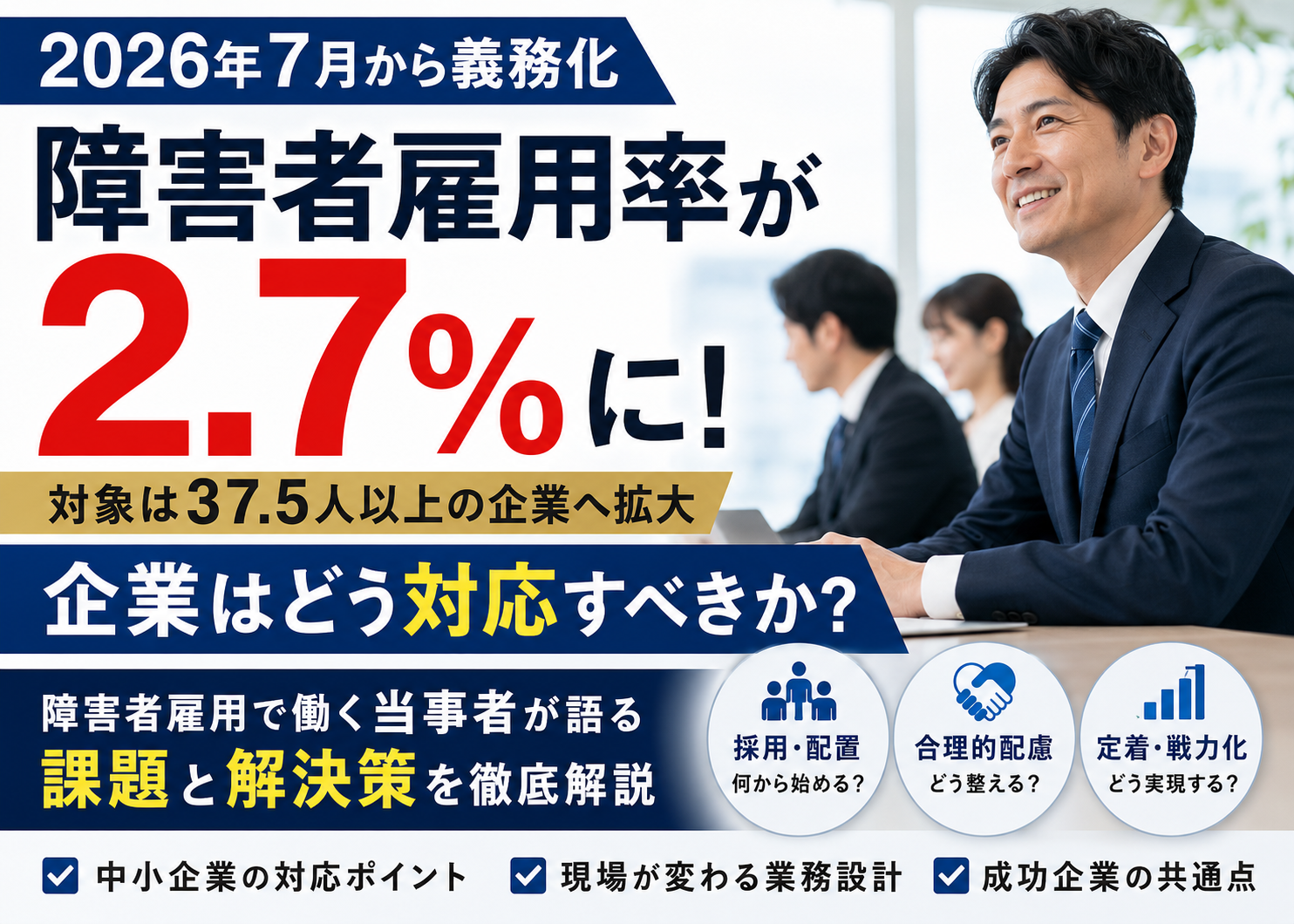
障害者雇用で「仕事を切り出す」だけでは足りない
――元課長・中途重度障害当事者が考える「人を活かす仕事の再設計」
障害者雇用で「仕事を切り出す」だけでは、本当の人材活用にはつながりません。健常者時代に課長を…
















コメントを残す