✅ Meta Description (within 155 characters)
The world has always changed and survived. Yet why does imagining the future feel so painful? A disabled writer explores fear, hope, and human imagination.
🔍 Main SEO Keywords
- Why do we fear the future?
- World collapsing anxiety
- Imagination and anxiety
- Media fearmongering
- Disabled blogger perspective
- Future prediction and unhappiness
- How to hold on to hope
- Uncertainty of social systems
- Power of imagination
- How to overcome life struggles
📑 Table of Contents
- Introduction|When You Can’t See the Future
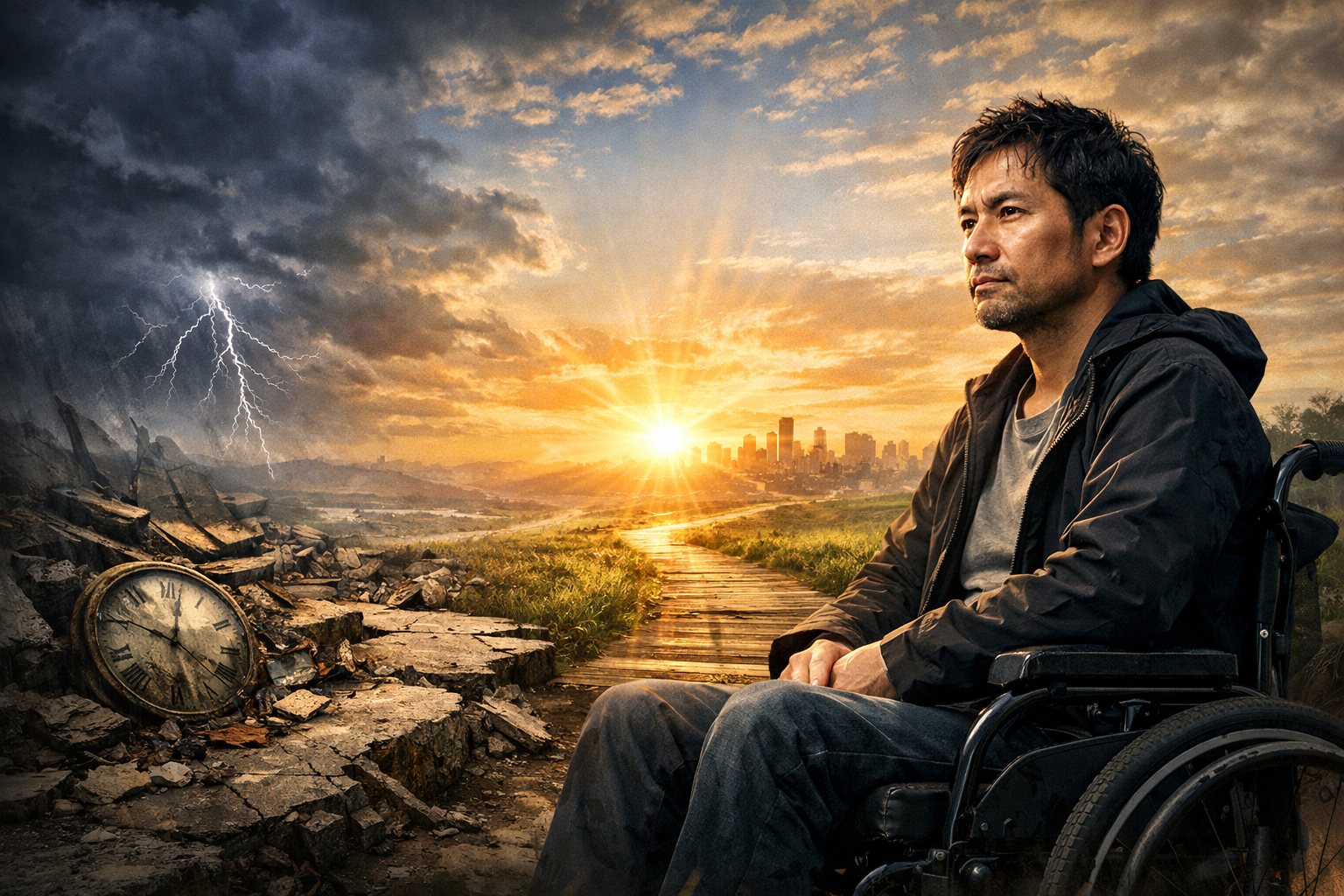
- A Truth: The World Has Broken Many Times and Survived
- Maybe We’re Unhappy Because We Can Predict the Future
- How Media Triggers and Amplifies Our Predictive Brains
- When Imagination Becomes Caution Instead of Joy
- Systemic Instability and the Disabled Person’s Perspective
- Choosing to Accept Uncertainty
- What It Takes to Light a Spark of Hope
- Believing Again in the Human Power of Imagination
- Conclusion|What Color Is Your Future?
1. Introduction|When You Can’t See the Future
Lately, I’ve found myself thinking:
“What’s going to happen to this world?”
Global warming, AI replacing jobs, collapsing welfare systems, wars, pandemics—every time I open my phone, dark predictions flood the screen.
As a person who acquired a severe physical disability later in life, I live on the edge of social support systems. For people like me, the future isn’t just uncertain—it’s often frightening.
Still, I want to ask the question:
Why does thinking about the future hurt so much?
2. A Truth: The World Has Broken Many Times and Survived
History tells us that humanity has always endured, even through disaster:
- The fall of the Roman Empire
- The Black Plague wiping out one-third of Europe’s population
- Two World Wars
- Multiple economic crises and pandemics
Yet through it all, humans have rebuilt, loved, laughed, sung, and created new cultures.
“Collapse” has never meant “end.”
It often meant “a chance to begin again.”
So why does our generation feel like it’s the first to face an ending we can’t survive?
3. Maybe We’re Unhappy Because We Can Predict the Future
Here’s a uniquely human curse: we can imagine the future.
This ability helped us survive—predicting weather, danger, or social dynamics. But it also created a psychological burden.
We suffer not from what’s happening, but from what we fear might happen.
Illness, loneliness, job loss, social collapse—we start grieving them before they even occur.
Our powerful predictive brains, meant to keep us safe, now rob us of peace.
4. How Media Triggers and Amplifies Our Predictive Brains
Modern media has supercharged our anxiety.
- Algorithms promote tragic or alarming content
- News outlets lead with fear-based headlines
- Social media spreads worry like wildfire
Our “predictive minds” are bombarded daily with images of crisis.
Even when we want to stay optimistic, we’re constantly pulled into narratives of collapse.
Unconsciously, we start imagining the future only through the lens of disaster.
Our imagination has been hijacked by fear.
5. When Imagination Becomes Caution Instead of Joy
Imagination should be a joyful human ability.
- Children dream of who they’ll become
- Artists create music, stories, and beauty
- People design futures that don’t yet exist
But now, imagination mostly fuels precaution and risk avoidance.
For example, retirement used to mean “freedom.” Now it means “pension insecurity,” “health risks,” and “dying alone.”
Our imaginative power—once a tool for dreaming—has become a warning system.
We’re not envisioning joy.
We’re preparing for disaster.
6. Systemic Instability and the Disabled Person’s Perspective
As someone with a severe disability, I live within fragile systems.
Recently, I received a notice: I no longer qualify for medical support due to a slight income increase. In other words:
“You worked harder and earned a bit more—so we’re cutting off your support.”
That moment shattered my trust in stability.
For disabled people, the future isn’t shaped by ambition—it’s shaped by policy.
And those policies can shift overnight.
When your survival depends on bureaucracy, imagining a hopeful future feels like a dangerous luxury.
7. Choosing to Accept Uncertainty
Even so, I don’t believe uncertainty is always bad.
It’s terrifying, yes—but also full of potential.
Uncertainty is where hope lives.
- People who overcame hopelessness
- Lives transformed by chance encounters
- Disabilities that led to profound new purpose
The future is uncertain, which means it isn’t fixed yet.
That is exactly why we must keep imagining it.
8. What It Takes to Light a Spark of Hope
You don’t need a revolution to feel hopeful.
All it takes is a moment of meaning:
- Comforting someone in pain
- Taking care of your own heart
- Sharing a story that helps others
- Writing a blog that someone needs to read
These may seem small, but they shape tomorrow.
Being a source of hope—however quiet—is a powerful way to participate in the future.
9. Believing Again in the Human Power of Imagination
Yes—our ability to imagine the future can make us suffer.
But imagination is not the problem.
How we use it is.
We can use it to catastrophize, or we can use it to create.
We don’t need to become fearless.
We just need to stay gentle, curious, and committed to showing up again tomorrow.
That, too, is an act of imagination.
10. Conclusion|What Color Is Your Future?
If you feel anxious thinking about the future—you’re not alone. I feel it, too.
But that fear comes from a deeply human strength:
the ability to imagine what’s next.
If we redirect that ability toward kindness, creativity, and connection,
we can shift from “predicting disaster” to “planting possibility.”
So I ask you gently:
What color is your future?
As for me—just writing these words today feels like I’ve lit a small candle in the dark.
📝 Summary Points
- Predicting the future is a uniquely human trait—but it often causes suffering
- Media and social media amplify anxiety by flooding us with negative visions
- Disabled people especially feel vulnerable to unpredictable systems
- Uncertainty is scary, but it’s also the birthplace of hope
- Using imagination for kindness and connection helps reclaim the future
💬 We’d Love to Hear from You
What thoughts or feelings does your future bring up?
If this post resonated with you, please leave a comment—and feel free to share it with someone who might need it.
Let’s imagine brighter futures—together.
This article was written by a severely disabled blogger, drawing on personal experience and social insight. May each of us find the courage to leave a light in the dark.

















コメントを残す