Meta Description (within 155 characters)
“When yin reaches its extreme, it turns into yang” — Does life, when fully lived, inevitably lead to death? A severely disabled blogger reflects on the inclusive nature of life and death, drawing from personal experience, Eastern philosophy, and Buddhist thought.
Table of Contents
- Introduction | Is Death Truly the End?
- Chapter 1 | “When Yin Reaches Its Extreme, It Turns into Yang”: The Principle of Change and Cyclicality
- Chapter 2 | “When Life Reaches Its Peak, It Leads to Death”? — Rethinking Linear Assumptions
- Chapter 3 | Buddhist View: Life and Death as One
- Chapter 4 | Death in Nature — The Mother of All Life
- Chapter 5 | Living Is a Series of “Small Deaths”
- Chapter 6 | What I Saw in My “Life After Death” as a Disabled Person
- Final Chapter | Embracing Death Within Life
- References & Quotations
Introduction | Is Death Truly the End?
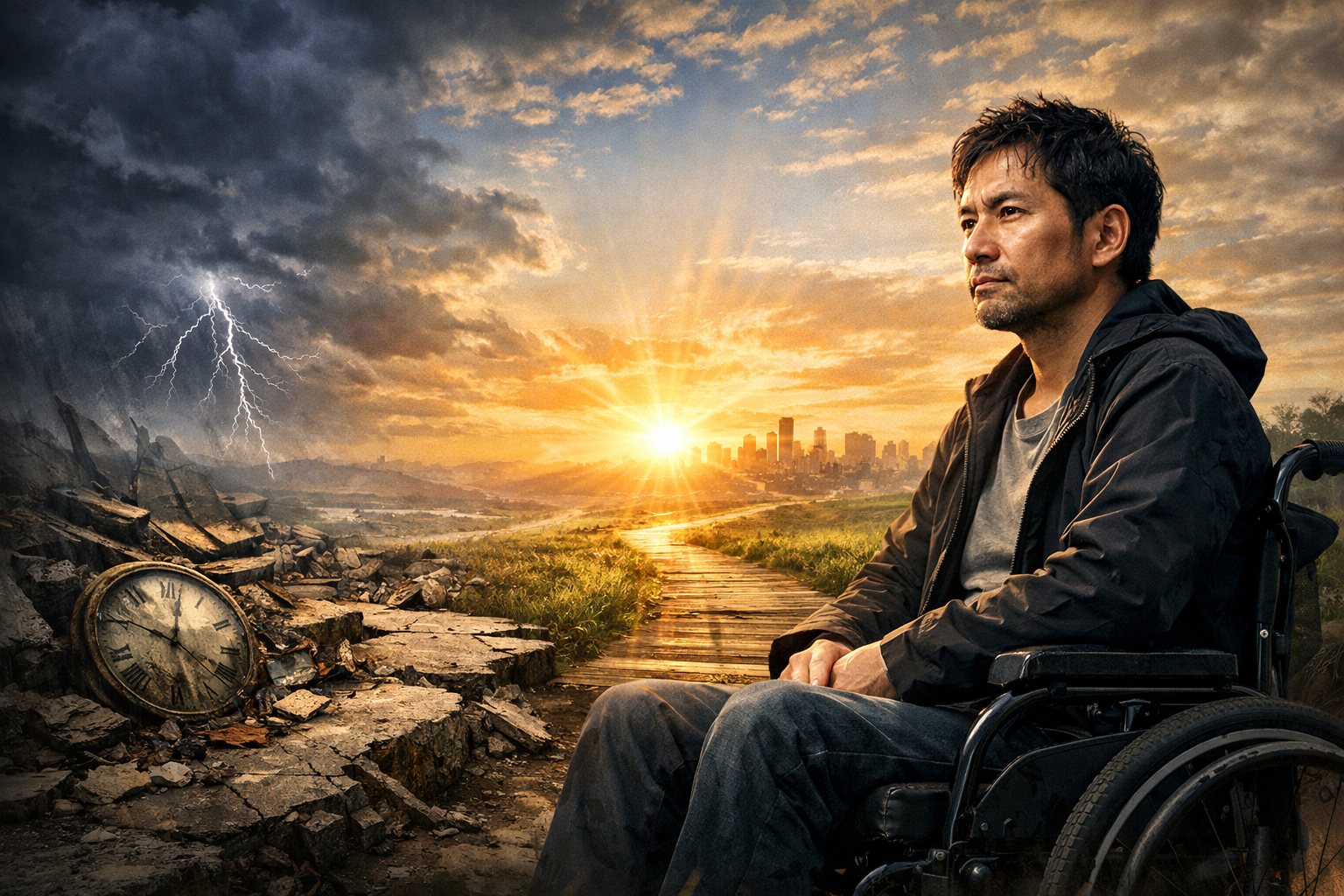
“When life reaches its peak, it leads to death.” This phrase sounds intuitively correct. But having lived through the collapse of my former life due to disability, I now see things differently.
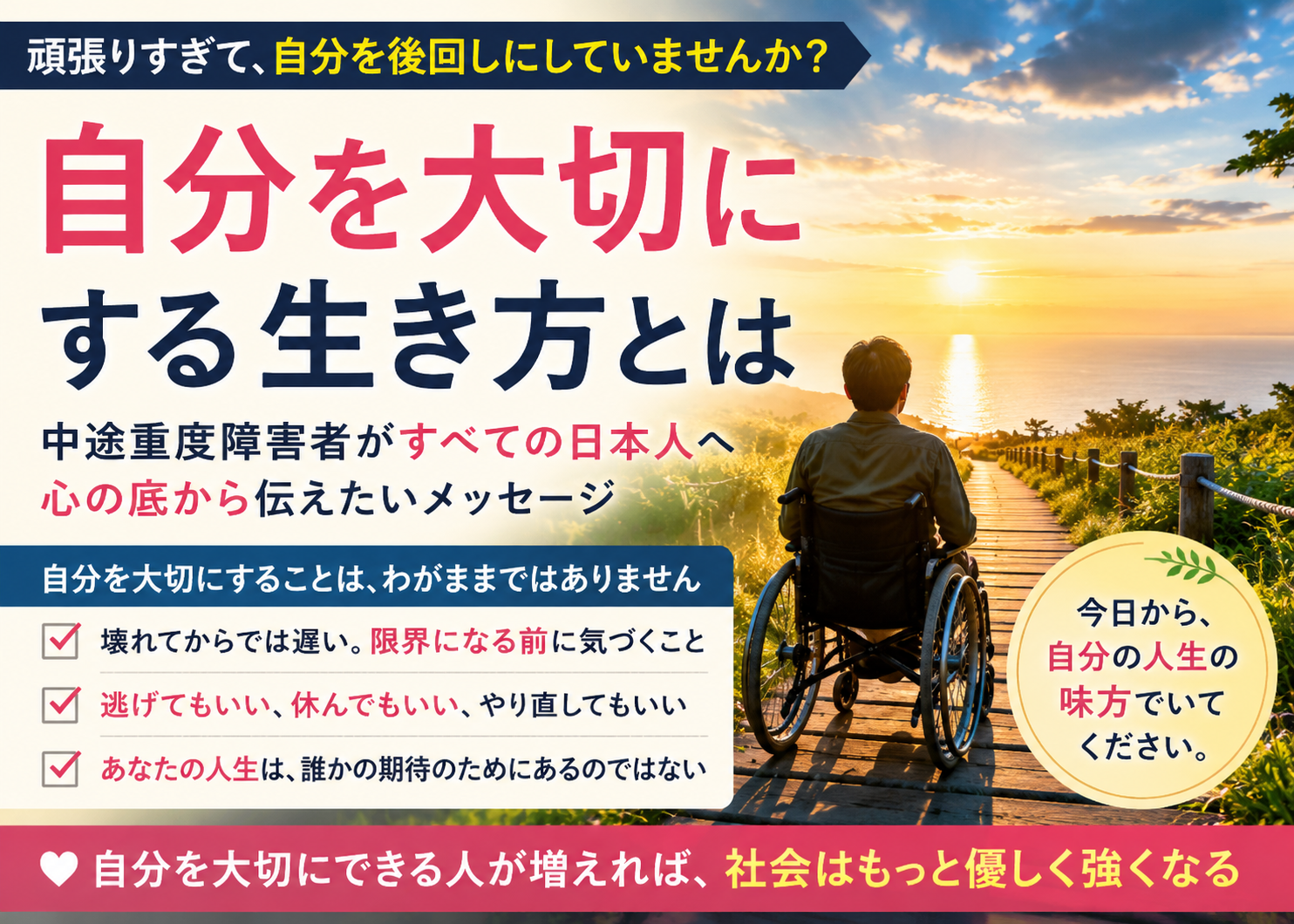
Losing my job, my role, my abilities — it felt as though I had died once. Yet what followed was a rebirth, a new form of life.
That experience taught me: death is not the opposite of life. Rather, death is already included within life.
In this blog, I explore the relationship between life and death, drawing from Eastern philosophy, Buddhism, and my own lived experience as a person with severe acquired disability.
Chapter 1 | “When Yin Reaches Its Extreme, It Turns into Yang”: The Principle of Change and Cyclicality
This phrase comes from the I Ching (Book of Changes). It teaches that the universe is formed by the dynamic balance of yin and yang — dark and light, stillness and movement.
The key point is that yin and yang are not enemies, but mutually arising and transforming forces.
Night gives way to day. Winter gives way to spring. Sorrow often precedes joy. So too, in darkness lies the seed of brightness.
If we apply this to death, we find that death may not be an end, but a transformation — a doorway to the next phase.
Chapter 2 | “When Life Reaches Its Peak, It Leads to Death”? — Rethinking Linear Assumptions
The phrase suggests a linear progression: more life inevitably leads to death.
But is life really a straight line from birth to death? From my perspective, life is more like a circle, or a spiral — a continuous flow where beginnings and endings are intertwined.
Rather than death being a wall at the end of the road, it may be a bridge, or even a mirror that reveals life’s depth.
Death is not an interruption to life — it is one of life’s most profound expressions.
Chapter 3 | Buddhist View: Life and Death as One
Buddhism teaches the concept of “Shoji Ichinyo” — life and death are one.
In this view, there is no strict boundary between the two. Life arises due to causes and conditions. So does death.
The teachings of impermanence, emptiness, and dependent origination all suggest that nothing is fixed — everything is in flux.
The Buddha did not teach how to defeat death, but how to live peacefully with its inevitability.
Through this lens, death does not diminish life — it deepens it.
Chapter 4 | Death in Nature — The Mother of All Life
Look to the forest: fallen trees become soil, feeding new plants.
Animals that die become nutrients for other living beings.
In nature, death is not feared — it is honored. It is part of the great cycle that sustains everything.
If we can learn from nature, we too may begin to see death not as a tragedy, but as an integral, sacred aspect of life.
Chapter 5 | Living Is a Series of “Small Deaths”
Becoming disabled meant losing many parts of myself: my job, my independence, my plans.
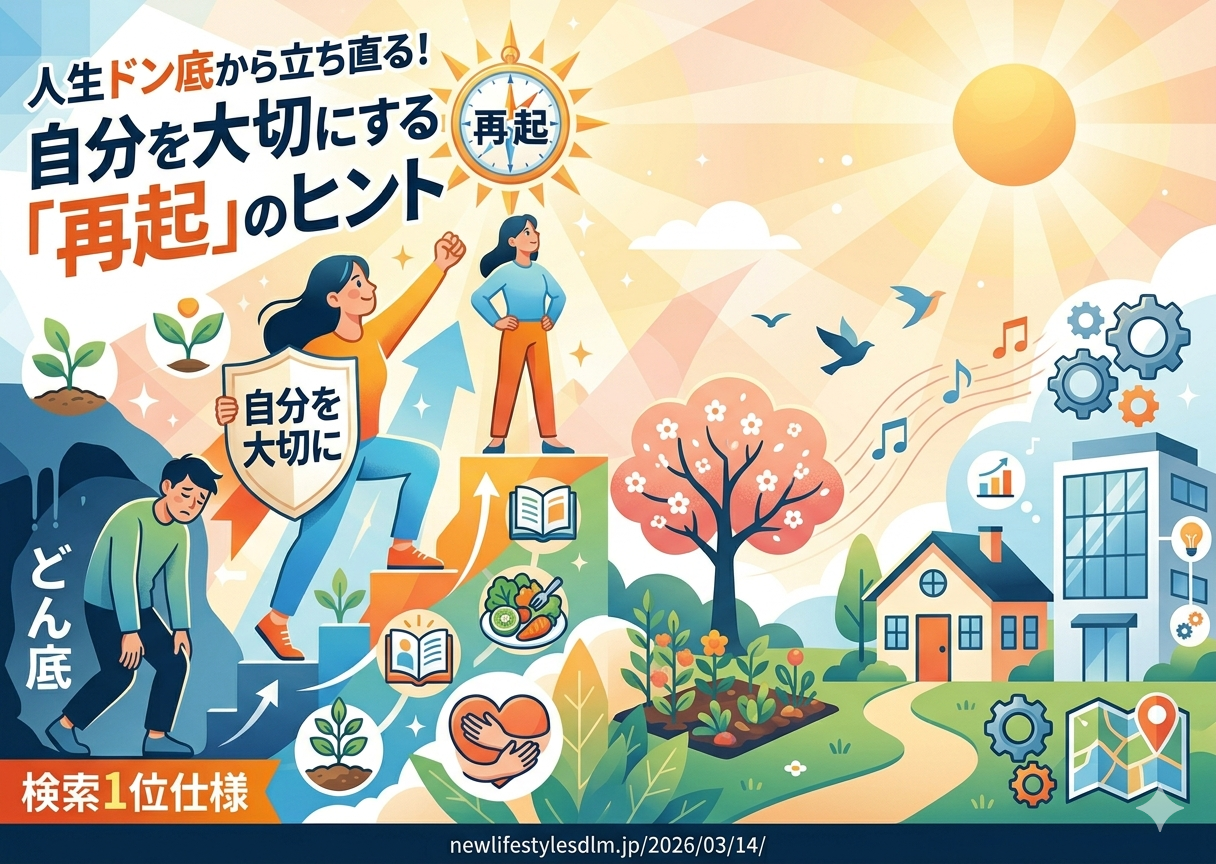
Each loss felt like a small death. But each was also a birth.
Letting go of who I was gave rise to who I could become. It was painful, yes — but it also gave me access to a deeper version of myself.
To live, then, is to experience these small deaths, again and again — and to grow through them.
Chapter 6 | What I Saw in My “Life After Death” as a Disabled Person
Losing my old life due to disability was like experiencing a form of death.
But what followed was not emptiness. It was a quieter, more profound existence.
I discovered a richness in stillness, in simply being.
I became more sensitive to kindness, to connection, to presence.
It was as if death had opened my eyes — not to what was gone, but to what remained, and what could still be born.
Final Chapter | Embracing Death Within Life
Death is not our enemy. It is not something “outside” of us.
It lives within us — in our changes, in our losses, in our growth.
To live fully is to carry death gently, reverently, as a companion.
By acknowledging death, we don’t diminish life — we enrich it.
May this perspective soften your fears, deepen your appreciation, and help you live this moment more fully.
References & Quotations
- I Ching – The foundation of yin-yang cyclic thought
- The Heart Sutra – On emptiness and impermanence
- Shunsuke Tsurumi, Philosophy of Death
- Masahiro Morioka, What Life Studies Can Do
- Tetsuo Yamaori, Between Life and Death













コメントを残す