✅ SEO Meta Description (within 155 characters)
“Work is hard—but I still want to work while I can.” A disabled blogger reflects on life, contribution, and self-worth in this deeply philosophical and heartfelt 10,000-word article.
🔍 Core SEO Keywords (naturally embedded)
- want to work while I can
- working with a disability
- meaning of work
- job and self-worth
- disabled worker blog
- joy of contribution
- life through labor
- working philosophy
- inclusion through work
- surviving through contribution
📑 Table of Contents
- Introduction|Still Choosing to Work
- Chapter 1|Work Is Hard — For Everyone
- Chapter 2|Why Do I Still Want to Work?
- Chapter 3|Working as a Severely Disabled Person
- Chapter 4|The Meaning of Work in Philosophy and Tradition
- Chapter 5|Work and Self-Worth
- Chapter 6|How I Work Without Burning Out
- Chapter 7|Wanting to Work While I Still Can
- Closing|To Everyone Who Works, and Everyone Who’s Hesitating
<a name=”introduction”></a>Introduction|Still Choosing to Work
“Work is really hard.”
That’s something almost everyone can agree on.
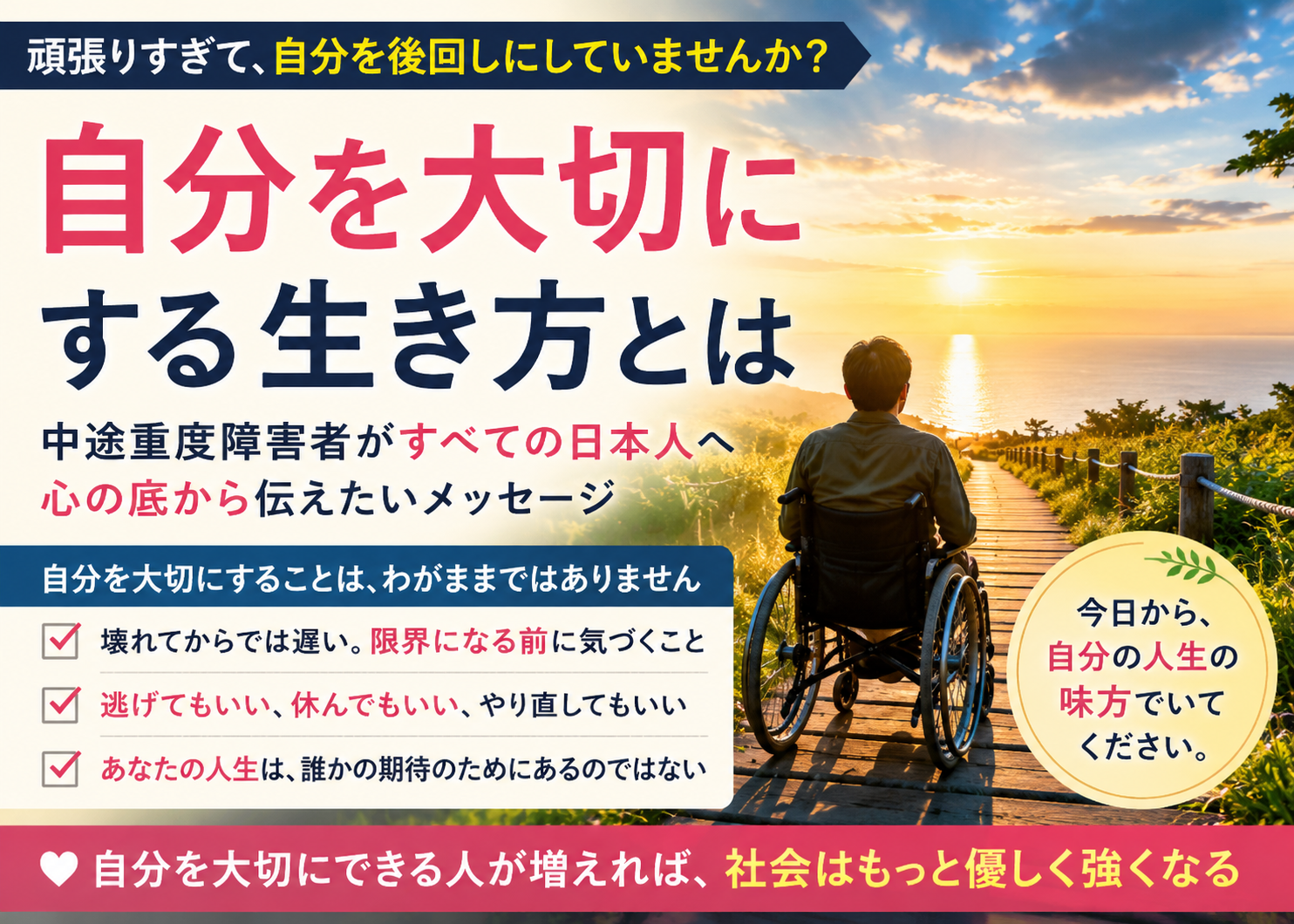
As someone who became severely disabled after a stroke, I know firsthand how tough it is to work again—physically, mentally, and socially.
And yet, I now find myself saying this from the bottom of my heart:
“I want to work while I still can.”
Why do I still want to work, even though it’s exhausting?
What do I gain from it?
In this 10,000-word article, I’ll explore these questions from personal, philosophical, and emotional perspectives, hoping it will resonate with you.
<a name=”chapter1″></a>Chapter 1|Work Is Hard — For Everyone
● Physical and Mental Strain
Rush-hour trains, overtime, office politics—
Work is full of stress, even for the healthiest people.
In Japan, surveys show that over 60% of workers report health problems from stress.
● Historical Roots: “Work as Punishment”
In ancient Greece, labor was for slaves.
In the Bible, after being expelled from Eden, Adam was cursed to toil for his bread.
Work has long been seen as “punishment.”
That legacy still shapes how we think about labor today.
<a name=”chapter2″></a>Chapter 2|Why Do I Still Want to Work?
● The Feeling of “Being Alive”
After years of rehab, when I finally returned to work, I felt something real:
I still belonged.
That sense of connection wasn’t just emotional—it was existential.
● The Joy of Being Useful to Someone
To use my time for someone else.
To see my effort make a difference.
These moments give life meaning.
<a name=”chapter3″></a>Chapter 3|Working as a Severely Disabled Person
● The Barriers Are More Than Physical
- Accessibility issues (stairs, door widths, restrooms)
- Psychological barriers (prejudice, fear of being a burden)
- Systemic barriers (rigid job structures, lack of accommodations)
For disabled people like me, working means constantly fighting invisible walls.
● But I Still Want to Work
Why?
Because nothing else gives me this kind of self-respect.
<a name=”chapter4″></a>Chapter 4|The Meaning of Work in Philosophy and Tradition
● Aristotle: Work as Purposeful Activity
Aristotle wrote that the highest good is to live in accordance with one’s purpose.
Work, then, is a way to activate one’s potential.
● Japanese Wisdom: “Hataraku” Means “To Make Others’ Lives Easier”
The Japanese word for work, hataraku, is said to come from “making others (hata) comfortable (raku).”
That origin reminds me of the deeper meaning of labor—not for myself, but for others.
<a name=”chapter5″></a>Chapter 5|Work and Self-Worth
● Being Needed Saved Me
When someone says,
“Thank you for your help,”
“You made a difference,”
I feel like I’m allowed to exist again.
That is how powerful work can be.
● Work Is Not Just About Results
Work is not only about what you produce—
It’s about how your presence connects you to society.
<a name=”chapter6″></a>Chapter 6|How I Work Without Burning Out
● Redefining What Work Looks Like
Work doesn’t have to be full-time.
It can be:
- Remote
- Part-time
- Flexible hours
- Even resting, so you can work again tomorrow
● My Routine: Mornings for Focus, Afternoons for Recovery
I divide my energy strategically.
That way, I can keep showing up without collapsing.
<a name=”chapter7″></a>Chapter 7|Wanting to Work While I Still Can
● “To Work” Is “To Use My Life Meaningfully”
I don’t want to burn out.
But as long as I can use this life for something—however small—
I want to offer it.
● Work Connects Me to the World
To work is to stay connected.
To not disappear.
To tell myself that I still matter.
<a name=”closing”></a>Closing|To Everyone Who Works, and Everyone Who’s Hesitating
Work is hard—always.
But even so, I want to keep working.
Not because of pressure, or productivity, or perfection.
But because working lets me say:
“I’m still here.”
“I’m still me.”
You don’t need to do something big.
Just being part of something, giving what you can—that’s enough.
If you’re reading this and feeling unsure about working again,
I hope my words bring you even a small sense of courage.
🙌 Share This if It Resonates
🔁 Please share this with others.
💬 Your thoughts and comments are deeply appreciated.
💡 Your support may help someone take their first step back into the world.
ご希望があれば、この英訳をWordPress形式でレイアウトした.docxファイルや、SNS投稿用のキャプション、Instagramサムネイル画像も作成いたします。お気軽にお申しつけください。
ツール
ChatGPT の回答は必ずしも正しいとは限りません。重要な情報は確認するように















コメントを残す