Meta Description
Why does the 14th-century Japanese essay collection Tsurezuregusa still move readers today? A late-onset severely disabled writer explores universal desires, solitude, impermanence, and self-awareness.
Target SEO Keywords
Tsurezuregusa modern meaning
Tsurezuregusa human psychology
Tsurezuregusa disabled perspective
Tsurezuregusa emotion empathy
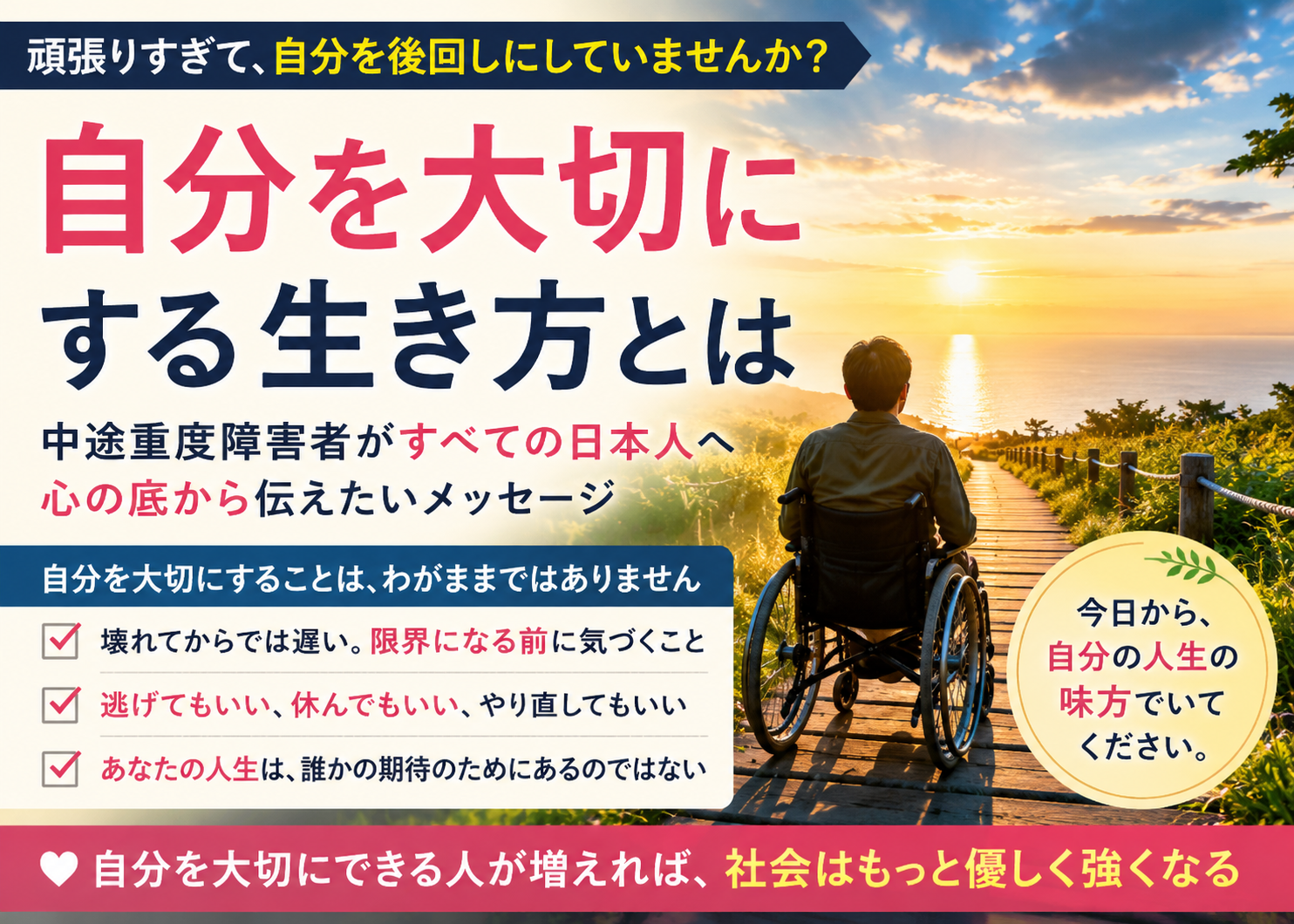
Severely disabled blogger
Table of Contents
- Introduction: Why Tsurezuregusa Speaks to Me as a Severely Disabled Person
- Lessons on Living Free from Desire
- Rethinking Solitude and Human Relationships
- Embracing Impermanence and Finding the Courage to Live
- Self-Recognition and Dignity as a Disabled Individual
- Conclusion: The Richness of Life with Disability and Tsurezuregusa
Introduction: Why Tsurezuregusa Speaks to Me as a Severely Disabled Person
Written in the late Kamakura period by Yoshida Kenkō, Tsurezuregusa is considered one of the three great Japanese essays, alongside Hōjōki by Kamo no Chōmei and The Pillow Book by Sei Shōnagon. Its sharp insights into human nature and psychology remain striking even over 700 years later. For someone like me—who became severely disabled mid-life and whose worldview was fundamentally altered—Tsurezuregusa offers profound relevance and resonance.
Lessons on Living Free from Desire
Kenkō observed with piercing clarity how people are dominated by desires and vanity. In Section 38, he writes, “Those bound by fame and fortune never know peace,” a line that mirrors my pre-disability self. I used to chase success and validation, only to live in constant anxiety. But after losing much of my physical freedom, I was finally forced to ask: what truly matters in life? Tsurezuregusa guided me back to this essential question.
Rethinking Solitude and Human Relationships
Becoming disabled brought with it an isolating loneliness. Many people distanced themselves, and I felt painfully abandoned. Section 211 of Tsurezuregusa says, “If one finds a single true friend in a lifetime, one has more than enough.” This struck me deeply. It made me realize that the number of acquaintances means little—what truly matters is the depth and authenticity of relationships.
In today’s hyperconnected world through social media, this message is more urgent than ever. Tsurezuregusa reminded me of the irreplaceable value of one genuine friend who truly sees and supports you.
Embracing Impermanence and Finding the Courage to Live
The recurring theme of impermanence in Tsurezuregusa reflects my daily reality as a person living with severe disability. In Section 7, Kenkō writes, “The dewdrops in Adashino never cease to vanish, nor does the smoke at Toribeyama ever stop rising.” These poetic images reflect the ephemeral nature of life.
After suddenly becoming disabled, I realized firsthand that nothing in life is guaranteed. Tsurezuregusa taught me to embrace this fragility—not with despair, but with courage and humility.
Self-Recognition and Dignity as a Disabled Individual
Kenkō repeatedly stresses the importance of self-awareness. Section 188, which emphasizes “knowing one’s place,” supported me during the darkest times of self-doubt and diminished self-worth. Accepting my limitations helped me rediscover new kinds of strength.
Even while acknowledging my physical constraints, I strive every day to protect my dignity, to live with integrity, and to explore what is still possible. Kenkō’s call for continuous self-examination and personal growth remains a beacon.
Conclusion: The Richness of Life with Disability and Tsurezuregusa
Why does Tsurezuregusa, written over 700 years ago, still resonate so deeply? It is because the human condition has not fundamentally changed. Our fears, desires, hopes, and existential questions remain the same.
For me, Tsurezuregusa is not merely a classical text—it is a personal guidebook, a philosophical companion. Through my disability, I lost many things. Yet I gained a rare chance to re-evaluate life’s true value and discover a new sense of purpose.
The psychological truths expressed by Kenkō transcend time and ability. The greatest gift this work has given me is the encouragement to keep asking what it means to live well.
May Tsurezuregusa also offer you, dear reader, a moment to pause, reflect, and reconnect with the truths that matter most in your own journey.















コメントを残す