Meta Description
Is it true that “the nail that sticks out gets hammered down”? A deep philosophical reflection by a mid-life person with a severe disability on what it means to live as “a nail.”
Keywords
- the nail that sticks out
- Japanese conformity
- social pressure in Japan
- philosophical blog
- disability and identity
Table of Contents
- Introduction: Why Do We Hammer Down the Nail?
- Chapter 1: What Does “the Nail” Symbolize?
- Chapter 2: Why Japanese Society Hammers the Nail
- Chapter 3: When the Nail Is “Too Tall to Hammer”
- Chapter 4: Even Tall Nails Get Hammered—The Harsh Reality
- Chapter 5: Living as a Nail—My Personal Commitment
- Conclusion: When Nails Become Pillars
Introduction: Why Do We Hammer Down the Nail? <a name=”intro”></a>
In Japan, we often hear the proverb:
“The nail that sticks out gets hammered down.”
But there’s also a counter-phrase:
“The nail that sticks out too far cannot be hammered down.”
Are these sayings true? Or are they myths we tell ourselves to justify conformity?
As someone who became severely disabled mid-life, I’ve often felt like a “nail” that unintentionally sticks out. I’ve been hammered down—gently, harshly, and sometimes silently—by society’s expectations.
And yet, I continue to stand up.
This blog explores what it means to be a nail: to stand out, to be struck down, and to live with the courage to rise again. Using insights from Japanese classical literature and Western philosophy, I hope to offer both clarity and hope to those who feel like they don’t fit in.
Chapter 1: What Does “the Nail” Symbolize? <a name=”ch1″></a>
Being “the Nail” Means Being Different
In this context, a nail is a metaphor for anyone who stands out—because of their ideas, lifestyle, appearance, disability, or beliefs.
Society tends to fear what is different.
As early as the 14th century, Japanese literature warned us of this. In Tsurezuregusa, Yoshida Kenkō wrote that “those who are too conspicuous invite envy and trouble.”
In other words, society has long punished difference under the guise of maintaining harmony.
Chapter 2: Why Japanese Society Hammers the Nail <a name=”ch2″></a>
Harmony Above All
In Japan, social harmony (“wa”) is a deeply ingrained value. While beautiful, this emphasis on uniformity can suppress individuality.
Foucault’s “Disciplinary Power”
French philosopher Michel Foucault argued that modern society controls people not through force, but through invisible systems of discipline. Schools, workplaces, and families all promote sameness.
The act of “hammering down” a nail is not just about punishment—it’s about control.
Chapter 3: When the Nail Is “Too Tall to Hammer” <a name=”ch3″></a>
The Wisdom of Confucius
Confucius once said: “Virtue is not lonely; it always attracts company.”
This means that truly virtuous people—those who seem isolated—will eventually be recognized and understood. They may be “tall nails,” but they cannot be ignored.
Nietzsche’s “Übermensch”
Nietzsche described the “Übermensch” as someone who creates their own values, independent of society. Such a person may be mocked or attacked at first—but in time, they become untouchable.
This is the essence of the saying: “The nail that sticks out too far cannot be hammered down.”
Chapter 4: Even Tall Nails Get Hammered—The Harsh Reality <a name=”ch4″></a>
Structural Inequality and Social Power
Let’s be honest: not all tall nails are protected.
People from marginalized groups—such as the disabled, women, and minorities—often get hammered down even when they stand out for the right reasons. This happens because social power is not distributed equally.
As someone with a severe disability, I have experienced this firsthand. Even when I excel, my “difference” often overshadows my efforts.
Chapter 5: Living as a Nail—My Personal Commitment <a name=”ch5″></a>
Choosing to Stand Out
Being a nail is painful. But it is also proof that we are truly alive.
I can’t hide my differences. So instead of retreating, I choose to stand—even if that means being struck. I choose to live with dignity, even in the face of rejection.
To be a nail is not to rebel. It is to hope.
Conclusion: When Nails Become Pillars <a name=”end”></a>
At first, nails may look like disruptions. But over time, they become foundations—pillars that support others.
The proverb “the nail that sticks out gets hammered down” may reflect a social truth. But its counterpart—that the nail that sticks out too far cannot be hammered down—is a philosophical goal.
It is not a description of reality, but a call to action: Rise beyond being hammerable.
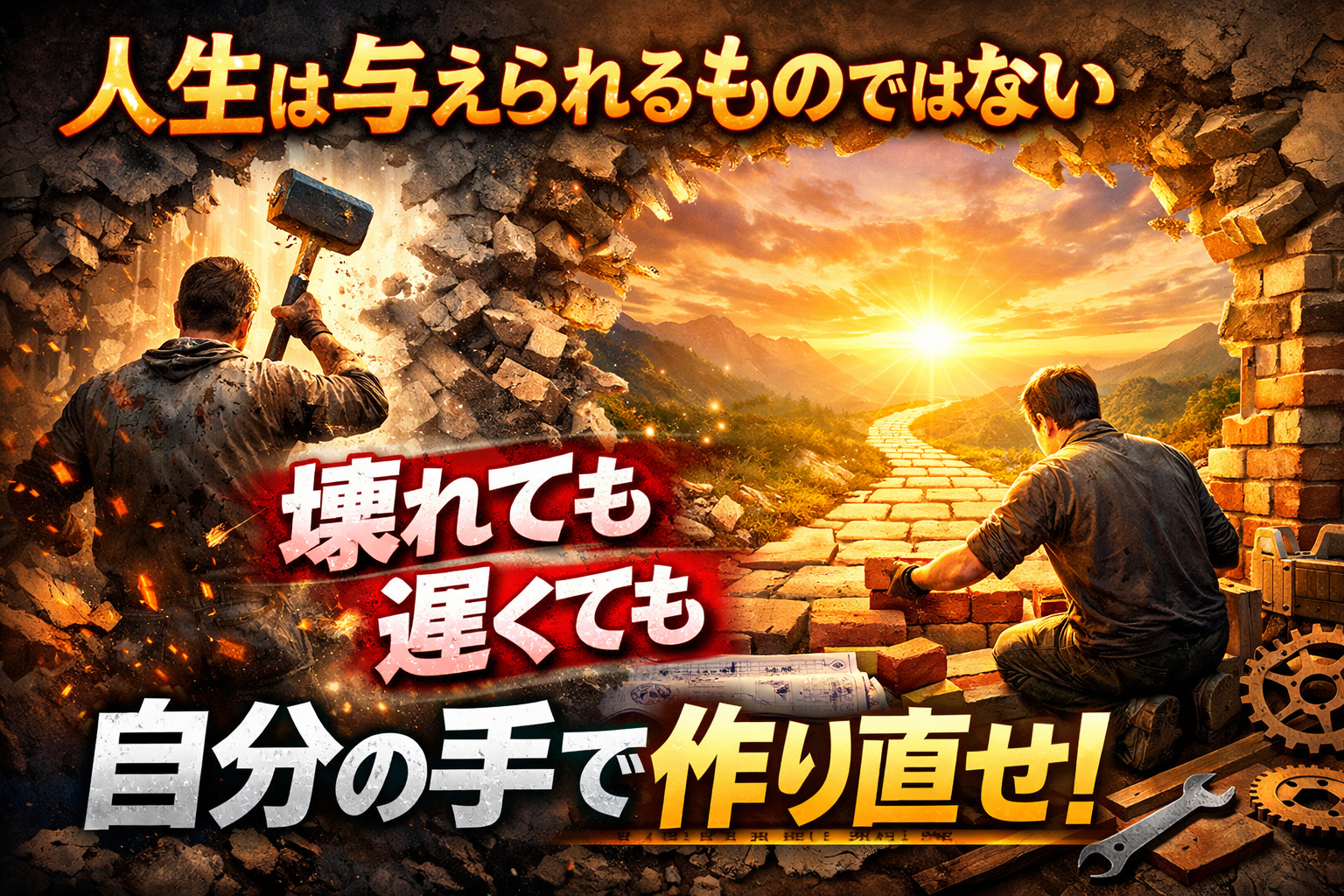
Even if we are hammered, let us rise again—not to defy society, but to reshape it. One resilient nail at a time.



















コメントを残す