Meta Description (120–160 characters)
Breaking through life’s dead ends requires not effort but encounters with people. This essay explores the power of weak ties, overcoming isolation, and real-life examples of how connections open new paths.
—
Table of Contents (with internal links)
1. Prologue—In the Darkness
2. The Nature of Dead Ends and the Limits of Effort
3. Weak Ties That Open New Doors
4. Encounters: Designed, Not Accidental
5. My Own Story—Disability and the Dual Role of Encounters
6. Overcoming the Barriers to Encounters
7. The Ethics of Encounters—Not Treating People as Resources
8. Encounters as Infrastructure to Disperse Loneliness
9. Conclusion—Small Encounters Change Lives
—
Prologue—In the Darkness
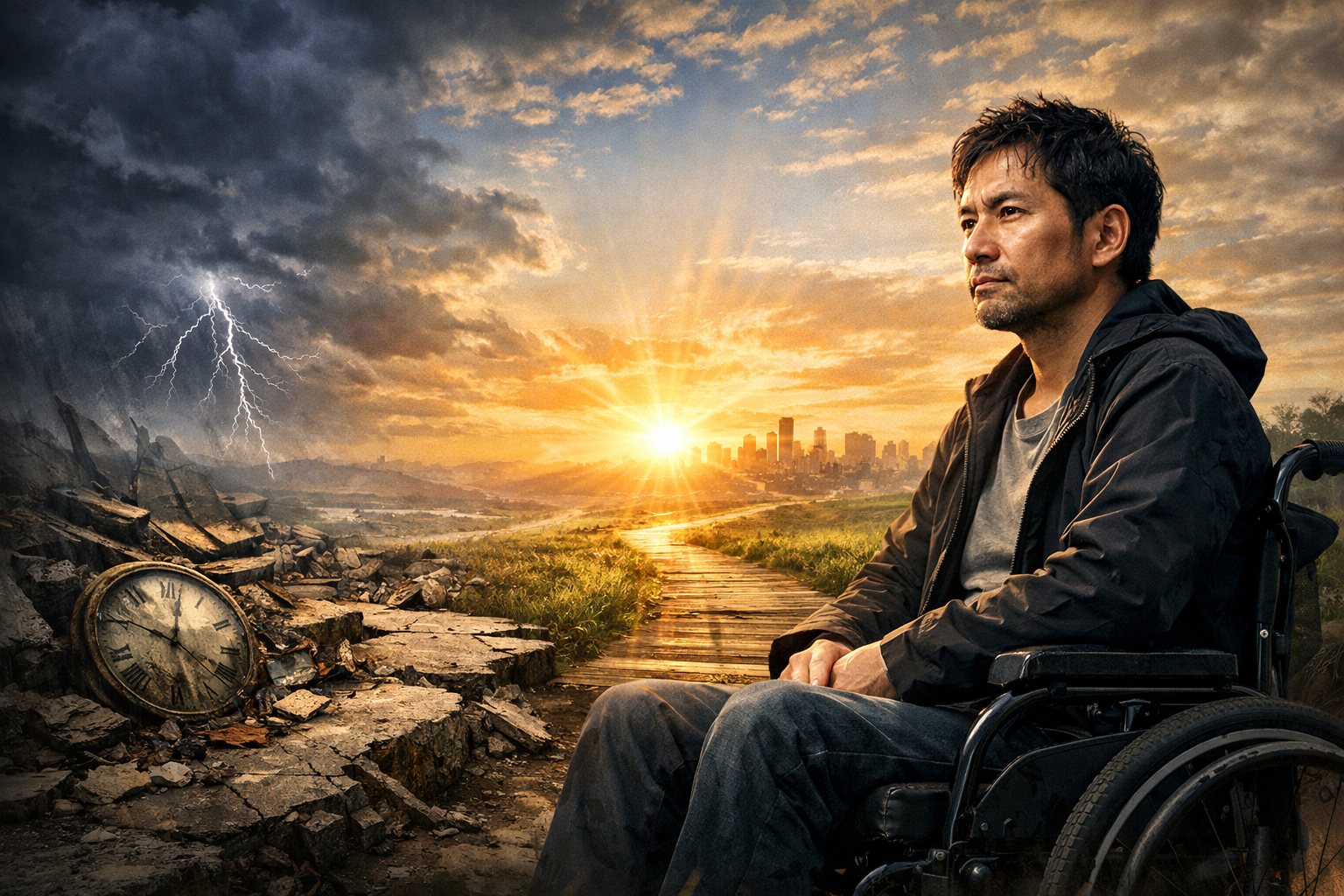
“There may be nothing left for me.” I have thought this countless times. I worked hard but was not rewarded; my body, burdened by disability, would not move as I wished. The very word effort pierced my chest like a blade.
And yet, what lifted me back up was not effort. It was encounters with people. A short conversation with a stranger sometimes shone light from the side onto a closed path, revealing a new direction.
—
The Nature of Dead Ends and the Limits of Effort
A dead end is not the limit of ability, but of perspective. Digging harder into the same spot only deepens the hole. What spreads out a new map is the perspective of others.
The Pitfall of the Effort Myth
“Effort will always be rewarded” is a beautiful belief. But when the question itself is wrong, effort is counterproductive.
Repeating the same effort deepens stagnation.
Changing perspective requires “exploratory effort,” and that is often made possible by encounters with people.
For search intent, phrases like “effort alone doesn’t change life” and “encounters with people change life” naturally resonate here.
—
Weak Ties That Open New Doors
Research in psychology and sociology shows that weak ties bring new opportunities into life. Weak ties are not deep relationships like close friends or family, but acquaintances you meet occasionally or casual connections.
The Difference Between Strong and Weak Ties
Strong ties: deep reassurance / homogeneous information
Weak ties: shallow connection / diverse and novel information
What often breaks open a closed life is a word carried through a weak tie. “Have you thought of it this way?” “Why not meet this person?”—such simple phrases mark the beginning of new paths.
—
Encounters: Designed, Not Accidental
Encounters may seem like fate, but in reality, small preparations make all the difference. For SEO as well, keywords like “design encounters” or “turn chance into necessity” align with user intent.
Small Preparations That Lead to Encounters
Condense your self-introduction into three sentences
Limit your request to one clear point
Express gratitude in specific terms
These practices turn encounters from accidents into inevitabilities.
—
My Own Story—Disability and the Dual Role of Encounters
When I acquired a severe disability mid-life, I was confronted with realities that effort alone could not change. Yet two types of encounters saved me:
1. People with similar experiences—with whom I did not need to explain my weaknesses. Simply being with them made breathing easier.
2. People from entirely different worlds—who told me, “Your experience is valuable in another field.” That single remark rotated the axis of my value system.
These dual encounters updated the map of my life.
—
Overcoming the Barriers to Encounters
Encounters are often blocked by various barriers. From an SEO perspective, the heading “barriers to encounters” also meets long-tail keyword needs.
Safety: meet in public spaces / use online meetings
Financial: leverage free events or libraries
Physical: schedule short sessions / allow rest
Psychological: set the first goal as “exchange of hypotheses,” not “contract”
Through small designs, the barriers to encounters can be overcome.
—
The Ethics of Encounters—Not Treating People as Resources
Encounters are gifts, not resources. Therefore, ethics matter.
Do not drain the other person
Do not impose excessive expectations
Express gratitude concretely
For search users seeking terms like “ethics of encounters” or “gratitude in encounters,” this content resonates.
—
Encounters as Infrastructure to Disperse Loneliness
The essence of a dead end is isolation. Isolation amplifies pain and robs the future. This is why encounters are not luxuries, but infrastructure for living.
A brief conversation or short message eases isolation and disperses loneliness. Encounters move life forward again.
—
Conclusion—Small Encounters Change Lives
Effort is noble. But effort alone does not open new paths. What moves life is encounters with people. At dead ends, redirect your effort toward designing encounters. A five-minute conversation may open a new door in your world.
—
Related Internal Links
The Danger of the Effort Myth and Rethinking Life Design
Daily Habits to Ease Loneliness and Build Human Connections
Why Weak Ties Drive Careers
—
SEO Keyword Summary
Main KW: life dead end / limits of effort / encounters with people change life
Sub KW: weak ties / overcoming loneliness / design encounters / effort unrewarded
Co-occurring terms: chance / necessity / perspective / door / isolation / hope
—
Final Note
Do not entrust everything to effort. Entrust it to encounters. From that moment, life is no longer a dead end.





















コメントを残す