— Ending the Curse of “Be Useful” and Reclaiming the Right to Be Alive
Prologue: The Quiet Collapse, and the Moment Light Peeled Away
The world does not always end with noise.
Sometimes it ends with silence.
Not the dramatic kind—
no sirens, no explosions, no final words.
Just a soft, horrifying sensation:
the feeling that the world has slipped one layer away from you.
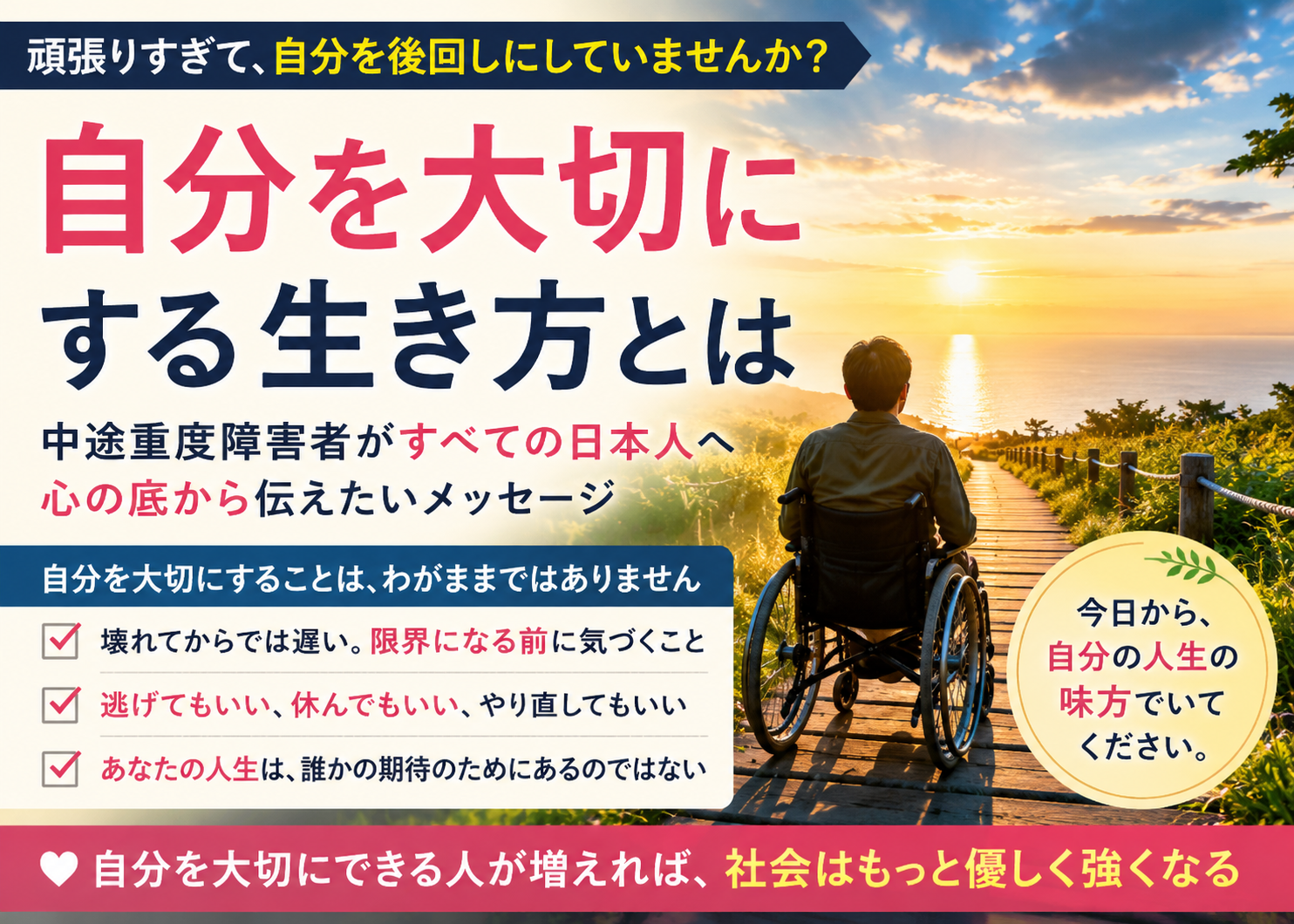
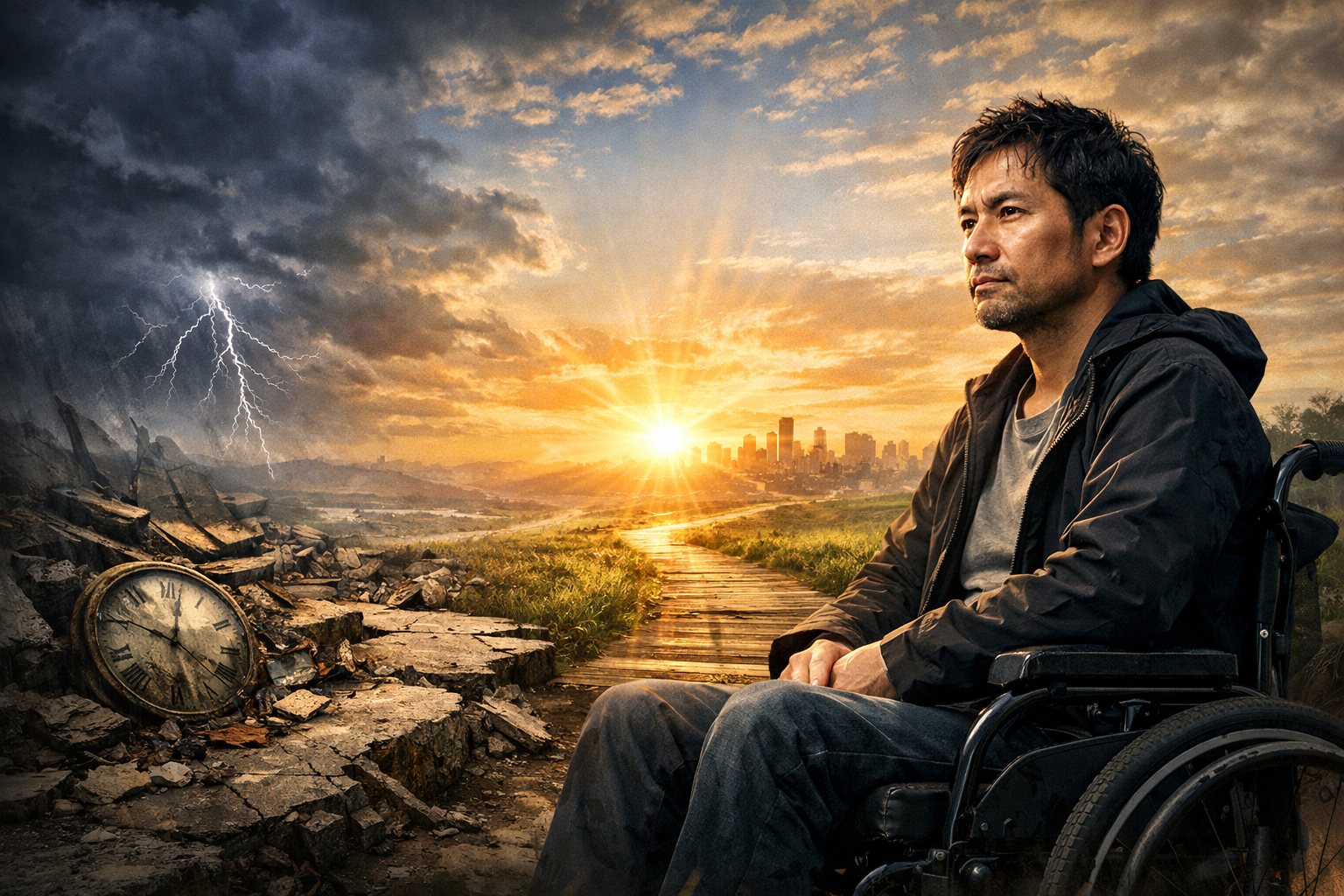
When I became severely disabled midway through my life, that was the moment I felt it.
The colors were still there.
The sky was still blue.
People still walked past me.
Cars still moved.
Time still advanced.
And yet—
something essential had peeled away.
It felt as if my body had been pushed half a step outside the world.
As if gravity itself had changed direction.
Pain existed, yes.
But pain was not what broke me.
What broke me came first.
A sound no one else could hear.
The sound of value falling.
The quiet clatter of social worth slipping from my hands.
I did not lose my dreams first.
I did not lose hope first.
I did not even lose pride first.
What I lost—instantly, brutally—
was permission.
Permission to exist.
In that moment, I collided head-on with the deepest curse embedded in modern society—
a curse so normalized we rarely see it:
If you are not useful, you are worth less.
This curse does not scream.
It whispers.
It wears the face of discipline.
Responsibility.
Hard work.
Self-reliance.
And yet hidden beneath those respectable words is a blade:
Those who cannot perform are quietly expendable.
Disability only made this visible.
But this curse does not target disabled people alone.
It suffocates exhausted workers.
It crushes parents drowning in guilt.
It hollows out the diligent, the sincere, the responsible.
It breaks people who “do everything right.”
You may recognize it.
The voice that says:
You shouldn’t rest yet.
Others are working harder.
You have no right to complain.
Be grateful you’re even allowed to be here.
And so adults learn to endure.
To suppress.
To function.
And then—without intending to—
they carry that pressure home.
“Try harder.”
“Don’t cry.”
“Be good.”
“Hurry up.”
“Don’t bother people.”
Children learn quickly.
Love has conditions.
Worth must be earned.
Simply breathing is not enough.
This is not cruelty.
It is inheritance.
And this—
this is how a society quietly collapses without realizing it is dying.
Why So Many Adults Cannot Allow Themselves to Be Happy
People often say that modern society is unhappy because of poverty, inequality, or broken systems.
Those are real.
But they are not the deepest wound.
The deeper problem is this:
Many adults no longer have the ability to receive happiness without fear.
In many cultures—particularly highly disciplined, performance-oriented ones—happiness is unconsciously associated with danger.
Happiness feels like complacency.
Like arrogance.
Like the prelude to punishment.
So the nervous system learns a rule:
If you relax, something bad will happen.
Joy triggers anxiety.
Rest triggers guilt.
Satisfaction triggers panic.
“Is this okay?”
“Am I falling behind?”
“What will people think?”
“Shouldn’t I be doing more?”
This is not a moral failure.
It is neurological conditioning.
From early education onward, people are trained to prioritize:
External evaluation over internal signals
Correctness over truth
Performance over presence
By adulthood, the body itself is rewired.
The circuits for rest are overwritten by vigilance.
The circuits for self-trust are overwritten by surveillance.
The circuits for joy are overwritten by comparison.
And when these adults become parents, something tragic happens.
They try to teach love—
without having access to it themselves.
Conditional Love: The Invisible Theft of Childhood
Conditional love rarely looks abusive.
It usually looks responsible.
“I’m doing this for your future.”
“I just want you to succeed.”
“The world is harsh—I’m preparing you.”
But children do not hear explanations.
They feel patterns.
They notice:
Praise arrives with achievement
Silence arrives with failure
Affection fluctuates with behavior
They learn a devastating equation:
I am lovable when I am useful.
This belief does not vanish with age.
It evolves.
It becomes:
Overworking without rest
Fear of asking for help
Chronic self-blame
Emotional numbness
The inability to feel “enough”
Eventually, these children become adults who cannot stop running.
And then they become parents.
Not because they want to pass on pain—
but because they have never been shown another way to live.
What Disability Reveals About “Healthy” People
Becoming disabled forced me outside the economy of productivity.
That exile gave me clarity.
From the outside, I could see something shocking:
So-called “healthy” people are often far more imprisoned than disabled ones.
Their bodies move freely.
But their inner world does not.
They cannot stop.
They cannot rest.
They cannot soften.
They cannot forgive themselves.
The moment they try, guilt attacks.
Disability taught me something brutal and precise:
When your body is fragile, small stressors become lethal.
A slight chill.
A little pressure.
A minor overextension.
So survival demands design.
I had to build:
Systems of rest
Systems of refusal
Systems of recovery
Systems of self-protection
And most importantly:
A system where I no longer punished myself for existing as I am.
This, I realized, is what many “functional” people lack.
They are destroying themselves quietly—
and calling it responsibility.
Self-Care Is Not Kindness. It Is Infrastructure.
Let me be clear:
Self-care is not indulgence.
It is not softness.
It is not selfishness.
Self-care is the infrastructure that prevents harm from spreading.
Because harm always spreads.
A parent who despises themselves teaches contempt without words.
A worker who never rests teaches fear without speaking.
A society that worships productivity teaches children that existence alone is insufficient.
You cannot raise free children in a prison you call “normal life.”
This is why I say—without hesitation:
Those who cannot care for themselves cannot protect the next generation.
Not because they are bad.
But because nervous systems transmit reality more loudly than beliefs.
Children do not imitate what you say.
They inhale how you live.
Acceptance Is Not Giving Up. It Is Seeing Clearly.
“Don’t give up.”
Sometimes this phrase kills.
What I needed was not encouragement.
It was honesty.
Some things in my body would never return.
Acknowledging that truth did not destroy me.
It liberated me.
To accept reality is not to surrender.
It is to remove illusion.
And once illusion falls, design begins.
Constraints are not enemies.
They are parameters.
A life designed honestly is infinitely more humane than a life fueled by denial.
A Letter to Children: You Do Not Have to Become Anything
To the children of the future—
You do not have to become special to deserve love.
You do not have to win.
You do not have to perform.
You do not have to prove your existence.
You are allowed to be tired.
You are allowed to be slow.
You are allowed to be unfinished.
But hear this carefully:
These words are meaningless unless adults live them.
Children do not believe slogans.
They believe atmospheres.
So this message is not really for children.
It is for adults brave enough to become evidence.
The Most Radical Form of Parenting
The greatest gift a child can receive is not a perfect parent.
It is a parent who knows how to be human.
A parent who rests without apology.
Who cries without shame.
Who asks for help.
Who admits limits.
Who treats their own life with dignity.
That posture teaches something revolutionary:
Life does not require justification.
The Moment That Changed Everything for Me
There was a day when my body was too heavy to move.
Breathing itself felt like work.
The floor was cold.
The future was blank.
Someone said quietly:
“Today, this is enough.”
I broke down.
Not from weakness.
From relief.
Because permission heals faster than motivation ever could.
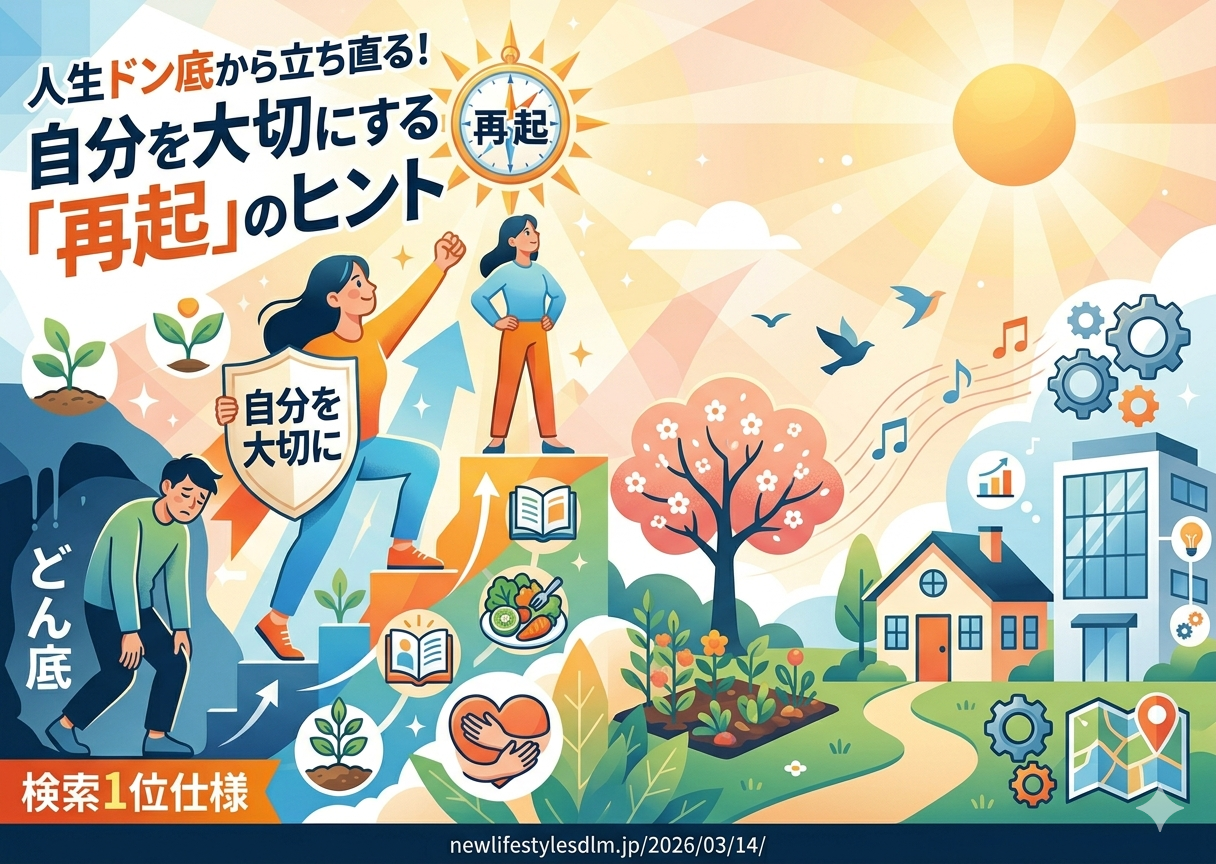
A Map for a New Way of Living
If your life feels unbearable, it is not because you are failing.
It is because you were taught to live without blessing.
But blessing is not abstract.
It is operational.
It begins when you tell yourself—truthfully:
I am allowed to rest.
I am allowed to exist without output.
I do not need to earn my right to be here.
That permission does not weaken society.
It saves it.
Final Question
So I ask you—not gently, but honestly:
Can you bless your own existence today?
Not your achievements.
Not your usefulness.
Not your role.
Just you.
Because the moment you do,
the world your children inherit changes its air.
And revolutions—
real ones—
begin with a single breath allowed to be taken.













コメントを残す