Meta Description:
“No matter what we build in life, we all die in the end.” Confronting this absolute truth, what does it mean to keep living? From the perspective of a person with a severe disability, this reflective blog explores impermanence, hope, and the legacy of human life.
Keywords:
Life’s legacy, We all die eventually, Meaning of life, Feeling impermanence, Life philosophy, Disabled blogger, Living with awareness of death
Introduction | Everything Disappears. Still, We Choose to Live.
“No matter what we build in life, we all die in the end.”
These words stir a quiet but undeniable ripple in the heart. The efforts we’ve poured into our lives, our work, time with family, names we’ve built, achievements, dreams — all of it, in the end, will return to dust.
So why do we keep building, day after day? Is it foolish? A meaningless struggle?
No. I believe that facing this reality — that we will die — is precisely what gives life its meaning and beauty.
Chapter 1 | Building Is Leaving a Trace That We Lived
What we build in life isn’t just about outcomes or numbers. It is an act of inscribing a mark — proof that we once existed in this world.
Humans instinctively seek evidence that they lived. That may take the form of children, creative works, professional contributions, or even acts of kindness.
“I touched someone’s heart.” That alone may be the truest and most lasting form of building.
Chapter 2 | Impermanence in Hojoki and Tsurezuregusa
Our efforts are as fragile as sandcastles in the wind — and that’s what makes them beautiful.
Kamo no Chomei’s Hojoki contemplates impermanence while finding peace in harmony with nature. Yoshida Kenko’s Tsurezuregusa finds quiet wisdom in the comedy and sorrow of life.
Both works accept that what we build will eventually crumble, and yet they affirm the human spirit that builds anyway. Because it is precisely because things fall that their brief form glows with poignance.
Chapter 3 | What I Realized After Losing Everything
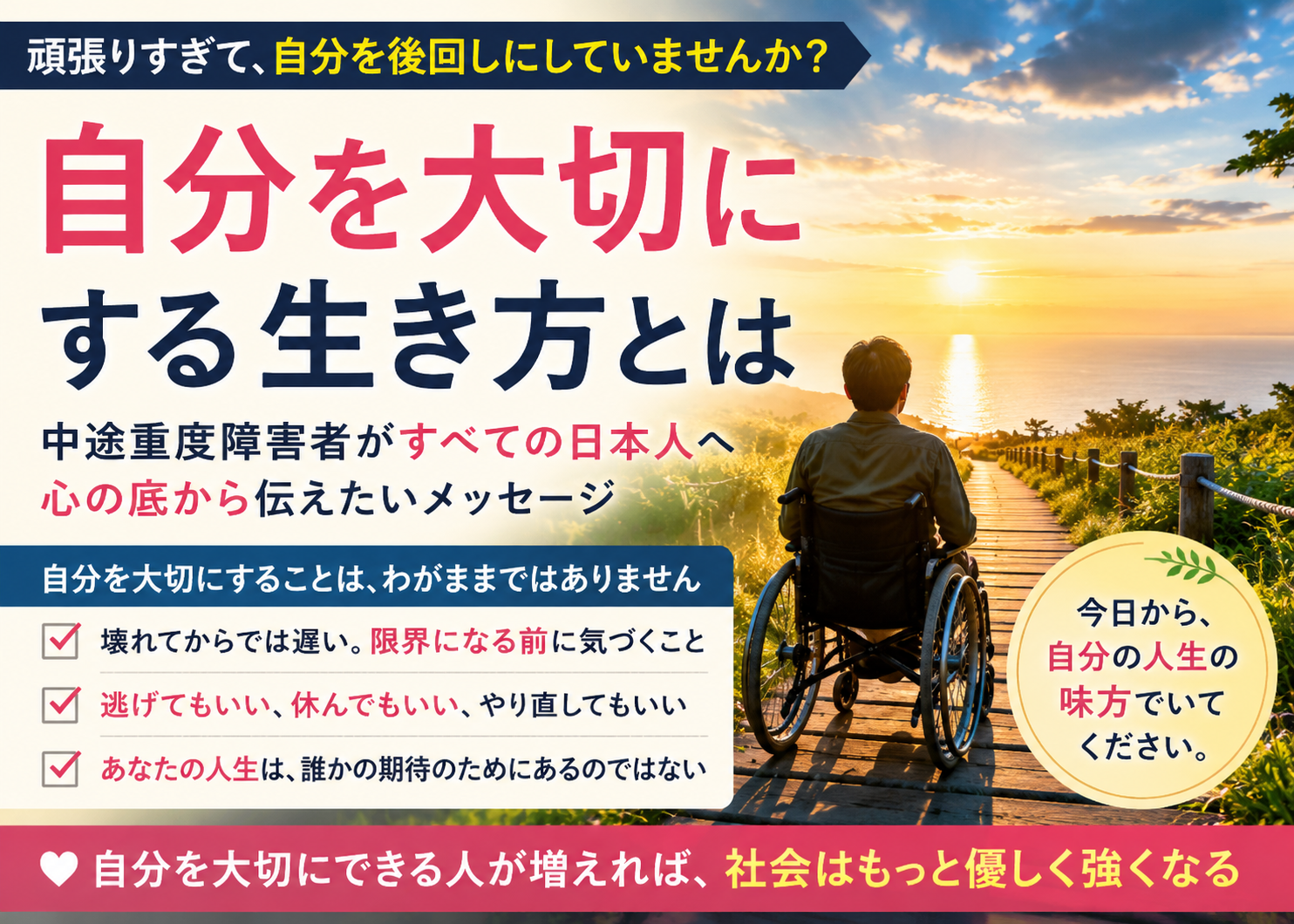
One day, I lost my physical freedom. I could no longer move anything but my fingers. Eating, using the restroom — nothing was possible without help.
The career I built, the titles I held, the income I earned, the expectations placed upon me — much of it collapsed like a house of cards.
And yet, from there, I began building again. I began writing words that might reach someone. I started telling my story. I began conveying, to even just one person, that “you are allowed to live as you are.”
What I now build may be small, slow, and imperfect. But it has become unshakable. Because it breathes not in trophies, but in the hearts of others — in shared empathy.
Chapter 4 | Death Is Not Nothing. We Live On in Memory.
Everyone dies. But what remains after death lives on in the hearts of those still alive.
The words someone once said. The way they lived. The quiet moments we shared.
These things continue to breathe quietly in us long after that person is gone.
In that sense, what we are building now may one day become seeds of kindness or courage in someone else’s life.
Chapter 5 | Seeking Meaning, Not Just Happiness
Psychologist Viktor Frankl once said, “What man actually needs is not a tensionless state but rather the striving and struggling for some goal worthy of him.”
Even in the harshest circumstances, when a person finds meaning, they can endure and move forward.
Since losing my physical freedom, I have begun to think more deeply about “meaning” than I ever did before.
To build is to search for meaning. That, I now believe, is what enriches a life.
Chapter 6 | Knowing We Die Helps Us Live With Care
If life were eternal, would we truly value the present moment as much?
It is precisely because we know it will end that each moment glows with irreplaceable worth.
A single word exchanged with someone. A brief glance at the sky. A handwritten letter from the heart. These are all parts of eternity — worthy of being built.
Death is not an end, but perhaps a reminder: that we are capable of placing eternity into each passing moment.
Conclusion | In a Crumbling World, Let Us Keep Building Gently
Death is inevitable. Everything we build will eventually crumble.
But — to know that and still choose to build — that, I believe, is the most beautiful aspect of being human.
Though I can no longer stand, I can still build with words. I can still build kindness toward others.
You, too, are building today, in your own way, no matter your circumstances.
Your efforts may be invisible. They may never take shape.
But I believe they will shine quietly in someone’s heart and continue living on — softly, eternally.
















コメントを残す