Meta Description
For workers with disabilities, resigning from a job can be more difficult than it seems—especially when legal employment quotas come into play. A first-person perspective from someone with an acquired severe disability.
Table of Contents
Introduction: When Getting an Offer Isn’t the End
What Is the Legal Employment Quota?
Why Is It So Hard to Quit as a Disabled Worker?
Feeling Like Just a “Number” in the System
Choosing My Career Path—Not the Company’s
What Society Needs: Not Just Hiring, But the Right to Leave
Conclusion: We’re Not Just Filling Quotas—We’re Living Our Lives
1. Introduction: When Getting an Offer Isn’t the End
“Congratulations, you got the offer!”
Those words should’ve brought nothing but joy. As someone with a severe acquired disability, finding a new job wasn’t easy. The road to recovery, reintegration, and eventually deciding to switch jobs was long and full of uncertainty.
But the moment I told my current boss about my decision to resign, the mood instantly changed:
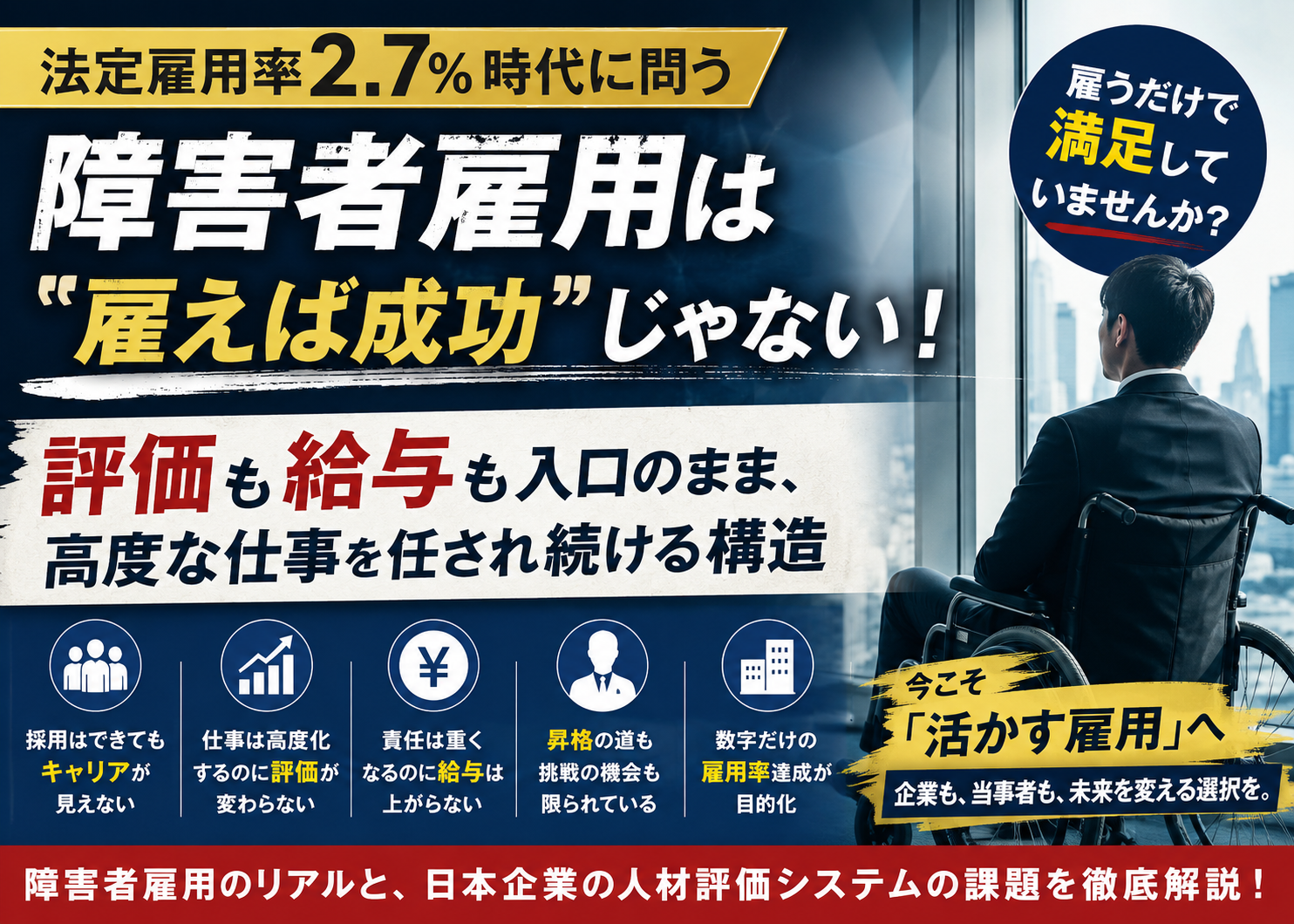
“If you leave, we’ll fall below the legal disability employment rate.”
“Can’t you stay at least until the end of the fiscal year?”
“It’ll be hard to find a replacement.”
Suddenly, what should’ve been a happy next step felt like I was doing something wrong.
2. What Is the Legal Employment Quota?
In Japan, companies with 43.5 or more employees are required by law to ensure that at least 2.5% of their workforce consists of people with disabilities. It’s known as the Legal Employment Quota System.
This system exists to promote job opportunities for people with disabilities—and that’s important.
However, in practice, it can also reduce us to mere numbers in a corporate headcount, especially when we try to resign.
3. Why Is It So Hard to Quit as a Disabled Worker?
When I brought up the idea of quitting, my boss wasn’t worried about my career goals or happiness.
Instead, I was met with:
Panic over falling below the legal quota
Stress over possible penalties from labor authorities
A plea to delay my resignation
It felt like my right to move forward in life was being weighed against a company’s need to meet its numbers.
4. Feeling Like Just a “Number” in the System
Being told “You can’t leave” made me question everything.
Was I truly valued as a person? Or just as a quota-filler?
I wasn’t seen as a professional with goals.
I was seen as a line on a spreadsheet.
And for someone who had fought so hard to reclaim a life after disability, that was a painful realization.
5. Choosing My Career Path—Not the Company’s
I spent weeks in conflict.
Would leaving be selfish?
Would I be abandoning my team?
But deep down, I knew this:
I want to choose my own path—not stay out of obligation or guilt.
After losing so many choices when I first became disabled, I couldn’t let the system rob me of this one too.
6. What Society Needs: Not Just Hiring, But the Right to Leave
If we want a truly inclusive society, we need more than systems that help people with disabilities get jobs.
We need systems that also respect our right to move, grow, and change.
Policy Suggestions:
Grace periods after a disabled employee resigns, so companies aren’t immediately penalized
Support networks to help companies recruit replacements
Improved links between disability support services and corporate HR departments
Only when we build such flexibility into the system will disability employment become truly empowering.
7. Conclusion: We’re Not Just Filling Quotas—We’re Living Our Lives
The Legal Employment Quota is important—but it must never define us.
We are not “protected numbers.”
We are people with lives, dreams, and the right to choose our own future.
If you’re a disabled worker thinking about quitting but feeling trapped—please remember:
Your life belongs to you. You don’t need to apologize for growing.
Suggested Social Media Caption (X/Twitter, under 140 characters)
I got a job offer—but quitting wasn’t so easy.
Disabled workers still face invisible walls in Japan’s legal quota system.
Here’s my story.


















コメントを残す