I Walk While Dragging My Leg — From Yabu City, I Redefined Accessibility as “Access to Life”
Live with care for yourself / Spread the love
Meta Description (SEO | ~155–160 chars)
I walk while dragging my leg. Here’s why “barrier-free cities” still fail people—and how Yabu City inspired a new definition: access to life itself.
Suggested Slug
why-barrier-free-cities-fail-access-to-life
Target Keywords (naturally distributed)
true accessibility / barrier-free city / acquired disability / self-hatred / guilt / retreat lines / continuity design / accessible local media / Yabu City
Search-Intent Opening (Hook | 250–350 words)
If you ever searched something like:
“Why do I still feel invisible in a barrier-free city?”
“Ramps exist—so why does life still feel impossible?”
“How do I stop hating myself when my body won’t cooperate?”
Then you were never really asking about stairs.
You were asking about something deeper—something that doesn’t fit into public policy slogans.
You were asking about access to life.
Not access to buildings.
Not access to sidewalks.
Not access to the idea of “inclusion.”
Access to dignity.
Access to roles.
Access to belonging without begging.
Access to continuing—without collapsing.
I became severely disabled later in life.
I’m not in a wheelchair.
I walk, slowly, while dragging one leg.
I’m not here to deny the importance of ramps and elevators.
I’m here to tell the truth most people refuse to say:
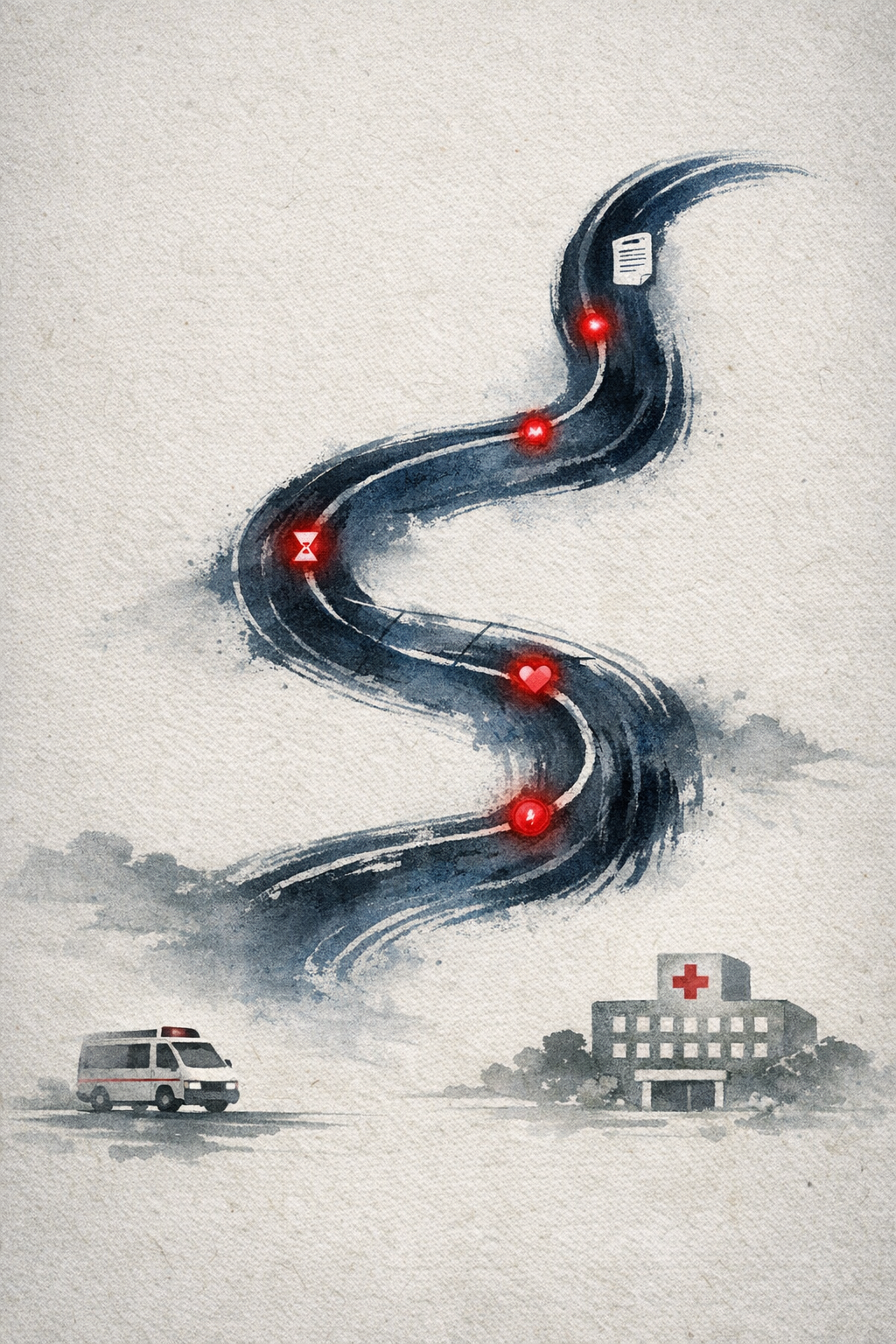
A city can remove physical steps and still erase a human being.
Because the most dangerous barriers are often invisible.
They hide in stories.
They hide in expectations.
They hide in the myth that “a proper human being is independent.”
I found the sharpest clarity in a quiet place:
Yabu City, Hyogo Prefecture—a rural region that Japan designated as a National Strategic Special Zone.
This article is not “inspirational content.”
It’s not therapy.
It’s not activism theatre.
It’s a manifesto and a blueprint:
How constraints become creativity—
and how true accessibility begins when we stop treating self-care as softness.
TL;DR (Read This First)
“Barrier-free” infrastructure can improve mobility while still failing to protect dignity, belonging, and continuity.
People break not from hardship itself but from unending structure: a life with no retreat lines, rollback, or “bad-day protocols.”
“Barrier-free cities” can create a dangerous story: “We fixed it.” That story can isolate disabled people and turn remaining pain into “complaints.”
True accessibility is not removing steps. It is increasing entry points into life: physical, informational, psychological, relational, and economic.
“Live with care for yourself” is not indulgence. It’s continuity technology—life design that prevents collapse.
Yabu City’s quietness restored my senses and exposed the real enemy: not stairs, but the standard cage.
1) This Is Not a Moving Story. It’s a Continuity Story.
My leg is slow.
I walk while dragging it.
That is not a moral failure.
Not a lack of discipline.
Not a character flaw dressed up as “weakness.”
It is a condition.
And I live with it.
I work. I maintain a household. I love someone. I continue.
Most people misunderstand collapse because collapse is rarely dramatic.
Collapse is quiet.
It arrives as an illness no one sees.
As fatigue that does not reset overnight.
As a body that refuses to return to its old contract.
As caregiving responsibilities that swallow your time.
As a mind that loses traction.
And then, one day, you notice something terrifying:
Your life is no longer designed for you.
Not because you changed by choice,
but because reality changed your conditions.
Acquired disability teaches you this brutal truth:
Life does not break because you are “wrong.”
Life breaks because your structure no longer matches your conditions.
So the solution is not willpower.
The solution is design.
Design is how you continue when you don’t have unlimited mistakes.
Because when your recovery budget is limited,
a small mistake today can become a permanent loss tomorrow.
This is where the world’s culture becomes dangerous.
It tells you:
“Push through.”
“Don’t be weak.”
“Be independent.”
“Don’t rely on others.”
But if you push through with a limited recovery budget,
you don’t become strong.
You become broken.
And here is the cruel irony:
The world loves people who sacrifice themselves—
until they collapse.
Then it forgets them.
That’s why I am writing this.
Not as a motivational speaker.
Not as a “survivor story.”
As a designer of continuity.
Mid-CTA #1 (High trust, non-pushy)
If this hit you like truth—not information—
I send a free weekly letter that turns this philosophy into implementable life design:
→ Free Weekly Letter: “Continuity Technology”
Retreat lines (how to stop collapse early)
Bad-day protocols (so one bad day doesn’t become a broken life)
Structural guilt dismantling (without pep talks)
[Signup link]
2) The Real Core of Acquired Disability Is Not Pain. It’s the Unending Structure.
Pain can become familiar.
Collapse doesn’t.
Acquired disability is cruel in a specific way:
Yesterday, you could do it.
Today, you can’t.
Shoelaces.
Stairs.
Crowded stations.
Crosswalk signals that assume your legs are young and obedient.
Rainy sidewalks that become a negotiation with the ground.
Tiny actions become missions.
And people break right here—
not because they are weak,
but because dignity gets shredded.
I’m a psychological counselor.
So I’m not guessing.
People don’t break because suffering is intense.
People break when suffering becomes structural—
when hardship becomes unending.
Unending means:
You try hard and still don’t recover today.
The same impossible task greets you every morning like a tax you cannot pay.
Your former self becomes a ghost that stands beside you, judging silently.
Life keeps demanding output anyway.
Society is designed for people who believe they have a reset button.
Acquired disability teaches you many people never needed one—
until the day they do.
And when that day arrives, they discover the real barrier:
Not stairs.
Not ramps.
The standard cage.
3) The Standard Cage: Why “Normal” Becomes a Weapon
There is a word modern society uses as if it is neutral:
Normal.
But “normal” is not neutral.
Normal is a hidden moral standard.
Normal decides who deserves patience.
Normal decides who deserves time.
Normal decides who is allowed to slow down without shame.
When your body changes, you don’t just lose function.
You lose the right to be unremarkable.
You become a “case.”
A “situation.”
A “problem to manage.”
Even when people are polite, the architecture is still there:
The subtle impatience
The forced cheerfulness
The awkward encouragement
The gaze that says “I’m glad it isn’t me”
And here is the worst part:
You start policing yourself.
You apologize for existing.
You feel guilty for needing time.
You hate yourself for not matching the standard.
That’s why self-hatred often feels “logical.”
But it’s not logic.
It’s design mismatch.
Self-hatred is frequently the emotional consequence of living inside a structure that was never built for your conditions.
4) Why I Stopped Trusting “Barrier-Free Cities”
Cities have ramps.
Elevators.
Accessible signage.
Services.
I am not denying their value.
But I stepped into a different barrier—
one ramps cannot fix.
The barrier of the gaze.
A city can be physically accessible and still psychologically hostile.
You can enter the building and still feel erased.
You can ride the elevator and still feel like your existence is inconvenient.
And there is a second barrier—more dangerous because it hides under progress:
The more barrier-free infrastructure improves, the more society tells itself:
“We fixed it.”
And once the story becomes “fixed,”
remaining pain becomes illegitimate.
You become:
difficult
ungrateful
asking for too much
ruining the atmosphere
Infrastructure can create a false ending.
A neat story where the problem is done.
But real life isn’t neat.
The gap between the story and reality
is where people quietly disappear.
So I stopped trusting “barrier-free” as an end.
I started treating accessibility as an operating system.
Because life requires something more fundamental than access to a building.
Life requires access to continuity.
5) The Silence of Yabu City Saved My Senses
Yabu City is quiet.
Quiet is not luxury.
Quiet is a recovery device for the human nervous system.
Cities run on notifications—literal and psychological.
Constant stimuli.
Constant comparison.
Constant urgency.
When your mind is always connected,
you lose the ability to detect early collapse.
You don’t notice you’re dying inside until you’re already gone.
In Yabu, winter changes the world.
When snow falls, sound thins.
The world becomes muted.
And suddenly you can hear your own breathing again.
That’s when I realized something terrifying:
My body wasn’t the only thing that broke.
What broke first was permission.
The permission to care for myself without guilt.
Modern culture treats self-care like indulgence.
But for people living with constraints, self-care is not indulgence.
It is survival design.
It is continuity technology.
It is how you prevent tomorrow from becoming another collapse.
Mid-CTA #2 (When emotion is highest)
If you are trapped in self-blame, consider this:
Self-hatred is often not a personality issue.
It’s a design mismatch.
→ Private: Life Redesign Session
Build retreat lines (fatigue, housework, work, relationships)
Create “bad day protocols”
Dissolve guilt through structural analysis (not pep talks)
[Consultation link]
6) Redefining True Accessibility: Not Steps, But “Access to Life”
Here is the redefinition I’m willing to stake my life on:
True accessibility is not removing steps.
True accessibility is increasing entry points into life.
Entry points include:
Physical Access
Can you move without constant risk?
Can you exit safely when conditions worsen?
Information Access
Do you receive the right information in the right format at the right time—
or is life a guessing game?
Psychological Access
Is your dignity protected?
Do you have roles that connect you to others?
Relational Access
Can you ask for help and also say no?
Does support empower—or become a cage?
Economic Access
Can you provide value and sustain yourself?
Is there a viable path to contribution?
A ramp can open a door—
and a system can still close a life.
So I treat accessibility as an operating system, not a checklist.
Not moral theatre.
Not charity branding.
Continuity engineering.
7) The Myth of Independence: Why Society Secretly Hates Dependency
There is a myth running the modern world like a silent OS:
A “proper” human being is independent.
Independent in movement.
Independent in income.
Independent in emotions.
Independent in needs.
The world calls this strength.
And then the world punishes anyone who violates it.
Acquired disability is not merely the loss of function.
It is the moment you become an outlaw in the religion of independence.
That is why the pain is not only physical.
The body suffers inside a society that worships a single type of human.
The independent human.
But here’s the truth most people avoid:
No one is independent.
A newborn is not independent.
An elderly person is not independent.
A person in grief is not independent.
A person living through winter is not independent.
Even the most powerful executive is not independent.
They depend on electricity they did not generate.
Food they did not grow.
Infrastructure they do not maintain.
Invisible workers they do not see.
Independence is not real.
It is a story—maintained by invisibility.
That’s why my background matters.
I work behind the scenes in critical infrastructure.
I know what continuity actually requires.
The light turns on not because society is strong,
but because society is layered with dependency.
Dependency is not weakness.
Dependency is architecture.
When you become disabled, you do not become less human.
You simply become less able to hide your dependency.
That’s the real crime.
You become a mirror.
And people hate mirrors that show them what they fear.
So here is the philosophical claim:
Accessibility is not charity.
Accessibility is the correction of a lie.
The lie that humans can be independent.
8) The Three Layers of Barriers: Surface, Hidden, Root
If you want to understand why “barrier-free cities” can still destroy a person,
you must learn to think in layers.
Layer 1: Surface Barriers (Visible Steps)
Ramps. Elevators. Signs. Toilets.
They matter. They reduce immediate pain.
But surface solutions can create a dangerous illusion:
“We fixed it.”
Layer 2: Hidden Barriers (Psychological Architecture)
The gaze.
The impatience.
The emotional tax of being a “special case.”
The constant calculation:
Should I ask for help?
Will I be hated if I do?
Will I be treated like a child?
Hidden barriers erase people not by force—
but by fatigue.
Layer 3: Root Barriers (Continuity Design)
This is what almost nobody discusses:
Does the structure allow continuation?
Does it provide rollback?
Retreat lines?
Bad-day protocols?
If a life requires maximum output to remain included,
it is not designed for humans.
It is designed for machines.
So when I say “true accessibility,”
I’m not demanding comfort.
I’m demanding continuity design.
9) The Philosophy of Retreat: Why Withdrawal Is Not Defeat
Modern culture treats retreat as shame.
Retreat means limitation.
Retreat means loss.
Retreat means you can’t keep up.
But I will say something that sounds like heresy:
Retreat is one of the highest forms of intelligence.
In war, retreat is strategy.
In life, retreat is survival.
The modern world worships forward motion:
More productivity.
More hustle.
More output.
But acquired disability exposes the lie:
Forward motion without retreat destroys the body.
And once the body is destroyed, your world shrinks.
Retreat is not weakness.
Retreat is a boundary that protects the future.
A life that continues is not built by bravery.
It is built by thresholds.
Stop now—so you can continue tomorrow.
My leg is slow.
But slowness taught me what speed hides:
Life is not about maximum output.
Life is about sustainable continuation.
10) Yabu City as an Accessible Lab: Why Quiet Places Can Be the Frontier
People think “frontier” means cities.
Silicon Valley.
New York.
London.
But the true frontier is not where things are fast.
The true frontier is where reality cannot be ignored.
In rural places:
Seasons are not metaphors.
They are constraints.
Distance is not “inconvenient.”
It is an engineering condition.
Community is not a lifestyle brand.
It is the difference between continuity and collapse.
This is why Yabu matters.
Not because it is perfect.
Not because it is “healing.”
But because it forces the question:
Can life be designed to continue under real constraints?
Cities often hide constraints with money and speed.
Rural places expose constraints.
Exposure is painful.
But exposure creates clarity.
And clarity creates design.
That’s why I call Yabu an accessible lab.
Not because it is special—
but because it is honest.
Honesty is rare.
11) The Accessible Local Media Manifesto: “Accessibility” as Translation, Not Sympathy
Now I will name the business—without turning it into sales noise.
I am building something specific:
Accessible Local Media.
Not local news.
Not travel content.
Not disability inspiration.
Accessible local media is:
a translation engine
that turns constraints into clarity,
and clarity into continuity design.
Most media does this:
It entertains.
It informs.
It triggers outrage.
It sells identity.
Accessible local media does something different:
It increases entry points into life.
It says:
Here is the hidden structure that is breaking you.
Here is the permission you lost.
Here is the retreat line you need.
Here is the protocol that prevents collapse.
Here is the meaning your senses were built to detect—before the world numbed you.
My leg is slow.
So my attention became fast.
If my body cannot travel freely,
my mind travels through the world’s structure.
I see what people ignore:
systems that rely on invisible labor
lives that collapse because they have no rollback
communities that break because support becomes a cage
“normal” as a weapon
And because I live in Yabu,
I also see what cities forget:
silence as nervous system repair
seasons as teachers of boundaries
community as an operational necessity
the difference between comfort and continuity
This is not pity content.
This is design content.
This is human architecture.
12) From Welfare Cage to Value Circuit: The Economics of Dignity
Welfare is necessary.
It can be a lifeline.
I am not attacking it.
But I have seen a second tragedy:
Support systems become cages
when a person is only treated as a recipient
and never as a provider of value.
Human beings survive through roles.
Not status.
Not titles.
Roles: the feeling that your existence touches someone else’s life.
My life generates “bug reports” of living.
What breaks continuity?
What causes hidden collapse?
What tools actually help?
What narratives poison people?
This is not inspiration.
It is applied design knowledge.
And it is not limited to disability.
Parenting.
Caregiving.
Chronic illness.
Mental burnout.
Constraints are not the exception.
Constraints are the human standard.
So the business model is simple—because truth is simple:
I translate constraints into continuity design,
and I offer it as media, tools, and guidance.
13) Practice: Continuity Technology in Real Life (Not Aesthetic Self-Care)
I do not treat life as war.
Life is operations.
Disability is not an enemy.
It is a specification.
If it is a specification, you adjust the system.
If you adjust the system, you improve.
Here are the principles I actually use:
Shorten movement routes.
Reduce objects.
Fix routines so decisions don’t drain you.
Do risky tasks only during peak energy windows.
Build a “bad-day protocol” so one bad day does not become a broken life.
Retreat is not defeat.
Retreat is continuity technology.
Winter steals judgment.
So I protect life with structure—not emotion.
14) Closing Manifesto: The Freedom Called Constraint
Constraints take from you.
And constraints force you to choose.
What do you keep?
What do you discard?
What speed do you live at?
Where do you place your energy?
Constraints are brutal.
But constraints are fair.
Constraints don’t allow lies.
That is why constraints can become the greatest source of creativity.
Human beings are not meant to be limitless.
We are meant to create meaning within conditions.
And that is where our beauty lives.
So I publish from Yabu City.
I do not sell weakness.
I transform weakness into design.
And I redefine accessibility as access to life.
Now I will ask you one question—
not to judge you, but to return you to your senses:
Are you using your senses fully?
Are you back in the driver’s seat of your life—
or are you beating yourself inside a standard cage?
If something moved inside you, your senses are still alive.
Entry points can be built.
Circuits can be expanded.
Life can continue.
From here, we begin again.
FINAL PLATFORM CTA (Business Ladder, High-Trust)
This is not just a blog.
It’s an entry point into a life that can continue.
1) Free Weekly Letter (Best First Step)
→ “Continuity Technology” (Free Weekly Letter)
A short, precise letter each week that turns this philosophy into implementable life design.
[Signup link]
2) Private Work (For People Who Want Change Now)
→ Life Redesign Session (Private)
Retreat lines, bad-day protocols, relationship + work + home operations.
[Consultation link]
3) Carefully Selected Tools (Affiliate / Reviews — No Noise)
→ Essential Tools for Accessible Continuity
Only what reduces collapse risk and increases entry points into life.
[Reviews link]
4) Share (Fastest Support)
If you share this, add one line:
“Self-care isn’t softness. It’s continuity technology.”
Share-Ready Lines (Copy/Paste)
“A ramp can open a door and still close a life.”
“True accessibility isn’t removing steps. It’s increasing ac
● About Me

I’m Jane, the creator and author behind this blog. I’m a minimalist and simple living enthusiast who has dedicated her life to living with less and finding joy in the simple things.











コメントを残す