— How Acquired Severe Disability Exposed the Defect in the Productivity Religion, and How to Reboot a Life Through Design (Global Edition | Full Translation)
You did not break.
A world designed to break people broke you.
Meta Description (120–130 chars)
After acquired severe disability, I found “particles of light” at rock bottom—then rebuilt life by design, not motivation.
Suggested Slug
particles-of-light-rock-bottom-life-redesign
Target SEO Keywords (naturally dispersed)
rock bottom / despair / life redesign / acquired disability / severe disability / burnout recovery / productivity culture / self-acceptance / dignity / freedom / design thinking / life systems / restore-ability / parallel running / emotional labor / cost shifting
TL;DR (Read This First)
Despair isn’t “pain.” Despair is the moment your future becomes unimaginable.
Acquired severe disability force-updates your life’s interface—without a manual.
Productivity culture works like a religion that consumes humans as fuel; burnout is not weakness but a design defect.
Constraints aren’t enemies. Constraints are design whitespace—and where there’s whitespace, life can be rewritten.
Hope isn’t a feeling. Hope is the certainty that you can design again—by collecting “particles of light” (small proofs, small systems, small wins).
Table of Contents
What Despair Really Is: Not Pain, but “The Loss of a Future”
The Hospital Bed as the World’s Backstage: When Your Life UI Collapses
Productivity as Religion: How Civilization Makes Your Nervous System Pay
I Refused to Quit Design: The Philosophy of Reboot
The Fingers That Wouldn’t Move Taught Me Real Freedom: Dignity as Self-Decision
Turning Constraints into “Design Whitespace”: How to Win Against Forced Spec Changes
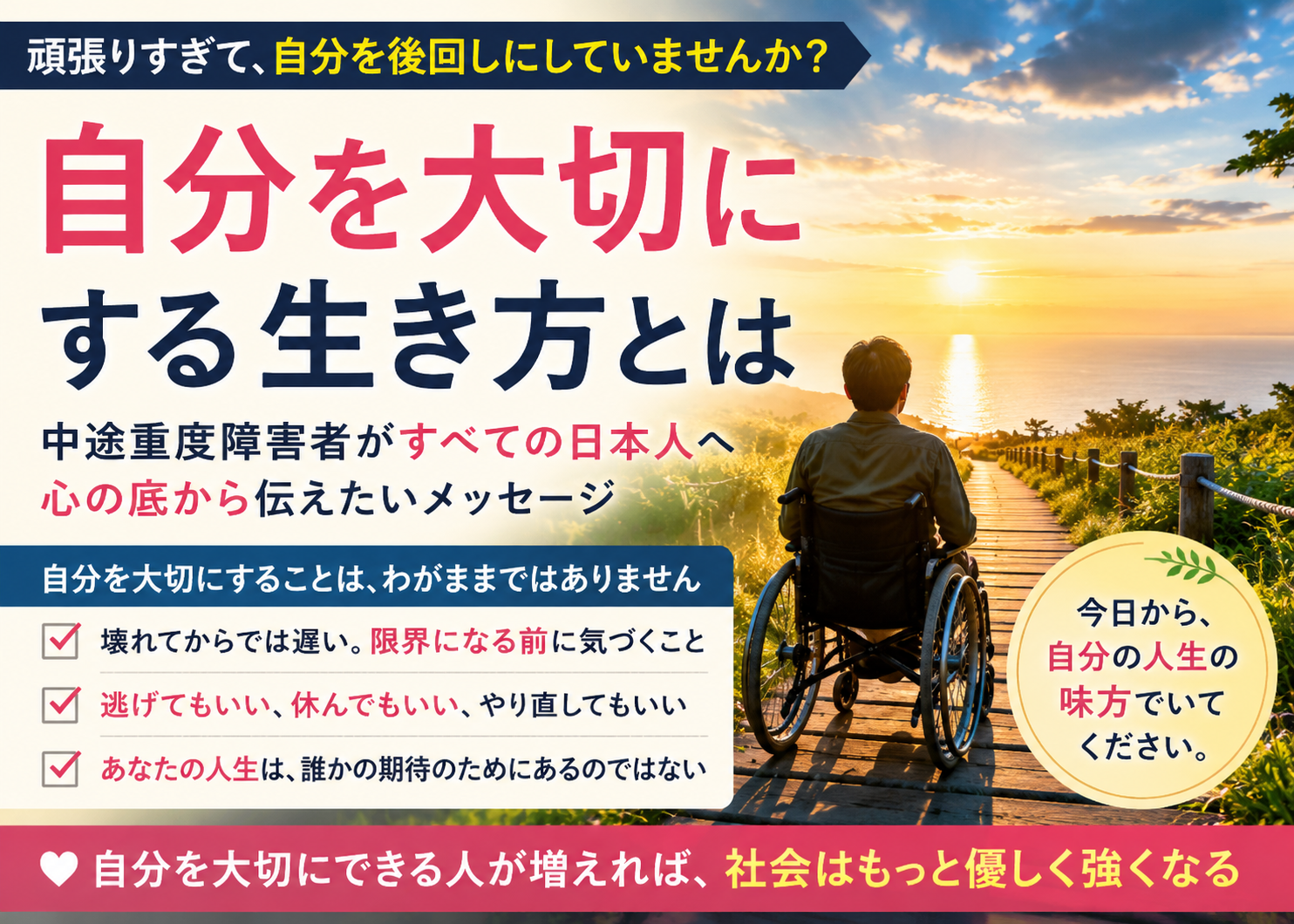
Loving Yourself Is Rebellion Against the World: Self-Acceptance as Revolution
Hope Is Not a Finished Product: The Skill of Collecting “Particles of Light”
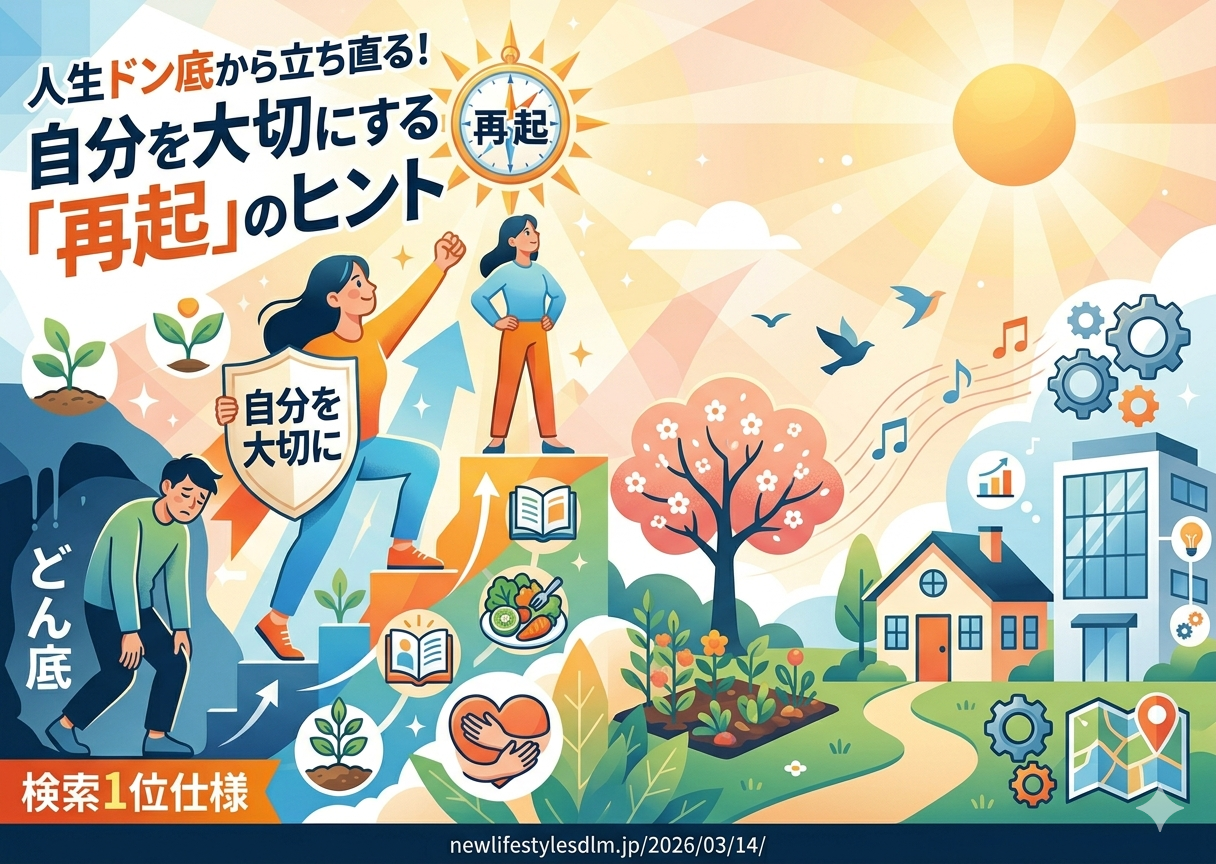
Implementation: 10 Design Steps to Rebuild a Life (Templates Included)
Closing: Parallel Running—How Your Particles Become Someone Else’s Light
1) What Despair Really Is: Not Pain, but “The Loss of a Future”
Ask people what despair is and you’ll hear familiar answers:
Tears. Insomnia. Powerlessness. Panic. The urge to disappear.
Those are symptoms. They are real—but they are not the core.
The core is colder.
Quieter.
More lethal.
You can’t imagine a future.
That’s all. And it’s enough to end a person.
This is not the same as “today is hard.”
Not the same as “yesterday hurt.”
It is the sensation that tomorrow does not exist.
When tomorrow disappears, encouragement becomes a kind of drug:
“You’ll be fine.”
“Stay strong.”
“It will get better.”
As painkillers, those phrases can work.
As treatment, they fail.
Because a missing future cannot be filled with language.
It can only be rebuilt with structure.
Only with design.
Hope is not optimism.
Hope is the certainty that you can design again.
I did not learn this as an inspirational quote.
I learned it as a bodily fact—on a hospital bed, where the world stripped me down to survival.
2) The Hospital Bed as the World’s Backstage: When Your Life UI Collapses
White ceiling. Sterile air. The drip of an IV. Footsteps in the hallway.
Hospitals look like kindness.
But a hospital is the world’s backstage.
Society’s “front stage” runs on speed, results, roles.
A hospital removes those costumes and leaves you as what you actually are: a living organism trying to stay alive.
Becoming severely disabled later in life is not merely “getting sick.”
It is a forced update to your life’s interface.
Acquired severe disability is when your life UI changes overnight—without a manual.
UI means your operating surface:
Walking. Gripping. Writing. Eating. Dressing. Using a toilet. Working. Speaking.
The “normal” gestures you never notice because they’re always there.
But when the UI breaks, your day becomes an exam.
A bottle cap.
A key.
A step at the entrance.
A crowded train.
A narrow restroom.
Coins at the register.
Paperwork.
A stranger’s impatient stare.
A kind voice that still carries pressure.
And the worst part is not even what you can’t do.
It’s the hidden tax nobody talks about:
The cost of explanation.
If you don’t explain, you’re misunderstood.
If you explain, you’re often not believed.
If you’re believed, the system doesn’t change.
If a system exists, it isn’t enforced.
If it’s enforced, “atmosphere” breaks it again.
That invisible social layer—what Japan calls air—can crush you more cleanly than open cruelty.
This is where people break.
And they’re not weak for breaking. This is an industrial-grade pressure chamber.
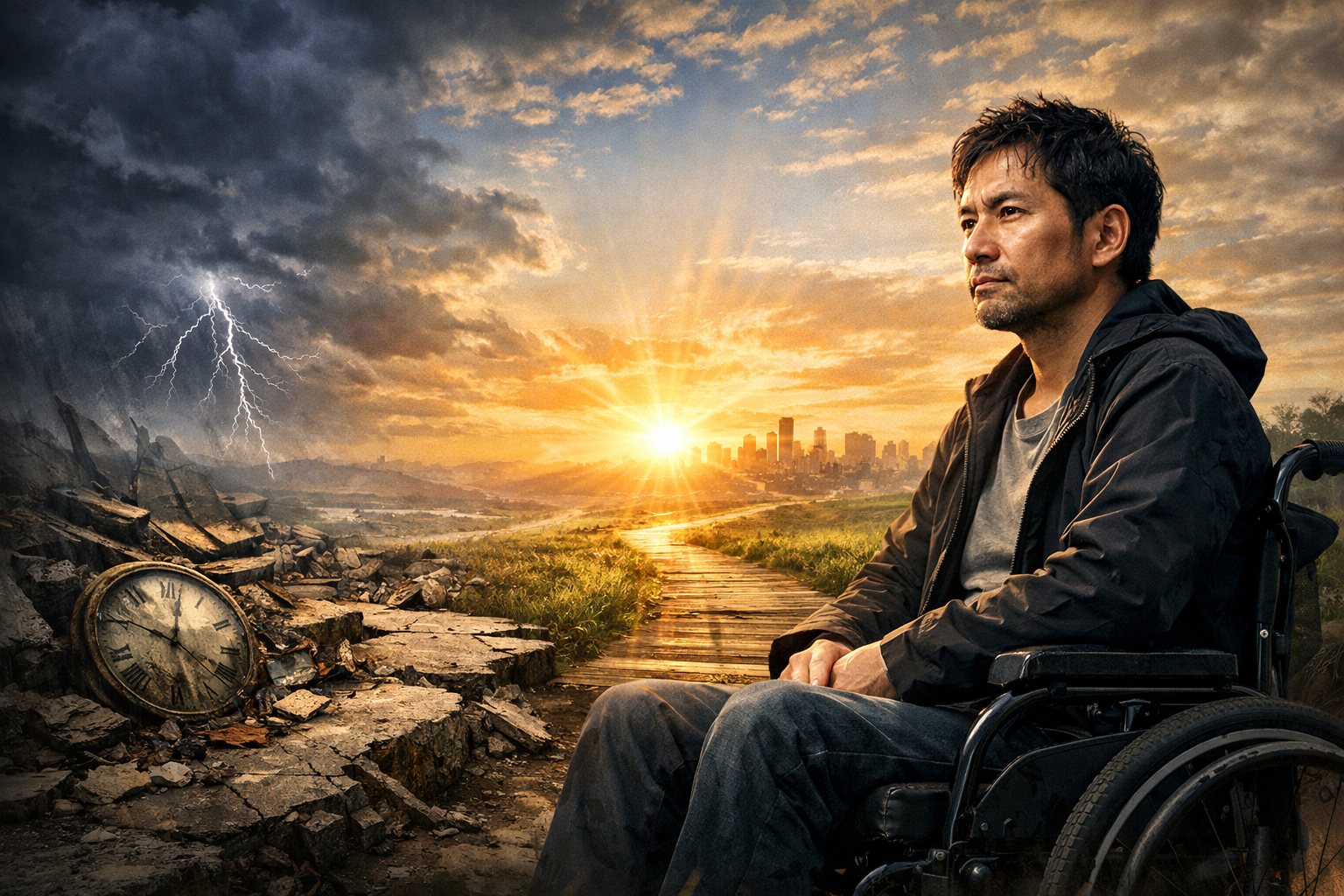
But something strange happens after despair strips you down to the bone.
Something remains.
The ability to observe.
The habit of designing.
The will to put reality into words instead of dying silently inside it.
That remainder is what I call a particle of light.
Not a grand sunrise.
Not a motivational poster.
A particle.
Small enough to ignore.
Real enough to save a life.
3) Productivity as Religion: How Civilization Makes Your Nervous System Pay
I won’t flatter you here.
This section may offend people who worship performance.
But I’m not here to soothe. I’m here to tell the truth.
Modern society has a religion.
The god’s name is productivity.
Results.
Speed.
Efficiency.
Growth.
Optimization.
KPIs.
Metrics.
Improvement.
This religion is terrifying because it offers no forgiveness.
Rest is sin.
Stopping is sin.
Slowness is sin.
Weakness is sin.
And it spreads through “nice” vocabulary:
Self-improvement.
Positivity.
Hustle.
Challenge.
Dreams.
The sweet wrapper hides a brutal core:
Your value is determined by your output.
Acquired severe disability exposes this religion because output becomes unstable.
There are days you cannot “perform.” There are hours you cannot “produce.”
And in those gaps, society tends to erase you.
The same mechanism appears in burnout.
Depression.
Caregiving.
Parenting.
Poverty.
Aging.
Any time your “output” falls, the world quietly withdraws respect.
This civilization runs on a dirty trick:
It treats humans as fuel.
When you burn out, it calls it your personal failure.
When you collapse, it labels it self-responsibility.
But burnout is not a moral weakness.
It is a design defect.
A system that requires human breakdown to function is not a healthy system.
It’s a machine that eats its operators.
So I will say it clearly:
You did not break.
A world designed to break people broke you.
We don’t need more motivation.
We need cooling systems.
Whitespace.
Recovery protocols.
Cultures that do not criminalize stopping.
4) I Refused to Quit Design: The Philosophy of Reboot
In despair, people split into two types:
Those who quit.
And those who refuse to quit quitting.
I became the second type—not from heroism, but from necessity.
I refused to quit design.
And I need you to hear what I mean by “design.”
Not decoration.
Not aesthetics.
Design is how you connect to the world.
If your body changes, connection must change.
If your time shrinks, time use must change.
If your career collapses, livelihood must change.
If relationships fracture, distance must be redesigned.
The key principle is ruthless:
Do not aim to “go back.”
“Going back” chains you to a past spec that no longer exists.
It turns your old self into the only legitimate version of you.
But reality doesn’t reverse. It compiles forward.
Recovery is not restoration.
Recovery is operability under new specifications.
And the first step is not prayer.
It is observation.
Where do you get stuck?
Where do you grind down?
What remains?
What must be deleted?
What remains—what survives the fire—becomes your build material.
Your particles of light.
5) The Fingers That Wouldn’t Move Taught Me Real Freedom: Dignity as Self-Decision
Freedom is widely misunderstood.
I misunderstood it too.
Freedom is not “doing whatever you want.”
Freedom is not “having no limits.”
Freedom is not “having endless choices.”
My fingers that wouldn’t move killed that fantasy.
A bottle cap won’t turn.
Coins won’t lift.
Paper won’t flip.
A key won’t enter cleanly.
Each failure feels like losing power.
But the deeper truth is sharper:
What collapses is not your “ability.”
What collapses is the world’s design assumption that you always have that ability.
And then the real lesson arrives:
Freedom is not the amount of ability you have.
Freedom is the state of dignity you can preserve.
Dignity is not perfection.
Dignity is self-decision.
It is the sense that your life still belongs to you.
That you still choose.
Disability stole my speed.
But it forced precision.
Order.
Sequence.
Selection.
Deletion.
Whitespace.
Boundaries.
Requests.
Refusals.
And here I discovered the core of freedom:
Real freedom is not being ruled by what you can’t do.
Yes, you can’t do it. That’s fact.
But fact does not have to become identity.
The most dangerous thing is not limitation.
The most dangerous thing is when limitation becomes a moral verdict.
My fingers taught me a new kind of freedom:
The freedom to disclose my specs without shame.
The freedom to be slow without apology.
The freedom to ask for help.
The freedom to refuse help.
The freedom to explain.
The freedom to not explain.
People with full mobility often have more capability—and less freedom.
Because they are chained to expectations, evaluation, and invisible deadlines.
In the productivity religion, freedom is distributed as a reward for output.
Produce, then you may rest.
Win, then you may choose.
Deliver, then you may be respected.
That logic is insane.
And the body that fails makes the insanity visible.
6) Turning Constraints into “Design Whitespace”: How to Win Against Forced Spec Changes
Constraints are not your enemy.
Constraints are your whitespace.
Whitespace is where design happens.
A canvas with no whitespace cannot be drawn on.
A life with no whitespace becomes pure consumption.
Now I need to be clear: I do not romanticize suffering.
Pain is ugly.
Disability is inconvenient.
Loss is brutal.
But the designer does something different from the worshipper of motivation.
The designer converts facts into systems.
Turning constraints into whitespace means:
Don’t list “what you can’t do”—identify where you get stuck.
Don’t try to break through by willpower—convert into steps.
Don’t raise goals—reduce friction and wear.
Don’t increase self-blame—modify environment and protocols.
Humans rarely change through “desire.”
Humans change through design.
And when you accept this, you stop being humiliated by your limits.
You start building around them.
Not as surrender.
As engineering.
7) Loving Yourself Is Rebellion Against the World: Self-Acceptance as Revolution
Self-acceptance is often sold as comfort.
As softness.
As “positive thinking.”
I hated that framing.
Because my pain was not a concept.
My limitations were not a mood.
My reality did not change because someone said “love yourself.”
But I eventually learned:
Self-acceptance is not comfort.
Self-acceptance is revolution.
This civilization runs on self-rejection.
Not enough.
More.
Faster.
Stronger.
Thinner.
Smarter.
Higher.
That permanent deficiency is how the machine keeps you moving.
So when someone says, “I won’t treat myself as disposable,”
the system becomes uncomfortable.
Because it relies on your disposal.
So I say this without softness:
Loving yourself is rebellion against the world.
And “love,” here, is not a warm feeling.
It is a decision.
I will not handle myself roughly.
I will not reduce myself to output.
I will not treat myself as a tool.
I will not throw myself away for approval.
After disability, the most dangerous discrimination is not outside you.
It’s the one that moves in.
“You’re a burden.”
“You’re too slow.”
“You’re not useful.”
“If you can’t return, you’re worthless.”
That inner voice is not “you.”
It is the productivity religion speaking through your mouth.
Refusing it is self-acceptance.
And once you refuse it, something returns:
Anger.
Not childish tantrum anger.
Clean anger.
Boundary anger.
Life-force anger.
Anger is evidence that you still believe your life has borders worth defending.
8) Hope Is Not a Finished Product: The Skill of Collecting “Particles of Light”
Hope is not something you “have.”
Hope is something that accumulates.
Hope is not a sunrise.
Hope is a build.
Particles of light are tiny.
But they multiply.
What counts as a particle?
A fact you observed clearly.
A step you improved.
A boundary you defended.
A day you truly rested.
A request you refused.
A person you asked for help.
A single line you wrote.
A single task you completed without self-hatred.
Small.
But small is why it compounds.
Big miracles are rare.
Small designs are daily.
And daily is how you survive.
9) Implementation: 10 Design Steps to Rebuild a Life (Templates Included)
Now we move from philosophy to execution.
Not feelings.
Systems.
1) Insert Whitespace (Recovery Space)
Design begins only where there is room.
Whitespace is not luxury. It is a survival device.
Template: Choose ONE thing you will not do this week (a plan, a call, a scroll habit).
2) Observe (New Specs)
Log reality before you interpret it.
Template: Each night: “3 friction points / 1 recovery point.”
3) Hold a Funeral (End the Old Spec)
Stop trying to return to a version of you that no longer exists.
Template: Write 5 things you will not “go back” to.
4) Debug Self-Hate (Bug Fix)
Turn self-blame into a design diagnosis.
Template: Replace “I’m useless” with “My specs and environment are misaligned.”
5) Weaponize Constraints (Selection & Focus)
Constraints force clarity. Use that.
Template: Choose ONE domain you will stop investing in.
6) Build Redundancy (Parallel Roles)
Single-income, single-identity living is fragile—especially for vulnerable bodies.
Template: What is one “second chair” you can grow in 1 hour/week?
7) Treat Expression as UI (Temperature Design)
A smile is not virtue. It’s interface—when it’s real.
Template: Prepare one line that lowers social friction without lying.
8) Parallel Run (Not “Empathy,” but Side-by-Side)
Empathy can stop conversations. Parallel running changes reality.
Template: Identify one person you can run beside, not “understand.”
9) Gratitude as Engine (Perspective Control)
Not spiritual sugar. Systems control.
Template: List 10 things that remain. Tiny is fine.
10) Celebrate Unfinishedness (Iterate)
A life is a product. Ship, learn, patch.
Do not be ashamed of unfinishedness. Unfinishedness is the form of survival.
Template: Write one “unfinished victory” you achieved today.
10) Closing: Parallel Running—How Your Particles Become Someone Else’s Light
I cannot live your life for you.
But I can walk beside you.
Comforting words are easy.
Standing next to reality is harder.
I choose the harder thing.
Particles of light do not shine well in isolation.
They grow when shared.
So I leave you with one line—one particle:
Do not quit quitting.
Slow is fine.
Stopping is fine.
Recovering is fine.
But decide this:
“I will not treat myself as disposable.”
That sentence is rebellion.
That sentence is design.
That sentence is a particle of light.
And one day, without noticing when it happened,
you will hand a particle to someone else in their dark.
Not because you became perfect.
Because you became buildable again.
Quick FAQ (Search-Intent Answers)
Q: How do you recover from rock bottom?
A: Not by motivation, but by redesigning structure. Rock bottom is the loss of an imaginable future; design rebuilds it.
Q: How do I find hope again?
A: Hope accumulates through tiny proofs—particles of light. Log, design, reduce friction, add whitespace, repeat.
Q: Is productivity culture supposed to feel this painful?
A: A system that requires human burnout is defective. The solution is not more willpower but better design: recovery, boundaries, redundancy.















コメントを残す