— A Complete Structural Breakdown, Not a Moral Lecture
Live Gently With Yourself / Spread the Love
TL;DR — Read This First
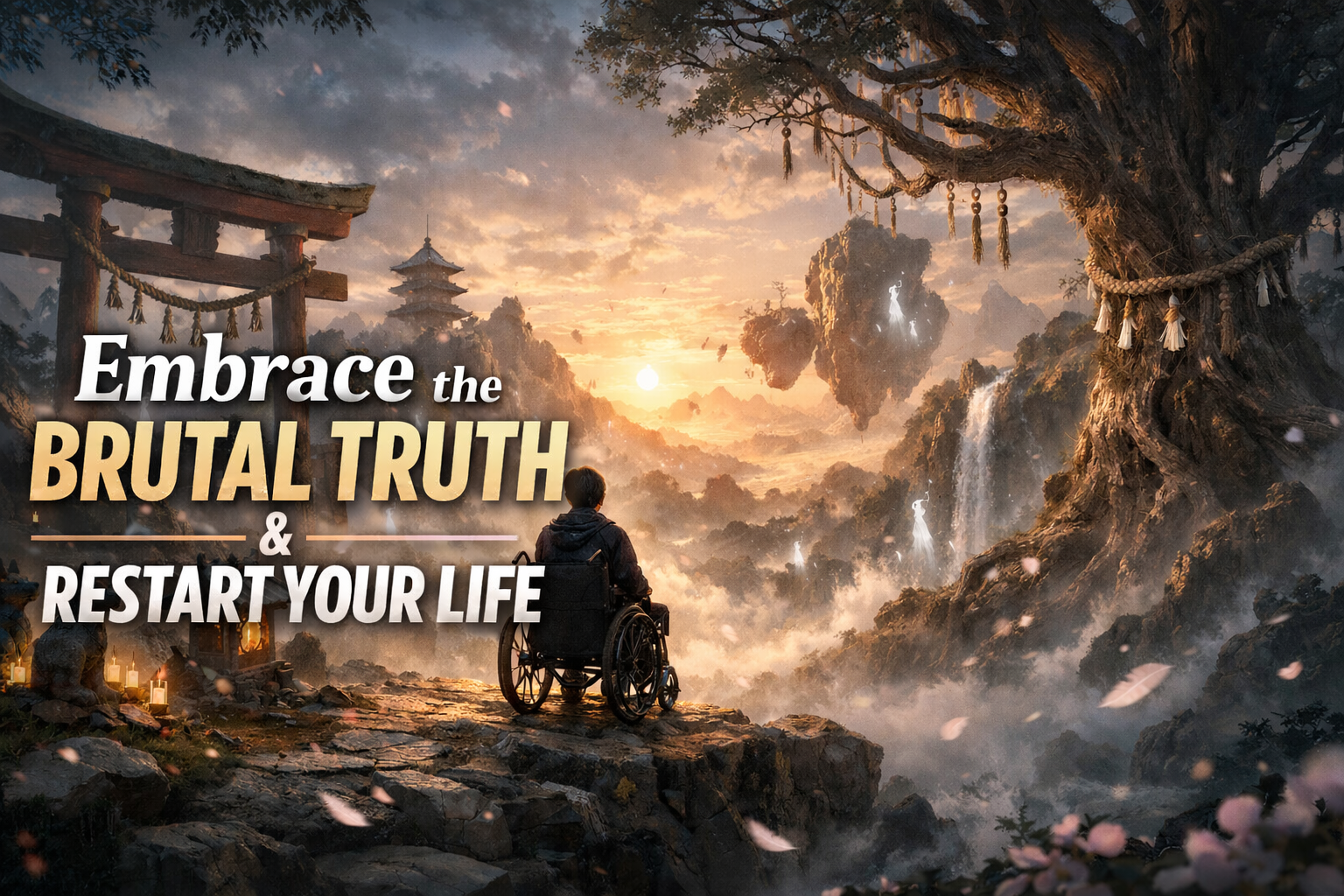
“Just do your best” becomes harmful not because people mean badly,
but because it assumes an outdated premise:
“If you try hard enough, you can go back to how you were.”
For people with acquired severe disabilities, this premise no longer matches reality.
“Just do your best” can turn from encouragement into pressure to return to a former self
People with acquired disabilities live with a powerful internal comparison: their past self
The phrase often triggers a silent chain reaction:
recovery fantasy → self-blame → self-hatred
The solution is not banning the phrase
The solution is updating the assumptions behind our words
Real support is not emotional sympathy —
it is redesigning language to match the other person’s reality
1. This Article Is Not About Blaming Anyone
It’s About Reducing Accidents Caused by Good Intentions
“Just do your best.”
In Japanese — and honestly, in many cultures —
few phrases are easier to say,
and few are more likely to explode under the wrong conditions.
People who say it usually mean well.
They want to help.
They want to encourage.
They want to support.
In fact, people who say “Just do your best”
are often the ones who care the most.
That’s why this topic is dangerous.
Handled poorly, it turns into:
blaming kind people,
labeling disabled people as “too sensitive,”
or sliding into shallow “language policing.”
That is not what I want.
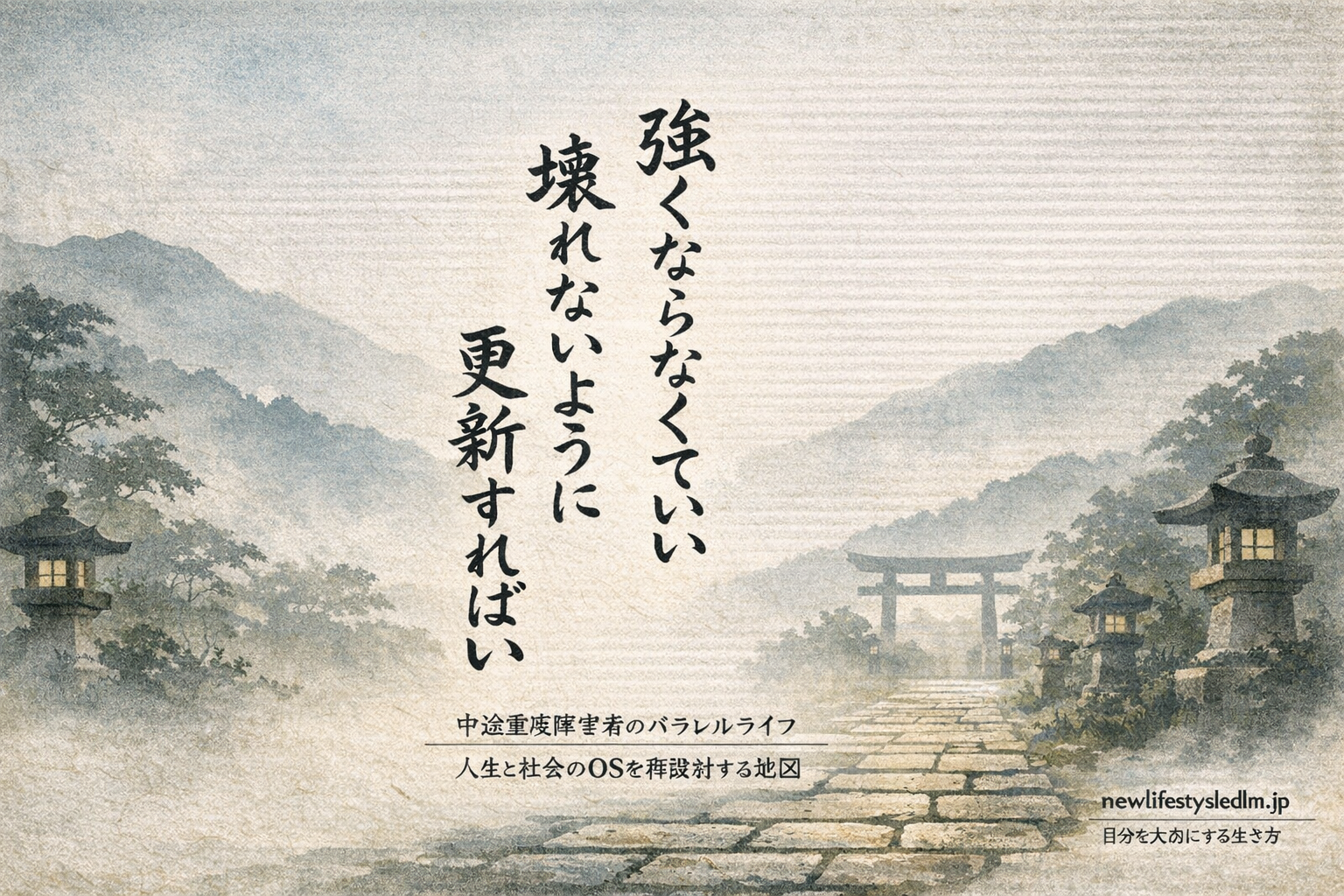
I acquired a severe disability later in life.
My life’s assumptions broke midway.
From that side of reality,
what I see is not morality or emotion —
but structure.
Words don’t hurt because emotions are weak.
Words hurt when their underlying assumptions don’t match reality.
This article is not about banning words.
It is a design document for preventing harm caused by good intentions.
2. Why “Just Do Your Best” Is So Powerful
The Nature of an Overly Convenient Phrase
“Just do your best” works everywhere.
In grief
In failure
In illness
In work
In parenting
In relationships
It can be dropped into almost any situation.
Why?
Because it has no concrete meaning.
Vague words can slip into any context
and let the listener fill in the meaning themselves.
That’s the core problem.
“Just do your best” is not a phrase that adapts to the listener.
It is a phrase the listener adapts themselves to.
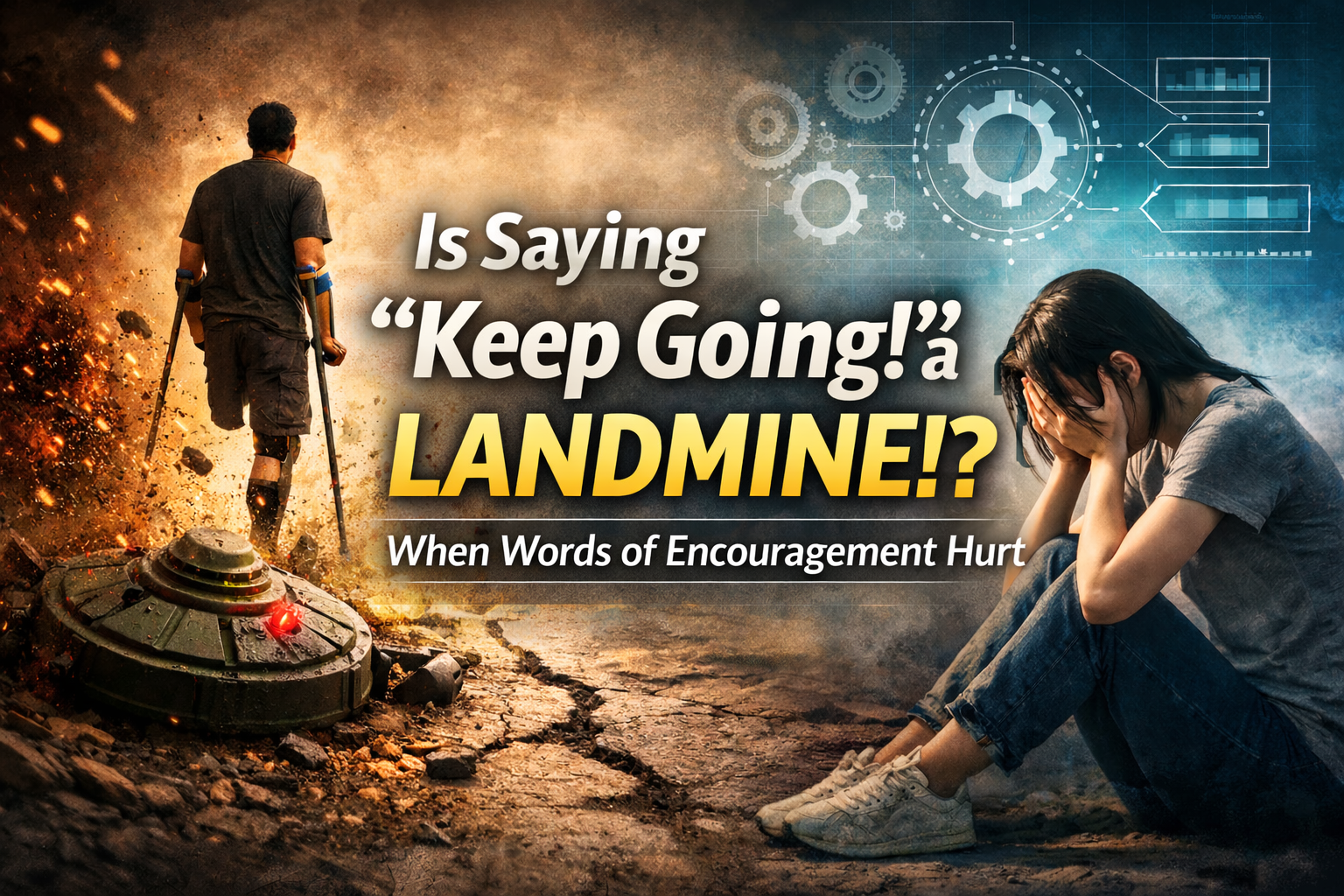
That’s where the landmine is buried.
3. The Exact Moment Encouragement Turns Into a Weapon
There is a clear boundary where good intentions turn harmful.
It depends on which world the person is living in:
World A
Effort reliably improves outcomes.
World B
Some outcomes cannot be changed by effort.
“Just do your best” works in World A.
But after acquiring a severe disability,
parts of life move permanently into World B.
Willpower doesn’t restore function
Determination doesn’t undo damage
Discipline doesn’t return everything that was lost
In this situation, “Just do your best” is often heard as:
“Go back to how you were.”
“You should be able to recover.”
“If you can’t, you’re not trying hard enough.”
No one says these things out loud.
But they are felt.
That is where the accident happens.
And it’s not because the speaker is cruel.
It’s because their mental operating system hasn’t been updated.
4. The Mental OS of Acquired Disability
Living With Your Former Self in Your Head
The hardest part of acquiring a disability
is not pain or inconvenience.
It’s this:
Your past self still lives in your mind.
Yesterday, you could do it
Yesterday, you were “normal”
Yesterday, you could work
Yesterday, you could move freely
That past self is not imaginary.
It is factual.
Which makes it the strongest possible comparison.
When someone says “Just do your best,”
the brain translates it automatically:
“If I try hard enough, I should be able to go back.”
“If I can’t, it must be my fault.”
This is the recovery fantasy.
And recovery fantasy is not hope.
It easily becomes a machine for self-blame.
5. The Internal Structure of the Landmine
How One Phrase Triggers Self-Destruction
Step 1: Recovery Fantasy
“I should be able to return.”
This belief is reinforced by:
society’s focus on “recovery” and “comebacks”
the person’s own desire to regain their old life
Wanting this is natural.
It is not wrong.
Step 2: Self-Blame
Reality doesn’t change.
So the mind looks for a cause.
When no external cause exists,
the easiest target is the self.
“I didn’t try hard enough.”
“I wasn’t strong enough.”
“I wasn’t positive enough.”
Step 3: Self-Hatred
Over time, self-blame accumulates.
I hate being a burden
I hate being slow
I hate being angry
I hate myself for not recovering
This damage is quiet.
Invisible.
And therefore often ignored.
That is what “the phrase hurts” really means.
6. Who Is Hurt — and Why
It’s About Circumstances, Not Personality
Let’s be clear:
People who are hurt by “Just do your best”
are not weak.
They are not overly sensitive.
The difference is situational, not personal.
It depends on:
How much effort still changes outcomes
How large the gap is between the present self and the past self
This is rational.
Not emotional.
That’s why language design matters.
7. The Deeper Layer
How Society’s Worship of Effort Makes Things Worse
This isn’t only about individuals.
Many cultures — especially Japan —
treat effort as moral virtue.
Effort is praised.
Endurance is admired.
Persistence is celebrated.
But when effort stops working,
this belief becomes cruel.
People who cannot improve are seen as lazy.
People who don’t recover are seen as lacking will.
In that environment,
“Just do your best” carries social judgment with it.
That’s why it cuts deeper.
8. When the Damage Actually Happens
The Landmine Explodes Later, Not Immediately
The phrase rarely hurts in the moment.
It hurts later:
at home,
alone,
when another task fails,
when time passes and nothing improves.
Then the phrase repeats in the mind:
“Just do your best.”
“You still can.”
“Why can’t you?”
At that point, the words are no longer encouragement.
They become a tool of self-attack.
The explosion happens inside.
9. The Solution
Not Prohibition — Redesign
The answer is not banning words.
Banning words silences kindness
and damages relationships.
The solution is this:
Move language from “effort” to “conditions and design.”
10. Safer Alternatives That Actually Help
(Highly Shareable)
Universal
“What’s the hardest part right now?”
“Where is the biggest cost with today’s conditions?”
“Let’s redesign this so it doesn’t break you.”
“Let’s adjust it to what’s sustainable.”
At Home
“Let’s stop here for today.”
“Consistency matters more than volume.”
“Your value isn’t measured by output.”
At Work
“Let’s standardize the process.”
“Where does this break down?”
“What accommodations increase repeatability?”
These phrases:
don’t assume recovery
don’t judge character
don’t turn effort into morality
11. What “Being Supportive” Really Means
It’s Not Emotion — It’s Updating Assumptions
Support is often misunderstood as kindness of feeling.
Feelings matter — but they are not enough.
Real support is this:
Updating your assumptions to match the other person’s reality.
Effort doesn’t always work
Motivation doesn’t fix everything
Some losses are permanent
Acknowledging this is not pessimism.
It is respect.
12. Self-Protection for Those Who Are Hurt
Internal Phrases That Stop the Spiral
You can’t control other people’s words.
So here are phrases to stop internal damage:
“This doesn’t mean ‘go back.’”
“This is about conditions, not character.”
“Today is about sustainability.”
“Keeping life running matters more than finishing.”
Reconnect words to design, not identity.
13. If You’ve Said “Just Do Your Best” Before
You don’t need to feel guilty.
What matters is what comes next.
“That might not have been the right wording — how did it feel?”
“What’s the hardest part right now?”
“How can I help redesign this?”
One sentence can turn harm back into support.
Language is adjustable.
Relationships are redesignable.
14. FAQ
Is “Just do your best” always bad?
No. It works when effort truly changes outcomes.
What if I don’t know what to say?
Ask about difficulty, not solutions.
Some people want to hear it, right?
Yes. That’s why flexibility matters. Needs change with context.
15. Final Thought
The Power of Words Comes From Shared Assumptions
“Just do your best” is born from kindness.
But kindness without updated assumptions
can still cause harm.
When life enters a world where effort no longer works,
old language must be redesigned.
Not into silence.
Not into fear.
But into conditions, sustainability, and shared reality.
One Last Line
Support is not about warm feelings.
It is about updating your assumptions
to match the other person’s reality.
Live Gently With Yourself / Spread the Love
● About Me

I’m Jane, the creator and author behind this blog. I’m a minimalist and simple living enthusiast who has dedicated her life to living with less and finding joy in the simple things.









コメントを残す