— The Quietest Revolution in Japanese Literature, Preserving How Ordinary People Felt the World
—
Meta Description (around 120–130 characters)
The Legends of Tōno is neither just ghost stories nor a folklore collection. It is a quiet revolution that records the blurry border between “reality” and “mystery” as it is. From the viewpoint of a mid-career, severely disabled blogger, this long thought-log breaks down Yanagita’s true genius and how to read The Legends of Tōno at the level of your inner operating system.
—
Target Readers (Persona)
People who know the title The Legends of Tōno but have never actually finished it
People who feel vaguely drawn to “folklore,” “yōkai (spirits),” or “old Japanese tales”
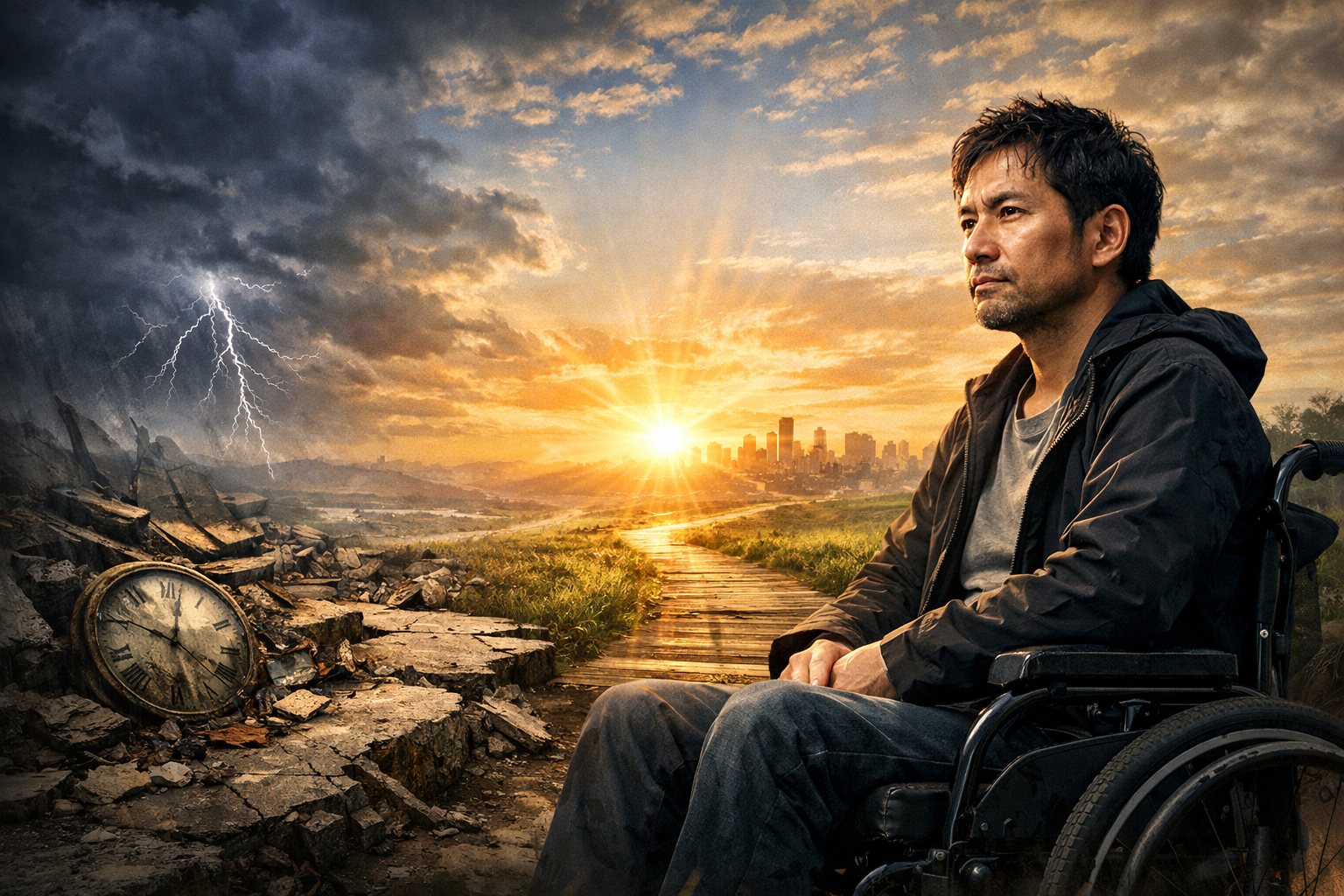
Rational types who are interested in spirituality but don’t want to blindly believe
People who want to understand Japanese culture and “Japaneseness” not through tourist guides, but from the ground level
People who have faced “unexplainable realities” like disability, illness, loss, etc.
—
Search Intent This Article Tries to Answer
what is the legends of tōno / easy explanation
legends of tōno summary / themes / analysis
who is kunio yanagita / father of japanese folklore
legends of tōno reality vs mystery / ghost stories / yōkai
japanese worldview / intro to japanese folklore / classic must-read
spiritual but not new age / japanese way of thinking about “mystery”
—
Table of Contents
1. The Legends of Tōno Cannot Be Read as “Either Reality or Mystery”
2. First, the Basics: What Kind of Book Is The Legends of Tōno?
3. The “Reality Trick” Built into Yanagita’s Writing Style
4. A World Where “Reality” and “Mystery” Do Not Clash
5. The Surface-Level “Truth”: The Legends of Tōno as a Classic of Folklore Studies
6. The Deeper “Real Truth”: An Obsession with Preserving How Ordinary People Felt the World
7. The Fundamental Curiosity Beneath It All: What Was Yanagita Trying So Hard to See?
8. Reading The Legends of Tōno as a Mid-Career Severely Disabled Blogger
9. What This Book Means for Those of Us Living Today
10. Conclusion: Accepting “Standing Between Worlds” as a Strength, Not a Weakness
—
1. The Legends of Tōno Cannot Be Read as “Either Reality or Mystery”
When you first pick up The Legends of Tōno, many people feel something like this:
> “The style is oddly dry.”
“There’s not much clear ‘beginning–middle–end,’ and it’s not exactly horror.”
“Are these ‘true ghost stories’ or just ‘old tales’? I can’t tell.”
And to be honest, a lot of people close the book right there.
I was one of those people, long ago.
But after I became disabled and had my life assumptions flipped over once,
rereading this book gave me a completely different impression.
It’s not a book made only of “reality,”
but it’s not just a book of “mystery” either.
It is a work that turns the blurred border between the two itself into literature.
The Legends of Tōno quietly refuses the yes/no question:
> “Is this reality, or is this fantasy?”
—
2. First, the Basics: What Kind of Book Is The Legends of Tōno?
From an SEO point of view, let’s first nail down the basics to meet queries like
“what is legends of tōno,” “summary,” “who is kunio yanagita.”
2-1. Time and Place
Author: Kunio Yanagita
First published: 1910 (Meiji 43)
Setting: The mountainous region of Tōno in Iwate Prefecture (the area around today’s Tōno City)
Form: 119 short anecdotes and legends
Source: Based on stories heard from a Tōno native, Kizen Sasaki
The key point: this is not a made-up fiction created at a desk.
It is a record of stories that people in a real place
actually told each other in their everyday lives,
written down almost as-is.
2-2. What Kind of Stories Does It Contain? (In Brief)
Some of the best-known motifs in The Legends of Tōno include:
Kappa (river creatures)
Zashiki-warashi (household child spirits)
Mountain men and mountain women
Deities like Oshirasama and Okunaisama
Mountain gods, river gods
Strange appearances of the dead
Men who meet mysterious women and then disappear
The names themselves look just like what you’d see
in a “yōkai encyclopedia.”
But once you start reading, you realize
The Legends of Tōno is not a “monster character book.”
Yōkai are not turned into cute mascots,
stories rarely end with clear morals,
and there is almost no “happily ever after” closure.
Instead, Yanagita simply records,
in a very dry tone:
> “This is said to have happened here.”
“So-and-so in such-and-such village told this story.”
This understated writing style is precisely what creates
the “reality trick” that I’ll dig into later.
—
3. The “Reality Trick” Built into Yanagita’s Writing Style
From an SEO angle, this part addresses queries like
“legends of tōno style,” “why is it eerie,” “yanagita literary value.”
3-1. Why All the Geography at the Beginning?
When you open The Legends of Tōno,
you don’t meet a yōkai right away.
You meet geography.
How many “ri” from this village in that direction
Which river flows how through which valley
What you find when you cross which pass
It goes on and on.
To be honest, some readers might think, “Is this a textbook?”
But here is Yanagita’s trick:
He builds a 3D map of Tōno in the reader’s mind.
He makes you feel, “People really live here; real paths run here.”
And only after that, he places “strange events” on that map.
In other words:
> He first raises the “resolution of reality” to the limit,
then pours mystery into that reality without breaking the frame.
This is the basic design of Yanagita’s style.
3-2. “Field Report” and “Story” at the Same Time
At first glance, Yanagita’s prose looks like a technical report:
“It is said that…”
“There is someone who tells this story…”
“The villagers say that…”
But by stacking these reports, something strange happens:
The same villagers appear more than once.
The same mountains and rivers become recurring stages.
Later stories echo the mood of earlier ones.
A quiet continuity emerges.
As a result, the reader begins to feel:
> “This is not just a random collection of ghost stories;
it’s a record of one whole world.”
At the very edge,
“Worldbuilding” in fiction
and
“Field notes” in folklore
quietly clasp hands.
That’s the unique charm of The Legends of Tōno.
—
4. A World Where “Reality” and “Mystery” Do Not Clash
Now we arrive at the core theme of this article:
“the space between reality and mystery.”
SEO-wise, this speaks to queries like
“legends of tōno reality or ghost story,”
“yanagita spiritual or not,” and so on.
4-1. Three Kinds of Inner “Shaking” in the Reader
When you read The Legends of Tōno, three kinds of internal shaking naturally occur:
1. “Did this really happen?”
2. “Is this just superstition, or is it a kind of wisdom?”
3. “Is this a scary story or a gentle story?”
Yanagita refuses to answer these questions for you.
He deliberately leaves them grey.
He never states clearly whether kappa really exist.
He doesn’t try to fully explain zashiki-warashi
using psychology or sociology.
He does not wrap up with “so the lesson is X.”
Instead, he simply and quietly hands you this:
> “There were people in this land
who truly felt and told the world in this way.”
4-2. Before “Believe or Don’t Believe,” There Is “Living”
We modern people tend to sort things by:
Is it scientifically correct?
Is there evidence?
Is it logically consistent?
Of course, that’s an important attitude.
But Yanagita was looking at a slightly different layer:
Human beings act, first of all,
based on how they feel the world.
That feeling creates their worldview and rules of life.
Yōkai and gods are interfaces
that give shape to this feeling.
So:
> More important than “whether yōkai exist” is the fact that
“people lived by seeing the world through them.”
4-3. “Mystery” as a World-Model Made by Those Who Live It
Imagine a situation like this:
The weather suddenly turns and the river floods.
A child goes missing.
Days later, the child returns, but something feels “off.”
In the modern world, we would try to explain this via:
Climate change,
civil engineering,
behavioral psychology, etc.
But without such words, people once used:
the anger of the mountain god,
the mischief of kappa,
the protection of a household spirit,
to understand the world.
That wasn’t mere “superstition.”
It was, in their context:
> The best OS update they could make
to live with a cruel and unreasonable world.
—
5. The Surface-Level “Truth”: The Legends of Tōno as a Classic of Folklore Studies
From an SEO standpoint, this is the solid, textbook part
answering queries like
“legends of tōno significance,”
“folklore and legends of tōno.”
5-1. The Starting Point of Japanese Folklore Studies
Textbooks usually describe The Legends of Tōno like this:
A seminal work by Kunio Yanagita, the father of Japanese folklore studies
A crossroads between modern Japanese literature and folklore
A pioneering attempt to record the lives, beliefs, and emotions of ordinary people head-on
You’ll find this explanation in almost every introduction.
It’s correct—but not enough.
5-2. The Risk of Reading It as Just a “Great Man Story”
A typical shallow reading goes:
Kunio Yanagita = great scholar
The Legends of Tōno = great book written by a great scholar
And that’s the end.
With that approach, the book remains:
> “A respectable work where a great person recorded
old stories of some countryside long ago.”
But that misses the real point.
The truly amazing part is:
> His obsession with preserving
“how ordinary people felt the world”
including both its reality and its mystery.
Unless we see this, we won’t reach the heart of The Legends of Tōno.
—
6. The Deeper “Real Truth”: An Obsession with Preserving How Ordinary People Felt the World
Now we move to this article’s core.
This section addresses deeper queries like:
“legends of tōno meaning”
“themes of legends of tōno”
“japanese worldview in folklore”
6-1. Yōkai Are Not Just Characters
The yōkai in The Legends of Tōno are fundamentally different
from the “cute monster characters” of modern pop culture.
Kappa: the danger of rivers and the reality of water accidents
Mountain gods / mountain women: the mountain’s richness and terror at once
Zashiki-warashi: beings tied to a house’s fate, prosperity, decline
In other words, yōkai are:
> Interfaces that transform invisible forces—
“nature,” “accident,” “luck,” “community rules”—
into forms graspable by human beings.
Today, we try to understand our condition using words like:
risk,
stress,
self-responsibility,
mental health.
The people of Tōno built their world-model
through beings like kappa and zashiki-warashi.
You can’t just wipe that away as “ignorant superstition.”
6-2. A World Where the Border Between Life and Death Bleeds
The dead appear again and again in The Legends of Tōno:
They stand at the bedside in dreams.
You meet them on a night road.
They stand silent at the eaves of a house.
They are not “horror movie ghosts” so much as:
> Beings who still linger, somehow, near this world.
The modern image of death is:
a clean cut between living and dead,
with death as absolute ending.
But in Tōno’s world, that’s not so.
Life and death are not as far apart as we think.
Sometimes the border blurs.
People turned those blurry moments into dreams, visions, and strange stories.
Anyone who’s had a serious illness or stroke
knows in their bones
how razor-thin the line between “alive” and “not here” can be.
As a stroke survivor and mid-career disabled person,
I always carry this feeling:
> “If things had been slightly different that day,
I wouldn’t be sitting here typing these words.”
The “dead” in Tōno embody that thin line.
6-3. Recording Ordinary Souls in History—Intact
Yanagita’s greatness lies in the fact that he turned
not heroes or famous figures, but:
unnamed farmers,
woodcutters entering the forest,
old women doing laundry in the river,
mothers who lost children,
into the main characters of his records.
And he didn’t strip away the gods and spirits they believed in.
> “If we cut off the yōkai as ‘irrational’
and record only the ‘reasonable parts,’
we can’t truly reconstruct how they felt the world.”
Because he knew this,
Yanagita wrote down both “reality” and “mystery” together
whenever he opened his notebook.
—
7. The Fundamental Curiosity Beneath It All: What Was Yanagita Trying So Hard to See?
If you’re still reading,
you’re probably not satisfied with textbook-level explanations alone.
Let’s go one level deeper:
> What was Kunio Yanagita, as a human being,
so desperately trying to see?
7-1. Searching for the “Invisible Threads” Connecting Fragmented Japan
Yanagita’s work can be roughly summed up as:
> “He chased the hypothesis that
beneath the seemingly fragmented customs and beliefs
in all corners of Japan,
there lies some shared way of feeling the world.”
To Tokyo intellectuals, “mountain village superstition”
probably looked like pure backwardness.
But Yanagita suspected that deep down,
there was a common feeling that also lived within themselves.
To hear that quiet underlying note clearly,
he chose Tōno as one sample,
and listened with intense focus.
7-2. Not “Photorealism,” but Constructing a “Literary Reality”
An important point:
> The Legends of Tōno is not a perfectly “raw” documentary.
Yanagita:
chooses the order in which stories are presented,
decides what to describe in detail and what to leave ambiguous,
inserts similar kinds of episodes at strategic points.
Through such editing and structuring, he makes sure that:
> “The reality of living in Tōno”
rises up inside the reader.
This is not a “photo copy” of fact, but:
> A literary reality constructed out of fact.
That’s why The Legends of Tōno is:
both a foundational document of folklore studies
and a cornerstone of modern Japanese literature.
A very rare position for one book to occupy.
7-3. A Life of Standing in Between
The most striking thing about Yanagita’s stance, for me, is this:
> He never fully joined either side.
He did not simply become a believer with the villagers.
He did not simply dismiss them as “superstitious peasants” like a typical urban elite.
He chose to stand in that uncomfortable middle ground,
slightly out of place for both sides.
That is a psychologically hard stance.
Fully believing something is, in a sense, easy.
Completely rejecting something is also, in its own way, easy.
The hardest is to keep both possibilities in view
and hold off on final judgment.
The Legends of Tōno is a book written
from the viewpoint of a man who chose that in-between position.
—
8. Reading The Legends of Tōno as a Mid-Career Severely Disabled Blogger
From here I’ll weave in a bit of my own story.
SEO-wise, this responds to queries like
“legends of tōno blog review,” “how to read legends of tōno today.”
8-1. Standing Between “Able-bodied” and “Disabled”
I became severely disabled in mid-life.
I used to work and live as an “able-bodied person.”
One day, illness and its aftereffects rewrote the foundations of my body and life.
I am no longer fully “able-bodied,”
but I don’t fit the stereotype of “the disabled person” either.
I’ve spent years wondering:
> “Who am I, standing in this in-between place?”
And I can’t avoid the feeling:
> “If the conditions that day had been slightly different,
I wouldn’t be here now.”
That thin-border feeling overlaps strongly with:
the people who lost their lives on the mountain,
children who disappeared in rivers,
dead who are still spoken of as “being nearby”
in The Legends of Tōno.
8-2. The Moment When Your “Worldview OS” Is Rewritten
When you become disabled,
your worldview gets rewritten at OS level.
What used to be “easy movement” becomes “a challenge.”
Things you assumed you could always do can no longer be done.
At the same time, new worlds open up that you once thought had nothing to do with you.
You’re forced to hold feelings that no rational explanation can fully soothe:
Why me?
Why now?
Wasn’t there a different possible future?
Modern society has surprisingly few words
that can honestly answer these questions.
The people of Tōno answered them with:
mountain gods,
kappa,
household spirits.
It feels cruel to simply label that “irrational belief”
and throw it away.
Because those stories helped keep
people’s hearts in balance.
8-3. Learning to See “Standing Between Worlds” as a Form of Strength
Rereading The Legends of Tōno, I felt:
> Standing between worlds is not just weakness;
it is also a privilege that lets you see the world in two or three layers.
Able-bodied / disabled
Center / periphery
City / countryside
Reality / mystery
Not fully merging with either side,
yet being able to see both—that position
shows you things others can’t see.
Yanagita tried to look at the OS,
the hidden structure, of Japan
from the “peripheral” land of Tōno.
I, as a “mid-career severely disabled blogger,”
am trying, in my own way,
to reexamine our society’s OS from the periphery as well.
—
9. What This Book Means for Those of Us Living Today
Finally, let’s organize what we,
living in the present day,
can receive from The Legends of Tōno.
9-1. A Skill for Living with the “Unexplainable”
Today’s world is packed with:
data,
evidence,
KPI,
logic.
That progress is wonderful—but behind it,
a quiet feeling spreads:
> “Everything’s logically explained.
But my heart is still not at peace.”
Work evaluations,
medical diagnoses,
family conflicts,
sudden accidents—
You can explain them all “rationally.”
But the question “Why me?”
often remains hanging in mid-air.
The Legends of Tōno gently reminds us of another way:
> A way of living that includes
something that can never be fully explained.
9-2. Recovering Imagination for the “Unseen”
If you walk through Tōno today, you’ll find:
the “kappa pool,”
old houses where zashiki-warashi are said to appear,
small shrines to mountain gods.
You may have mixed feelings about the touristification.
But just imagining:
> “People once truly believed something was here”
already raises your resolution of the world.
If we assume:
> “There might be some ‘unseen something’ here
that someone once felt,”
then we start to grow:
imagination for other people’s pain,
imagination for futures that haven’t happened yet,
imagination for inner worlds of people who don’t think like us.
It’s a quiet training for empathy.
9-3. A Philosophy for Not Blaming Yourself for “Living In Between”
The Legends of Tōno is not a book that forces you
to choose either “reality” or “mystery.”
Instead, it is:
> A book that quietly sets a chair
in the in-between space
and invites you to sit.
For those who carry things that logic alone can’t sort out
For those who have been saved and hurt by spirituality both
For those who don’t fully belong to the social “center” or “margins”
For such people, the book offers hints
for living without blaming themselves.
—
10. Conclusion: Accepting “Standing Between Worlds” as a Strength, Not a Weakness
Let me “SEO-style summarize”
what I wanted to say in this article:
The Legends of Tōno cannot be read as simply “reality vs fantasy.”
Yanagita carefully builds a sense of reality through geography and daily life,
then pours in mystery without breaking that frame.
Yōkai and gods are not just superstition; they were the OS,
the world-model of the people of that time.
In Tōno, the border between life and death was naturally blurred.
Yanagita’s deepest obsession was to preserve
“how ordinary people felt the world” intact, soul and all.
The Legends of Tōno is both a classic of folklore studies
and a “quiet revolution” in modern Japanese literature.
For a mid-career disabled person, it painfully clarifies
the hardship and privilege of “standing in between.”
For us today, this book is also a practical philosophy book
about how to live with things that cannot be fully explained.
—
Afterword: Where Is Your “Legends of Tōno”?
If you’ve read this far,
you might be sensing this:
> “Maybe I have my own personal ‘Legends of Tōno.’”
A strange story passed down in your family
An event in your life that has never made sense
A night you still don’t know was dream or reality
These might be small chapters of
your own private Legends of Tōno.
If you feel like it, try writing down
just one of those stories in a notebook or blog.
It doesn’t need scientific explanation.
It doesn’t need a moral or neat ending.
“This sort of thing seems to have happened” is enough.
In doing so, you’re basically doing
exactly what Yanagita did in Tōno:
> Preserving the blurred space between reality and mystery
as it is.
That might be one small,
yet deep, OS update
for those of us living now.
—
On this blog, I’ll keep writing long thought-logs on themes like:
Japanese classics × modern sense of unease
Folklore × life OS
Disability × philosophy
If you like quiet masterpieces like The Legends of Tōno,
I’d be glad if you checked out my other articles too.
● About Me

I’m Jane, the creator and author behind this blog. I’m a minimalist and simple living enthusiast who has dedicated her life to living with less and finding joy in the simple things.












コメントを残す