Meta Description
Both life and death should fundamentally be matters of personal choice. But the moment we impose our values on others, human relationships begin to distort. In this deeply philosophical blog post by a mid-career, severely disabled writer, we explore the psychological and ethical layers behind the phrase “do as you like.”
Main SEO Keywords
- Meaning of life
- Freedom to die
- Right to self-determination
- Danger of imposing values
- Meaning of “Do as you like”
- Disabled person and suicide
- Responsibility of living
- Ethics of life and death
- Philosophical freedom
- Choice of how to live
Table of Contents
- Introduction
- Living is a freedom, and dying is also a choice
- The human psychology behind imposing ways of living
- A society where saying “I want to die” is not allowed
- The true emotions behind “Do as you like”
- What I learned about freedom through my disability
- Freedom always comes with responsibility
- Don’t entrust your life to others
- Is “I want you to live” an expression of love or contradiction?
- Arriving at the point where I could say “Do as you like”
- Closing thoughts: From me, who chose to live today too
1. Introduction
Both living and dying should be considered personal choices. But in the framework of society, culture, and morality, this freedom is rarely acknowledged. Especially the phrase “I want to die” remains taboo, while the “right” to live is frequently forced upon us.
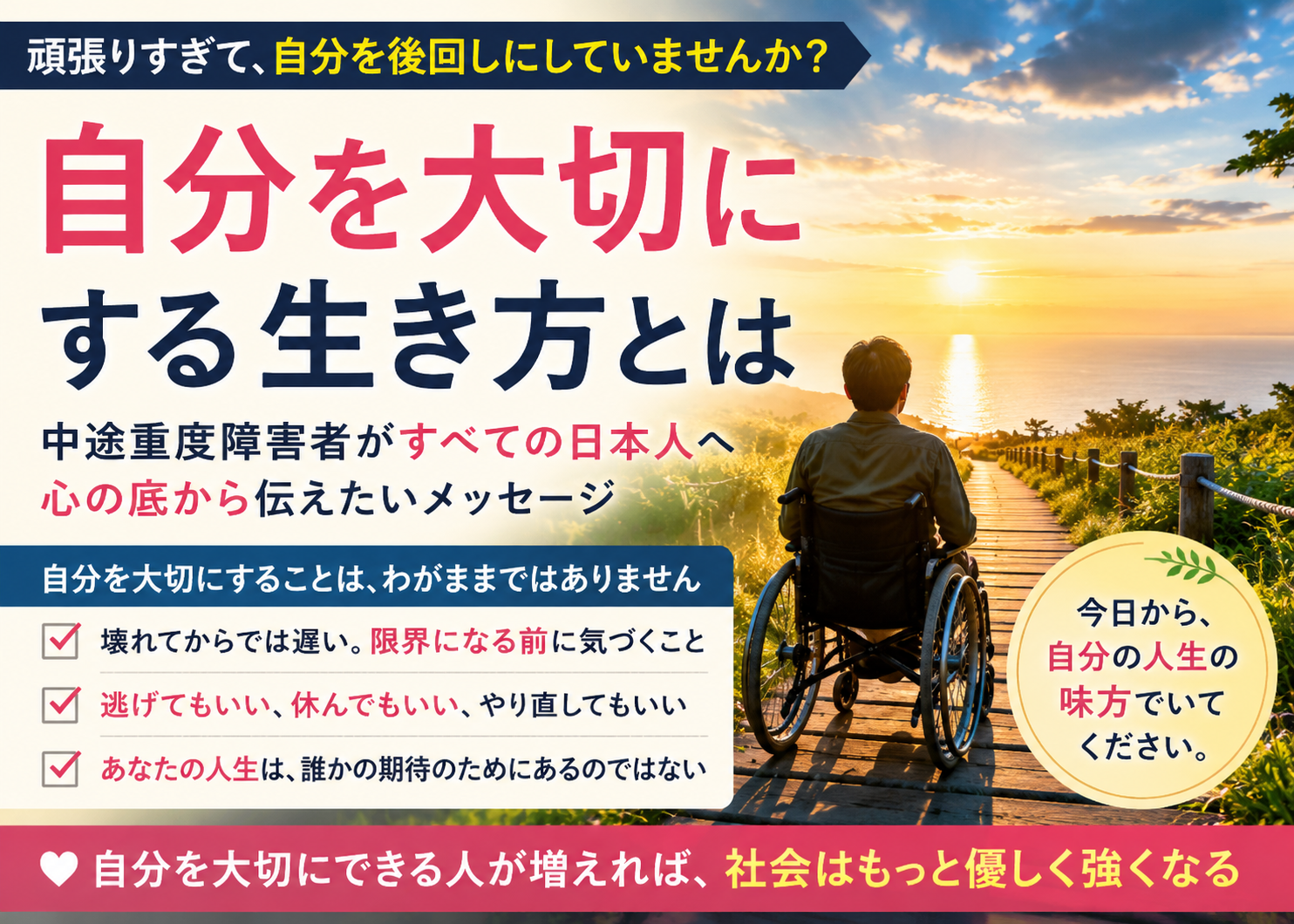
After suffering a cerebral hemorrhage and becoming severely disabled, I lost my physical and verbal freedom. And yet, that very hardship allowed me to reexamine what it means to live or die.
The phrase I arrived at was:
“Do as you like.”
It’s not a rejection. It’s a form of respect, trust, and love. This article explores the essence of that phrase through the lenses of philosophy, ethics, psychology, and society.
2. Living is a freedom, and dying is also a choice
We can’t choose when or where we are born. But we should be able to choose how we live—and when to end it. For some, death is not escape but the ultimate act of self-determination.
Just as terminally ill patients may choose death with dignity, those suffering emotional pain may feel that continuing to live is a form of torment.
What is “life” to one person can be a “curse” to another.
3. The human psychology behind imposing ways of living
“I want you to live,” “You must not die”—these sentiments may stem from love. But the moment they become obligations, the other’s choices are erased.
Why do we impose our values on others?
It often comes from fear of having our own values denied, a desire to be validated, or even self-protection from the pain of powerlessness.
4. A society where saying “I want to die” is not allowed
In Japan, saying “I want to die” immediately invites social condemnation. Responses like “Don’t say that” or “Hang in there” may appear comforting but often end the conversation.
What’s truly needed is listening.
“Why do you want to die?” “What hurts so much?”—trying to understand the background can reignite a faint desire to live.
5. The true emotions behind “Do as you like”
“Do as you like” may sound indifferent, but it actually carries a deeper sentiment:
“I trust you. I will accept your choice.”
It’s not apathy or abandonment. It’s something only those prepared to take full responsibility for another’s choice can say.
6. What I learned about freedom through my disability
I became paralyzed on one side of my body.
People often said, “You’re amazing,” “You’re strong.” But I felt discomfort. In my heart, I was constantly thinking, “I want to give up.”
Even so, I chose to live—not out of obligation, but as an act of personal freedom.
7. Freedom always comes with responsibility
Freedom sounds light, but it’s heavy.
The freedom to live or die always affects others and comes with social consequences.
Still, living according to your own will and accepting the consequences is far more sincere than letting someone else dictate your path.
8. Don’t entrust your life to others
Many people live “for their parents” or “to meet society’s expectations.” But eventually, such lives lead to resentment.
To truly live authentically, we must take full ownership of our decisions.
Only then can life become truly ours.
9. Is “I want you to live” an expression of love or contradiction?
Wishing someone to live is a very human and natural feeling.
But when that wish denies the other’s freedom to choose, it becomes a form of control.
Love means not stealing someone’s agency—even if their choice isn’t what we want.
10. Arriving at the point where I could say “Do as you like”
I once thought this phrase was cold. Now, I see it differently.
It’s love. It’s trust. It’s respect.
To say “Do as you like,” one must let go of the arrogance of thinking we can change someone else’s life—and embrace dialogue instead.
11. Closing thoughts: From me, who chose to live today too
I’m still living with a disability.
It’s not because I “didn’t give up,” but because I chose to try again.
There is no right answer in life.
That’s why being able to choose—and letting others choose—is deeply meaningful.
To anyone reading this: whether you choose to live or die, please speak your truth first.
And may we become a society that accepts whichever path you choose.
That is the reason I continue to live today.


















コメントを残す