SEO Meta Description (within 155 characters)
Earthquakes, typhoons, heavy rain, volcanic eruptions—Japan faces many disasters. Should we control nature or coexist with it? A deeply philosophical blog from the perspective of a person with a severe acquired disability.
Core SEO Keywords (naturally included throughout)
- natural disaster control
- coexistence with nature
- artificial rain technology
- earthquake prediction limits
- volcano eruption countermeasures
- typhoon manipulation science
- heavy rainfall countermeasures
- disaster-prone Japan
- coexistence of faith and science
- disabled blogger’s perspective
Table of Contents
- Introduction | A Fundamental Question in a Nation of Disasters
- Chapter 1 | Japan’s Fate and Wisdom as a Disaster-Prone Nation
- Chapter 2 | How Far Can Science Control Nature?
- Chapter 3 | Faith and Nature — Why the Japanese Accept Disasters
- Chapter 4 | Facing the Uncontrollable as a Severely Disabled Person
- Chapter 5 | Toward Coexistence, Not Control — Connecting Technology and Prayer
- Chapter 6 | Ethical Perspectives — Is Intervention in Nature Justified?
- Chapter 7 | Hints for the Future — Building a Coexistence-Oriented Society
- Conclusion | Living Between Control and Empathy
Introduction | A Fundamental Question in a Nation of Disasters
Typhoons, earthquakes, tsunamis, volcanic eruptions, and torrential rain— Japan is one of the most disaster-prone countries in the world.
A single quake can collapse buildings in an instant. One night of rainfall can flood entire towns.
Faced with such realities, people are left with two choices:
Should we try to control nature?
Or should we accept it and live together with it?
This is a deeply fundamental question that touches not only on science and faith, but also on power, coexistence, rationality, and emotion.
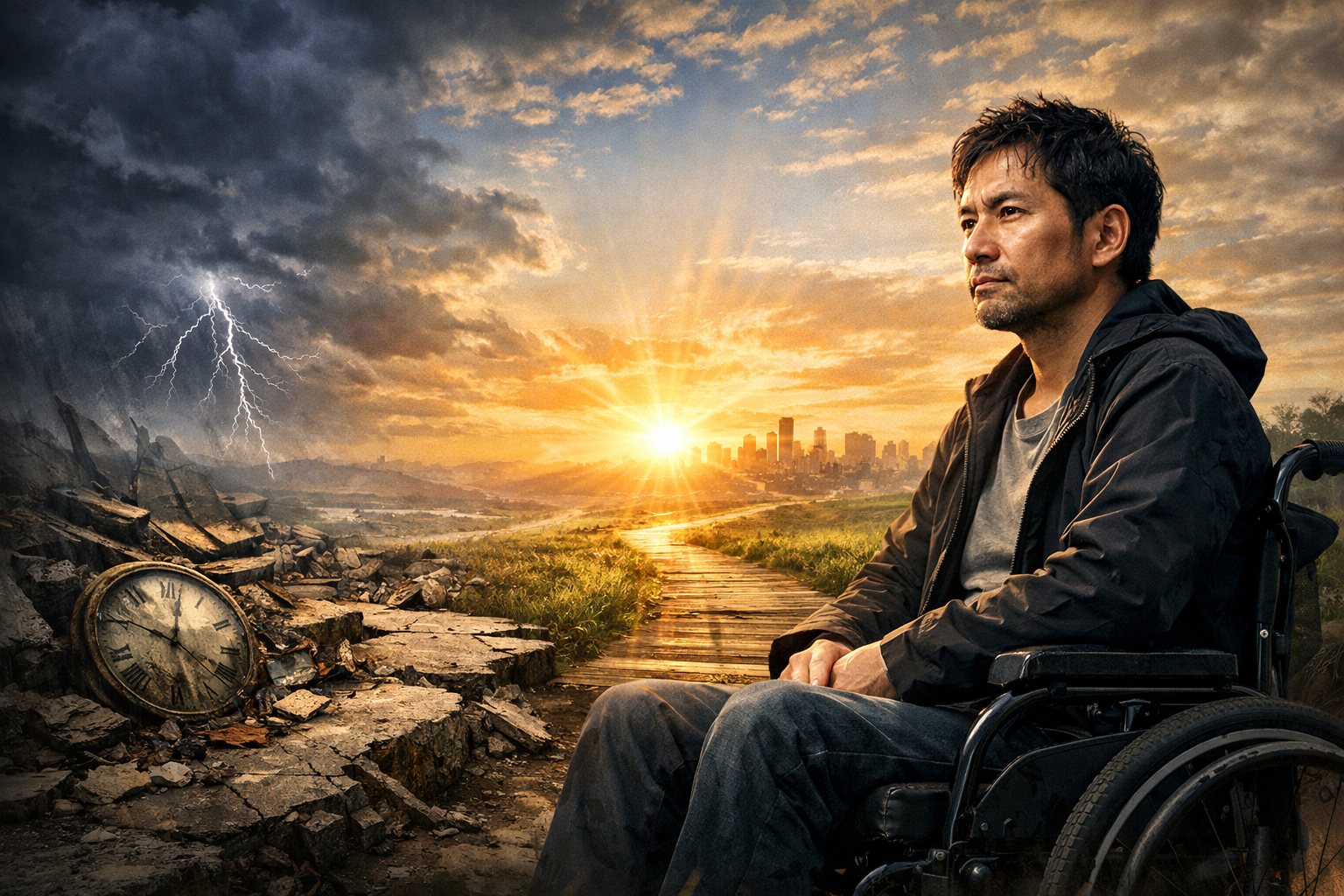
As someone living with a severe acquired disability, I offer a unique perspective. This article explores the limits of modern science, traditional Japanese views of nature, and the daily insights of living in a body that cannot be fully controlled.
Chapter 1 | Japan’s Fate and Wisdom as a Disaster-Prone Nation
1-1. Why Does Japan Face So Many Disasters?
Japan lies at the intersection of four tectonic plates, making it highly prone to earthquakes and volcanic activity. Additionally, the country’s humid subtropical climate brings frequent typhoons and heavy rainfall from the Pacific.
1-2. A Culture of Disaster Preparedness
For centuries, the Japanese people have built wisdom in how to live with disasters. Flexible wooden architecture, terraced fields, windbreak forests, and the strategic location of shrines all reflect a philosophy not of fighting nature, but of living with it.
Chapter 2 | How Far Can Science Control Nature?
2-1. Artificial Rain and Weather Manipulation Technologies
Modern science attempts to control nature through technologies like artificial rain (using silver iodide to induce precipitation) or dispersing hurricane energy.
However, these interventions are temporary and limited in scope. Weather systems are complex, and complete control remains far out of reach.
2-2. The Limits of Earthquake and Volcano Prediction
Despite advanced monitoring of tectonic plates, magma flow, and crustal movements, precise predictions of earthquake timing, location, and magnitude are still unreliable.
Humanity remains largely powerless before nature.
Chapter 3 | Faith and Nature — Why the Japanese Accept Disasters
3-1. The Idea of “Yaoyorozu no Kami” (Eight Million Gods)
In Shinto belief, deities dwell in all aspects of nature—mountains, rivers, rocks, wind, fire, and more.
This fosters not hostility toward nature, but reverence for it.
3-2. Seeing Disasters as Warnings, Not Punishments
When disasters strike, Japanese culture tends to interpret them not as divine wrath, but as moral or ecological warnings—signals to reflect and realign.
This attitude favors coexistence over control.
Chapter 4 | Facing the Uncontrollable as a Severely Disabled Person
4-1. The Reality of a Body That Cannot Be Controlled
I live with a severe disability that prevents me from regulating even basic functions like breathing or temperature.
This taught me the emotional and existential challenge of accepting what cannot be controlled.
4-2. Choosing Acceptance and Coexistence
Rather than control, I have learned to choose understanding and adaptation. Not resistance, but empathy. Not dominance, but harmony.
This deeply shapes how I view nature.
Chapter 5 | Toward Coexistence, Not Control — Connecting Technology and Prayer
5-1. Could Science Be a Modern Prayer?
Artificial rain and earthquake monitoring resemble modern rituals—ceremonies to give form to human hope.
In this sense, science and religion may not be opposites but share a common essence.
5-2. Building a Society Where Science and Faith Are Not in Conflict
Disaster prevention technologies, emergency drills, and infrastructure design are not about domination but about coexisting with nature.
Faith provides the spiritual framework to support these efforts. They should complement each other.
Chapter 6 | Ethical Perspectives — Is Intervention in Nature Justified?
6-1. Geoengineering and the Ethics of Disaster Control
Large-scale weather manipulation and seismic experiments raise ethical questions.
Who bears responsibility if things go wrong? Who benefits, and who suffers?
6-2. Between Arrogance and Humility
Nature is far greater than humanity. Forgetting that breeds scientific arrogance.
We must approach technology with humility—using it carefully to protect life and coexist, not dominate.
Chapter 7 | Hints for the Future — Building a Coexistence-Oriented Society
7-1. Teaching the Value of Coexistence
Future generations must learn not to see nature as an enemy but as a partner in dialogue.
Disaster education should help redefine our relationship with the natural world.
7-2. A Society That Is Both Resilient and Kind
Rather than total control, what we need is empathy, preparedness, and mutual aid.
How we prepare for, respond to, and recover from disasters defines who we are as a society.
Conclusion | Living Between Control and Empathy
We cannot fully control nature.
But we can face it, respect it, and live with it—through technology, faith, and compassion.
The balance between control and coexistence is not only a national challenge for Japan, but also a personal philosophy I live with every day as someone navigating life in a body that cannot be controlled.
And perhaps, that very tension is what makes life beautiful.












コメントを残す