Meta Description
From South Asia to the Middle East, religious and territorial conflicts persist. This blog explores them through the lens of disability and Shinto harmony.
Table of Contents
- Introduction | When a Distant War Becomes Personal
- Chapter 1 | India and Pakistan: A Prayer Torn Apart
- Chapter 2 | Israel and Gaza: The Prayer That Couldn’t Become a State
- Chapter 3 | When Religion Is Used to Justify Exclusion
- Chapter 4 | The Wisdom of the Weak: A Disabled Perspective
- Chapter 5 | Ancient Shinto: A Spiritual Path that Welcomes the Different
- Chapter 6 | What Philosophy of Harmony Can Teach the World
- Conclusion | Wars End When We Reclaim the Meaning of Prayer
Introduction | When a Distant War Becomes Personal
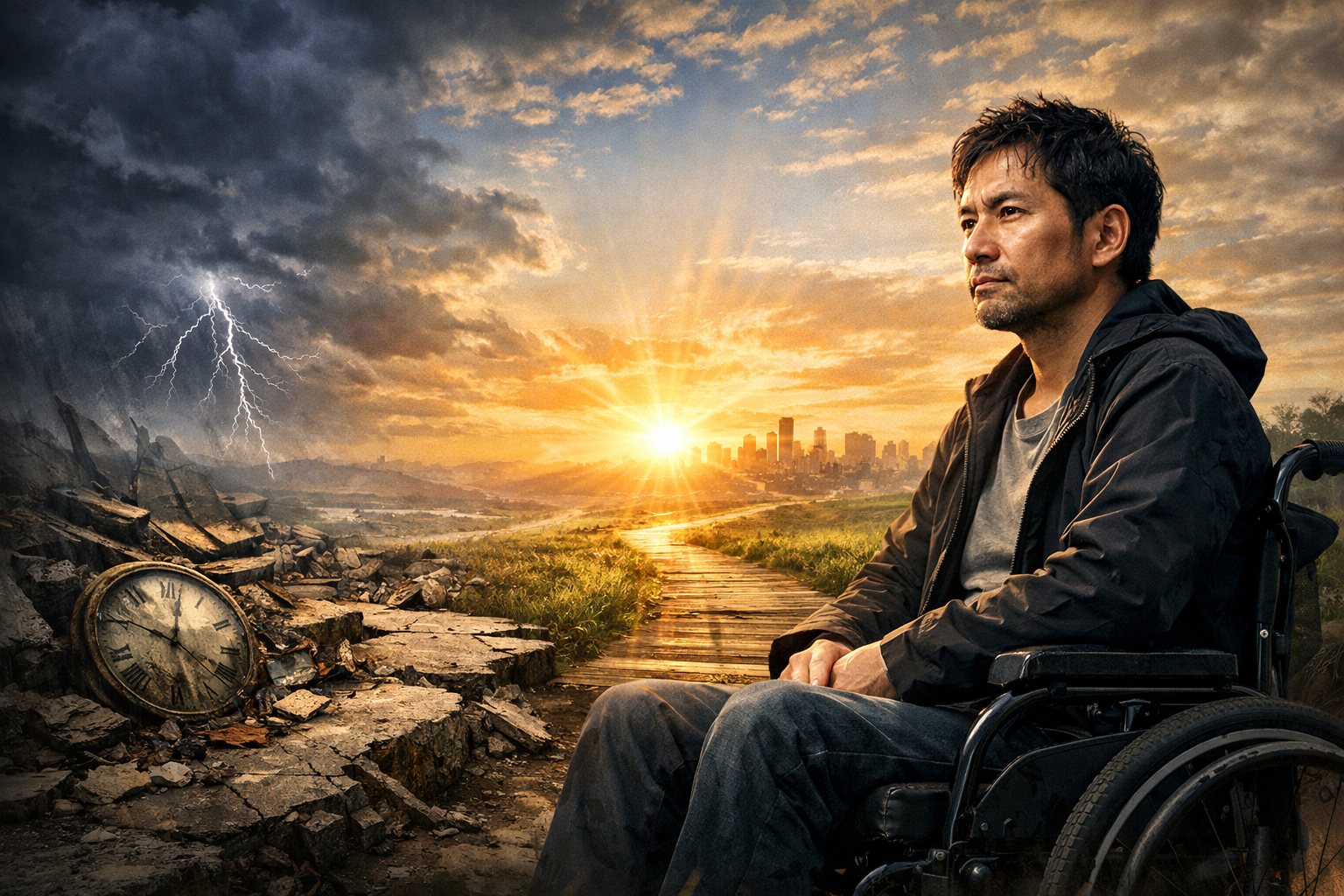
Wars between nations like India and Pakistan or Israel and Gaza may seem far removed from our daily lives. But as someone who became severely disabled mid-life, I have lived through rejection, exclusion, and the consequences of being categorized as “different.”
Through these experiences, I’ve come to see that these conflicts are not only about religion or territory. At their core, they reflect a human tendency to fear difference—and to divide.
In this blog, I examine these wars not through power politics, but through two unlikely lenses:
the perspective of a person with a severe disability and the worldview of Ancient Shinto, Japan’s indigenous spiritual tradition that values harmony, ritual, and reverence for all existence.
Chapter 1 | India and Pakistan: A Prayer Torn Apart
The Partition of 1947
In 1947, British India was split into Hindu-majority India and Muslim-majority Pakistan.
This partition led to one of the largest mass migrations in history and left deep scars—over a million people died in the violence, and more than 10 million were displaced.
Religion, once a source of personal salvation, became a marker of identity—used to divide rather than unite.
The Kashmir Dispute
Even today, the disputed region of Kashmir fuels ongoing conflict.
Muslim-majority, yet ruled by India, the area symbolizes the unresolved tension between national identity and religious belonging.
Chapter 2 | Israel and Gaza: The Prayer That Couldn’t Become a State
A Conflict of Faith and Homeland
Israel-Palestine’s tension arises from the historical trauma of the Jewish diaspora and the forced displacement of Palestinians.
Here again, land and religion intersect—but with a crucial difference.
The Asymmetry of Statehood
Unlike India and Pakistan, both of which are sovereign nations, Palestine is not universally recognized as a state.
This makes the Israel-Gaza conflict asymmetrical—a powerful state against a stateless population.
That imbalance shapes everything from international media coverage to military dynamics.
Chapter 3 | When Religion Is Used to Justify Exclusion
Religion, at its best, connects us to others and gives meaning to life.
But when fused with politics and nationalism, it mutates into something else—a system for categorizing who belongs and who doesn’t.
- In India and Pakistan, religion is used to assert national legitimacy.
- In Israel and Gaza, it is invoked to claim sacred land.
In both cases, the language of prayer becomes a justification for violence.
Chapter 4 | The Wisdom of the Weak: A Disabled Perspective
I used to be a so-called “able-bodied” person. I lived in a world that prized strength, efficiency, and logic.
Then, a severe disability forced me to slow down—and to witness what society does to those who don’t fit the mold.
That same “invisible violence” is experienced by minorities in Kashmir, refugees in Gaza, and anyone marginalized because of who they are.
A Shared Experience of Silence
As a disabled person, I know what it’s like to be spoken about but not spoken to.
To have decisions made for you.
To feel like your pain is too inconvenient to mention.
That’s why I believe empathy—not power—is the only way out of these conflicts.
Chapter 5 | Ancient Shinto: A Spiritual Path that Welcomes the Different
Shinto, Japan’s indigenous spirituality, offers a radically inclusive worldview.
The Way of Eight Million Gods
Shinto teaches that everything has divinity—mountains, rivers, the dead, strangers, even “dangerous” spirits.
Instead of banishing what is different, Shinto welcomes it through ritual and reverence.
This isn’t mere tolerance—it’s a recognition that everything, even conflict, holds meaning.
In Shinto, even a plague god is treated as an honored guest.
This worldview stands in stark contrast to the idea of “righteous enemies” who must be destroyed.
Chapter 6 | What Philosophy of Harmony Can Teach the World
Both conflicts—India-Pakistan and Israel-Gaza—share one root cause:
the fear of difference, the desire for control, and the weaponization of prayer.
Ancient Shinto and the experience of disability offer a different vision:
- A world where we acknowledge what we do not understand
- A world where we honor even what we fear
- A world where prayer is not about victory, but about connection
Conclusion | Wars End When We Reclaim the Meaning of Prayer
As a severely disabled person, I live without physical strength, societal power, or political influence.
But I have learned something invaluable:
what we call weakness is often a hidden strength.
True peace will not come from weapons or sanctions.
It will come from those willing to imagine a different way of being—with humility, empathy, and reverence.
We must reclaim prayer—not as a tool for division, but as a practice of reconciliation.
And in doing so, perhaps we can create a world where conflict is no longer inherited,
but healed—by those who have suffered, survived, and chosen to see the divine in others.










コメントを残す